Our Pick: Wiley
Check PriceItalian vs Carniolan Bees: Which Race to Buy
Verdict first: if your season is long and warm and you want a colony that builds steadily and forgives a beginner's mistakes, buy Italians. If you keep bees north of roughly the 40th parallel, or anywhere winter is the thing that kills your hives, buy Carniolans. That is the whole decision, and for most US backyard keepers it is decided by a map rather than a preference.
By The BeehiveKits Hive Desk2026-08-2915 min read Fact-checked against verified Amazon listingsHow we research
Both are subspecies of the western honey bee, selected in Europe and imported into American beekeeping generations ago. Italians descend from Apis mellifera ligustica out of the Italian peninsula and have been the default American commercial bee since the 1860s (Wikipedia). Carniolans, Apis mellifera carnica, come from the Slovenian Alps and the surrounding region, and are the second most widely kept subspecies in the world (Wikipedia). Neither is exotic. Both ship as packages and nucs from every major American supplier every spring.
The differences are real but narrower than the internet suggests, and they cluster around one axis: how a colony budgets its population against the calendar. Italians run a bigger brood nest for longer and eat accordingly. Carniolans shrink hard in dearth and winter, then rebuild faster than anything else in the yard when the maples pop. Everything downstream, swarm pressure, winter stores consumption, robbing behavior, and even your mite timing, falls out of that single trait.
One honest caveat up front, because it outranks everything below: locally raised, well-adapted stock beats race selection almost every time. A Carniolan queen bred three states away in a different climate is a worse bet than a mutt queen raised by a beekeeper in your county whose colonies survived last winter. Our honey bee races guide covers the wider field including Russians, Buckfasts, and Saskatraz, and our where to buy bees guide explains how to find that local breeder before you default to a catalog.
What to know
- Warm, long-season climates (South, Southwest, coastal California, most of the lower Midwest): Italians. Steady buildup, easy to read, easy to buy.
- Cold, short-season climates (Upper Midwest, Northeast, Mountain West, Canada border states): Carniolans. Small winter clusters eat far less honey.
- Carniolans build explosively in spring and swarm more readily as a direct consequence. Plan swarm management before the first dandelions, not after.
- Italians consume more winter stores because they keep brooding later and start earlier. Budget more fall feed if you run them cold.
- Temperament is close enough on both that it should not decide your purchase. Individual queen genetics matter more than the race label on the box.
- Italians are the more determined robbers, which matters most in a dearth and in a yard with weak colonies or careless feeding.
- The real answer: buy locally adapted stock of either race from a breeder in your climate. Race is a tiebreaker, not the decision.
At a glance
| Product | Role | Why it belongs here | Price | Check price |
|---|---|---|---|---|
| Beekeeping For Dummies | The reference | Covers races, package installation, and the seasonal management both races need | $15.99 | Check Price |
| The Backyard Beekeeper, 5th Ed. | The second opinion | Stronger on colony-level decision making and reading buildup | $15.59 | Check Price |
| Benefitbee Queen Marking Kit | The tool you actually need | Marked queens tell you whether you still have the genetics you paid for | $21.99 | Check Price |
The two races cannot be bought as products, so these are the resources we hand every keeper making this decision. Prices verified August 29, 2026.
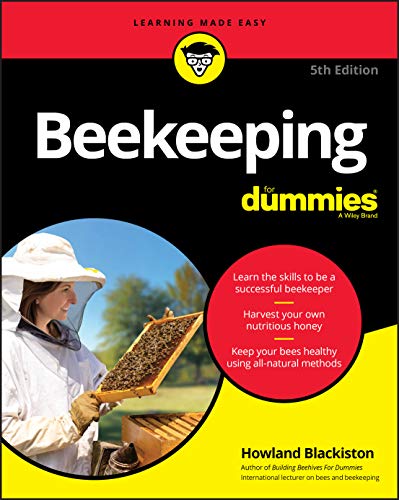
Beekeeping For Dummies
Wiley · Print reference · beginner-through-second-season scope · widely recommended by clubs
Our verdict: The book most American beekeeping clubs hand new members, and the reason we keep recommending it: it explains the seasonal management that your Italian or Carniolan colony will demand, in language that survives a first year of panic. At $15.99 it costs less than a single replacement queen.
Race choice matters far less than knowing what to do in June. Beekeeping For Dummies is the reference we point at when a new keeper asks whether Italians or Carniolans are "better," because the honest answer is that both die in the hands of someone who has not read a chapter on swarm control or mite thresholds. It walks through package and nuc installation, the inspection routine, feeding, supering, and overwintering, in the order a first-year keeper meets them.
Its specific value in this comparison is the buildup chapter. Italians and Carniolans differ mostly in how fast the brood nest expands and contracts, and this book gives you the vocabulary to see that happening on a frame: brood pattern, laying rate, the ratio of open to capped brood, and what an expanding nest is telling you about the space you have not yet given it. Read it alongside our first-year calendar and you will know when your Carniolan colony is about to make swarm cells before it makes them.
Who should buy it
Buy it if this is your first or second season with either race, or if you have kept bees for years by imitation and never actually read a systematic account of the annual cycle. It is the cheapest insurance in beekeeping.
What we don't like
It is a general reference, not a genetics text: race differences get a short treatment rather than the deep comparison this page exists to provide. It is also written for a national audience, so regional timing is left for you to translate.
- Format
- Print reference (listed)
- Scope
- Beginner through second season
- Covers races
- Yes, briefly
- Best paired with
- A local club and a mentor
- Price
- $15.99
Pros
- The standard first book, recommended by clubs nationwide
- Systematic coverage of the full annual cycle
- Plain language that holds up under first-year stress
- Cheaper than one replacement queen
Cons
- Race comparison is shallow by design
- National timing needs regional translation

The Backyard Beekeeper, 5th Edition
Quarry Books · 5th edition · backyard-scale focus · heavy on photographs and decision points
Our verdict: Where the Dummies book teaches procedure, The Backyard Beekeeper teaches judgment, and judgment is exactly what a Carniolan colony's spring demands. At $15.59 it is the natural second book, and the two together cost less than a single nuc.
Carniolan spring is a management problem, not a genetics problem. The trait that makes them wonderful in a short season, an ability to go from a modest winter cluster to a full box in a matter of weeks, is the same trait that puts swarm cells on the bottom bars while you are still thinking about it. The Backyard Beekeeper, 5th Edition is heavy on photographs and decision points, which is what you need to recognize a colony that has outrun its space.
It is also the better book on the other half of this comparison: overwintering a colony that eats less than you expect, or more. Italians brood later into fall and start earlier in spring, which means their winter stores budget is genuinely different from a Carniolan colony's on the same stand. Pair this with our winterizing guide and our swarm prevention guide and you have the two seasons where race actually changes your calendar.
Who should buy it
Buy it if you already own a general reference and want the judgment layer: when to add space, when to split, when a buildup curve is telling you a swarm is three weeks out. Especially worth it for Carniolan keepers.
What we don't like
There is real overlap with any other beginner title you already own, and the photograph-heavy layout means less text per dollar. Neither book will tell you what your specific breeder's line actually does.
- Edition
- 5th (listed)
- Focus
- Backyard scale, decision making
- Strength
- Photographs and colony reading
- Best for
- Carniolan keepers facing spring
- Price
- $15.59
Pros
- Best-in-class on reading colony buildup
- Photograph-heavy, which helps beginners identify swarm cells
- Backyard-scale advice, not commercial
- Pairs cleanly with a procedural first book
Cons
- Overlaps a general beginner reference
- Less depth per page than a text-heavy title
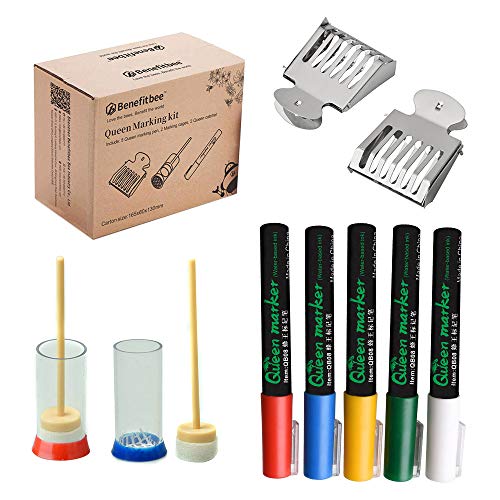
Benefitbee Queen Bee Marking Kit
benefitbee · Marker pens + press-in cage (listed) · standard international color codes
Our verdict: Race arguments collapse the moment a colony supersedes and open mates with whatever drones are in the neighborhood. A marked queen tells you at a glance whether you are still evaluating the Carniolan you bought or a locally mated daughter. At $21.99 it is the cheapest honesty in the yard.
Half the race debates online are about queens that were replaced two months earlier. The Benefitbee Queen Bee Marking Kit gives you marker pens and a press-in marking cage (listed) so you can put a dot on the queen you introduced and know, on every inspection after, whether she is still there. When you find an unmarked queen, you have learned something important: the colony superseded or swarmed, and the genetics in front of you are now half local drone.
That matters directly to this comparison. Open-mated queens carry their race in the maternal line only; the drones they met on a mating flight came from every colony and feral nest within a few miles. So a "Carniolan" colony in its second year is usually a Carniolan-mothered hybrid, which is not a problem, it is often an improvement, but it does mean the race label on your invoice stops describing the bees fairly quickly. Marking is how you keep track. Our requeening guide covers the introduction side.
Who should buy it
Buy it if you are deliberately evaluating a race or a breeder line, if you run more than one hive, or if you have ever spent twenty minutes looking for a queen you had already seen. Mark every queen you introduce.
What we don't like
Marking takes a steady hand and a calm day, and a botched press-in cage can injure a queen. Paint pens dry out if stored badly, and the color code only helps if you actually record the year.
- Includes
- Marker pens and marking cage (listed)
- Method
- Press-in cage marking
- Color code
- Standard five-year international rotation
- Why it matters
- Proves the purchased genetics are still present
- Price
- $21.99
Pros
- Turns race evaluation from guesswork into evidence
- Cuts queen-finding time on every inspection
- Cheap enough to buy before your first queen arrives
- Standard color rotation records queen age too
Cons
- Requires a steady hand; a bad cage press can injure a queen
- Pens dry out if stored carelessly
The verdict, stated plainly
Buy Italians if your climate gives you a long foraging season and a winter that does not require a colony to survive four months on stored honey alone. That is most of the South, the Southwest, coastal California, the mid-Atlantic, and much of the lower Midwest. You get a colony that builds steadily rather than explosively, that is easy to find brood in, that is widely available from every supplier, and that behaves the way the beginner literature describes.
Buy Carniolans if winter is the thing that kills your hives. That is the Upper Midwest, New England, upstate New York, the Mountain West, the Dakotas, and anywhere your last frost is in late May. You get a colony that shrinks its cluster hard in fall, eats markedly less honey through a long winter, and then rebuilds faster than any other common stock when the first real flow arrives. You pay for that with swarm pressure, which is a management cost, not a defect.
If you are somewhere in between, and a lot of American beekeeping is, this comparison is genuinely close, and you should let availability and breeder quality decide. That is not a hedge; it is the actual answer, and the sections below explain exactly why the margin is narrow in moderate climates and wide at the extremes.
What a bee race actually is (and is not)
Italians and Carniolans are both Apis mellifera, the western honey bee. They are subspecies, geographic races that developed distinct traits in isolation before humans started shipping them around the world. They interbreed freely, produce fertile offspring, and are managed with identical equipment: the same 10-frame Langstroth boxes, the same frames, the same feeders, the same treatments.
What a race label buys you is a set of statistical tendencies in the queen's maternal line. It does not buy you a guarantee, and it does not survive open mating. When your purchased queen's daughters mate, they mate with drones from every colony within a few miles of your yard, which in most of the United States means a genetic soup of Italian, Carniolan, Russian, Buckfast, and feral survivor stock. By the second season, the label describes ancestry rather than the bees on the frame.
Two practical consequences. First, judge a breeder before you judge a race: a well-run breeding program producing hybrid stock adapted to your region will beat a catalog-grade purebred queen almost every time. Second, mark your queens, because the difference between "my Carniolans are aggressive" and "the queen you bought was superseded in July" is a dot of paint.
Italians: what you are actually getting
The Italian honey bee, Apis mellifera ligustica, comes from the Italian peninsula and reached American beekeeping in the 1860s, where it became and remains the default commercial bee (Wikipedia). The workers are the lighter, more yellow-banded bee most people picture when they picture a honey bee, which is a genuine practical advantage: on a dark frame, a light bee is easier to see, and a light-colored queen is far easier to find.
The behavioral signature is a big brood nest maintained for a long season. Italian queens start laying earlier in spring than most stock and keep laying later into fall, often continuing while nectar has stopped entirely. A large, long-lived brood nest means a large foraging force through a long flow, which is exactly why commercial operations in warm regions run them: in California almonds and southern honey production, sustained population is the product.
The costs are the mirror image of the benefits. A colony that broods late and starts early consumes stores at a rate that a short northern season may not have supplied. Italians are also the most persistent robbers among common American stock, and they have a well-earned reputation for drifting between hives in a crowded yard. None of this is disqualifying. All of it is predictable, which is the point.
Carniolans: what you are actually getting
The Carniolan honey bee, Apis mellifera carnica, originates in Slovenia and the surrounding alpine region and is one of the most widely kept subspecies in the world (Wikipedia). The bees are darker, grayer, and less banded, which makes queen-finding harder and makes it easy to mistake a Carniolan queen for a worker on a crowded frame. Buy a marked queen or mark her yourself.
The behavioral signature is responsiveness to forage. Carniolan colonies contract their brood nest sharply when nectar stops, overwinter in a smaller cluster than an equivalent Italian colony, and consume noticeably less honey doing it. Then, when the first serious flow arrives, they expand at a rate that surprises people who have only kept Italians. In a short season, that combination is exactly right: small when there is nothing to eat, enormous the moment there is something to gather.
They also have a reputation, deserved, for gentleness on the frame and for a low tendency to rob. Their signature cost is swarming: a colony that can double its population in three weeks will run out of space faster than you check on it. Carniolans are not a hive you can inspect every four weeks in April and expect to still own in May.
Buildup: steady ramp versus spring explosion
This is the single trait that generates every other difference, so it is worth being precise. Italian colonies maintain a relatively high brood level across a long window. Their population curve is a broad plateau: they come up earlier than you expect, hold, and come down late. Carniolan colonies run a spike: a low winter and early-spring baseline, then a very steep climb that tracks the arrival of pollen and nectar, then a fast contraction when the flow ends.
| Season | Italian colony | Carniolan colony | What it means for you |
|---|---|---|---|
| Late winter | Brood rearing already restarting | Cluster still tight, minimal brood | Italians need stores checked earlier; Carniolans coast |
| Early spring | Steady, predictable expansion | Slow start, then very rapid climb | Carniolan swarm risk concentrates in a short window |
| Main flow | Large, sustained foraging force | Large peak force, briefly | Italians suit long flows; Carniolans suit sharp ones |
| Dearth | Keeps brooding, eats stores | Contracts brood nest quickly | Italians may need dearth feeding sooner |
| Fall | Brooding late into the season | Shuts down early, clusters small | Italians go into winter heavier and hungrier |
Neither curve is superior in the abstract. The right curve is the one that matches your forage calendar. If your region has a long, gentle nectar season, the plateau harvests more of it. If your region delivers one violent spring flow and then nothing, the spike is built for it.
The honest case for Italians
They are the easiest bee to learn on. The light coloring makes queens and eggs easier to find, the buildup is gradual enough that a beginner inspecting every ten days will not be blindsided, and every book, video, and club presentation in America implicitly describes Italian behavior because Italians are what most Americans keep. Advice fits the bee.
They are the easiest bee to buy. Package and nuc availability is broadest, prices are lowest, and replacement queens ship overnight from a dozen suppliers in April. When a colony goes queenless in June, that supply chain is worth real money. Our where to buy bees guide covers how to evaluate a supplier once you have decided what to order.
They exploit a long season better than anything. Sustained brood rearing means sustained foraging population, and in regions where nectar trickles in for five months rather than arriving in a three-week wall, that plateau collects more of it. For anyone in a warm climate whose goal is honey volume, this is the correct default. See our hot-climate guide for the management that goes with it.
The honest case for Carniolans
They survive winter on less. A smaller cluster with an earlier brood shutdown burns through fewer pounds of stored honey across a long winter. In a climate where a colony has to hold from November to April, that difference is not academic; it is the margin between a live hive in March and a starved one. It also lowers the amount of fall feeding you have to do, which is real money and real labor.
They rebuild faster than anything common. A Carniolan colony that came through winter with 5,000 bees can be a full-strength foraging force by the main flow, which means a short season is not the handicap it looks like. In practice, this is why northern operations run them: the bee matches the calendar.
They are calm and they do not rob much. Gentleness on the frame is a quality-of-life issue for a backyard keeper with neighbors, and low robbing tendency makes an apiary with mixed colony strengths less dramatic during dearth. If your hive sits twenty feet from a property line, temperament is not a soft consideration. Our cold-climate guide pairs directly with this stock choice.
Swarm tendency, and how to manage each
Carniolans swarm more. This is the honest cost of the trait that makes them good in the north, and it is not something a breeder has bred away. A colony capable of exponential spring growth reaches the "we are out of room" threshold sooner, and bees that decide they are out of room start queen cells whether or not you were planning to inspect that weekend.
The management is not exotic, it is just earlier and more frequent. For Carniolans in spring, inspect every seven to ten days, give space ahead of demand rather than in response to it, and be ready to split. A planned split in April is a free hive; an unplanned swarm in May is half your honey crop leaving over the fence. Our swarm prevention guide and splitting guide cover the mechanics, and our nuc box guide covers where the split goes.
Italians swarm too, obviously; every healthy colony wants to reproduce. The difference is that the Italian buildup gives you a wider window to notice. A keeper who inspects every two weeks will usually catch Italian swarm preparation and will sometimes miss Carniolan swarm preparation entirely. If your life does not allow weekly spring inspections, that is a legitimate argument for Italians regardless of your climate.
Wintering: cluster size and the stores math
A wintering colony is a heat engine burning honey. Two things determine consumption: how many bees are in the cluster and whether the colony is rearing brood, because brood must be held near 95F while a broodless cluster can let its periphery run far cooler. Carniolans win on both counts: smaller cluster, earlier and more complete brood shutdown.
Practically, that means a Carniolan colony in a hard-winter state can often overwinter on meaningfully less stored honey than an Italian colony on the same stand, and the Italian colony is more likely to need supplemental feed in late winter because it restarted brood rearing in January and ran the tank dry in March. The failure mode is specific and worth naming: a colony that starves in late winter is usually a colony that brooded up before the first flow arrived.
None of this excuses skipping the work. Both races want the same winter prep: adequate stores going in, a wind break, mouse guards, upper ventilation to manage condensation, and a mite load knocked down in fall. Our winterizing guide and winter feed guide cover it, and our wraps and stands guide covers the hardware. Race choice adjusts the margin; it does not replace the preparation.
Temperament on the frame
Both races are gentle by the standards of managed honey bees, and anyone telling you one of them is dramatically calmer than the other is describing their specific queens, not the subspecies. Carniolans have the slightly better reputation, and in our reading of the field it is a real but modest edge, easily erased by a single hot queen line on either side.
What is more useful than the race generalization: temperament in an open-mated colony is set largely by the drones the queen met, which is to say by your neighborhood. A gentle queen mated in a yard full of defensive feral colonies produces defensive daughters. This is one more argument for buying from a local breeder who knows what is flying in your area.
If temperament is a hard requirement, because of close neighbors, small children, or a spouse's patience, do not solve it with a race label. Solve it by requeening any colony that stays hot, promptly and without sentiment. A colony that meets you at the entrance is a colony to replace the queen in, not a colony to argue with. Our requeening guide covers the procedure, and our sting safety guide covers the human side.
Robbing behavior and drift
Italians are the more determined robbers. In a dearth, an Italian colony is quicker to test a weak neighbor's entrance, quicker to exploit a careless open feeding session, and quicker to turn a small breach into a full robbing frenzy that can kill a nuc in an afternoon. Carniolans are comparatively restrained.
This is a real management difference in a mixed-strength apiary. If you run Italians, feed inside the hive rather than in the open, reduce entrances on weak colonies during dearth, avoid leaving burr comb or wet supers exposed, and be quick with a robbing screen when a colony looks under pressure. Our robbing screens guide covers the hardware; a $17 screen has saved more nucs than any amount of good intentions.
Drift, bees returning to the wrong hive in a row of identical boxes, is also more pronounced with Italians, and it matters more than most keepers think: drifting bees redistribute mites across an apiary and quietly strengthen end hives at the expense of middle ones. Stagger hive placement, vary entrance orientation, and paint boxes differently. Our placement guide covers the layout.
Brood breaks, mite math, and treatment timing
Varroa reproduce inside capped brood cells, so a colony's brood cycle drives its mite population. This is where the buildup difference stops being a honey question and becomes a health question. A Carniolan colony that shuts brood down early in fall and stays broodless longer in winter creates a natural brood break, and a broodless window is when mites are most exposed and most treatable. Italians, brooding late and restarting early, offer a narrower broodless window.
The practical consequence is timing, not intensity. Both races need monitoring and both need treatment; the widely cited action thresholds sit around 2 to 3 mites per 100 bees (Bee Health extension community), and the decision tools published by the Honey Bee Health Coalition apply to both identically. What changes is which chemistry fits your window: a broodless Carniolan colony is a natural candidate for an oxalic acid application, while a still-brooding Italian colony in early fall may need something that penetrates cappings.
Our oxalic vs formic comparison works through that exact decision, and our treatment timing guide maps it to the calendar. Against a national backdrop of annual colony losses commonly reported in the 40 to 50 percent range, the mite plan matters more than the race on the invoice, by a wide margin.
Availability, price, and what actually shows up
Italians are easier to buy and generally cheaper, particularly for packages, and replacement queens are available from more suppliers for a longer stretch of the season. Carniolans and Carniolan hybrids are widely available too, but the good northern breeding programs sell out early, sometimes in January for an April pickup.
Be aware of what the label means commercially. Much of what ships as "Carniolan" in the American market is a Carniolan-derived hybrid rather than a purebred carnica line, and that is usually a good thing: hybrids selected for local performance tend to beat purebreds selected for a catalog. The same is true of "Italian." Ask a breeder what their stock actually is and what they select for, and treat evasive answers as information.
Also decide package versus nuc before you decide race, because it changes your first season more than genetics will. Our package vs nuc comparison resolves that one, and our nuc installation guide and package installation guide cover the day the bees arrive.
The caveat that beats race selection: local stock
Here is the part of this page we would keep if we had to delete everything else. Locally raised, well-adapted stock outperforms race selection. A queen bred by a beekeeper in your region, from colonies that survived your winters, exposed to your pathogens, mated with drones from your area, is a better bet than a purebred anything shipped from a climate that looks nothing like yours.
The reasons are not mystical. Local breeders select, implicitly and often explicitly, for survival in local conditions: overwintering in your temperature profile, timing brood rearing to your forage calendar, and coping with the mite and disease pressure already present. Catalog stock is selected for shipping well and producing consistently across a national market, which is a different objective.
So the priority order we actually recommend is: (1) a good local breeder, whatever they call their stock; (2) a well-regarded regional breeding program of either race; (3) national catalog stock of the race that fits your climate. Race is the tiebreaker at step three, not the decision at step one. Our where to buy bees guide lists how to find step one, and it usually starts with your county beekeeping association rather than a search engine.
Pick Italian if / Pick Carniolan if
Pick Italian if: your winter is mild or short; your nectar season is long and gradual; this is your first colony and you want the bee that every book describes; you cannot inspect weekly in spring and need the wider swarm-warning window; you want the broadest supplier choice and the cheapest replacement queens; you value being able to find a light-colored queen on a dark frame.
Pick Carniolan if: your winter is long and cold; you want to reduce fall feeding and winter stores consumption; your forage arrives as one sharp spring flow; you can and will inspect every seven to ten days through April and May; you have close neighbors and want the calmer reputation; you want a natural brood break that simplifies your fall mite plan; you are willing to order early because the good lines sell out.
Pick neither, and buy local, if: there is a working beekeeper within an hour of you selling nucs off overwintered colonies. Do that instead. Then use everything above to understand what you bought.
What to buy either way
Whichever race arrives in the box, the equipment list is identical: a hive, frames, a suit, a smoker, a hive tool, a feeder, and a mite monitoring plan. Race changes none of it. Our starter kit guide and cost index cover the full spend.
What we would add specifically for this decision is small and cheap. Get Beekeeping For Dummies at $15.99 for the annual cycle, add The Backyard Beekeeper at $15.59 if you are running Carniolans into a fast spring and need to read a buildup curve, and buy the Benefitbee Queen Marking Kit at $21.99 before your queen ever arrives. Under $55 total, and it converts a race opinion into a record you can actually check next season.
Then spend your real attention where the loss statistics point: mites, stores, and winter preparation. The colony does not know what its race is called. It knows whether it has enough bees, enough food, and few enough mites, and that is a management outcome, not a genetics one.
More gear worth comparing
Beyond this guide: the highest-rated gear across every category and budget, with a live price check on each.




As an Amazon Associate we may earn from qualifying purchases, at no cost to you.
Quick shop: every pick
Skip the scroll: the whole lineup, with a live price check on each.
- Beekeeping For DummiesThe Reference Both Races NeedWiley · $15.99Check Price
- The Backyard Beekeeper, 5th EditionReading Colony BehaviorQuarry Books · $15.59Check Price
- Benefitbee Queen Bee Marking KitKnowing What You Actually Havebenefitbee · $21.99Check Price
How we chose
We treat race as one variable among many, and we say plainly where the published differences are strong (wintering, buildup curve) and where they are weak (temperament, honey yield).
Biological and historical claims are grounded in encyclopedic and extension sources, linked inline. Where a trait is a tendency rather than a rule, we say tendency.
We assume open-mated queens unless stated. Almost every queen sold to a backyard keeper is open mated, which means the race label describes the mother, not the drones.
Prices come from our verified offer table (checked August 29, 2026). Live bees are not sold through our affiliate catalog, so the products here are the books and tools the decision actually requires.
No breeder, hatchery, or supplier paid for placement or influenced a single sentence on this page.
Key terms
- Subspecies (race)
- A geographically distinct population of Apis mellifera with characteristic traits. Italians and Carniolans are both western honey bees and interbreed freely, so a race label describes tendencies in the maternal line, not a guarantee.
- Buildup
- The rate at which a colony expands its population in spring. Italians ramp steadily over a long window; Carniolans start low and climb steeply once forage arrives.
- Brood break
- A period with no capped brood in the colony. Because varroa reproduce under cappings, a broodless window is when mites are most exposed and most treatable. Carniolans tend to produce a longer natural break.
- Open mating
- A virgin queen mating in flight with drones from the surrounding area rather than in a controlled setting. It is how nearly every queen sold to backyard keepers is mated, and it is why race labels fade after the first generation.
- Robbing
- Bees from one colony stealing stores from another, most common in dearth. Italians have the stronger tendency, which makes entrance reducers and robbing screens more important in an Italian yard.
- Drift
- Foragers returning to the wrong hive in a row of identical boxes. It redistributes bees and mites across an apiary and is more pronounced in Italian stock. Stagger and differentiate your hives to reduce it.
- Winter cluster
- The ball of bees that maintains hive temperature through winter by consuming stored honey. A smaller cluster with no brood to warm consumes less, which is the core Carniolan advantage in cold climates.
- Locally adapted stock
- Bees bred from colonies that survived your region's winters, pathogens, and forage calendar. In practice it outperforms race selection, which is why we rank a good local breeder above any catalog purebred.
Questions, answered
italian vs carniolan bees which is better for beginners
For most beginners, Italians. They build steadily rather than explosively, which gives a new keeper a wider margin before swarm preparation gets away from them, and the light coloring makes queens and eggs easier to find. Beginners in genuinely cold northern states should still choose Carniolans, because winter survival matters more than inspection convenience.
are carniolan bees better for cold climates
Yes, and this is the strongest single argument in the comparison. Carniolan colonies overwinter in a smaller cluster and shut brood rearing down earlier, so they consume less stored honey across a long winter. They also rebuild very fast once spring forage arrives, which suits a short season. Winter preparation still matters; the race only widens your margin.
do carniolan bees swarm more than italians
Yes. The rapid spring buildup that makes Carniolans good in the north also means they hit the out-of-space threshold sooner. Plan on inspections every seven to ten days through spring, give space ahead of demand, and be prepared to make a split. A planned split is a free hive; an unplanned swarm is half your crop leaving.
which bees are gentler italian or carniolan
Carniolans have the slightly better reputation, but the margin is small and individual queen lines matter far more than the race label. If temperament is critical because of neighbors or children, do not rely on race: requeen any colony that stays defensive, promptly.
do italian bees eat more honey in winter
Generally yes. Italians maintain brood rearing later into fall and restart earlier in late winter, and brood must be kept warm, so the colony burns more stores. In cold regions this is the main reason to prefer Carniolans, and if you run Italians in the north, budget more fall feed and check stores in late winter.
can you mix italian and carniolan hives in the same apiary
Yes, and plenty of keepers do it deliberately to compare stock in identical conditions. Two things to watch: drift between adjacent hives redistributes bees and mites, so stagger and differentiate your boxes, and any queen that mates openly in that yard will produce hybrid daughters regardless of what you bought.
how long does a purchased queen's race actually last
The queen keeps her genetics for life, but her daughters do not keep them cleanly. When the colony supersedes or swarms, the new queen mates with local drones and the offspring are hybrids. Mark every queen you introduce so you know when that transition happened rather than guessing about the bees in front of you.
is it worth paying more for carniolan queens
In a cold climate, usually yes, but a better use of the same money is a queen from a good breeder in your own region regardless of race. Locally adapted stock, bred from colonies that survived your winters, generally outperforms catalog purebreds. Ask what the breeder selects for and treat evasive answers as an answer.
which race produces more honey
Neither reliably. Italians harvest a long, gradual nectar season better because they hold a large foraging force for months; Carniolans harvest a sharp, concentrated flow better because they peak hard at exactly the right moment. Match the race to your region's forage pattern rather than expecting a yield difference in the abstract.
do i need to treat carniolan bees for varroa
Yes. Every colony of every race in North America needs mite monitoring and a treatment plan, with common extension guidance putting the action threshold around 2 to 3 mites per 100 bees. Carniolans do offer a longer natural broodless window, which makes some treatment options more convenient in fall, but it does not remove the need to monitor and act.
Filed under Comparison
Keep reading
Types of Honey Bees
The wider field: Russians, Buckfast, Saskatraz, and survivor stock beyond the two default choices.
Where to Buy Bees
How to find the local breeder whose stock beats any catalog purebred.
Package Bees vs Nuc
The decision that changes your first season more than race does.
How to Prevent Swarming
Required reading before a Carniolan spring gets ahead of you.
Beekeeping in Cold Climates
The management that goes with the Carniolan argument, month by month.
How to Requeen a Hive
The fix for a hot colony, and the way you change genetics without buying bees.