Our Pick: USKEEPERS
Check PriceThe Best Beekeeping Suits (2026)
Our pick is the USKEEPERS 3-Layer Ultra Ventilated Suit at $129.99. It is the full-coverage suit we reach for from May through September, because the three-layer mesh does the two things a suit must do at once: it holds the fabric far enough off your skin that a stinger cannot reach you, and it lets air pour through so a forty-minute inspection in July does not end with you dizzy in the shade. We spent a full season in this one and wrote it up separately in our long-term USKEEPERS bee suit review. If your beekeeping happens anywhere with a real summer, and in the US that is almost everywhere, ventilated is the default answer and this is the ventilated suit we would buy.
By The BeehiveKits Hive Desk2026-08-2815 min read Fact-checked against verified Amazon listingsHow we research
The rest of this guide covers the honest alternatives. The USKEEPERS Polycotton at $89.99 trades airflow for a lighter price and a tougher, wind-blocking shell that makes more sense in cool, breezy climates. The BeeProGear and Brutul three-layer suits at $124.99 and $126.99 are credible ventilated rivals that keep our top pick priced honestly. And at the bottom of the price ladder, the LONGADS full suit at $45.99 and the VIVO at $29.99 exist for the swarm call, the loaner hook, and the beekeeper who needs full coverage this weekend for as little money as possible.
Protective gear is not the place beekeepers should economize first, and it is also not a place to panic-spend. A honey bee sting is a solved problem: fabric standoff plus a sealed veil beats venom every time, and the physics work the same at $30 and $130. What the extra hundred dollars buys is heat management, durability, and zippers you can trust for years instead of seasons. We explain exactly where each of those thresholds sits so you can spend once, correctly. If you are still assembling your first kit, our guides to beehive starter kits and starting beekeeping cover the rest of the shopping list.
One disclosure, plainly: no brand paid for a spot in this guide, nobody placed a product, and no manufacturer saw it before publication. Links go to Amazon; if you buy through one we may earn a small commission at no extra cost to you, and that never moves a pick up or down. Prices are the verified listings at publication, always check the live page.
What to know
- Our pick is the USKEEPERS 3-Layer Ultra Ventilated Suit ($129.99): full-body three-layer mesh that keeps stingers off your skin and air moving through the suit.
- Ventilated three-layer mesh is the right construction for most US climates: the middle layer creates standoff distance a stinger cannot cross, and summer inspections stop being an endurance event.
- Polycotton ($89.99 for the USKEEPERS version) is the cool-climate and windy-apiary answer: lighter on the wallet, tougher against snags, hotter in July.
- Size UP, always: a suit that pulls taut against your shoulders or knees puts fabric on skin, and fabric on skin is where stings happen. Order at least one size larger than your street clothes.
- Budget suits like the LONGADS ($45.99) and VIVO ($29.99) provide real coverage for occasional use, but expect thinner single-layer fabric, hotter sessions, and shorter zipper lifespans.
- The veil matters as much as the suit: fencing hoods fold back and travel well, round veils give the best all-around visibility. Either works; a torn or gapping veil does not.
At a glance
| Suit | Best for | Construction | Veil style | Price | Check price |
|---|---|---|---|---|---|
| USKEEPERS 3-Layer Ventilated | Our Pick | 3-layer ventilated mesh | Fencing hood (listed) | $129.99 | Check Price |
| BeeProGear 3-Layer Mesh | Best Alternative Ventilated | 3-layer ventilated mesh | Fencing hood (listed) | $124.99 | Check Price |
| Brutul Bee 3-Layer Ultralight | Lightest Ventilated Feel | 3-layer ventilated, ultralight (listed) | Fencing hood (listed) | $126.99 | Check Price |
| USKEEPERS Polycotton | Best for Cool Climates | Ventilated polycotton blend | Fencing hood (listed) | $89.99 | Check Price |
| LONGADS Full Suit | Best Budget Full Suit | Single-layer polycotton, gloves included (listed) | Fencing hood (listed) | $45.99 | Check Price |
| VIVO Professional Suit | Cheapest Full Coverage | Single-layer cotton blend | Round veil (listed) | $29.99 | Check Price |
The 2026 bee suit shortlist at a glance. Constructions are the manufacturers' listed descriptions; prices verified against our offer table on 2026-08-28.
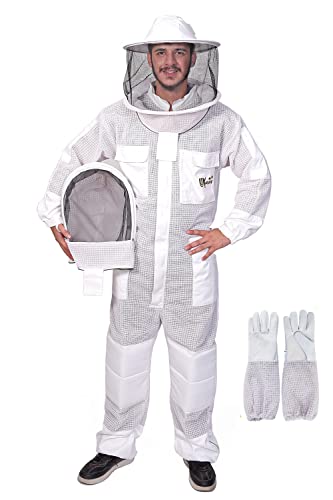
USKEEPERS 3-Layer Ultra Ventilated Suit
USKEEPERS · 3-layer ventilated mesh construction · fencing hood · full-body suit · listed sting-proof standoff design
Our verdict: The USKEEPERS 3-Layer is the suit that makes July inspections routine instead of heroic. The ventilated sandwich construction holds the fabric off your skin, which is the entire physics of sting protection, and moves enough air that you finish the inspection you planned. At $129.99 it does what suits at twice the price do, which is exactly why it is our pick.
The right suit is the one you will still be wearing in August. The USKEEPERS 3-Layer Ultra Ventilated Suit earns the top spot on the boring fundamentals: a listed three-layer mesh body that sandwiches a thick spacer layer between two mesh faces, so the surface a bee lands on sits well off your skin even when the suit presses against you. That standoff is what actually stops stings, and the open mesh is what stops the suit from becoming a sauna. On a humid afternoon the difference between this and a canvas suit is not comfort, it is whether the inspection happens at all.
The details hold up. The fencing-style hood (listed) zips on with an overlap at the collar, flips back between hives, and detaches for washing. Elastic at the wrists and ankles seals the usual entry points, and the pockets are where hive-tool hands expect them. Fit runs true to the size chart, which means, as with every suit in this guide, you should order a size above your street clothes so the mesh never pulls taut; the loft is the protection. Pair it with goatskin gloves from our jackets and gloves guide and a reliable smoker and you are equipped for years, not seasons.
Could you spend more? Easily, and for most backyard and sideliner keepers we cannot tell you why you would. The boutique ventilated suits add embroidery and a logo; the physics are the same three layers. At $129.99 the USKEEPERS 3-Layer is the suit we hand people who ask us what to buy once.
Who should buy it
Buy the USKEEPERS 3-Layer if you inspect regularly from spring through fall anywhere with a real summer, which is most of the US. It is the right first suit for a nervous beginner, because full ventilated coverage buys confidence, and the right upgrade for anyone currently sweating through canvas. If you run more than a couple of hives, this is the suit that keeps your inspection schedule honest.
What we don't like
Ventilated mesh breathes both ways, so early-spring and windy-day inspections run cold, and the lofted fabric is bulkier to store and slower to dry after a wash than polycotton. Mesh also snags on hive-body splinters and blackberry canes more readily than tight-woven fabric. And the protection depends on the loft: kneel on the suit or cinch it tight and you have flattened the layer doing the work.
- Construction
- 3-layer ventilated mesh (listed)
- Coverage
- Full body, ankle to hood
- Veil
- Fencing-style hood, detachable (listed)
- Closures
- Front zipper, elastic wrists and ankles (listed)
- Best climate
- Warm and hot summers
- Care
- Machine wash, veil removed
- Price
- $129.99
Pros
- Three-layer standoff construction, the real mechanism of sting protection
- Airflow that makes long summer inspections routine
- Full-body coverage with sealed wrists and ankles
- Fencing hood folds back between hives and detaches for washing
- Undercuts boutique ventilated suits doing the same job
Cons
- Runs cold in early spring and wind
- Mesh snags easier than woven polycotton
- Bulkier to store than a single-layer suit

BeeProGear 3-Layer Ventilated Mesh Suit
BeeProGear · 3-layer ventilated mesh construction · fencing hood · full-body suit (listed)
Our verdict: The BeeProGear 3-Layer is the credible second bid in the ventilated tier: the same mesh-spacer-mesh construction, the same full coverage, listed at $124.99. It exists in this guide because competition keeps the category honest, and because when our pick is out of stock in your size, this is the suit we would order without hesitation.
Ventilated three-layer is a construction, not a brand, and BeeProGear builds it well. The BeeProGear 3-Layer Ventilated Mesh Suit uses the same sandwich the category standardized on: two mesh faces over a listed spacer layer that keeps the landing surface off your skin. Airflow, standoff, full coverage, fencing hood; every load-bearing feature from the top pick appears here, at $124.99.
Where we hedge: the listed spec is the same, but small execution details, zipper feel, hood shape, elastic tension, are where near-identical suits separate over two or three seasons, and the USKEEPERS has the longer track record on our desk. What we can say is that the BeeProGear's construction is the correct one, its coverage is complete, and at $124.99 it keeps the whole ventilated tier priced like commodity gear instead of specialty gear, which benefits every beekeeper reading this. If your first inspections are still ahead of you, our first-year beekeeping calendar maps out when this suit will earn its keep.
Who should buy it
Buy the BeeProGear if its size chart fits your body better than the USKEEPERS chart, if it is in stock when the top pick is not, or if five dollars genuinely matters to the budget. You are getting the same construction class and the same coverage; nothing about choosing it is a compromise on protection.
What we don't like
It wins no single category outright: not the cheapest ventilated suit here, not the lightest listed, and without the top pick's track record on details like zipper longevity. The same ventilated caveats apply: cold in wind, snag-prone mesh, protection that depends on loft.
- Construction
- 3-layer ventilated mesh (listed)
- Coverage
- Full body, ankle to hood
- Veil
- Fencing-style hood (listed)
- Closures
- Front zipper, elastic cuffs (listed)
- Best climate
- Warm and hot summers
- Price
- $124.99
Pros
- Correct three-layer ventilated construction
- Full-body coverage with fencing hood
- Slightly undercuts our top pick at $124.99
- A real alternative when sizes sell out
Cons
- No category it wins outright
- Shorter track record on long-term details
- Standard ventilated trade-offs: wind chill and snags

Brutul Bee 3-Layer Ultralight Ventilated Suit
Brutul Fight · 3-layer ventilated construction, ultralight build (listed) · fencing hood · full-body suit
Our verdict: The Brutul Bee suit takes the ventilated formula and shaves it down: same listed three-layer construction, trimmed to the lighter end of the class. For beekeepers who find standard ventilated suits heavy and hot at the shoulders, it is the nimble option; the trade is that lighter lofted fabric earns closer inspection each season.
Ultralight is a real preference, not a gimmick. A standard ventilated suit is noticeably heavier than street clothes, and by the fourth hive of the day you feel it across the shoulders. The Brutul Bee 3-Layer Ultralight Suit is the ventilated pick for keepers who feel that weight: the same listed mesh-spacer-mesh construction as the suits above it, built lighter, at $126.99. On and off the body it handles more like a windbreaker than a coverall, and in peak heat that agility is genuinely pleasant.
Everything else is familiar: full ankle-to-hood coverage, a listed fencing hood that folds back between colonies, elastic seals at the openings. Sizing up matters even more here than usual, because a taut ultralight suit gives away its margin fastest. For the keeper with two calm colonies, a hot roofline apiary, and a habit of quick, frequent checks, this is a lovely suit to work in, and quick, frequent checks are exactly what our kit-buying mistakes guide keeps telling beginners to plan for.
Who should buy it
Buy the Brutul if suit fatigue is real for you: long sessions, many hives, hot climates, or simply a strong preference for light gear. It suits experienced keepers with gentle colonies who will notice and retire worn fabric. It is not our first recommendation for brand-new keepers, who are better served by the standard-weight top pick.
What we don't like
Lighter construction means a smaller protective margin and a shorter expected service life at the wear points. At $126.99 it costs within a few dollars of the standard-weight leaders, so you are paying the same money for less material, which only makes sense if the weight bothers you. Standard ventilated caveats, wind chill and snagging, apply in full.
- Construction
- 3-layer ventilated mesh, ultralight (listed)
- Coverage
- Full body, ankle to hood
- Veil
- Fencing-style hood (listed)
- Weight
- Light end of the ventilated class (listed)
- Best climate
- Hot summers, long sessions
- Price
- $126.99
Pros
- Lightest-feeling ventilated option in the guide
- Same three-layer construction class as the leaders
- Excellent for long, multi-hive sessions in heat
- Full coverage with fold-back hood
Cons
- Thinner margin: inspect the loft and wear points each season
- Same money as heavier, more durable rivals
- Not our pick for defensive colonies or loaner duty
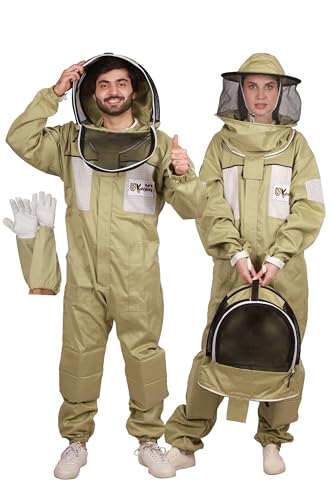
USKEEPERS Ultra-Ventilated Polycotton Suit
USKEEPERS · Ventilated polycotton blend (listed) · fencing hood · full-body suit
Our verdict: The USKEEPERS Polycotton is what we recommend when the mesh tier is the wrong tool: northern springs, coastal wind, bramble-choked bee yards. Woven polycotton blocks wind and shrugs off snags that would pull a mesh suit, listed ventilation panels claw back some airflow, and at $89.99 it saves real money over the three-layer suits.
Mesh is not the answer everywhere. If your inspections start on 50-degree April mornings, if your apiary sits in a wind funnel, or if reaching your hives means wading brambles, woven fabric earns its keep. The USKEEPERS Polycotton Suit is a full-coverage suit in a poly-cotton blend: lighter and faster-drying than old-school pure cotton canvas, tight-woven enough to block wind and slide past snags, with listed ventilation panels where the heat builds. At $89.99 it is also the cheapest suit in this guide we consider a long-term buy rather than a starter.
Construction details track the brand's mesh flagship: full ankle-to-hood coverage, listed fencing hood, front zipper with elastic-sealed cuffs. The blend washes and dries fast, which matters because washing out alarm pheromone after a stingy session is part of suit maintenance, not an option. For northern-tier and Pacific coastal keepers, and for anyone whose bee season is more sweatshirt than sweat, this is the suit we would buy, with the savings going toward the hive tools you will use at every single visit.
Who should buy it
Buy the polycotton if your climate is genuinely cool or windy for most of the bee season, if your bee yard is rough on fabric, or if you want a durable full suit at a two-figure price. It is also a sensible second suit for mesh owners: polycotton for April and October, mesh for July.
What we don't like
It runs hot in genuine summer heat, and in most of the US that means you will envy the mesh suits for at least two months a year. Protection depends on loose fit rather than engineered standoff, so an undersized polycotton suit is a worse mistake than an undersized mesh one. The ventilation panels help but do not make it a ventilated suit.
- Construction
- Polycotton blend with ventilation panels (listed)
- Coverage
- Full body, ankle to hood
- Veil
- Fencing-style hood (listed)
- Wind resistance
- Good, tight woven shell
- Best climate
- Cool, windy, or coastal
- Price
- $89.99
Pros
- Blocks wind that pours through mesh suits
- Tough, snag-resistant woven shell
- Forty dollars under the three-layer tier
- Washes and dries fast
- Packs smaller than lofted mesh
Cons
- Hot in real summer heat
- Needs generous sizing to protect: fit is the mechanism
- Ventilation panels are a mitigation, not a cure
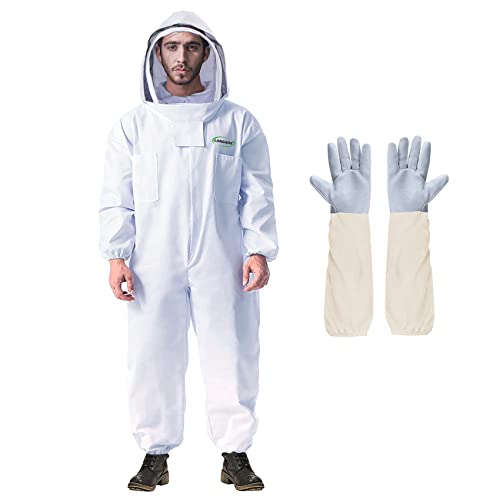
LONGADS Full Beekeeper Suit with Gloves
LONGADS · Single-layer full suit · gloves included (listed) · fencing hood
Our verdict: The LONGADS is the budget suit we would actually buy: full ankle-to-hood coverage, a listed hood and included gloves, at a price that makes owning a spare reasonable. The fabric is a single layer, so it protects by looseness and runs hot, but for the five-visit-a-year keeper or the loaner hook it is exactly enough suit.
There is a right way to spend $46 on a bee suit, and this is it. The LONGADS Full Beekeeper Suit covers the whole checklist at $45.99: full-body coverage, a listed fencing-style hood, elastic seals, and included gloves, which at this price is a genuinely useful bundle for someone assembling a first kit or a guest kit from zero. Single-layer fabric means it protects the old-fashioned way, by hanging loose off your body, so buy it big: two sizes up is not a joke at this tier, it is the spec.
Our honest use cases: the beekeeper doing a handful of inspections a year on one gentle colony, the spouse or kid who helps twice a season, the swarm-call bag in the truck, and the mentor who keeps loaner gear. In all four, the LONGADS earns its hook. What it should not be is the daily suit for a growing apiary; sweat and zipper cycles will find its limits inside two seasons, and by then you will know enough to want the USKEEPERS 3-Layer anyway. Budget the difference now or later; our beekeeping cost index shows where suit money sits in the first-year total.
Who should buy it
Buy the LONGADS as a first suit on a strict budget, a second suit for a helper, or dedicated loaner and swarm-call gear. It is the cheapest package here that covers body, face, and hands in one order, and for occasional use on calm colonies it is genuinely sufficient.
What we don't like
Single-layer fabric runs hot and protects only where it hangs loose, so fit discipline is everything. Included budget gloves tend to be stiff; most keepers replace them with goatskin within a season. Zippers and elastic at this price are consumables: check them each spring and retire the suit when they fail, because a gapping veil zipper is not a suit at all.
- Construction
- Single-layer polycotton (listed)
- Coverage
- Full body, ankle to hood
- Veil
- Fencing-style hood (listed)
- Includes
- Gloves (listed)
- Best use
- Occasional, backup, loaner
- Price
- $45.99
Pros
- Complete coverage plus gloves in one $45.99 order
- Ideal loaner, backup, and swarm-call suit
- Light and packable
- Real fencing hood, not a drape veil
Cons
- Hot: single layer, no engineered airflow
- Protects by loose fit only, so sizing up is mandatory
- Hardware is the weak point over multiple seasons
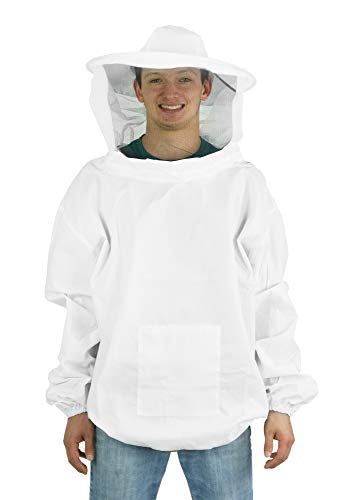
VIVO Professional White Beekeeping Suit
VIVO · Single-layer suit · round veil (listed) · XL sizing (listed)
Our verdict: The VIVO is the least suit we would put between a person and a colony, and we mean that as a description, not an insult. Real coverage, a listed round veil with excellent visibility, thirty dollars. Treat it as occasional-use gear, size it huge, and it does its job; ask it to be a daily suit and it will tell you why the mesh tier exists.
Every category needs an honest floor, and the VIVO is this one's. At $29.99 the VIVO Professional Beekeeping Suit delivers the two things no suit may skip: full-body fabric coverage and a sealed veil. Its veil is the listed round style, mesh hung from a full brim, and that is quietly the best feature on the suit: round veils give wider peripheral vision than most fencing hoods and hold the mesh well away from your face by geometry rather than hood structure. For the price of a hive tool and a smoker fuel bag, you are covered.
Who actually wins with it: the curious neighbor who wants to look inside your hive once, the homesteader with a single docile colony and a ten-minute monthly check, the classroom with an observation hive, anyone staging gear for a maybe-hobby before committing real money. That last case matters; plenty of would-be beekeepers stall on upfront cost, and a $29.99 suit plus our getting-started guide is a cheaper way to find out than a $500 shopping cart. Just promise us the upgrade to a USKEEPERS 3-Layer the season beekeeping becomes a habit.
Who should buy it
Buy the VIVO for trial-run beekeeping, one-off guest duty, or as the always-in-the-truck emergency suit. It is the cheapest legitimate full coverage on the market, and worn loose over clothes on a calm colony it does what a suit must do.
What we don't like
Thin single-layer fabric with no engineered standoff, so pressure points are reachable; heat builds fast; and the round veil, for all its visibility, is bulky to store and awkward to pack. Longevity is measured in uses, not years. This is the floor of the category and should be bought as exactly that.
- Construction
- Single-layer cotton blend (listed)
- Coverage
- Full body
- Veil
- Round veil (listed)
- Sizing
- XL (listed), worn oversized
- Best use
- Trial, guest, emergency
- Price
- $29.99
Pros
- Full legitimate coverage for $29.99
- Round veil: best-in-guide peripheral vision
- Perfect trial-run and guest suit
- Cheap enough to keep one in the truck
Cons
- Thin fabric protects only where slack
- Hot in anything above mild weather
- Short service life; hardware is basic
- Round veil stores awkwardly
More gear worth comparing
Beyond this guide: the highest-rated gear across every category and budget, with a live price check on each.


As an Amazon Associate we may earn from qualifying purchases, at no cost to you.
Quick shop: every pick
Skip the scroll: the whole lineup, with a live price check on each.
- USKEEPERS 3-Layer Ultra Ventilated SuitBest OverallUSKEEPERS · $129.99Check Price
- BeeProGear 3-Layer Ventilated Mesh SuitBest Alternative VentilatedBeeProGear · $124.99Check Price
- Brutul Bee 3-Layer Ultralight Ventilated SuitLightest Ventilated FeelBrutul Fight · $126.99Check Price
- USKEEPERS Ultra-Ventilated Polycotton SuitBest for Cool ClimatesUSKEEPERS · $89.99Check Price
- LONGADS Full Beekeeper Suit with GlovesBest Budget Full SuitLONGADS · $45.99Check Price
- VIVO Professional White Beekeeping SuitCheapest Full CoverageVIVO · $29.99Check Price
How we chose
We judge suits the way suits actually fail: at the seams, at the zippers, and at 95 degrees. Sting protection is table stakes; the ranking questions are whether the fabric stays off your skin when you crouch, whether the veil zipper seals without a gap at the chin, and whether you can work a full inspection in August without cutting it short.
Every construction claim below (layer counts, mesh types, included veils and gloves) is the manufacturer's listed description, and we say 'listed' where we could not put hands on the spec ourselves. Prices come from our verified offer table dated 2026-08-28, not from memory.
We weight beginner reality heavily. A first-year keeper is nervous, moves fast, and zips things wrong; a good suit forgives that with self-locking zippers, overlap flaps at the neck, and elastic that seals wrists and ankles without a checklist.
We price-check the category honestly: three-layer ventilated suits cluster between roughly $120 and $130, so a suit in that band has to win on details, not price. Below $50 we grade on a different curve and say so.
No brand has bought a placement, and a suit that starts failing in the field loses its spot in the guide. Would we put a colony in it applies to gear too: would we open a defensive hive in this suit, and would we hand it to a friend's teenager for their first inspection.
Key terms
- Standoff distance
- The gap a suit maintains between its outer surface and your skin. A honey bee stinger is only about an eighth of an inch long, so any construction that reliably holds fabric farther away than that stops the sting. Three-layer ventilated suits engineer the gap with a spacer layer; woven suits create it with loose fit, which is why sizing up matters.
- Three-layer ventilated mesh
- The construction behind most modern premium suits: two faces of fine mesh sandwiching a thick, springy middle layer. The sandwich holds its loft under light pressure, keeping stingers short of skin while letting air flow straight through the suit.
- Polycotton
- A polyester-cotton blend fabric used for woven bee suits. Lighter, faster-drying, and usually cheaper than traditional pure cotton canvas, it blocks wind and resists snags better than mesh but runs hotter in summer.
- Fencing veil
- A self-supporting hood-style veil, named for its resemblance to a fencing mask, that zips to the suit collar and flips back off the head between hives. Compact and convenient; its mesh sits closer to the face than a round veil's, so hood shape and condition matter.
- Round veil
- A veil that hangs mesh from a stiff circular brim, hat-style. Best peripheral vision and face clearance in the category, at the cost of bulk and awkward storage.
- Alarm pheromone
- The scent honey bees release when they sting or feel threatened, which recruits more defenders to the same spot. It lingers in fabric, which is why a suit that took stings should be washed before the next inspection.
Questions, answered
What is the best beekeeping suit for beginners?
Our pick is the USKEEPERS 3-Layer Ultra Ventilated Suit at $129.99. Beginners benefit most from ventilated full suits, because confidence is the beginner's scarcest resource and full mesh coverage plus airflow buys a lot of it. If the budget will not stretch, the LONGADS at $45.99 covers body, face, and hands honestly for occasional use.
Are ventilated bee suits really sting proof?
No suit is absolutely sting proof, and marketing that says so is rounding up. Three-layer ventilated suits are highly sting resistant because the spacer layer holds fabric beyond stinger reach, and in practice stings through an intact, properly fitted ventilated suit are rare. The failure points are wherever the loft is crushed flat, at gaps in zippers, and at mesh pressed directly on skin.
Should I size up in a bee suit?
Yes, at least one size over your street clothes, and two if you are between sizes or will layer underneath. Loose fabric is a protection mechanism, not a style choice: anywhere a suit pulls taut, a stinger can bridge it. Check the maker's height and weight chart and round up.
What is the difference between a round veil and a fencing veil?
A round veil hangs mesh from a full hat-style brim: best all-around visibility and the mesh sits far from your face, but it is bulky and does not fold flat. A fencing veil is a self-supporting hood that flips back between hives and packs easily, with mesh that sits closer to the face. Both protect well when intact; choose by how you carry and store gear.
Is a polycotton suit or a mesh suit better?
Climate decides. Ventilated mesh is better anywhere summer inspections top roughly 85 degrees, which is most of the US. Polycotton is better in cool, windy, or coastal conditions and in snag-heavy bee yards, and it costs less: the USKEEPERS Polycotton is $89.99 against $129.99 for the mesh flagship. Serious keepers in variable climates eventually own one of each.
How much should I spend on a bee suit?
The ventilated tier clusters around $120 to $130 and is the buy-once answer for regular inspection schedules. Woven polycotton lands near $90. Below $50 you get honest occasional-use coverage, like the LONGADS at $45.99 or the VIVO at $29.99, with heat and hardware as the trade. Spend by your inspection count: weekly visitors belong in the ventilated tier.
Can I get stung through a bee suit?
Through an intact suit, only where fabric touches skin: pressure points on tight suits, crushed loft on ventilated ones, mesh against your nose in a collapsed hood. Most real-world stings actually happen at gaps instead: an unzipped chin, a ride-up ankle, a torn veil. Fit big, seal the closures, and retire damaged veils immediately.
How do I wash a beekeeping suit?
Detach the veil first: mesh veils generally should not go through a machine. Machine-wash the suit gently and let it air dry. Wash promptly after any session where the suit took stings, because embedded alarm pheromone can make the next colony you visit defensive from the moment you walk up.
Filed under Buyer's Guide
Part of Protective Gear & Tools
Keep reading
The Best Beekeeping Jackets and Gloves
When a jacket beats a full suit, and the goatskin gloves that finish the kit.
The Best Bee Smokers
The other half of sting prevention: the smokers that stay lit through a full inspection.
The Best Beekeeping Tool Kits
The five tools you will actually use every week, and the kits that contain them.
The Best Beehive Starter Kits
The hives worth putting a colony in, ranked from benchmark to budget.
How to Start Beekeeping
The complete first-year path: gear, bees, timing, and the mistakes to skip.
The Beekeeping Cost Index
What the whole hobby really costs, line by line, so the suit budget makes sense.