Hive Health
22 guidesVarroa treatments, beetle traps, feeders, and winter prep: keeping the colony you started alive.

The Best Varroa Mite Treatments (2026)
Varroa mites are the number one reason colonies die, and hoping is not a treatment plan. We ranked the six legal treatments we would actually put in a hive, from the supers-on benchmark Formic Pro to the new RNAi option, organized by chemistry class so you can rotate like the pros, plus a sidebar on small hive beetles while you have the lid off.
Updated Aug 2026~16 min read

The Best Oxalic Acid Vaporizers (2026)
Oxalic acid vapor is the cleanest knockout punch in varroa control, when the colony is broodless and the operator is protected. We ranked the three vaporizers we would actually run, from a $40 12V wand to the $299 cordless benefitbee, and included the honest alternative for beekeepers who would rather skip the hardware entirely.
Updated Aug 2026~13 min read

The Best Bee Feeders (2026)
Feeding is how beekeepers buy time: for a package drawing comb, a nuc building up, or a light colony racing winter. We ranked the five feeders we would actually put on a hive, top feeders that pour gallons without opening the brood nest and entrance feeders that make spring stimulation cheap, and covered the syrup math and robbing rules that make any of them work.
Updated Aug 2026~13 min read

The Best Beehive Stands and Winter Wraps (2026)
Winter does not kill most colonies with cold; it kills them with condensation, starvation, and mites, in roughly that order of surprise to new beekeepers. We picked the stands that save your back and your bottom boards, the wraps that actually earn their place by climate zone, the screened bottom board that manages moisture year round, and the electric fencing that keeps bears from ending the whole conversation.
Updated Aug 2026~15 min read
Your First-Year Beekeeping Calendar, Month by Month
Beekeeping is a calendar sport: every month has one job that cannot be done in any other month, and the colonies that die in February were usually lost to a task skipped in August. This is the whole first year on one page, December ordering through your first spring-two inspection, on a US temperate baseline with honest adjust-by-region notes for the Gulf South, the northern tier, and the arid West.
Updated Aug 202622 min read

The Best Nuc Boxes and Swarm Traps (2026)
The humble five-frame box is the highest-leverage equipment in a small apiary: it houses your splits, banks your queens, catches free bees every spring, and costs less than a single package of the bees it can save or capture. We ranked nine picks across both jobs, from the $38.81 plastic workhorse the industry standardized on to a $175 assembled trap built for serious swarm season, plus the two lures that make any box smell like home.
Updated Aug 202617 min read

When to Treat for Varroa: The Timing That Decides Winter
Every varroa product works, and every varroa product fails, and the difference is almost never the chemistry: it is the calendar. Treat in August and the colony winters; treat the same hive with the same strips in October and it dies anyway, because the winter bees were already damaged as pupae. This is the timing page: thresholds by month, the temperature window on every mainstream product, the broodless oxalic windows most keepers waste, and a full-year treatment calendar you can tape to the shed wall.
Updated Aug 202623 min read
The Best Mite Monitoring Tools (2026)
Varroa mites kill more colonies than everything else beekeepers argue about combined, and the beekeepers who keep bees alive share one habit: they count. We ranked the wash testers that turn a half cup of bees into a number, explain the 2 to 3 mites per 100 bees threshold that number answers to, and cover the two treatments to reach for when counts cross it.
Updated Aug 202614 min read

The Best Winter Bee Feed (2026)
Once cold weather ends syrup season, a light colony lives or dies on solid feed placed directly over the cluster. We ranked the candy board and fondants we would actually trust a winter to, covered candy boards versus fondant versus dry sugar, and laid out the hive-weight math that tells you whether you need any of it.
Updated Aug 2026~14 min read

The Best Pollen Patties and Substitutes (2026)
Sugar keeps bees alive; protein makes more bees. We ranked the pollen patties and substitutes that drive late-winter buildup and carry colonies through pollen droughts, covered when protein feeding actually helps and when it backfires, and flagged the small hive beetle rule that decides how much patty ever goes on a hive.
Updated Aug 2026~14 min read

The Best Robbing Screens and Entrance Reducers (2026)
A colony defends its entrance or loses everything through it. We ranked the robbing screens, entrance reducers, and mouse guards that turn a hive's front door from a liability into a checkpoint, and covered when dearth, fall, and moving day each demand different hardware.
Updated Aug 2026~13 min read
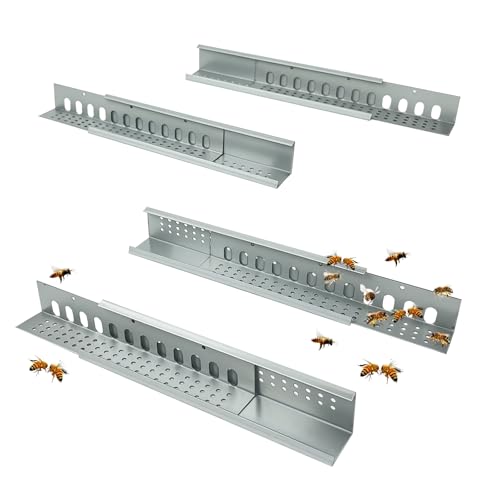
How to Winterize a Beehive: The Full Survival Protocol
Winter does not kill honey bee colonies. Mites, starvation, and condensation kill colonies, and all three are decided in fall while the weather is still pleasant. This is the complete winterizing protocol in order of importance: the August mite knockdown, the weight targets, the entrance hardware, the moisture plan that outranks any wrap, and the restraint that carries a hive from November to the first dandelions.
Updated Aug 202621 min read

The Best Bee Feed Supplements (2026)
A splash of lemongrass and spearmint oil in sugar syrup is one of the oldest tricks in American beekeeping: bees take the syrup faster, the bucket keeps longer before it goes cloudy, and a newly installed package acts like it has decided to stay. We ranked five feeding stimulants and protein boosters, and we are equally clear about the thing they are not, which is medicine.
Updated Aug 202614 min read

The Best Wax Moth Treatments (2026)
This is a small category with few good options, and we are going to say so. The best wax moth treatment in beekeeping is a chest freezer, which costs nothing per use and kills every life stage in 48 hours. Everything you can buy exists for the moment your comb inventory outgrows your freezer, and we ranked those honestly, including one product in this search that is not a wax moth treatment at all.
Updated Aug 202615 min read
American Foulbrood: Signs, Reporting, and What Happens Next
AFB is the one honey bee disease that ends with a fire and a phone call. It is caused by a spore-forming bacterium that survives in old comb and hive parts for decades, it kills brood faster than a colony can replace it, and in much of the United States it is reportable to a state apiary inspector. This is the field guide: the signs in the order you meet them, the rope test done properly, what your state will likely require, and the prevention rule that stops nearly every case before it starts.
Updated Aug 202619 min read

European Foulbrood and Chalkbrood: The Recoverable Brood Diseases
Two of the three brood diseases a US beekeeper is likely to meet are not death sentences. European foulbrood twists larvae into discolored ruin before their cells are ever capped, and usually recedes when the colony gets a queen, a flow, or both. Chalkbrood turns brood into white mummies you find on the landing board, and answers to ventilation and better genetics. This is the identification and management guide, plus the field-sign table that separates both from the disease that does end in fire.
Updated Aug 202618 min read
Nosema and Dysentery: The Difference That Matters
Brown streaks on the front of a hive in February are the most misdiagnosed sign in beekeeping. Nosema is a microsporidian parasite living inside the gut cells of adult bees, invisible without a microscope. Dysentery is a plumbing problem caused by too much water and indigestible solids in a bee that cannot get out to void. They overlap, they are not the same thing, and the management that fixes both is about stores, moisture, and queens rather than about anything you can pour in a feeder.
Updated Aug 202618 min read
Bee Viruses and Deformed Wing: Why Mites Are the Real Fight
There is no antiviral you can put in a beehive. Deformed wing virus, the paralysis viruses, sacbrood, and black queen cell virus are present in most colonies at low levels and stay quiet until something amplifies them, and in the United States that something is almost always varroa. This is the field guide to what viruses look like in your bees, and the argument, backed by extension and the Honey Bee Health Coalition, that your virus management program is your mite management program.
Updated Aug 202619 min read
Wax Moths in Beehives: The Symptom, Not the Cause
Wax moths almost never kill a healthy colony. They arrive after something else already did the killing, and then they eat the evidence. This is the full field guide: greater and lesser wax moth biology, how to read webbing, frass, and the cocoon divots chewed into your woodenware, and the storage protocol that keeps a shed full of drawn comb from turning into a bag of gray silk over one August.
Updated Aug 202619 min read

Small Hive Beetle: The Complete Management Guide
Aethina tumida is a minor nuisance in its native range and a colony killer in the American Southeast, and the difference is almost entirely about colony strength, comb spacing, and soil. This is the full guide: the life cycle, why the pupation stage happens outside the hive and what that means for your hive stand, how to read a slimed frame, the traps that work, and the 48-hour clock that starts the moment supers come off.
Updated Aug 202620 min read
Apiary Predators: Mice, Skunks, Bears, and the Rest
Everything bigger than a beetle wants something from your hives, and each one leaves a different signature at the entrance. This is the full field guide to reading that evidence and answering it: mouse guards before the first frost, raised stands and tack strips for the night scratchers, electric fencing for bears because nothing else works, and the fall yellowjacket pressure that finishes weak colonies.
Updated Aug 202620 min read
How to Diagnose a Deadout: The Spring Autopsy
You lift the lid in March and the hive is silent. The frames in front of you are a written record of what happened, and the beekeeper who reads them correctly does not repeat the same loss next winter. This is the decision tree: what the cluster position, the stores, the cappings, the cell walls, and the smell each mean, what to salvage, and the one finding that means you stop, do not reuse anything, and call the state.
Updated Aug 202621 min read
Every category, one page
Not sure where to start? See our top picks.
Every category's winner, with the reasoning shown and a live price check on each.
About this collection
Varroa mites kill more colonies than everything else combined; winter starvation is second. This hub covers the defensive line: mite treatments and vaporizers, small hive beetle traps, syrup feeders for the hungry seasons, and stands and wraps that keep a hive dry and warm.
Treatment guidance here follows published university extension recommendations. We link the research and label instructions on every treatment we cover.
Keep exploring
Hive Kits
Every beehive kit worth buying: starter kits, Langstroth, insulated, auto-flow, and observation hives, ranked.
Beekeeping 101
Start here: what a hive costs, what to buy first, and the first-year calendar that keeps a colony alive.
Honey Harvest
Extractors, uncapping tools, buckets, and refractometers: the gear that turns frames into jars.
Protective Gear & Tools
Suits, jackets, gloves, smokers, and hive tools: the working kit between you and ten thousand bees.
How-To Guides
Step by step through every job in the bee yard: installs, inspections, harvest, winter, swarms, and queens.
Honey & Bee Products
Raw honey, manuka, comb, pollen, propolis, and beeswax: what to buy, what the grades mean, and what to make.
Bees & Pollinators
Mason bees, native pollinators, carpenter bee control, and how to help bees without keeping a hive.
Our top-rated beekeeping gear
Whatever you decide, this is the gear we recommend: verified, researched, and ranked. Live price check on each.

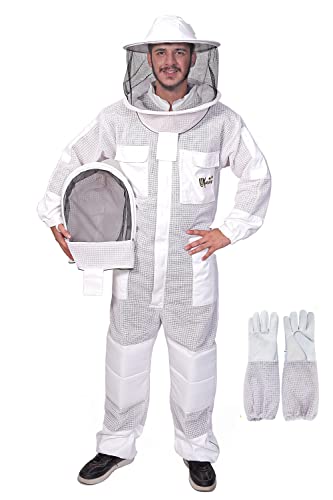


As an Amazon Associate we may earn from qualifying purchases, at no cost to you.