Our Pick: Wiley
Check PriceAmerican Foulbrood: Signs, Reporting, and What Happens Next
Answer first, because this disease rewards speed: if a brood frame smells like a hot glue pot, shows sunken and perforated cappings, and a toothpick drawn out of a dead larva pulls a brown thread an inch long, stop working the hive, close it up, and call your state apiary inspector before you touch another colony. American foulbrood is reportable to the state in much of the country, the standard resolution in most US states is destruction of the infected combs by fire, and a beekeeper's own equipment habits decide whether it ever arrives. The cheapest useful thing you can own for brood disease work is a reference with good photographs, and the standard beginner copy is Beekeeping For Dummies ($15.99), because AFB is diagnosed by pattern recognition and pattern recognition needs pictures.
By The BeehiveKits Hive Desk2026-08-2919 min read Fact-checked against verified Amazon listingsHow we research
American foulbrood, AFB, is a bacterial disease of honey bee larvae caused by Paenibacillus larvae. Larvae are infected by eating spores in their food, the bacterium multiplies inside them, and the larva dies after its cell is capped, breaking down into a brown, gluey mass that dries to a hard scale. That mass is not the end of the story, which is the whole problem: a single dead larva can hold an enormous number of spores, and those spores are extraordinarily durable, remaining viable in comb, honey, and hive parts for decades. Reference summaries including the American foulbrood entry and university extension bee health programs describe the same arc, and it is why AFB is treated as an equipment problem, not just a colony problem.
The two facts a new beekeeper needs to carry: AFB is rare enough that most keepers will never see it, and serious enough that everybody has to know it anyway. Almost every alarming brood frame turns out to be something else, chilled brood, a failing queen, European foulbrood, or the spotty brood of a varroa collapse, which is why the EFB and chalkbrood page and the virus page exist alongside this one. But when it is AFB, the correct actions are unusual: no rescue, no medicating it away, no moving frames to a stronger colony, and no selling the used boxes.
One note on scope and one disclosure. We do not publish antibiotic dosing, product names, or protocols for AFB, because in the United States the antibiotics historically used against it are medically important drugs whose use in food animals requires veterinary involvement, and because a beekeeper who is medicating without an inspector's involvement is usually making the state's problem worse. Everything regulatory on this page is written as a pointer to your own state apiary program, which is the authority. Standard disclosure: no brand paid for placement here, some links go to Amazon where a purchase may earn us a small commission at no extra cost to you, and prices are verified at publication.
What to know
- AFB is caused by Paenibacillus larvae, a spore-forming bacterium. Spores survive in comb, honey, and woodenware for decades, which is why the disease is managed as an equipment problem.
- Field signs: spotty brood, sunken and greasy cappings with ragged perforations, a ropy brown thread on the toothpick test, hard dark scale glued to the lower cell wall, and a distinctive glue-pot smell.
- AFB is reportable to the state apiary inspector in many US states. Calling early is both the legal path and the cheapest one, and inspectors are diagnosticians, not fine collectors.
- Burning infected combs and frames is the standard resolution in most US states, sometimes with irradiation or scorching allowed for boxes. Your state program sets the rule.
- Antibiotics suppress symptoms without killing spores, and under current US rules their use in bees requires a veterinarian. They are not a home fix.
- Prevention is almost entirely about equipment: never buy or accept used comb of unknown history, never feed honey of unknown origin, and never move frames between colonies you have not inspected.
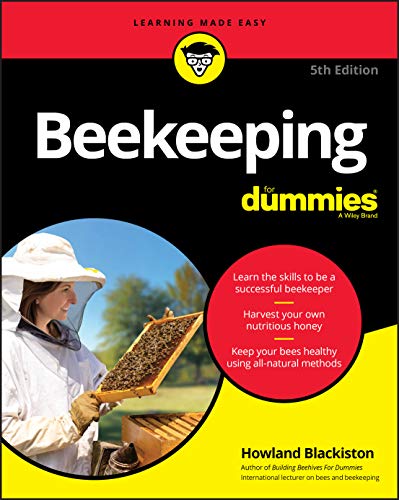
Beekeeping For Dummies
Wiley · Wiley reference title · beginner-oriented · covers colony management and common brood and adult diseases
Our verdict: Brood disease diagnosis is pattern recognition, and pattern recognition needs a reference you can hold next to the frame. This is the beginner standard for a reason: plain descriptions, photographs, and no pretense that a first-year keeper already knows what healthy capped brood looks like. Cheap enough that there is no argument for not owning one.
The single hardest part of brood disease work for a new beekeeper is that they have not yet built a mental image of normal. Solid tan cappings, pearly white pupae, a dense slab of brood: until you have seen a few hundred healthy frames, everything looks alarming, and the internet will happily tell you every ugly frame is foulbrood. Beekeeping For Dummies ($15.99) is the cheapest correction available: a general beekeeping reference with disease coverage written for people who are looking at their first brood frame.
It is not a diagnostic manual and we would not treat it as one. For a confirmed call, an inspector's eyes and a laboratory beat any book. But for the far more common job of deciding whether the frame in your hand is worth a phone call, having photographs and plain descriptions on the truck seat is worth more than another gadget. Our full book shortlist, including the deeper references worth graduating to, is in the beekeeping books guide.
Who should buy it
Anyone in their first three seasons, and anyone who has never knowingly looked at a diseased brood frame, which is most backyard beekeepers.
What we don't like
It is a general reference, not a disease atlas, so severe or ambiguous cases still need an inspector, and its brood disease coverage is a starting point rather than the last word.
- Format
- Paperback reference (listed)
- Audience
- Beginner to second season
- Disease coverage
- Common brood and adult diseases, general
- Best use
- Comparing a suspect frame against described normals
- Price
- $15.99
Pros
- Plain-language descriptions of healthy versus abnormal brood
- Covers the whole first-season workflow, not just disease
- Cheap enough to keep in the truck and get wax on
- Good bridge to deeper references
Cons
- Not a substitute for an inspector on a suspect frame
- General reference depth, not a disease atlas

Mann Lake Varroa EasyCheck
Mann Lake · Two-chamber wash cup · marked fill line for a roughly 300-bee sample · alcohol wash or sugar roll
Our verdict: Most spotty, ugly brood frames are varroa damage, not foulbrood, and the only way to know is a mite count. This is the standard wash cup: shake in a half cup of nurse bees, agitate, count, divide by three. Do this before you talk yourself into a disease you almost certainly do not have.
When a beekeeper posts a photograph of scattered brood and asks whether it is foulbrood, the most useful reply is a question: what is your mite count? Parasitic mite syndrome produces exactly the pattern that makes people think of AFB, and it is many times more common. The Mann Lake Varroa EasyCheck ($30.50) is the field-standard tool for settling it: about 300 nurse bees from a brood frame, alcohol to the marked line, thirty seconds of agitation, and a decision-grade number.
It is not an AFB test and nothing in this article implies otherwise. It is the differential diagnosis step you should run first, because if the wash comes back at five or eight mites per 100 bees, you have found your brood problem, and the response is a treatment on the timeline in the varroa timing guide rather than a phone call to the state.
Who should buy it
Every beekeeper, monthly from spring through fall; in a disease context, anyone staring at a brood pattern they cannot explain.
What we don't like
The alcohol wash kills the sample, and it answers only the varroa question: a clean mite count does not rule out foulbrood, it just moves it up the list.
- Method
- Alcohol wash or sugar roll
- Sample
- About 300 bees (marked line)
- Chambers
- Two-part wash cup with basket
- Role here
- Differential diagnosis before assuming brood disease
- Price
- $30.50
Pros
- Rules out the most common cause of ugly brood in minutes
- Marked fill line keeps counts comparable month to month
- Doubles as a sugar-roll cup
Cons
- Sacrifices the sampled bees
- Answers the mite question only

BeeCastle 9-Piece Beekeeping Tool Kit with Tote
BeeCastle · 9-piece kit with organizer tote · hive tool, frame grip, brush, and accessories · listed
Our verdict: Disease travels on hive tools and gloves more than on bees. A second complete tool set is the least glamorous biosecurity purchase in beekeeping and one of the most effective: one set per yard, scorched between suspect colonies, never carried from a sick hive to a healthy one.
Every serious disease protocol in beekeeping ends at the same unremarkable place: clean your tools. Spores ride on a hive tool exactly as well as they ride on a bee, and a keeper who works a suspect colony and then opens three healthy ones with the same steel has done more damage than the disease would have managed alone. The BeeCastle 9-piece beekeeping tool kit ($25.64) is priced so that a second, or a third, is an easy call.
Our use for it here is specific: keep a set per yard, or a dedicated set for suspect colonies, and scorch or scrub the hive tool between hives when anything looks wrong. The tote keeps the set from mixing with the clean gear. Where these tools rank against the rest of the field on their own merits is in the tool kit guide.
Who should buy it
Keepers running more than one yard, anyone helping other beekeepers inspect, and anyone who has ever had a disease scare and realized their only hive tool had been in all six hives.
What we don't like
Budget kits are budget kits: the frame grip and brush are serviceable rather than heirloom, and a torch for scorching is a separate purchase.
- Pieces
- 9 (listed)
- Includes
- Hive tool, frame grip, brush, accessories (listed)
- Storage
- Organizer tote
- Role here
- Second set for yard-to-yard tool hygiene
- Price
- $25.64
Pros
- Cheap enough to buy a set per yard
- Tote keeps suspect gear separate from clean gear
- Hive tool is scorchable steel
- Covers the accessories beginners forget
Cons
- Budget build quality on the smaller accessories
- No torch or sanitizing gear included
What American foulbrood actually is
AFB is a disease of larvae, not adults. Adult bees are unharmed carriers: they clean out infected cells and spread spores through the hive on their mouthparts, in the food they share, and on the comb they walk over. A young larva swallows spores in its brood food, the spores germinate in its gut, the bacteria break through the gut wall, and the larva dies, usually after its cell is capped, at the late larval or prepupal stage. What is left liquefies into the brown gluey mass the rope test finds, then dries to a scale. Only the youngest larvae are readily infected, and it takes remarkably few spores to do it, which is the biological reason a low-level infection can smolder in a strong colony for a season before it becomes obvious.
The number that governs everything else is the spore count. A single dead larva can contain spores in the billions, and a frame of scale is a spore magazine. Those spores are not fragile: they tolerate desiccation, disinfectants, and ordinary heat, and remain infective in stored comb and honey for decades. That single property is why AFB gets a different rulebook from every other bee disease on this site. Chalkbrood and European foulbrood, covered in the EFB and chalkbrood guide, are managed with ventilation, requeening, and time. AFB is managed with fire, because there is no realistic way to disinfect drawn comb that has held it.
None of this makes AFB common. Most backyard keepers go a career without meeting it, and the state inspection systems that exist across the US are a large part of why. But it does make AFB the one disease where a beekeeper who guesses, hopes, or quietly moves equipment can seed an entire neighborhood. The correct posture is boring and effective: learn the signs, look at every brood frame you handle, and know the phone number of your state apiary program before you need it.
The field signs, in the order you meet them
The pattern. Healthy capped brood is a dense, uniform slab. AFB brood is spotty, with capped cells scattered among opened and empty ones, because nurse bees uncap and try to remove infected larvae. Spotty brood by itself means very little: a failing queen produces it, chilled brood produces it, and so does the parasitic mite syndrome described in the virus guide. It is the flag that makes you look closer, not the diagnosis.
The cappings. This is where AFB starts to declare itself. Instead of dry, slightly convex, papery tan cappings, you see cappings that are sunken and concave, darker than their neighbors, moist or greasy in appearance, and pierced with small irregular holes chewed by workers. The combination of sunken, dark, and perforated on the same cell is the classic look.
The rope. Open a suspect cell and the remains are a brown to chocolate semi-fluid with no recognizable bee in it. Stir with a toothpick and draw out slowly, and AFB material follows in an elastic brown thread, commonly an inch or more, which then snaps and springs back. Nothing else in a bee hive ropes quite like that. European foulbrood larvae can be slightly pasty and watery but rarely rope more than a short distance, and sacbrood larvae lift out whole as a fluid-filled sac.
The smell. A strongly infected colony has an odor that veteran keepers recognize before they get the lid fully off: sour, penetrating, and most often described as a hot glue pot. Mild cases may not smell at all, so a clean-smelling hive proves nothing, but a glue-pot smell on a frame that also ropes is a diagnosis in all but name.
The scale. Late in the sequence, the dried remains form a hard, dark, brittle scale lying flat along the lower wall of the cell, sometimes with a fine upturned thread that is the dead pupa's tongue. AFB scale is stuck fast. You cannot flick it out with a toothpick without tearing the cell, and that adhesion is one of the most reliable field distinctions in brood disease work.
The rope test, done properly
The rope test is the single most useful two-minute skill in brood disease diagnosis, and most beekeepers do it wrong by testing the wrong cell. You want a cell that was capped and has sunk, ideally one that has been partially chewed open by the bees, with brown material inside. A larva that is merely dead and white, or dried and crusty, will not rope no matter how healthy or sick the colony is, and testing three of those in a row produces false reassurance.
Use anything disposable: a toothpick, matchstick, dry grass stem, or the corner of a hive tool you are prepared to scorch afterward. Push it into the remains, stir once to load the tip, then withdraw slowly and steadily. A positive result stretches a brown, mucus-like thread that hangs together as you lift, usually 20 to 30 mm and sometimes much more. A negative test breaks immediately or produces a granular, watery, or crumbly mess. Do the test on at least three suspect cells before you draw a conclusion, and burn or bury the toothpick rather than dropping it in the grass by the hive.
A field rope is strong evidence, not a laboratory result. State apiary inspectors confirm suspect colonies in person, and diagnostic laboratory services for bee disease samples have long been available through state programs and federal bee research laboratories; check current availability and submission instructions with your state program and with USDA Agricultural Research Service. Confirmation matters, because the disposition it triggers, burning good equipment, is expensive enough to be worth getting right.
AFB versus the diseases it gets confused with
Four brood conditions account for nearly every "is this foulbrood?" photograph posted to a club forum. The table separates them on the signs you can actually see in the yard. The full workups for the others live in the EFB and chalkbrood guide and the virus guide.
| Sign | American foulbrood | European foulbrood | Chalkbrood | Sacbrood |
|---|---|---|---|---|
| When the larva dies | After capping, as prepupa | Usually before capping, coiled | After capping | After capping, fails to pupate |
| Color | Coffee to chocolate brown | Off-white to yellow, then brown | Chalky white, later gray or black | Pale yellow to dark brown |
| Texture | Gluey, ropes 20 mm or more | Watery to pasty, little or no rope | Hard, dry mummy | Fluid-filled sac, lifts out intact |
| Odor | Glue pot, penetrating | Sour, sometimes none | None to slightly musty | None to slightly sour |
| Scale | Hard, glued down, cannot be removed | Rubbery, lifts out easily | Loose mummy, rattles in the frame | Brittle canoe shape, lifts out easily |
| Usual response | Report; burn infected combs per state rule | Requeen, feed, strengthen; often self-resolves | Ventilate, requeen, rotate comb | Requeen; usually self-limiting |
Two of those rows do most of the work. If the remains rope a long brown thread, think AFB. If the scale lifts out of the cell in one piece, it is not AFB. Everything else is supporting evidence.
The spore problem: why this disease outlives the colony
Understand the spores and every strange rule about AFB becomes obvious. Vegetative bacteria are easy to kill. Spores are a survival state, and Paenibacillus larvae spores tolerate drying, cold, most disinfectants, and considerable heat, staying infective in comb, honey, and hive parts for decades. Extension bee health programs, including eXtension bee health and the University of Minnesota bee health program, use that same decades framing, and it is the reason the disposition is destruction rather than cleaning.
Three practical consequences follow. First, drawn comb from an infected colony is permanently contaminated, and drawn comb is the most valuable thing a beekeeper owns, which is exactly what makes AFB so expensive. Second, honey can carry spores, which is why feeding honey of unknown origin back to bees is a hard no across every extension program that addresses it, and why honey from a suspect colony must never go on another hive. Third, a hive body that once held AFB is suspect until it is treated, which is why states that allow salvage of woodenware specify how: scorching the interior surfaces with a torch until the wood chars lightly, or gamma irradiation where a commercial facility is available.
This is also the reason for the most repeated warning in this article: the used equipment on the local classifieds. A stack of deep boxes with drawn comb for forty dollars is either the best deal in beekeeping or the most expensive purchase you will ever make, and you cannot tell by looking, because scale in old comb does not announce itself. We wrote about that trade in the beehive kit buying mistakes guide, and AFB is the reason the rule there is absolute rather than cautious.
Reporting: who to call, and why calling helps you
In many US states, AFB is a reportable disease. The apiary program in your state department of agriculture maintains an inspection service, and the statutory framework in most states requires beekeepers to report suspected AFB and gives the inspector authority to inspect, quarantine, and order destruction of infected material. Specifics differ state to state, including who must register hives and what the response timeline looks like, so treat this page as an instruction to find your own state's program rather than as a statement of your state's law. Our beekeeping laws by state overview is the starting point for locating yours, and your county extension office or state beekeeping association will have the inspector's number on hand.
New beekeepers hesitate to call, imagining fines and confiscation. That instinct gets the disease spread. In practice, state inspectors are the most useful free resource in beekeeping: they see more disease in a month than most keepers see in a lifetime, they confirm or rule out AFB on the spot, and in the far more common case where the frame is actually chilled brood or EFB, they will tell you so and save you from burning perfectly good equipment. Where destruction is required, the inspector supervises it and documents it, which matters if you later sell nucs or move hives across a state line.
The other reason to call is that AFB is a neighborhood problem. Robbing bees strip a dying colony and carry contaminated honey home, exactly as they carry mites home in the fall reinvasion described in the varroa timing guide. An unreported AFB colony that collapses and gets robbed out can seed every apiary within flying range. Reporting is not an admission of bad beekeeping. It is the part of the job that protects everyone else's bees.
Why burning is the standard response
The standard resolution for a confirmed AFB colony in most US states is destruction by fire: the bees are killed, usually in the evening when the colony is home, and the combs and frames are burned in a pit, with the ashes buried. It is a grim procedure and it is not performative severity. It is the only method that reliably ends the spore load in drawn comb, and it is the same conclusion apiary programs around the world have reached independently.
The parts of the hive that are not wax get more options, subject to what your state allows. Scorching the interior of boxes, bottom boards, and covers with a propane torch until the surface chars is the traditional salvage method for woodenware. Gamma irradiation at a commercial facility is used where available and is the standard commercial approach in some regions, because it sterilizes assembled equipment including comb. Plastic and metal parts may be salvageable by scorching or approved chemical treatment. What is not on the menu anywhere: washing, sunning, freezing, or "letting it air out," none of which touch spores.
The economics are worth stating honestly, because they explain a lot of bad beekeeper behavior. A two-deep colony with drawn comb represents a few hundred dollars of equipment and a season of bee labor, and the temptation to quietly medicate and keep going is real. That path produces a colony that looks healthy, keeps producing spores, and then becomes a mite bomb equivalent for foulbrood when it eventually fails. The cost of doing it right once is far lower than the cost of seeding your own yard, and the cost of seeding your neighbor's is not yours to spend.
Antibiotics: what they do, what they cannot do, and the veterinary rule
Antibiotics have a history in AFB management, and the important thing to understand is what they were ever doing. Antibacterial treatment suppresses the vegetative bacteria and clears the visible symptoms in a colony. It does not kill spores. The comb stays contaminated, the colony stays a reservoir, and when treatment stops the disease commonly returns. That is why extension guidance has long described antibiotics as symptom suppression rather than a cure, and why several apiary programs discourage or prohibit their use in AFB-positive colonies precisely because masking the disease makes surveillance impossible.
The regulatory picture is the second half. The antibiotics historically used in bee colonies are medically important antibiotics, and under current US rules their use in food-producing animals, honey bees included, requires veterinary oversight rather than over-the-counter purchase. In practice that means a veterinarian must be involved, through the mechanisms the FDA administers for veterinary feed directives and prescriptions. We deliberately publish no product names, no doses, and no timings for this, both because that information belongs on a label under a veterinarian's direction and because a beekeeper reaching for antibiotics before an inspector has seen the frame is usually about to make a reportable situation harder to resolve.
So the practical sequence for a suspect colony is unchanged by any of it: stop, isolate, report, confirm, follow the official disposition. If your state and your veterinarian have a role for antibacterial treatment in your situation, they will tell you. Nothing you buy on the internet is a shortcut around that conversation.
Prevention: the equipment rules that stop nearly every case
AFB prevention is unglamorous and close to complete, because the disease arrives by only a few routes.
Never buy or accept used drawn comb of unknown history. This is the rule that matters most. Estate-sale hives, marketplace stacks of "barely used" boxes with comb, and generous gifts from a keeper who quit are the classic entry point, and AFB scale in old comb is invisible to a buyer who does not know exactly what to look for. Used woodenware with no comb, scorched before use, is a defensible purchase. Used comb is not, at any price. We put this at the top of the buying mistakes guide for exactly this reason.
Never feed honey of unknown origin. Grocery store honey, a friend's honey, honey from a colony you did not inspect: all potential spore vehicles. Feed sugar syrup instead, mixed as described in the syrup feeding guide, and keep your own harvested honey for your own known-clean colonies.
Do not shuffle frames between colonies casually. Equalizing a weak hive with a frame of brood from a strong one is a normal management move and a normal disease-spreading move. Do it with colonies you have actually examined, and never from a colony with a brood pattern you cannot explain.
Inspect brood every time, and know what you are looking at. The habit of looking into cells rather than just counting frames is the whole game, and it is the core skill in the hive inspection guide. A copy of Beekeeping For Dummies ($15.99) next to the hive stand is a fair way to check your read against photographs before you panic or, worse, before you shrug.
Keep colonies strong and requeen unproductive stock. Hygienic behavior, the tendency of workers to detect and remove diseased brood, is heritable, and stock selected for it resists both foulbroods and chalkbrood better. Requeening a chronically weak colony from good stock is disease management, and the mechanics are in the requeening guide.
Most scary brood frames are not AFB: the differential in practice
Because the response to AFB is drastic, the discipline of ruling it out matters. Here is the honest order of probability for a spotty, ugly brood frame in a US backyard hive.
Varroa and its viruses come first. Parasitic mite syndrome produces spotty brood, discolored larvae dying at odd stages, and a dwindling adult population, and it is far more common than either foulbrood. If you have not done an alcohol wash on the colony, you are missing the most likely explanation: the Mann Lake Varroa EasyCheck ($30.50) settles that question in five minutes, and the timing rules are in the varroa timing guide.
Chilled brood is second. A cold snap after a beekeeper spread the brood nest, or a colony too small for the space it is covering, produces dead brood in patches, often at the edges of the nest. It looks alarming and resolves itself.
Queen failure is third. A drone-laying queen or a laying worker produces a scattered, domed, unmistakably wrong pattern with no disease at all, and the fix is a new queen.
European foulbrood and chalkbrood are fourth and fifth, both covered in their own guide, and both usually managed rather than destroyed.
AFB comes after all of those in frequency, and before all of them in consequence. That is the whole reason to learn the rope test: it is a fast, cheap way to move a scary frame out of the AFB column, and on the rare day it does not, you have found the thing early enough to contain it.
If you find it: the calm order of operations
1. Close the hive. Do not shake bees, do not pull more frames than you need, and do not start moving equipment around the yard.
2. Contain your tools and gloves. Scorch or wash the hive tool. Change or wash gloves. Do not open another colony with the same equipment until you have.
3. Reduce the entrance. A weak, dying colony gets robbed, and robbing is how AFB travels. Entrance reducers and robbing screens, covered in the robbing screen guide, buy you time until the inspector arrives.
4. Call the state apiary inspector and describe exactly what you saw: sunken perforated cappings, rope length, odor, scale adhesion. Follow their instructions on sampling or holding the colony.
5. Inspect the rest of the yard, carefully, in order. Work your other colonies with clean tools, strongest to weakest, looking at brood in every one. AFB in one hive is a strong reason to check every hive you own.
6. Carry out the disposition as directed, keep records of what was destroyed and when, and treat the woodenware question as the inspector rules on it.
7. Then do the boring part. Write down where every piece of equipment in that yard came from, and stop the practices that let unknown comb in. A confirmed AFB case is nearly always traceable to used equipment, fed honey, or a swapped frame, and the same route is still open until you close it.
The takeaway for a first-year beekeeper
You do not need to be afraid of AFB. You need to be literate in it. Learn the five signs, sunken and perforated cappings, brown gluey remains, a rope on the toothpick, glue-pot smell, and hard scale glued to the cell floor. Run the rope test whenever a brood frame looks wrong, which will mostly reassure you. Buy new comb, feed sugar rather than mystery honey, and keep a phone number for your state apiary program in the same note as your club's swarm line.
The rest of the disease library is built to be read alongside this page: European foulbrood and chalkbrood for the brood problems that are usually recoverable, nosema and dysentery for the adult-bee gut story that gets misdiagnosed every spring, bee viruses and deformed wing for the mite-driven half of colony health, and how to diagnose a deadout for the morning you open a hive that did not make it. Read together, they cover the questions that actually kill colonies, and AFB is the one where knowing the answer early is worth the most.
How to Check a Suspect Brood Frame for American Foulbrood
- 1
Work in good light with the frame angled
Hold the brood frame so sunlight falls into the cells over your shoulder. Most brood disease diagnosis is looking into the bottom of cells, and shade hides everything that matters.
- 2
Read the brood pattern first
Healthy capped brood is a solid slab of uniform, slightly domed, tan cappings. A shotgun pattern of scattered capped cells among empty ones is the first flag, though many things cause it, including a failing queen and varroa.
- 3
Look at the cappings themselves
AFB cappings sink inward, darken, look greasy or moist rather than dry and papery, and are often chewed into small ragged holes by workers trying to clear the cell.
- 4
Open a suspect capped cell
Use the corner of a hive tool or a matchstick to lift the capping on a sunken cell. A healthy pupa is pearly white and clearly a bee. AFB remains are a coffee-brown to chocolate semi-liquid with no bee shape left.
- 5
Run the rope test
Push a toothpick, matchstick, or grass stem into the brown remains, stir gently, and draw it out slowly. AFB material stretches into a brown mucus-like thread, often an inch or more, before it snaps back. That rope is the classic field indication.
- 6
Smell the frame, deliberately
AFB carries a sour, penetrating odor that keepers describe as a hot glue pot or a carpenter's glue bench. Odor alone is not a diagnosis, but combined with rope and sunken cappings it is a strong one.
- 7
Check the cell floors for scale
Tilt the frame and look for a hard, dark scale lying flat along the lower cell wall. AFB scale is glued down and cannot be lifted out intact with a toothpick, which distinguishes it from European foulbrood and sacbrood scales that come away easily.
- 8
Stop, close up, and isolate
If the signs line up, close the hive, do not swap frames anywhere, and do not open other colonies with the same unwashed gloves and hive tool. Sanitize the tool by scorching or scrubbing before it touches another hive.
- 9
Call the state apiary inspector
Report the suspect colony to your state apiary program. In many states this is required, and everywhere it is useful: inspectors confirm the diagnosis in person, and free or low-cost laboratory confirmation is often available through state and federal bee laboratories.
- 10
Follow the official disposition
Do what the inspector directs, which in most US states means burning the infected combs and frames and dealing with the boxes by scorching or irradiation. Do not sell, gift, or store suspect equipment while you wait.
More gear worth comparing
Beyond this guide: the highest-rated gear across every category and budget, with a live price check on each.



As an Amazon Associate we may earn from qualifying purchases, at no cost to you.
Quick shop: every pick
Skip the scroll: the whole lineup, with a live price check on each.
- Beekeeping For DummiesThe Disease Photographs You Need Beside the HiveWiley · $15.99Check Price
- Mann Lake Varroa EasyCheckRuling Out the Far More Likely CulpritMann Lake · $30.50Check Price
- BeeCastle 9-Piece Beekeeping Tool Kit with ToteA Dedicated Tool Set So Spores Do Not TravelBeeCastle · $25.64Check Price
Key terms
- American foulbrood (AFB)
- A bacterial disease of honey bee larvae caused by Paenibacillus larvae. Larvae die after capping and decay into a gluey brown mass that dries to a hard scale, and the spores remain infective in comb and equipment for decades.
- Paenibacillus larvae
- The spore-forming bacterium that causes AFB. Only larvae are infected, by eating spores in brood food; adult bees are unharmed carriers that spread spores through the colony and, by robbing, between colonies.
- Rope test
- The field test for AFB: stir a toothpick into the brown remains in a sunken capped cell and withdraw it slowly. AFB material draws out in an elastic brown thread, commonly an inch or more. Nothing else in a hive ropes like it.
- Scale
- The dried remains of a dead larva on the cell floor. AFB scale is dark, hard, and glued down so firmly it cannot be lifted out intact, which distinguishes it from the rubbery, removable scales of European foulbrood and sacbrood.
- Spore
- The dormant survival stage of a bacterium. Paenibacillus larvae spores tolerate drying, disinfectants, and heat and stay infective in comb, honey, and woodenware for decades, which is why AFB is resolved by destroying comb rather than cleaning it.
- State apiary inspector
- The state department of agriculture officer who inspects hives, confirms disease, and directs disposition. AFB is reportable to this office in many US states, and the inspector is the authority on what happens next.
- Scorching
- Charring the interior surfaces of hive boxes, bottom boards, and covers with a torch to destroy surface spores. The traditional salvage method for woodenware where a state permits salvage; it does not save drawn comb.
- Hygienic behavior
- The heritable tendency of worker bees to detect and remove diseased or parasitized brood. Stock selected for it resists both foulbroods and chalkbrood better, which is why requeening from good stock counts as disease management.
Questions, answered
what does american foulbrood look like
Spotty capped brood with cappings that are sunken, darker than their neighbors, greasy looking, and chewed into small ragged holes. Open one and the larva has decayed into a coffee-brown semi-fluid with no bee shape left, which draws out into an elastic thread on a toothpick. Later, hard dark scale lies glued along the lower cell wall.
how do you do the ropy test for foulbrood
Pick a sunken, perforated capped cell with brown remains inside, push in a toothpick or matchstick, stir once, and withdraw slowly. American foulbrood material stretches into a brown mucus-like thread roughly 20 to 30 mm or more before it snaps. Test at least three cells, and burn the toothpick rather than dropping it in the grass.
what does american foulbrood smell like
Beekeepers consistently describe it as a hot glue pot or a carpenter's glue bench: sour, penetrating, and noticeable when the lid comes off a badly infected colony. Mild infections may not smell at all, so the absence of odor proves nothing, but a glue-pot smell on a frame that also ropes is close to a diagnosis.
is american foulbrood reportable
In many US states, yes. State departments of agriculture run apiary inspection programs, and their statutes commonly require reporting of suspected AFB and give the inspector authority to inspect and order destruction of infected material. The specifics vary by state, so look up your own program; your county extension office or state beekeeping association can point you to it.
do you have to burn hives with american foulbrood
In most US states, burning the infected combs and frames is the standard resolution, because spores survive in drawn comb for decades and no practical cleaning removes them. Boxes, bottom boards, and covers can often be salvaged by scorching the interiors with a torch, and gamma irradiation is used where a facility is available. Your state apiary program sets the rule.
can you treat american foulbrood with antibiotics
Antibiotics suppress symptoms without killing spores, so the comb stays contaminated and the disease typically returns when treatment stops. Under current US rules, the antibiotics historically used in bees require veterinary involvement rather than over-the-counter purchase. Report the colony to your state inspector first; any role for antibacterial treatment is a decision for your inspector and a veterinarian, not a home purchase.
how long do american foulbrood spores live
Decades. Paenibacillus larvae spores tolerate drying, most disinfectants, and considerable heat, and remain infective in old comb, honey, and hive parts long after the colony that produced them is gone. That durability is the entire reason AFB is handled by destroying comb instead of cleaning it, and the reason used comb of unknown history is never a bargain.
can you catch foulbrood from used beekeeping equipment
Yes, and used equipment is the classic route. Scale in old drawn comb is invisible to anyone who does not know exactly what to look for, and a stack of cheap boxes with comb can carry viable spores for decades. Buy new comb, and treat used woodenware as acceptable only when it comes without comb and gets scorched before use.
what is the difference between american and european foulbrood
American foulbrood larvae die after their cells are capped, turn coffee brown, rope into a long thread, smell like a glue pot, and leave hard scale that cannot be removed from the cell. European foulbrood larvae usually die before capping, look twisted and discolored in the cell, rarely rope, and leave rubbery scale that lifts out easily. EFB is often managed with feeding and requeening; AFB is reported and destroyed.
can american foulbrood spread to my other hives
Yes, mainly through robbing, drifting bees, and the beekeeper. A weak infected colony gets robbed out and its contaminated honey is carried home by neighbors, and hive tools, gloves, and swapped frames do the rest. If you find AFB in one hive, reduce its entrance, sanitize tools between colonies, and inspect the brood in every other hive you own.
Keep reading
European Foulbrood and Chalkbrood
The brood diseases that look frightening and are usually recoverable, with the field-sign table that separates them from AFB.
Bee Viruses and Deformed Wing
Why most ugly brood frames are really a mite problem, and what parasitic mite syndrome looks like up close.
How to Diagnose a Deadout
The spring autopsy: what the cluster, the stores, and the comb tell you, including when not to reuse the frames.
Beehive Kit Buying Mistakes
Why used drawn comb is the one bargain in beekeeping that can cost you an apiary.
How to Do a Hive Inspection
The habit that catches brood disease early: looking into cells instead of just counting frames.
Beekeeping Laws by State
Registration, inspection, and reporting: how to find the apiary program you will be calling.