Our Pick: Wiley
Check PriceBeekeeping Laws by State: The 50-State Directory
Here is the answer most readers came for: yes, backyard beekeeping is legal in all 50 states, and in most of them the state-level requirement amounts to some combination of registering your apiary with the state agriculture department, keeping bees in movable-frame hives that an inspector can open, and cooperating with disease inspection if it is requested. What actually stops people from keeping bees is almost never state law. It is a city ordinance, a county zoning code, or a homeowners association document, which is why the single most useful sentence in this guide is this one: check your state apiary program, your municipal code, and your HOA covenants, in that order, before your bees are ordered.
By The BeehiveKits Hive Desk2026-08-2824 min read Fact-checked against verified Amazon listingsHow we research
This page is a directory, not a statute book, and we are deliberate about that. State beekeeping rules change: registration windows move, fees get adjusted by legislatures, programs get merged into new divisions. A website that lists a specific fee for all 50 states is guaranteed to be wrong somewhere within a year, and wrong legal information is worse than none. So we do the durable thing instead: we explain the regulation patterns that repeat across nearly every state, then give you the 50-state table of the agency that runs each state's apiary program so you can verify the current requirements at the source in about ten minutes.
The good news baked into all of this: American beekeeping regulation is, on the whole, friendly. Apiary programs exist to protect bees, not to hassle beekeepers. The inspectors are mostly beekeepers themselves, the registration systems exist largely to help states track and contain brood disease, and the fees where they exist are typically modest. Treat the system as an ally, register where required, and you get a free disease expert who will look at your frames. If you are still assembling the rest of your first-year plan, our guides on how to start beekeeping and what it all costs pick up where the legal homework ends.
Standard disclosure, plainly: we are beekeepers and equipment reviewers, not lawyers, and nothing on this page is legal advice. No brand paid for placement here, and some links go to Amazon, where purchases may earn us a small commission at no extra cost to you.
What to know
- Beekeeping is legal in every US state; the state-level rules are usually registration, movable-frame hives, and disease inspection cooperation.
- Local law beats your intuition: city ordinances, county zoning, and HOA covenants stop more backyard apiaries than any state statute ever has.
- Roughly half the states require apiary registration and the rest make it voluntary or targeted; verify your state's current rule with the agency in our 50-state table.
- The movable-frame requirement is near-universal and is the legal reason skeps and fixed-comb hives are not used: inspectors must be able to examine comb for disease.
- Registration is usually cheap or free, and it buys you real benefits: inspection access, disease alerts, and standing if a pesticide kill or neighbor dispute ever lands you in a hearing.
- Verify before you buy bees: one call or web search to your state apiary program in the table below settles your actual obligations in minutes.
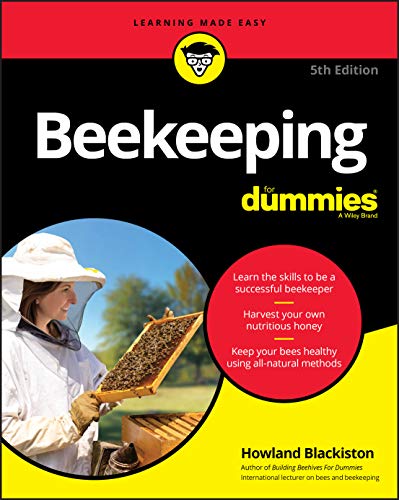
Beekeeping For Dummies
Wiley · Wiley beginner reference · covers regulations, registration, and neighbor relations alongside husbandry
Our verdict: The book we hand people who ask where to start, and its treatment of legality, registration, and neighbor diplomacy pairs directly with this directory. Everything else a first year requires, from equipment to inspections, is in the same volume.
Most beekeeping books wave at the legal layer in a paragraph. Beekeeping For Dummies ($15.99) gives the check-your-rules-first workflow real space, then delivers the standard first-year curriculum on top: equipment, installs, inspections, and harvest.
It is the reigning first pick in our beekeeping books roundup for exactly this completeness.
Who should buy it
Every pre-first-hive reader: it turns this page's verification checklist into a full first-year plan for the price of a jar of honey.
What we don't like
Like every printed reference, it cannot track current fees or your city code; use it for the method, verify specifics with your agencies.
- Format
- Paperback reference (listed)
- Publisher
- Wiley
- Coverage
- Regulations, equipment, seasonal management
- Price
- $15.99
Pros
- Treats legality and neighbors as a real chapter, not a footnote
- Complete first-year curriculum in one volume
- Cheap enough to buy alongside any kit
Cons
- Printed specifics decay; verify details with agencies
- US-centric guidance

Honey Lake 10-Frame Langstroth Beehive Starter Kit
Honey Lake · 10-frame Langstroth · beeswax-coated (listed) · movable frames included
Our verdict: A conventional, well-made 10-frame Langstroth with movable frames throughout, which is precisely what state movable-frame laws contemplate. Buy standard equipment and the inspection-compliance question answers itself.
The simplest way to satisfy the near-universal movable-frame requirement is to keep bees in exactly what the law was written around: a standard Langstroth. The Honey Lake 10-frame Langstroth starter kit ($159.99) is our benchmark version, beeswax-coated with frames and foundation in the box.
The full ranked field lives in the 10-frame roundup and the starter kit guide.
Who should buy it
New beekeepers who want equipment that every inspector, mentor, and ordinance in the country already understands on sight.
What we don't like
Full 10-frame deeps are heavy; readers with back concerns should weigh the 8-frame path in our comparison guide.
- Configuration
- 10-frame Langstroth (listed)
- Material
- Beeswax-coated pine (listed)
- Frames/foundation
- Included (listed)
- Price
- $159.99
Pros
- Movable-frame compliant everywhere by design
- Standard dimensions every mentor and inspector knows
- Frames and foundation included
Cons
- 10-frame boxes get heavy when full
- Assembly documentation is thin
How beekeeping regulation actually works in the US
There is no federal license to keep bees. The USDA researches bee health, regulates interstate and international movement of bees at the border, and funds surveys, but the day-to-day regulation of your backyard hive belongs to your state, and the enforcement of where a hive may sit belongs to your city, county, and HOA. Think of it as three stacked layers, each with a different job.
Layer one, the state: nearly every state maintains an apiary program, almost always inside the state department of agriculture, occasionally inside a university or a natural resources agency. These programs descend from the early 1900s wave of apiary inspection laws passed to fight American foulbrood, a spore-forming brood disease that can persist in equipment for decades. The classic state toolkit is registration of apiaries, authority to inspect colonies for disease, authority to order treatment or destruction of infected equipment, and rules on moving bees into the state.
Layer two, the locality: cities and counties decide land-use questions, which is what "can I keep bees on this particular lot" legally is. Local codes commonly speak to hive counts per lot size, setbacks from property lines, flyway barriers, and water requirements. Many localities say nothing about bees at all, which usually, but not always, means bees are treated like any other permitted accessory use.
Layer three, private covenants: an HOA can restrict beekeeping even where the state and city both allow it, because covenants are contracts that run with the deed. This is the layer that surprises the most new beekeepers, and it is the one no government database will surface for you.
The registration question: mandatory, voluntary, and in-between
The most common state-level obligation is apiary registration, and states fall into three broad patterns. Some states make registration mandatory for all beekeepers, typically with a small fee or none, on an annual or multi-year renewal cycle. Some make it voluntary, operating registration as a service that connects you to inspection and to pesticide-application notification programs. And some run a targeted model, requiring registration only above a hive-count threshold, only for commercial or migratory operations, or only when selling bees and queens.
We are deliberately not printing a state-by-state mandatory-versus-voluntary list with fees and deadlines, because that list decays. Legislatures amend fees, agencies move renewal windows, and a stale table dressed up as authority is how the internet spreads confident nonsense. What does not decay is who runs the program, so that is what the 50-state table below gives you: the agency to search or call, with the query that gets you the current answer in one step.
Apiary inspectors: who they are and what they can do
Most states employ or contract apiary inspectors, ranging from a full-time state apiarist with a staff to a single part-time inspector shared across regions. Their classic authorities, which vary by state, include entering apiaries to inspect for disease, quarantining or ordering treatment of infected colonies, ordering destruction of equipment with American foulbrood, and issuing the health certificates that legally move bees across state lines.
New beekeepers sometimes hear "inspector" and imagine an adversary. The reality across the hobby is closer to a free mentor with a badge. Inspectors see hundreds of colonies a year, they can identify what a beginner cannot, and calling one about a suspicious brood pattern is exactly what the system is for. Extension bee labs echo the same disease-first mission; the national extension network's bee health resources at bee-health.extension.org are a good companion reference for what inspectors are actually looking for.
Moving bees across state lines
Interstate movement is where state rules bite hardest, because this is historically how disease and pests spread. The common pattern: bringing colonies, nucs, or used equipment into a state requires a certificate of inspection or health certificate from the origin state, sometimes an entry permit from the destination state, and some states add specific pest rules, with special attention historically paid to states managing Africanized bee genetics or invasive pests. Package bees and queens generally move under lighter-touch versions of the same paperwork, handled by the shipper.
For a backyard beekeeper this matters in exactly two situations: buying bees from an out-of-state supplier, where a reputable seller handles the certificates and a sketchy one is a red flag we cover in where to buy bees, and moving house with your colonies, where a call to both states' apiary programs before the truck is loaded will save you real grief. Used equipment deserves its own caution flag regardless of paperwork, since foulbrood spores ride in old comb, a risk we detail in the buying mistakes guide.
Local zoning: the layer that actually decides your backyard
Here is the sentence that reorders most readers' homework: local law overrides your assumptions, and in practice it is the binding layer for a backyard apiary. A state that warmly welcomes beekeeping does not prevent a city from restricting hives on residential lots, and a silent state statute does not mean your suburb is silent too. Municipal bee ordinances, where they exist, tend to draw from a familiar menu:
Hive-count limits scaled to lot size, commonly a small number of colonies on a typical residential lot with more allowed on larger parcels. Setbacks requiring hives some distance from property lines, sidewalks, and dwellings. Flyway barriers, a fence or hedge near the hive that forces bee traffic above head height, a technique that works so well we recommend it even where no law requires it, as covered in the hive placement guide. Water requirements, obligating the beekeeper to provide a water source so bees do not adopt the neighbor's pool. Some ordinances add requeening or temperament clauses and registration with the city itself.
Finding yours takes minutes: search your city or county name plus "municipal code" plus "bees" or "beekeeping," and read the animal-control and zoning chapters. If the code is silent, a polite call to the planning or code-enforcement office settles how your locality treats uses the code does not name. Get the answer in writing where you can.
HOAs: the private law of your subdivision
Homeowners associations restrict beekeeping through covenants, conditions, and restrictions, the CC&Rs you agreed to at closing, and courts routinely enforce them even against uses that state and city law fully permit. Some CC&Rs ban bees by name, more commonly they contain livestock, nuisance, or structure clauses broad enough to reach a hive, and interpretation belongs to the board in the first instance.
Our field-tested advice: read your CC&Rs before you read another beekeeping article, and if the documents are ambiguous, ask the board for written approval before bees arrive rather than forgiveness after. Boards say yes more often when the proposal is specific: a diagram of the placement, a flyway fence, a water source, a two-hive cap, gentle stock, and a copy of your state registration. That package converts "a neighbor wants livestock" into "a documented, insured, state-registered hobbyist with a plan," which is a different conversation entirely.
How to use the 50-state directory
The table below names the agency that operates each state's apiary or bee program, so you can go straight to the source. Where we name a specific program or department, we are confident that body exists and handles bees; where state programs have been reorganized often enough that a specific name would be a guess, we list the standard pattern, the state department of agriculture's apiary program, which is the correct front door in nearly every state. Two instructions apply to every row: search the agency name plus "apiary registration" to land on the current requirements page, and verify fees, deadlines, and forms with that agency directly, because those details change and this page deliberately does not freeze them.
The 50-state apiary program directory
Alphabetical, one row per state. Every state's row answers the same question: who runs the apiary program I should verify my rules with?
| State | Apiary program authority |
|---|---|
| Alabama | Alabama Department of Agriculture and Industries, apiary protection program |
| Alaska | Alaska Division of Agriculture (Department of Natural Resources) |
| Arizona | Arizona Department of Agriculture, apiary program |
| Arkansas | Arkansas Department of Agriculture, apiary section |
| California | California Department of Food and Agriculture, apiary program |
| Colorado | Colorado Department of Agriculture |
| Connecticut | Connecticut Agricultural Experiment Station, apiary inspection |
| Delaware | Delaware Department of Agriculture, apiary program |
| Florida | Florida Department of Agriculture and Consumer Services, apiary inspection |
| Georgia | Georgia Department of Agriculture, apiary program |
| Hawaii | Hawaii Department of Agriculture, apiary program |
| Idaho | Idaho State Department of Agriculture |
| Illinois | Illinois Department of Agriculture, apiary inspection |
| Indiana | Indiana Department of Natural Resources, Division of Entomology and Plant Pathology |
| Iowa | Iowa Department of Agriculture and Land Stewardship, apiary program |
| Kansas | Kansas Department of Agriculture |
| Kentucky | Kentucky Department of Agriculture, state apiarist |
| Louisiana | Louisiana Department of Agriculture and Forestry, apiary program |
| Maine | Maine Department of Agriculture, Conservation and Forestry, apiary program |
| Maryland | Maryland Department of Agriculture, apiary inspection |
| Massachusetts | Massachusetts Department of Agricultural Resources, apiary program |
| Michigan | Michigan Department of Agriculture and Rural Development |
| Minnesota | Minnesota Department of Agriculture, apiary program |
| Mississippi | Mississippi Department of Agriculture and Commerce, apiary program |
| Missouri | Missouri Department of Agriculture |
| Montana | Montana Department of Agriculture, apiary program |
| Nebraska | Nebraska Department of Agriculture |
| Nevada | Nevada Department of Agriculture |
| New Hampshire | New Hampshire Department of Agriculture, Markets and Food |
| New Jersey | New Jersey Department of Agriculture, apiary program |
| New Mexico | New Mexico Department of Agriculture |
| New York | New York State Department of Agriculture and Markets, apiary inspection |
| North Carolina | North Carolina Department of Agriculture and Consumer Services, apiary program |
| North Dakota | North Dakota Department of Agriculture, apiary program |
| Ohio | Ohio Department of Agriculture, apiary program |
| Oklahoma | Oklahoma Department of Agriculture, Food and Forestry |
| Oregon | Oregon Department of Agriculture |
| Pennsylvania | Pennsylvania Department of Agriculture, apiary program |
| Rhode Island | Rhode Island Department of Environmental Management, Division of Agriculture |
| South Carolina | Clemson University, Department of Plant Industry (state apiary inspection) |
| South Dakota | South Dakota Department of Agriculture and Natural Resources, apiary program |
| Tennessee | Tennessee Department of Agriculture, apiary program |
| Texas | Texas Apiary Inspection Service (Texas A&M AgriLife) |
| Utah | Utah Department of Agriculture and Food, apiary program |
| Vermont | Vermont Agency of Agriculture, Food and Markets, apiary program |
| Virginia | Virginia Department of Agriculture and Consumer Services, apiary program |
| Washington | Washington State Department of Agriculture, apiary program |
| West Virginia | West Virginia Department of Agriculture, apiary program |
| Wisconsin | Wisconsin Department of Agriculture, Trade and Consumer Protection |
| Wyoming | Wyoming Department of Agriculture |
In every row: verify the current registration requirement, any fee, and any renewal window with the named agency before your bees ship. Where a state has reorganized its program since our publication date, the state department of agriculture's main line will route you, and your local beekeeping club will know the answer off the top of its head, which is one more reason joining a club is step one in our starting guide.
Selling honey: a preview of the next legal layer
The moment your apiary produces surplus, a second body of law appears: food sales. Most states have cottage food laws that let small producers sell honey with simplified or no licensing, usually with labeling requirements covering net weight, producer identity, and product name, and several states add honey-specific labeling standards. The same verification rule applies: your state department of agriculture, in most states the same agency in the table above, publishes the current cottage food and honey-sales rules. Until then, gifting honey from jars like the ones in our harvesting gear guide keeps you comfortably outside commerce, and the yield math in how much honey per hive tells you when this question becomes real for you.
Liability, neighbors, and the diplomatic file
Beyond statutes and codes sits ordinary nuisance and liability law, which is where neighbor conflicts actually play out. The practical protections are the same ones that make good beekeeping: gentle stock, sensible placement with flyway barriers and water on your own property (the full playbook is in the placement guide), and hives that never get robbed into a frenzy because their keeper skipped the basics in the first-year calendar.
Then keep what we call the diplomatic file: your state registration confirmation, a photo of your setup, your club membership, and a note of the date you checked the municipal code. Many homeowner insurance policies are indifferent to a couple of hobby hives, but a call to your agent to confirm, noted in the same file, costs nothing. If a complaint ever comes, the beekeeper with a file, a fence, and a registration number tends to have a very short hearing.
The verification workflow: fifteen minutes, in order
Everything above compresses to a checklist you can run this evening. One: find your state in the table, search the agency name plus "apiary registration," and note whether registration is required, what it costs now, and how to file. Two: search your city or county municipal code for "bees" and read the zoning and animal chapters; call planning if silent. Three: if you have an HOA, read the CC&Rs and get written board approval if anything is ambiguous. Four: join the local club and ask what everyone else in your zip code does; local practice is the fastest error-check on your reading. Five: file the paperwork and start the diplomatic file.
Do this before ordering bees, because bees are ordered months ahead, as the winter ordering windows in where to buy bees explain, and a zoning surprise in April with a package in the mail is a bad week. A copy of Beekeeping For Dummies ($15.99) makes a good companion for this stage; its early chapters walk the same legality-and-neighbors homework alongside the husbandry you will need next.
The bottom line
US beekeeping law is a permission structure, not an obstacle course. The state layer wants your apiary registered and inspectable in movable-frame equipment; the local layer wants hives placed considerately on your lot; the private layer wants you to have read your own covenants. All three are satisfiable in a weekend of homework, and the system pays you back with inspection access, disease intelligence, and standing. Verify your row in the table, make the calls, write things down, and then get on with the genuinely hard parts of beekeeping, which are all in the hive, not in the code book.
More gear worth comparing
Beyond this guide: the highest-rated gear across every category and budget, with a live price check on each.


As an Amazon Associate we may earn from qualifying purchases, at no cost to you.
Quick shop: every pick
Skip the scroll: the whole lineup, with a live price check on each.
- Beekeeping For DummiesBest First BookWiley · $15.99Check Price
- Honey Lake 10-Frame Langstroth Beehive Starter KitBest Compliant Starter HiveHoney Lake · $159.99Check Price
Key terms
- Apiary registration
- Filing the location and count of your hives with the state apiary program. Mandatory in some states, voluntary or targeted in others, typically cheap or free, and the gateway to inspection services and disease alerts. Verify your state's current rule with the agency in this page's directory.
- Movable-frame requirement
- The near-universal state rule that colonies be kept in hives whose combs can be individually removed for disease inspection. The legal foundation of Langstroth dominance in the US and the reason fixed-comb skeps are not used.
- State apiarist / apiary inspector
- The state official with authority to inspect colonies for disease, order treatment or destruction of infected equipment, and issue the health certificates that move bees between states. In practice, the best free diagnostic resource a new beekeeper has.
- Flyway barrier
- A fence, hedge, or structure near a hive entrance that forces bee flight paths above head height. A standard requirement in municipal bee ordinances and a good idea even where no ordinance requires it.
- CC&Rs
- Covenants, conditions, and restrictions: the private rules of an HOA, enforceable as contract even where state and local law permit beekeeping. Read them before buying bees, and get ambiguous cases approved by the board in writing.
- Health certificate
- The certificate of inspection from an origin state's apiary program that legally accompanies bees or used equipment moving across state lines. Reputable bee suppliers handle this paperwork as a matter of course.
Questions, answered
Do I have to register my beehive?
It depends on your state. Some states require every beekeeper to register apiaries with the state agriculture department, others make registration voluntary, and some only require it above a hive-count threshold or for commercial operations. Find your state's apiary program in this page's directory and search the agency name plus apiary registration for the current rule. Even where voluntary, we recommend registering: it typically costs little or nothing and connects you to inspection services and disease alerts.
Is it legal to keep bees in my backyard?
Beekeeping is legal in all 50 states, but whether it is legal in your particular backyard is decided lower down: by your city or county zoning code and, if you have one, your HOA covenants. Check the municipal code for hive limits, setbacks, and flyway-barrier rules, and read your CC&Rs, before ordering bees. Most suburban beekeepers who do this homework find they can keep bees with modest placement adjustments.
How many hives can I keep per acre?
State law almost never sets a hives-per-acre limit for stationary hobby apiaries; hive-count limits come from municipal ordinances, which commonly scale allowed colonies to lot size on residential parcels. On rural land the practical limit is forage, not law: many beekeepers use a few dozen colonies per location as a rule-of-thumb ceiling before nectar competition hurts yields, though this varies enormously with the landscape. Check your local code first, then let forage decide.
Do I need a license to keep bees?
No state requires a license in the sense of an exam or qualification to keep bees. The state-level obligation, where one exists, is registration of your apiary, plus keeping bees in movable-frame hives and cooperating with disease inspection. Selling honey or selling bees and queens can trigger additional registration or food-sales rules, which your state agriculture department publishes.
Can my HOA ban beekeeping even if my state allows it?
Generally yes. HOA covenants are private contracts that run with your deed, and courts routinely enforce them independently of state and local law. Some states have enacted protections for backyard beekeeping, but you should read your CC&Rs and, where anything is ambiguous, request written approval from the board before bees arrive. A specific proposal with a placement diagram, flyway fence, water source, and hive cap gets approved far more often than a vague request.
What happens if I don't register my bees in a mandatory state?
Enforcement varies, but the practical risks are penalties available under the state's apiary law, loss of standing if a dispute or pesticide-kill claim arises, and exclusion from the inspection and alert services registration provides. Since registration is typically cheap or free and takes minutes, non-compliance buys nothing. If you discover you should have registered, most programs simply want you to file; call them.
Why do bee laws require movable frames?
Disease control. American foulbrood, a spore-forming bacterial disease, is diagnosed by examining brood comb, and its spores persist in equipment for decades. Inspectors can only examine comb that can be removed from the hive, so states standardized on requiring movable-frame equipment. Any standard Langstroth hive complies by design, as do top bar and Warre hives managed to keep combs removable.
Do I need paperwork to buy bees from another state?
The seller usually does: the common pattern is that colonies, nucs, and used equipment entering a state need a health certificate from the origin state's apiary program, and some states add entry permits. Reputable suppliers handle this automatically, and a supplier who cannot produce inspection paperwork is showing you a red flag. Packages and queens shipped by established producers move under the same system.
Can I sell my honey without a license?
In most states, small-scale honey sales fall under cottage food laws that allow sales with simplified or no licensing, subject to labeling rules like net weight and producer identity. The specifics are state-by-state and change, so verify with your state department of agriculture, which is usually the same agency that runs the apiary program in this page's directory.
Who do I call if I think my hive has a disease?
Your state apiary program, listed for every state in the directory above. Inspectors exist precisely for this: they can examine comb, diagnose brood disease, and tell you the legally required next step if it is American foulbrood. Your local beekeeping club can also put experienced eyes on a frame quickly, and the extension network's bee health resources help you compare what you are seeing.
Filed under Explainer
Part of Beekeeping 101
Keep reading
How to Start Beekeeping
The full first-year plan that begins where this legal homework ends: clubs, classes, ordering, install, and season one.
The Beehive Placement Guide
Where the ordinances get satisfied in practice: setbacks, flyway barriers, water sources, and neighbor diplomacy.
Where to Buy Bees
Nucs, packages, ordering windows, and the health-certificate paperwork reputable suppliers handle for you.
The Beekeeping Cost Index
What the whole first year costs once the legal questions are answered, itemized in three complete builds.
The Best Beehive Starter Kits
Movable-frame compliant equipment, ranked by whether we would put a colony in it.
Your First-Year Beekeeping Calendar
When registration, ordering, and every other first-year task actually happens, month by month.