Our Pick: Mann Lake
Check PriceWhere to Buy Bees: Nucs, Packages, and Everything Else
The answer up front: most new beekeepers should buy a five-frame nucleus colony, a nuc, from a local producer found through their state beekeeping association or club, expect to pay roughly $150 to $250 for it as a current market range, and place the order between December and February for pickup in April or May. A three-pound package at roughly $100 to $175 is the legitimate budget alternative and the only practical option in some regions, swarms are free bees for keepers with equipment and nerve, and buying an established full colony is a fine advanced move that beginners should approach carefully. That paragraph is the whole decision; the rest of this page is the reasoning, the logistics, and the ways to avoid buying someone else's problems.
By The BeehiveKits Hive Desk2026-08-2822 min read Fact-checked against verified Amazon listingsHow we research
Bees are the one line of the startup budget you cannot click your way out of. No hive kit includes them, no big-box store stocks them in spring, and the good local producers sell out of spring nucs while there is still snow on the ground. That timing mismatch, gear available year-round, bees ordered in winter, catches a large fraction of first-year beekeepers and converts them into second-year beekeepers before they have started. If you take one operational fact from this page, take the calendar: the moment you decide bees are happening next spring, the ordering window is already open, and it closes early.
A note on what this page deliberately does not do: we do not name or rank bee suppliers. Bee quality is intensely local and year-to-year, a producer excellent in one season can struggle the next, and a national website pretending to know the best nuc seller in your county would be exactly the kind of confident nonsense we exist to replace. What we can do better than anyone is teach you the finding method that works everywhere: state association directories, club group buys, and the vetting questions that separate a careful producer from a box-shaker. Standard disclosure: no brand paid for placement, and some links go to Amazon, where purchases may earn us a small commission at no extra cost to you.
What to know
- Buy a nuc if you can: $150 to $250 as a market range buys five drawn frames with brood, stores, and a proven laying queen, roughly a month ahead of any package.
- Packages ($100 to $175 as a market range) are the budget and mail-order option: three pounds of bees and a caged queen, more install steps, more early risk.
- Order December through February for spring delivery; good local producers sell out before most beginners start shopping.
- Find suppliers through your state beekeeping association and local club, not through search ads; club group buys are often the best bees and the best price in the county.
- Local bees beat shipped bees when you have the choice: locally overwintered stock is selected for your winters, and pickup skips shipping stress.
- Vet every supplier with the questions in this guide, and walk away from mystery genetics, no inspection paperwork, and nucs sold on old black comb.

Mann Lake Pro Nuc 5-Frame Plastic Nuc Box
Mann Lake · 5-frame plastic nuc box · locking lid and ventilation (listed) · reusable
Our verdict: The default answer to how do I get my nuc home: a rigid, ventilated five-frame box with a locking lid that then spends years as swarm housing, a frame ambulance, and split equipment. One of the highest reuse-per-dollar items in beekeeping.
Nuc pickup day goes better with your own rigid box, and the Mann Lake Pro Nuc ($38.81) is the industry-standard plastic version: five deep frames, locking lid, molded ventilation, and an entrance disc for transport lockdown.
After install it becomes the most reused box in your apiary, as our nuc box roundup details.
Who should buy it
Anyone picking up a nuc, planning splits, or staging swarm equipment; it earns its keep for years past the first trip.
What we don't like
Plastic walls are thin insulation for long-term housing; treat it as transport and temporary quarters, not a permanent hive.
- Capacity
- 5 deep frames (listed)
- Material
- Molded plastic (listed)
- Lid
- Locking, with ventilation (listed)
- Price
- $38.81
Pros
- Rigid, ventilated, and secure for transport
- Reusable for swarms, splits, and spare frames
- Standard deep-frame compatibility
Cons
- Not a long-term hive
- Entrance disc is easy to misplace

Foxhound Bee Co Half-Gallon Entrance Feeder
Foxhound Bee Co · Half-gallon entrance feeder, 2-pack (listed) · fits standard entrances
Our verdict: New nucs and packages need syrup on tap while they draw comb, and this half-gallon entrance setup delivers it with zero hive-opening disturbance. The capacity means fewer refills than the classic quart-jar entrance feeders.
Both install guides on this site end the same way: feeder on, immediately. The Foxhound half-gallon entrance feeder ($33.99) covers the critical comb-drawing weeks with visible syrup levels and refills that do not disturb a colony trying to settle.
When robbing season or scale demands top feeding instead, the upgrade path is in the feeder guide.
Who should buy it
New-colony keepers who want feeding they can check from three feet away during the fragile first month.
What we don't like
Entrance feeding can invite robbing in a dearth; switch styles if wasps or robber bees start investigating, and reduce the entrance.
- Capacity
- Half gallon (listed)
- Quantity
- 2-pack (listed)
- Mount
- Hive entrance
- Price
- $33.99
Pros
- Refills without opening the hive
- Bigger capacity than quart entrance feeders
- Syrup level visible at a glance
Cons
- Robbing risk in dearth conditions
- Outside syrup can freeze in cold snaps

USKEEPERS 3-Layer Ventilated Bee Jacket
USKEEPERS · 3-layer ventilated mesh jacket with veil (listed)
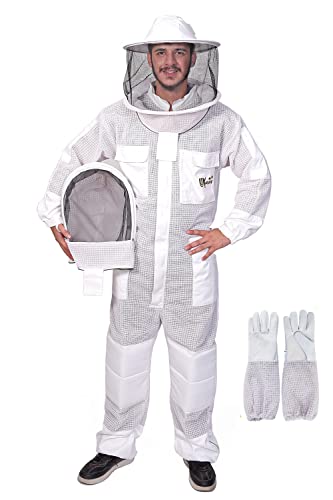
Our verdict: The right protection tier for bee acquisition season: enough coverage for installs and transport mishaps, ventilated enough that you will actually wear it zipped, and faster on and off than a full suit for the quick checks that dominate a colony's first month.
Pickup day and install day are exactly when a new beekeeper wants confidence, and the USKEEPERS ventilated jacket ($79.99) delivers it without the August-sauna problem of budget single-layer suits.
Where it sits against full suits and the rest of the field is mapped in jackets and gloves and the suit guide.
Who should buy it
Keepers who run quick, frequent checks and want protection they will never talk themselves out of wearing.
What we don't like
A jacket leaves your legs in regular pants; for cutouts, swarm work in brush, or hot colonies, step up to a full suit.
- Construction
- 3-layer ventilated mesh (listed)
- Veil
- Included (listed)
- Coverage
- Upper body
- Price
- $79.99
Pros
- Ventilation you will actually wear zipped
- Fast on and off for quick checks
- Real sting protection at jacket weight
Cons
- No leg coverage
- Costs more than budget full suits
The five ways to get bees, in one table
Every method of acquiring honey bees is a variation on five formats. Prices are honest current market ranges, not quotes; your region and year will land somewhere inside them, and club members will know exactly where.
| Format | What you get | Market range | Best for |
|---|---|---|---|
| Nucleus colony (nuc) | 5 frames: bees, brood, stores, laying queen | $150 to $250 | Beginners, anyone who can buy local |
| Package | About 3 lbs of loose bees + caged queen | $100 to $175 | Budget builds, mail-order regions, non-Langstroth hives |
| Swarm | A wild-caught colony, queen included, comb not | Free (gear and luck required) | Second-year keepers with equipment ready |
| Split | Frames of brood and bees from a mentor's hive | Free to about $150, often informal | Club members with generous mentors |
| Established colony | A full production hive, equipment included | Roughly $250 to $500+, highly variable | Experienced buyers who can inspect before paying |
The rest of this guide takes these one at a time, then covers the calendar, the logistics, and the vetting. If you have not yet chosen the hive these bees will live in, settle that first in the starter kit guide, because format and hive interact: nucs slot into standard Langstroth deeps, while top bar hives generally need packages, a wrinkle covered in our hive-style comparison.
Nucs: the format we recommend to beginners
A nucleus colony is a small but complete functioning colony: five standard deep frames carrying drawn comb, brood in all stages, honey and pollen stores, a few thousand workers, and a mated, laying, proven queen. You transfer the five frames into your own equipment and the colony continues without missing a beat. Against a package, a nuc is typically three to four weeks ahead in buildup, has already demonstrated that its queen lays well, and skips the most failure-prone phase of a package's life, queen acceptance.
The market range runs $150 to $250, with locally overwintered nucs from your own region's stock at the top of the range and worth it: those bees carry genetics that already survived your winter, a selection filter no shipped southern package has passed. The premium over a package, often less than a hundred dollars, is in our view the best-spent money in the entire startup budget, an argument we also make in the cost index.
Packages: the budget workhorse
A package is about three pounds of loose worker bees, roughly ten thousand of them, shaken from production colonies into a screened or plastic box, plus a young mated queen in a separate cage and a can of syrup for the road. Nothing else: no comb, no brood, no stores. You install the bees into your equipment, let them release and accept the queen over several days, and feed heavily while they draw comb from nothing, a process our guide to installing a package walks step by step.
The market range is roughly $100 to $175. What the discount buys is risk and delay: queen acceptance can fail, absconding is possible in the first days before comb anchors the cluster, and the colony starts about a month behind a nuc. What the format buys is flexibility: packages can be shipped, they suit any hive style including top bar and Warre equipment, and in regions without strong local nuc production they are simply how bees arrive. A package hived on the first-year calendar's schedule with a feeder on from day one is a proven path; millions of colonies have started exactly this way.
Swarms: free bees, with conditions
A swarm is a colony in transit: a queen and several thousand workers that have left a parent hive and are clustered somewhere, house-hunting. Caught and hived, a good-sized early-season swarm can build into a production colony, and the price is zero. The conditions: you need equipment standing ready, availability on random spring afternoons when the calls come, comfort handling a fist-sized ball of bees of unknown temperament, and acceptance that swarms carry unknown genetics, unknown mite loads, and occasionally an old failing queen.
Our honest guidance matches what most mentors say: swarms are a spectacular year-two bonus channel and a poor year-one plan, because you cannot schedule them and a first year needs a schedule. If the idea appeals, get on your club's swarm list, stage a baited trap, and read how to catch a swarm plus the swarm gear roundup before the season starts.
Splits and established colonies: the community and veteran channels
Splits are how bees move inside beekeeping communities: a mentor pulls frames of brood, bees, and stores from a strong colony into a nuc box for you, with either a purchased queen, a ripe queen cell, or the resources to raise one. Pricing is informal, free to roughly nuc price, and the quality depends entirely on the giver, which inside a good club is usually excellent. This channel alone justifies club membership, and it comes with a mentor attached to the bees.
Established colonies, a full hive of bees plus the equipment, appear on club lists and estate sales at highly variable prices, commonly $250 to $500 and up depending on equipment and strength. For an experienced buyer who can open the hive and read frames before paying, they are the fastest start in beekeeping. For a beginner they are a gamble: you cannot yet judge brood pattern, mite load, or disease, and used comb is the classic vector for American foulbrood spores. If you go this route in year one, bring an experienced club member to the inspection, insist on opening every box, and treat any seller who resists as your answer.
The calendar: why bees are a winter purchase
Bee producers plan their spring inventory in winter, and demand has exceeded supply in most recent years; with national surveys from the Bee Informed Partnership reporting annual colony losses in the 40 to 50 percent range, replacement demand keeps spring bees a seller's market. The operational consequence is a calendar most beginners learn one year too late:
| Months | What happens | Your move |
|---|---|---|
| December to February | Producers open ordering; popular local producers sell out | Order and pay deposits now |
| March | Late ordering; selection thins fast | Last reliable chance in most regions |
| April to May | Packages ship, nucs come ready; pickup days | Install within days of arrival |
| June onward | Leftover and second-round bees, occasionally | Late starts are possible but build weak colonies going into winter |
The dates slide by latitude, southern states run weeks earlier, northern states later, but the shape is universal. Order in winter, receive in spring, and use the waiting months to assemble equipment, which is precisely what the winter chapters of our starting guide schedule for you.
Pickup vs shipped bees
Pickup is better whenever you have the option. Driving to a local producer means your bees skip days of transit stress and temperature swings, you see the operation with your own eyes, and you can ask questions with the seller's yard as the visual aid. Nucs, being heavier and containing comb, are overwhelmingly a pickup product. Bring ratchet straps, ventilate the vehicle, drive gently, and never leave bees in a closed car in the sun; heat kills faster than any other transit mistake.
Shipping is the mail-order reality for packages and queens. USPS has carried live honey bees for over a century and remains the standard carrier for packages and queen cages from established producers, with express services and live-animal handling rules built for the job. Losses in transit happen but are the exception with experienced shippers, who time dispatch around weather and label boxes loudly. Two rules on your end: track the shipment daily and arrange to collect the moment it arrives at your post office rather than letting it ride a delivery truck all afternoon, and open shipping-damage claims immediately if a box arrives with the cluster dead, which reputable sellers will help you handle. A small percentage of dead bees on the box floor is normal and not a defect.
How to actually find suppliers: the association method
Here is the method that works in all 50 states and does not depend on us or anyone else ranking sellers. Step one: your state beekeeping association. Every state has one, most maintain public directories of member producers selling nucs, packages, and queens, and association producers have reputations attached to their names inside a community they see at every meeting, which is the best quality-control mechanism in the hobby. Search your state name plus "beekeepers association" and look for the suppliers or bees-for-sale page.
Step two: your local club. Clubs run group buys, negotiating bulk orders of nucs or packages from a vetted producer with pickup at one member's farm, and the club channel is frequently both the cheapest and the highest-quality option in a county. Clubs also know which local producers had a rough year, intelligence no website captures. Step three: extension resources. Land-grant university extension apiculture programs, the network behind bee-health.extension.org, often publish buying-bees guidance and point to state association lists; they are a solid neutral starting point when you do not yet know your state's players. The registration homework in beekeeping laws by state plugs you into the same local network from the regulatory side.
Questions to ask a supplier before you pay
A ten-minute conversation separates careful producers from box-shakers. Ask these, in roughly this order:
Where did these bees winter? Locally overwintered stock is the premium answer; freshly trucked-in southern bees are common and fine, but you should know which you are buying and price accordingly. What is the queen, and is she this year's? You want a current-year mated queen and a supplier who can name the stock, Italian, Carniolan, or a local mutt line, an answer you can interpret with our honey bee breeds guide. What is your varroa management, and when were these last treated or tested? Any competent producer answers instantly; a blank look here is disqualifying, and you can sanity-check the answer against our varroa timing guide. For nucs: how many frames of brood, and how old is the comb? Three-plus frames of brood is a real nuc; comb should be light to medium, not black with age. Are you inspected or registered with the state? Producers selling nucs and queens are generally inspected under the state apiary program, and paperwork should be a shrug, not an argument. What is your replacement policy? Established sellers typically stand behind queens for a defined early window.
Red flags: when to walk away
Any one of these is a reason to keep shopping, and two is a certainty. No varroa answer: a producer who cannot describe mite management is selling you mites. No inspection paperwork for out-of-state sales, since certificates are how interstate bee sales legally work. Black, ancient comb in a nuc: old comb is where disease and residue history lives; it also signals a producer clearing junk frames on beginners. Mystery genetics at a discount, especially deep-South sourced bees priced suspiciously below the local market with vague answers about the queen. Refusal to open a hive when selling an established colony. No deposit structure or contact trail: cash-only strangers from classifieds with no reputation attached deliver the worst outcomes we hear about. Cheap bees that die or need requeening in June are the most expensive bees you can buy, a lesson the cost index prices out in painful detail.
A quick word on breeds before you order
Suppliers will describe their bees by race or line, and the words carry real information. The short version: Italians are the friendly, prolific American default; Carniolans are gentle, frugal winterers that build explosively in spring; Russians and survivor lines carry stronger mite resistance reputations with quirkier management; Buckfast and regional hybrid lines aim for balanced, gentle productivity. For a first colony, any well-raised Italian or Carniolan nuc from a good local producer beats an exotic line from a distant one; the producer's competence matters more than the label. The full comparison, temperament, buildup, overwintering, and mite resistance race by race, is in types of honey bees.
Arrival week: be ready before the bees are
The bees' arrival date is a deadline, not a suggestion. Before pickup day: hive assembled, painted, and placed on its stand at its permanent site, chosen with the placement guide; feeder ready with syrup mixed, because both nucs and packages need feeding while they draw comb, and an entrance-mounted option like the Foxhound half-gallon entrance feeder ($33.99) makes those first weeks refill-easy without opening the hive; protection washed and tried on, whether that is a full suit or a ventilated jacket like the USKEEPERS ventilated jacket ($79.99) that most quick spring checks call for. Install nucs within a day or two of pickup and packages promptly on arrival, following the nuc install guide or the package install guide as appropriate.
The bottom line
Buy a local nuc through your state association or club if you possibly can, at $150 to $250 as the going range; buy a package at $100 to $175 when budget, region, or hive style points that way; treat swarms and splits as the delightful community channels they are; and leave established-colony purchases until you can read a frame of brood. Order in the December-to-February window, prefer pickup, interrogate every supplier politely, and walk away from mystery bees. Do those things and the bees themselves, the one part of this hobby no kit includes, become the easiest purchase of your first year instead of the panic.
More gear worth comparing
Beyond this guide: the highest-rated gear across every category and budget, with a live price check on each.



As an Amazon Associate we may earn from qualifying purchases, at no cost to you.
Quick shop: every pick
Skip the scroll: the whole lineup, with a live price check on each.
- Mann Lake Pro Nuc 5-Frame Plastic Nuc BoxBest Nuc Transport BoxMann Lake · $38.81Check Price
- Foxhound Bee Co Half-Gallon Entrance FeederBest First-Weeks FeederFoxhound Bee Co · $33.99Check Price
- USKEEPERS 3-Layer Ventilated Bee JacketBest Jacket for Bee DayUSKEEPERS · $79.99Check Price
Key terms
- Nucleus colony (nuc)
- A small complete colony on five standard frames: drawn comb, brood in all stages, stores, workers, and a proven laying queen. The premium starter format at $150 to $250 as a market range, typically three to four weeks ahead of a package in buildup.
- Package
- About three pounds of loose worker bees plus a separately caged mated queen and transit syrup, sold without comb or brood. The budget and mail-order format at roughly $100 to $175, requiring queen acceptance and comb-drawing from zero.
- Overwintered stock
- Bees, usually nucs, that survived the previous winter in the region where they are sold, demonstrating winter fitness for that climate. The premium answer to where did these bees winter, and worth the top of the price range.
- Group buy
- A club-organized bulk order of nucs or packages from a vetted producer with shared pickup. Frequently the best combination of price, quality, and built-in mentorship available to a new beekeeper.
- Queen acceptance
- The days-long process by which package bees release and adopt their caged queen. The most failure-prone phase of a package start and the main biological reason nucs, whose queens are already laying, are lower-risk.
- Absconding
- A newly installed colony abandoning its hive entirely, a risk mainly in the first days before drawn comb and brood anchor the cluster. Feeding, a frame of old comb if available, and a queen excluder trick under the brood box all reduce it.
Questions, answered
Where can I buy live bees?
From bee producers in your region, found through your state beekeeping association's supplier directory and your local beekeeping club, which often runs group buys from vetted producers. Packages and queens can also be ordered from established producers who ship via USPS. There is no reliable walk-in retail channel for bees; they are ordered in winter and delivered or picked up in spring.
How much do bees cost in 2026?
As current market ranges: a five-frame nuc runs about $150 to $250, a three-pound package about $100 to $175, and an established full colony with equipment commonly $250 to $500 or more. Locally overwintered nucs sit at the top of the nuc range and are usually worth the premium. Swarms are free if you have the equipment and the luck, and splits from club mentors run free to about nuc price.
Should I buy a nuc or a package?
Buy a nuc if a reputable local producer sells them: you get drawn comb, brood, stores, and a proven laying queen, which puts you three to four weeks ahead and skips the queen-acceptance risk that packages carry. Buy a package when budget is tight, when no good local nuc supply exists, or when your hive style, like top bar, cannot accept standard frames. Both work; the nuc simply removes the most common beginner failure modes.
When should I order bees?
December through February for spring delivery, and earlier beats later. Good local producers open ordering in winter and sell out while it is still cold, with pickup and shipping happening in April and May depending on your latitude. If you decide in March, order immediately; by late spring the realistic options are leftovers, swarms, and waiting a year.
Can bees really be shipped in the mail?
Yes. USPS has carried live honey bees for over a century and remains the standard carrier for packages and queens from established producers, using express services and live-animal handling procedures. Arrange to collect the box at your post office the morning it arrives rather than letting it ride a truck all day, and a small layer of dead bees on the box floor is normal. Nucs, which contain comb, are generally a pickup product rather than a shipped one.
Is it better to buy local bees?
When you have the choice, yes. Locally overwintered stock has passed your winter as a selection filter, local pickup skips days of transit stress, and a local producer's reputation lives in the club community you can simply ask. Shipped packages from established producers are a legitimate and often necessary channel; local is a preference, not a rule.
What questions should I ask a bee supplier?
Six cover most of it: where did these bees winter; what stock is the queen and is she this year's; what is your varroa management and when were these bees last treated or tested; for nucs, how many frames of brood and how old is the comb; are you inspected or registered with the state; and what is your replacement policy on queens. Confident, specific answers mark a careful producer. A blank on the varroa question is disqualifying.
What are the red flags when buying bees?
No varroa management answer, no inspection paperwork on out-of-state sales, nucs built on old black comb, mystery genetics at below-market prices, refusal to open a hive when selling an established colony, and anonymous cash-only sellers with no community reputation. Any one of these means keep shopping. Cheap bees that fail by June are the most expensive bees available.
Can I just catch a swarm instead of buying bees?
You can, and swarms are genuinely free bees, but you cannot schedule them, which makes them a poor sole plan for a first year. Get on your club swarm list, stage a baited trap, and treat anything you catch as a bonus colony. From year two onward, with equipment on standby and some handling confidence, swarm catching becomes one of the best deals in beekeeping.
What do I need ready before my bees arrive?
The full hive assembled, painted, and placed at its permanent location, a feeder with syrup mixed, your protection tried on, and the install guide read twice. Nucs should be transferred within a day or two of pickup, and packages installed promptly on arrival. The arrival window is set by the producer and the weather, not by your readiness, so finish the equipment first.
Filed under Explainer
Part of Beekeeping 101
Keep reading
Types of Honey Bees
What Italian, Carniolan, Russian, and the rest actually mean when a supplier names their stock.
How to Install a Package of Bees
The step-by-step for shipped bees: queen cage, shake, feed, and the first-week checks.
How to Install a Nuc
Five frames from carrier to hive: transfer order, spacing, feeding, and settling in.
The Beekeeping Cost Index
Where the bee purchase sits in the full first-year budget, itemized across three builds.
Beekeeping Laws by State
The registration and inspection homework to finish before your bees are ordered.
The Best Nuc Boxes and Swarm Traps
Transport boxes, bait hives, and the gear behind the free-bees channels.