Bees & Pollinators
12 guidesMason bees, native pollinators, carpenter bee control, and how to help bees without keeping a hive.
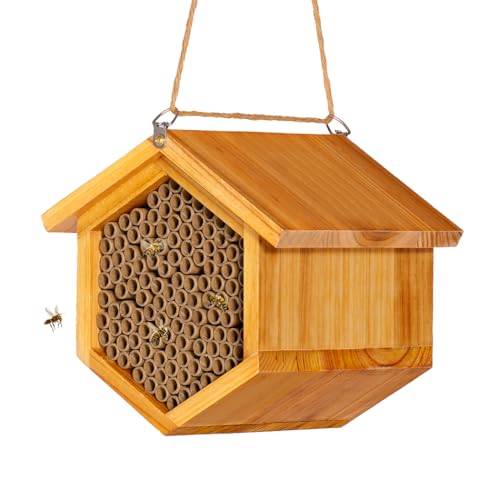
The Best Mason Bee Houses: 8 Tested Picks for Real Native Bees
A mason bee house is the rare garden purchase that either helps native bees or quietly kills them, and the difference is whether you can open it. Here are eight houses ranked on the criterion that matters most, replaceable nesting material, plus the hole diameter blue orchard bees actually want, the mounting height and direction that fill a house in one season, and the reason those pretty bamboo bundles at the garden center belong in the trash.
Updated Aug 202619 min read

Best Mason Bee Tubes and Cocoons: What to Buy Every Year
Nesting tubes are a consumable, not a fixture, and treating them like one is the entire difference between hosting native bees and farming their parasites. Here are the refill packs worth buying, an honest comparison of cardboard, reed, wooden trays, and drilled blocks, plus how to source cocoons without shipping bees across the country, how to harvest and wash them in the fall, and the storage temperatures and release timing that get you a second generation.
Updated Aug 202617 min read
How to Raise Mason Bees: The Complete Year, Start to Finish
No hive, no suit, no smoker, no mite treatments, and no honey either. Mason bees are the gentlest way to put a serious pollinator in a backyard, and the entire practice fits into about four hours a year. Here is the full annual cycle: mounting the house in late winter, releasing cocoons at the right temperature, the mud source that decides everything, watching the nesting season, harvesting and washing cocoons in the fall, and refrigerating them until spring.
Updated Aug 202622 min read
Mason Bees vs Honey Bees: Which One Belongs in Your Yard
One is a native solitary insect that costs about sixty five dollars, takes four hours a year, almost never stings, and out-pollinates its rival blossom for blossom. The other is an imported livestock animal that costs several hundred dollars, takes dozens of hours, needs a suit and mite treatments, and makes honey. Here is the full head-to-head on cost, time, stings, pollination, equipment, regulation, and winter work, plus an honest verdict on who should keep which.
Updated Aug 202618 min read

The Best Carpenter Bee Traps (2026)
Carpenter bees drill perfectly round holes in bare softwood, then come back to the same board every spring. A well-placed trap turns that loyalty against them without a drop of spray. We ranked five traps that actually catch bees, explain exactly where to hang them, and say plainly when a trap is the wrong tool.
Updated Aug 2026~13 min read
How to Get Rid of Carpenter Bees
Round holes in the fascia, sawdust on the deck, and a big shiny bee hovering in your face every time you open the back door. Here is the order of operations that actually ends it: identify the bee, judge the damage, trap the scouts, plug the tunnels at the right time of year, and finish the wood so next spring there is nothing to drill.
Updated Aug 2026~15 min read
Bee vs Wasp vs Hornet: How to Tell What You Are Looking At
Ten insects people call bees, sorted out for good. What each one looks like, what it nests in, whether it can sting you more than once, what it actually eats, and what you should do about it. Including the single most useful fact in this whole guide: the thing at your soda can in August is almost never a honey bee.
Updated Aug 2026~16 min read
The Native Bees Guide: 4,000 Species Most People Never Notice
The United States has roughly four thousand native bee species, and the one on the honey jar is not among them. Here is the field guide the honey bee overshadows: bumble bees and the buzz pollination almonds and tomatoes depend on, mason and leafcutter bees in the cavities, mining and sweat bees underfoot, squash bees that show up in your zucchini before dawn, and carpenter bees in the deck rail. Plus the single most useful thing you can do for them, which costs nothing.
Updated Aug 202621 min read

The Best Bee Water Stations: 4 Picks That Bees Can Land On
Bees drown in open water, which is why a birdbath is a hazard and a saucer of pebbles is a lifeline. Here are four watering stations ranked on the only spec that matters, whether a bee can stand on dry ground while she drinks, plus how much water a colony really hauls in July heat, how to keep a station from becoming a mosquito nursery, where to put it so bees actually find it, and how to keep your bees out of the neighbor's swimming pool.
Updated Aug 202615 min read

How to Help Bees Without Keeping Bees
We sell beehive kits, and we are going to tell you plainly that buying one is not how you help pollinators. Honey bees are managed livestock. The bees that need help are the several hundred wild species already living in your yard, and helping them costs less than a hive, takes less time, and works.
Updated Aug 2026~15 min read
The Best Plants for Honey Bees: Seed Mixes and a Real Forage Plan
What to plant if you actually want to feed bees: the seed mixes worth buying, the nectar-versus-pollen distinction nobody explains, a bloom-succession plan that covers early spring through the fall gap, why one good tree beats your whole flower bed, what not to plant, and the pesticide fine print. Written by the desk that also does the honey math, because forage is where the honey comes from.
Updated Aug 202621 min read

The Best Bee Gifts and Decor (2026)
Everyone has one: the person whose kitchen, garden, tote bag, and phone case are all bees. This is the gift list that does not embarrass them, sorted by budget and by who you are actually buying for, with a clear note about which gifts are for bee lovers and which are for people who genuinely keep bees, because those are two different shopping trips.
Updated Aug 2026~14 min read
Every category, one page
Not sure where to start? See our top picks.
Every category's winner, with the reasoning shown and a live price check on each.
About this collection
Most people who love bees will never run a Langstroth. This hub is for them: mason and leafcutter bee houses that actually get occupied, native pollinator plantings, water stations, and the identification guide that settles whether the thing at your picnic is a bee, a wasp, or a hornet.
It is also where we deal with the one bee people want gone: the carpenter bee drilling your fascia board, and the traps that work on it.
Keep exploring
Hive Kits
Every beehive kit worth buying: starter kits, Langstroth, insulated, auto-flow, and observation hives, ranked.
Beekeeping 101
Start here: what a hive costs, what to buy first, and the first-year calendar that keeps a colony alive.
Honey Harvest
Extractors, uncapping tools, buckets, and refractometers: the gear that turns frames into jars.
Hive Health
Varroa treatments, beetle traps, feeders, and winter prep: keeping the colony you started alive.
Protective Gear & Tools
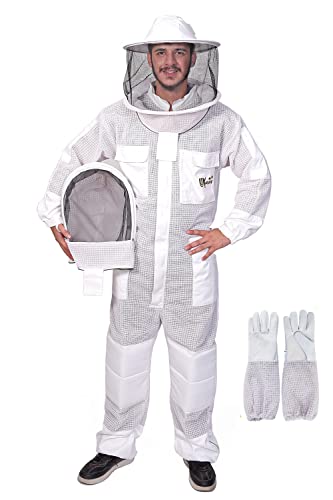
Suits, jackets, gloves, smokers, and hive tools: the working kit between you and ten thousand bees.
How-To Guides
Step by step through every job in the bee yard: installs, inspections, harvest, winter, swarms, and queens.
Honey & Bee Products
Raw honey, manuka, comb, pollen, propolis, and beeswax: what to buy, what the grades mean, and what to make.
Our top-rated beekeeping gear
Whatever you decide, this is the gear we recommend: verified, researched, and ranked. Live price check on each.



As an Amazon Associate we may earn from qualifying purchases, at no cost to you.