Our Pick: BBB Seed
Check PriceHow to Help Bees Without Keeping Bees
If you want to help bees, plant forage that blooms in succession from early spring to hard frost, leave some bare ground and standing stems for the ninety percent of native species that nest in soil and cavities, stop spraying, put out water, and host mason bees. A wildflower mix like the BBB Seed honey bee mix costs about $16 and does more for the pollinators on your street than a $200 beehive will. That is the whole answer, and the rest of this page is why.
By The BeehiveKits Hive Desk2026-08-29~15 min read Fact-checked against verified Amazon listingsHow we research
Here is the uncomfortable part, from a site that sells hive kits. Keeping honey bees is not conservation. The western honey bee is a managed agricultural animal, not native to North America, kept in boxes, fed when hungry, medicated for parasites, and moved around the country on trucks to pollinate crops. Adding a hive to your backyard adds livestock to your yard. It is a wonderful hobby, it produces honey, it teaches you more about insects than any book, and it is not the same activity as helping wild bees, any more than keeping chickens is helping wild birds.
There is a further wrinkle worth stating carefully, because it gets overstated in both directions. A growing body of research has examined whether high densities of managed honey bee colonies compete with wild bees for limited flowers, and findings point that way in a number of landscapes, particularly where forage is scarce. The effect is context dependent and researchers are still working out where and how much it matters. What follows from it is not that honey bees are villains: it is that a hive in a yard with nothing blooming is a net demand on the neighborhood's flowers, not a gift to it. Forage first. Always forage first.
The good news is that the alternatives are cheap and mostly consist of doing less. Less mowing, less mulching, less spraying, less tidying. Add some plants, add water, leave stems standing over winter, and you have built habitat for the mining bees, sweat bees, mason bees, leafcutter bees, and bumble bees that were there before anyone put a box in the yard. Our native bees guide introduces the cast.
The disclosure: some links go to Amazon and we may earn a small commission at no cost to you if you buy through one. No brand paid for a mention. Prices are approximate at publication, and seed mixes in particular vary in price and content by season, so read the species list on any mix before you buy.
What to know
- Honey bees are managed livestock, not a wild species in need of rescue. Keeping them is agriculture, and a fine hobby, but it is not conservation.
- Research suggests dense managed honey bee populations can compete with wild bees for forage where flowers are limited, which is a reason to plant before you keep.
- Bloom succession beats bloom quantity: something in flower from the first warm week to hard frost matters more than a big showy June.
- About seventy percent of native bee species nest in the ground, so bare, undisturbed soil is habitat, and total mulch coverage removes it.
- Leave stems standing through winter and cut them back in stages: hollow stems are nurseries for cavity-nesting bees.
- Stop routine spraying, and if you must use a product, read the label and follow its pollinator protections, which are legally binding.
- A shallow water source with landing surfaces solves a real daily problem for bees, especially in dry heat.
- Hosting mason bees costs about $30 and gives you a spring pollinator with essentially no sting risk and no colony to manage.
- If you want to support honey bees specifically, buy honey from a local beekeeper. That is the market signal that keeps colonies in your area.

BBB Seed Honey Bee Wildflower Seed Mix
BBB Seed · Pollinator wildflower seed mix · annual and perennial species (listed)
Our verdict: If you buy one thing off this page, buy seed. A pollinator mix sown on a prepped bed puts nectar and pollen into a landscape that mostly does not have any, which is the actual limiting factor for wild bees in most suburban yards. About $16 covers a small bed, and the bees arrive on their own.
Forage is the constraint, everywhere. A typical American yard is turf grass, a few evergreen shrubs, and mulch, which is a food desert for a bee. The BBB Seed honey bee wildflower mix is the cheapest way to change that: clear a patch of sod, rake the seed in for good soil contact, water it until it establishes, and let it run. You do not need to attract anything. Wild bees are already in the neighborhood and they will find flowers within days.
Two practical notes that decide whether a mix works. First, soil contact: seed broadcast onto unprepared sod mostly feeds birds, so clear or scalp the area and rake the seed in. Second, patience: many perennials in a mix put down roots in year one and bloom in year two, so a thin first season is normal rather than a failure. If you want a bigger, more diverse sowing, the Survival Garden 24 variety wildflower pack covers more ground with more species.
Who should buy it
Buy this if you have a bed, a strip along a fence, or a corner of lawn you are willing to convert and you want the highest pollinator return per dollar available. It is also the right gift for anyone who says they want to help bees and is thinking about buying a hive.
What we don't like
Mix contents vary and are not always ideal for every region, so this is a product that requires reading before buying. Coverage from a single packet is modest, so a large area needs several or a bulk pack. And seed demands site prep and watering to establish, which is real work: broadcast it onto unprepared lawn and you will get very little.
- Type
- Pollinator wildflower seed mix
- Contents
- Annual and perennial species (listed)
- Best for
- Small beds and strips
- Site prep
- Clear sod, rake in, keep moist to establish
- Approx. price
- ~$16
Pros
- The highest pollinator return per dollar on this page
- Feeds wild bees and honey bees alike
- No maintenance once established
- Small enough commitment for one bed
Cons
- Mix contents vary; check species against your region
- Needs real site prep and watering to establish
- Modest coverage from one packet

Survival Garden Seeds American Wildflower 24 Variety Pack
Survival Garden Seeds · 24 variety wildflower seed collection (listed) · separate packets
Our verdict: Diversity is the whole game in a pollinator planting, because different bee species emerge at different times and some are picky. A 24 variety pack at about $35 lets you build genuine bloom succession across a larger area, and separate packets mean you can place species by sun, moisture, and season rather than scattering one blended mix everywhere.
More species means more weeks in bloom. That is the mechanism that matters. A single blended mix gives you whatever germinates together; the Survival Garden Seeds 24 variety American wildflower pack gives you the components separately, which means you can put the early bloomers where they get spring sun, the tall late-season species at the back, and the drought tolerant ones on the dry slope where nothing else has worked.
The practical use case is a fence line, a hell strip, a septic field edge, or the awkward sunny corner every property has. Prep it once in fall or early spring, sow by species, and you get a planting that carries bees from the first warm week through frost rather than peaking in June. Pair it with native milkweed seed for the host plant side, which nectar species do not cover.
Who should buy it
Buy this if you have more than a small bed to convert and want to place species deliberately rather than broadcast a single mix. It is also the better buy if you have a mix of sun, shade, wet, and dry areas, since separate packets let you match plants to conditions.
What we don't like
A national variety pack cannot be regionally matched, so some varieties will not thrive where you are and a few may be inappropriate; check the list. Twenty four packets is also more planning work than dumping one mix, which is a real barrier for people who wanted a weekend project. Establishment still requires site prep and watering.
- Type
- Wildflower seed collection
- Varieties
- 24 separate packets (listed)
- Best for
- Fence lines, strips, larger conversions
- Site prep
- Clear, sow by species, keep moist to establish
- Approx. price
- ~$35
Pros
- Species diversity drives longer bloom succession
- Separate packets let you match plants to conditions
- Covers a much larger area than a single mix packet
- Good value per species for the price
Cons
- Not regionally matched: read the variety list
- More planning than a single blended mix
- Same site prep and watering demands as any seed

Gardeners Basics Milkweed Seeds, 4 Native Varieties
Gardeners Basics · 4 native milkweed species (listed) · host plant for monarch butterflies
Our verdict: Nectar feeds adults; host plants make the next generation. Monarch caterpillars eat milkweed and nothing else, so a yard without it cannot produce monarchs no matter how much else is blooming. Four native varieties for about $10 is close to the cheapest genuinely meaningful conservation action a homeowner can take.
Host plants are the part most pollinator gardens leave out. A bed full of nectar species is a restaurant with no nursery attached. Gardeners Basics milkweed seeds in four native varieties covers the most famous case: monarch caterpillars are milkweed specialists, and milkweed bloom is also excellent bee forage, so a single planting does both jobs at once.
Give it a sunny spot and be patient: milkweed is a perennial that spends its first year building roots. Once established it is close to indestructible and spreads, which is a feature in a meadow planting and something to place thoughtfully in a tidy bed. Plant it in a clump rather than scattered, since a searching monarch is looking for a patch.
Who should buy it
Buy this if you want your yard to produce butterflies rather than just feed them, and if you have a sunny spot you can leave alone for two seasons. It pairs naturally with a wildflower mix: nectar from the mix, host plants from this, which is the combination most pollinator gardens are missing.
What we don't like
Cold stratification is a real barrier and the reason a lot of milkweed seed never germinates for beginners. Milkweed spreads by rhizome and seed, which is not what everyone wants in a formal bed. And a multi-species packet may include a variety not suited to your region, so read before sowing and plant accordingly.
- Type
- Native milkweed seed, 4 varieties (listed)
- Role
- Host plant for monarch caterpillars
- Bloom value
- Strong bee forage in addition to host use
- Germination
- Most species need cold stratification
- Approx. price
- ~$10
Pros
- The host plant monarchs cannot reproduce without
- Also excellent nectar forage for bees
- Perennial: plant once, keep it for years
- Cheapest meaningful conservation action here
Cons
- Cold stratification required for most species
- Spreads more than a formal bed may want
- Not every variety in a pack suits every region
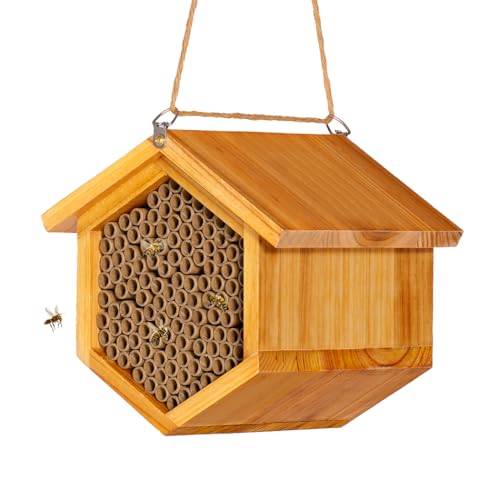
POLLIBEE Wax Coated Mason Bee House
POLLIBEE · Wax coated wooden bee hotel · removable nesting material (listed) · pollinator house
Our verdict: Mason bees give you the fascination of hosting bees with none of the management: no colony, no varroa, no swarms, no honey harvest, and a bee so reluctant to sting it is the standard recommendation for gardens with children. About $29 buys the house, and the only real commitment is cleaning it out every fall.
This is the closest thing to beekeeping that is also habitat. Mason bees are native solitary cavity nesters that fly in cool early spring weather when honey bees will not, and they are outstanding orchard pollinators. The POLLIBEE wax coated mason bee house is the type worth buying: a real house with removable nesting material, rather than a sealed decorative hotel with bamboo glued in permanently.
Mount it facing east or southeast to catch morning sun, five or six feet up, firmly fixed so it does not swing in wind, sheltered from rain, with a source of mud nearby since females seal each cell with it. Then leave it alone through spring and watch the tubes get capped one by one, which is genuinely one of the more satisfying things to observe in a garden. Our mason bee raising guide covers the annual cycle and mason bees versus honey bees covers how differently the two actually work.
Who should buy it
Buy this if you want to host bees without keeping livestock, if you have fruit trees or a spring garden that would benefit from early pollination, or if you have children and want a bee project with essentially no sting risk. It is also the right pick for anyone drawn to beekeeping but not ready for the time commitment.
What we don't like
It only works if you commit to annual cleaning, and an ignored bee hotel becomes a parasite reservoir that does more harm than good. Occupancy is not guaranteed in the first season, which disappoints people expecting immediate results. And it houses spring cavity nesters only, so it does nothing for the ground nesting majority of native bees.
- Type
- Mason bee house, wax coated wood (listed)
- Nesting
- Removable nesting material (listed)
- Target bees
- Mason and leafcutter bees
- Mounting
- East or southeast facing, 5 to 6 feet, fixed
- Maintenance
- Annual cocoon harvest and tube replacement
- Approx. price
- ~$29
Pros
- Hosting bees with no colony to manage
- Superb early spring orchard pollination
- Essentially no sting risk: safe around kids
- Removable nesting material makes cleaning possible
Cons
- Requires annual cleaning or it does harm
- First-season occupancy is not guaranteed
- Helps cavity nesters only, not ground nesting species

Retyion Bee Watering Station, 4 Pack
Retyion · 4 bee watering stations (listed) · shallow with landing surface · garden placement
Our verdict: Bees need water daily and drown in anything with vertical sides, which is why they end up in dog bowls and pool edges. A shallow station with a safe landing surface solves it for about $18, and getting four of them means you can put water where the flowers actually are rather than making bees commute.
Water is the forgotten input. Honey bee colonies use it for evaporative cooling and for thinning stored honey, and every solitary bee drinks; mason bees also need mud, which is water plus soil. The failure mode is not scarcity so much as safety: open water with slick vertical sides is a drowning hazard, so bees end up at the edge of a pool or in a pet bowl, and some do not make it out. The Retyion four pack bee watering stations gives you shallow vessels with surfaces a bee can stand on at the waterline.
The four pack matters more than it sounds. Bees drink close to where they forage, so one station by the back door is far less useful than four placed near the beds, the fruit trees, the herb garden, and the wildflower patch. Keep them in fixed positions, top them up daily in heat, and refresh the water often enough that nothing breeds in it. Our bee water stations guide covers the floating and ceramic alternatives.
Who should buy it
Buy this if you live anywhere with real summer heat, if you have found bees drowned in a pet bowl or pool, or if you already have forage planted and want to complete the habitat. It is also a sensible purchase for beekeepers, since colonies that find water at home stop visiting the neighbor's pool.
What we don't like
Small stations dry out fast in heat and need daily attention, and a dry station is worse than none because bees learn to stop checking it. They are also small enough to blow around in wind if not weighted or seated. And any standing water needs refreshing regularly so it does not become a mosquito site.
- Type
- Shallow bee watering stations
- Count
- 4 (listed)
- Design
- Landing surface at the waterline
- Placement
- Sun or part sun, near forage, fixed position
- Maintenance
- Top up daily in heat, refresh regularly
- Approx. price
- ~$18
Pros
- Four stations means water where the forage is
- Landing surfaces prevent drowning
- Cheap completion of a habitat planting
- Keeps colonies away from pools and pet bowls
Cons
- Dries out quickly in real heat
- Needs regular refreshing to avoid mosquitoes
- Light enough to shift in wind if not seated
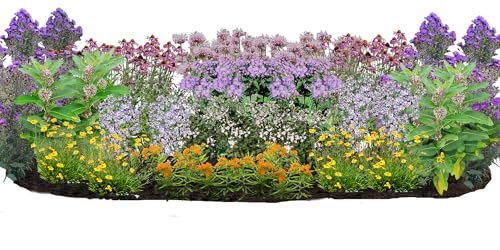
My Home Park 64 Live Native Plants for Full Sun
My Home Park · 64 live native plants (listed) · full sun collection · regionally selected
Our verdict: This is the premium end of pollinator habitat, and the value is time rather than plants. Seed gives you a thin first year and a real second; live perennials give you a planting that performs the season after it goes in the ground. At about $329 it is the most expensive item here, and it is still less than a fully equipped hive with bees in it.
The bottleneck in habitat is establishment, not intent. Most people who buy seed do the sowing and then lose patience in year one, when perennials are quietly building roots and the bed looks like a weed patch. The My Home Park 64 plant native collection for full sun removes that failure point: established plants, selected for a region, planted over a weekend, blooming the following season and getting better every year after.
Set expectations on the work. Sixty four plants is a real planting weekend: dig, water in, mulch lightly between plants rather than over them, and water through the first season while roots establish. After that, native perennials matched to a site need very little. And leave the stems standing over winter, cutting back to varying heights in spring, so the planting doubles as cavity nesting habitat rather than being cleared bare every fall.
Who should buy it
Buy this if you have a sunny area to convert, want results next season rather than in three years, and would rather spend money than spend two years of patience. It is also the sensible institutional purchase for a school, church, or business that was about to buy a beehive as an environmental gesture.
What we don't like
It is by far the most expensive item on this page, and seed does the same job for a tenth of the price if you are willing to wait. Sixty four plants is a genuine weekend of digging plus a season of watering, which is more physical work than people expect. Live plant shipping is also weather dependent, so the planting window is set by the supplier as much as by you.
- Type
- Live native perennial collection
- Count
- 64 plants (listed)
- Exposure
- Full sun collection
- Selection
- Regionally matched (listed)
- Time to bloom
- Following season, versus 2 to 3 years from seed
- Approx. price
- ~$329
Pros
- Established plants perform a full season sooner than seed
- Regionally matched species suit local bees and climate
- Covers a real area in one planting weekend
- Costs less than a fully equipped hive with bees
Cons
- The most expensive option here by a wide margin
- A weekend of digging plus a season of watering
- Shipping windows are set by weather, not by you
Why a backyard hive is not conservation
Start with what the honey bee actually is. The western honey bee, Apis mellifera, is native to Europe, western Asia, and Africa, and was brought to North America by colonists in the seventeenth century. It has been a managed animal for thousands of years. Every colony in a hive box is fed, inspected, treated for varroa mites, requeened when it fails, and often trucked between crops. The background is laid out in the western honey bee entry.
Which means the famous headline is about livestock. The annual colony loss numbers that drive so much of the public alarm are agricultural production statistics, tracked because beekeepers replace what they lose. US beekeepers have reported annual losses around forty to fifty percent in recent national surveys, and the number of managed colonies in the country has nonetheless stayed broadly stable, because losses are replaced by splitting surviving colonies. That is a serious economic and animal health problem. It is not a species heading for extinction.
The species genuinely in trouble are wild. North America has roughly four thousand native bee species, and a number of them, including several bumble bees, have declined sharply. Those declines are driven by habitat loss, pesticide exposure, pathogens, and climate pressure, which is the framing used in the pollinator decline literature. None of those causes is addressed by adding a managed colony to a yard.
To be clear about what we are not saying. We are not saying do not keep bees. Beekeeping is absorbing, useful, and one of the best ways to learn insect biology that exists, and our whole how to start beekeeping guide is there for people who want in. We are saying that if your actual goal is helping pollinators, the hive is not the tool, and the tools that are cost a fraction as much.
The competition question, handled honestly
What the research says, without the spin. A number of studies across different landscapes have examined whether high densities of managed honey bee colonies reduce forage availability for wild bees, and several report measurable effects on wild bee visitation, body condition, or reproduction where flowers are limited. Other work in flower-rich landscapes finds little effect. The honest summary is that the effect appears real, appears strongest where forage is scarce relative to colony density, and is still being characterized.
What that means for a single backyard hive. Two hives in a suburban yard surrounded by lawns and a few ornamental shrubs are drawing tens of thousands of foragers out of a landscape with very little to eat. Two hives in a yard backed onto a native meadow are drawing from abundance. Same equipment, very different situation, and the variable is forage, not the bees.
So the rule is simple, and it applies whether or not you ever keep bees. Plant first. If you are already a beekeeper, planting is not a nice gesture, it is direct mitigation of your own colonies' demand on the neighborhood, and it improves your bees at the same time. Our best plants for honey bees guide covers the forage side from the beekeeper's angle; this page covers it from the pollinator's.
And beware the corporate version of this. Hives on office rooftops installed as a sustainability program are a marketing exercise, not habitat restoration, and in dense cities with limited forage they are the exact scenario the research worries about. If an organization wants to help, meadow planting and reduced spraying on the grounds they already own are cheaper and actually work.
Thing one: plant forage in bloom succession
Bees do not need a peak, they need a season. The classic failure of a pollinator garden is a spectacular June and a hungry April and September. Native bees emerge across a very wide window: mining bees and mason bees fly in early spring when almost nothing is open, bumble bee queens emerge with the first warm days and need forage immediately, and late-season bees and migrating monarchs need August and September flowers. A garden that is dazzling for six weeks is a desert for the other twenty.
So plan by calendar, not by color. Aim for at least three species in bloom at any time from your first warm week to hard frost. Early: willow, maple, crocus, dandelion, redbud, fruit trees, and creeping phlox. Mid: clover, borage, catmint, coneflower, bee balm, milkweed, and lavender. Late: goldenrod, aster, sedum, sunflower, and mountain mint. Goldenrod and aster in particular carry an enormous amount of the late-season load in eastern North America and are exactly the plants people rip out.
Cheapest entry: a wildflower mix. A pollinator seed mix over a prepped patch is the highest return per dollar in this entire guide. The BBB Seed honey bee wildflower mix (about $16) is a sensible starting point for a small bed; for a larger area or a strip along a fence line, the Survival Garden Seeds 24 variety American wildflower pack (about $35) gives you more species diversity per square foot, which is what you actually want.
Plant in clumps, not confetti. A patch of one species several feet across is far more useful to a foraging bee than the same number of plants scattered singly, because a bee working a patch does not have to spend energy searching between flowers. Three square feet of one thing beats one plant of nine things.
Thing two: plant natives, and specifically host plants
Native plants and native bees co-evolved, and some of it is not optional. A substantial share of native bee species are specialists that collect pollen from a narrow range of plants, and if that plant is not present, the bee is not either, no matter how many petunias you install. Generalist nectar sources feed adults; specific host plants determine whether the next generation exists.
Milkweed is the famous case. Monarch caterpillars eat milkweed and nothing else, so a yard without milkweed cannot produce monarchs regardless of how much nectar it offers. A packet like Gardeners Basics milkweed seeds, four native varieties (about $10) is close to the cheapest meaningful conservation action available to a homeowner. Plant the species suited to your region, and note that milkweed seed generally needs a cold stratification period, so fall sowing or a stint in the refrigerator is part of the deal.
If you would rather skip the seed-starting entirely, established plants get you years ahead. A regionally matched live plant kit such as the My Home Park 64 plant native collection for full sun (about $329) is the premium version of this step: real perennials, chosen for a region, planted in one weekend, in bloom the following season rather than three seasons out. It is the most expensive item on this page and it is still less than a fully equipped beehive with bees in it, which is a comparison worth sitting with.
Where to check what is native to you. State extension services and native plant societies publish regional lists, and the USDA maintains plant and pollinator resources at usda.gov. Ten minutes with a regional list beats any national top ten article, including this one.
Thing three: leave bare ground and standing stems
This is the step everyone skips, and it is free. Roughly seventy percent of native bee species in North America nest in the ground, excavating small burrows in bare, well-drained, sun-warmed soil. Most of the rest nest in cavities: hollow or pithy stems, old beetle borings in wood, and similar. Almost nobody nests in a beehive, and almost nothing nests in landscape fabric under three inches of shredded hardwood.
So leave a patch of dirt. A sunny, undisturbed, unmulched, ungrass-covered few square feet at the edge of a bed, along a south-facing slope, or behind a shed is a native bee nesting site. It looks like you forgot to finish. It is habitat. Do not till it, do not mulch it, do not walk on it, and by the second season you may notice tiny mounds with pencil-lead holes in them, which is exactly what success looks like.
And leave the stems up. Cutting perennials to the ground in fall removes the hollow stems that cavity-nesting bees overwinter in. Leave them standing through winter, then in spring cut them back to varying heights, roughly eight to twenty four inches, rather than to the ground. The stubble is nursery habitat, new growth hides it within weeks, and next year's stems replace it. This one habit does more for cavity nesters than any purchased bee house.
The honest social problem is that all of this looks untidy, and neighbors and homeowner associations have opinions. The workaround that tends to succeed is intentionality: crisp edges, a defined border, and a small sign make an unmown patch read as a garden rather than as neglect. That is not a joke, it is the practical difference between a pollinator patch that survives and one that gets a letter.
Thing four: stop spraying
The default suburban spray program is the problem. Routine broad-spectrum insecticide application on lawns and ornamentals kills the insects you were not aiming at, which is most of them. Pollinator exposure happens through direct contact during application, through residues on treated blooms, and for systemic products through nectar and pollen in the plant itself. The simplest, cheapest, most effective pollinator action available to a homeowner is to stop applying things by default.
If you do use a product, the label is the rulebook. Pesticide labels carry legally binding pollinator protection language, including restrictions on applying to blooming plants and on application timing. The Environmental Protection Agency registers these products and maintains the pollinator protection program that shapes that language. Read the whole label, follow it exactly, and treat any advice that contradicts it as wrong.
Four rules that cover most real situations. Never spray anything on plants in bloom. If you must treat, do it at dusk when bees are not flying and the residue has overnight to dry. Spot treat the actual problem rather than blanket treating an area. And ask whether the problem needs treating at all, because aphids on one rose bush are food for the ladybugs and lacewings that would otherwise handle it for free.
Ask your lawn service what they apply and when. Many contracts include routine insecticide applications the homeowner never specifically requested. You can decline those and keep the rest, and most companies will do it without argument.
Check what you buy, too. Nursery plants are sometimes treated with systemic insecticides that persist in the plant tissue, which means a pollinator-friendly plant that is not. Ask at the nursery, and buy from growers who can tell you.
Thing five: put out water
Bees need water and drown easily, which is a solvable combination. Colonies use water for cooling and for diluting stored honey, and solitary bees drink and, in the case of mason bees, need mud. Open water with vertical sides is a hazard rather than a resource, which is why bees end up in dog bowls, pool edges, and birdbaths, and why some of them do not come back out.
The fix is landing surfaces. Any shallow vessel with pebbles, marbles, corks, or a sloped edge that lets a bee stand safely at the waterline works. A purpose-made set like the Retyion four pack bee watering stations (about $18) gives you four small stations to place around a yard, which beats one large one because bees do not travel across a property to drink when the neighbor's pool is closer.
Placement matters more than the vessel. Put water in sun or part sun, near forage, and low to the ground and sheltered from wind. Then keep it in the same place, because bees recruit to a reliable water source and a station that moves around gets abandoned. Top it up daily in heat; a dry station is worse than no station because they learn to stop checking.
One maintenance note: standing water can breed mosquitoes if it sits for more than a few days, so refresh small stations regularly, which you will be doing anyway in summer heat. Our bee water stations guide compares the styles, including the floating ones for people who already have a pond or a pool.
Thing six: host mason bees
If you want the beekeeping experience without livestock, this is it. Mason bees are solitary native cavity nesters, active in early spring, remarkably efficient orchard pollinators, and about as close to sting-free as a stinging insect gets. There is no colony, no honey, no varroa treatment, no swarm, and no inspection schedule. You put up a house, they use it, and in fall you harvest cocoons.
Buy a house you can open. This is the one real product decision, and it is where most bee hotels fail. A sealed decorative bee hotel with glued-in bamboo becomes a disease and parasite trap over a few seasons, because nesting material has to be cleaned or replaced annually. The POLLIBEE wax coated mason bee house (about $29) is the kind we point people to: a real house with removable nesting material rather than a permanently sealed ornament.
Mount it right: facing east or southeast to catch morning sun, five or six feet up, firmly attached so it does not swing, under an overhang or with a roof, with mud available within a short distance since the females seal cells with it. Our how to raise mason bees guide covers the annual cycle, and the mason bee house guide compares the houses in detail.
Thing seven: buy honey from a local beekeeper
If you specifically want to support honey bees, this is the lever. Honey bees are agriculture, and agriculture responds to markets. Buying honey from a beekeeper within driving distance keeps colonies in your area, pays for the varroa treatments and feed those colonies need, and supports the small-scale operations that pollinate local orchards and community gardens.
Where to actually find it. Farmers markets, farm stands, feed stores, and state and county beekeeping association directories. Ask two questions: where were the hives, and is it raw or filtered. A beekeeper will happily answer both. If nobody can tell you where the bees were, you are probably looking at a blended commodity product from an importer, which is fine as a food and is not what you came for.
And the piece nobody mentions: keeping bees is a hobby with a fairly high dropout rate, and the local associations are the ones absorbing that. Buying honey, attending a class, or paying association dues supports the infrastructure that helps new beekeepers not kill their colonies, which is a real pollinator health outcome. Our where to buy bees guide covers the same local networks from the other direction.
One food safety note that belongs on any page mentioning honey: honey is not safe for infants under twelve months due to the risk of infant botulism, a point maintained by the FDA and every pediatric guideline. That applies to raw and pasteurized honey alike, and to honey cooked into food.
What does not help, or helps less than advertised
Seed bombs tossed into wild areas. Well intentioned and frequently counterproductive: mixes often contain species not appropriate to the site, and scattering seed into established vegetation without soil contact mostly feeds birds. Prepare a patch and sow it properly instead.
Sealed decorative bee hotels. Covered above. If it cannot be opened and cleaned, it accumulates parasites, and after a few seasons it is doing more harm than the empty wall it replaced.
Sugar water for tired bees. The viral advice to leave out dishes of sugar water attracts wasps and ants, can encourage robbing among honey bee colonies, and does nothing for the wild bees this page is about. A grounded bee that genuinely needs help can be moved onto a flower. Otherwise, plant flowers and let them handle it.
Buying a hive for a school or an office as an environmental program. Expensive, requires ongoing skilled labor nobody budgeted for, and in a low-forage urban setting is the exact scenario the competition research flags. A meadow planting on ground the institution already owns costs less, needs no beekeeper, and helps the species that need it.
Products marketed as saving the bees with no explanation of how. Some are genuine and many are a logo. Ask what specifically the purchase funds; if the answer is vague, buy a bag of native seed instead and know exactly what happened to your money.
And the near miss worth naming: planting nothing but a few showy nectar annuals. It is not nothing, bees do feed on them, and it leaves out host plants, bloom succession, and nesting habitat, which is three quarters of the job. Nectar is the easy part.
A one weekend plan, and what it costs
Saturday morning, spend about $60 and do the whole first pass. A wildflower mix, a milkweed packet, and a set of water stations covers forage, host plants, and water. Prep a bed by clearing sod, rake the seed in, water it, and put the stations out near flowers.
| Action | Cost | Effort | Who it helps |
|---|---|---|---|
| Wildflower seed mix on a prepped bed | About $16 to $35 | One morning | Nearly every foraging bee, all season |
| Native milkweed seed | About $10 | One hour plus stratification | Monarchs, plus many bees on the bloom |
| Water stations placed near forage | About $18 | Ten minutes, daily top-up | All bees, critically in heat |
| Leave bare ground and standing stems | Free | Less work than the alternative | Ground and cavity nesters, roughly all natives |
| Stop routine spraying | Saves money | One phone call to a lawn service | Everything, immediately |
| Mason bee house, cleaned annually | About $29 | One afternoon per year | Spring cavity nesters, orchard pollination |
| Established native plant collection | About $329 | One weekend planting | Everything, years sooner than from seed |
| Buy local honey | Ongoing | None | Managed honey bee colonies near you |
Compare that to the hive. A complete beehive kit, bees, protective gear, a smoker, and a first year of treatments and feed runs several hundred dollars and a real weekly time commitment through the season, which our beekeeping cost index breaks down honestly. That is a fair price for a rewarding hobby. It is a poor price for pollinator conservation, and those are two different purchases that get sold as one.
Do both if you want. The best version of a backyard beekeeper is one whose property feeds the bees it hosts and the wild bees that were there first. Plant first, then keep bees if the hobby appeals. That order is the entire argument of this page.
If you still want a hive, do it with your eyes open
Nothing here is an argument against beekeeping. It is an argument against conflating two activities. Keep bees because you want to understand a superorganism, because you want honey you produced, because the work is absorbing, or because your orchard could use the help. Those are all good reasons and none of them require pretending the hive is a conservation project.
Then be a good neighbor to the wild bees. Plant enough forage that your colonies are not simply importing demand into a landscape that cannot support it. Keep colony numbers appropriate to what your area can feed. Control varroa properly, since collapsing colonies spread pathogens that can spill over into wild bumble bees, a transmission pathway that appears in the pollinator health literature. Our varroa treatment guide is the practical side of that.
And start with the reading rather than the equipment. The most common failure mode in first year beekeeping is buying a hive in February and bees in April with no plan, which usually ends in a dead colony by the following winter. Our how to start beekeeping guide and the beekeeping books guide are the cheap version of that education, and a local association class is the better one.
More gear worth comparing
Beyond this guide: the highest-rated gear across every category and budget, with a live price check on each.



As an Amazon Associate we may earn from qualifying purchases, at no cost to you.
Quick shop: every pick
Skip the scroll: the whole lineup, with a live price check on each.
- BBB Seed Honey Bee Wildflower Seed MixBest First PurchaseBBB Seed · ~$16Check Price
- Survival Garden Seeds American Wildflower 24 Variety PackBest for Larger AreasSurvival Garden Seeds · ~$35Check Price
- Gardeners Basics Milkweed Seeds, 4 Native VarietiesBest Host PlantGardeners Basics · ~$10Check Price
- POLLIBEE Wax Coated Mason Bee HouseBest Nesting HabitatPOLLIBEE · ~$29Check Price
- Retyion Bee Watering Station, 4 PackBest Water SourceRetyion · ~$18Check Price
- My Home Park 64 Live Native Plants for Full SunBest Premium OptionMy Home Park · ~$329Check Price
Key terms
- Managed pollinator
- A bee species kept and maintained by people, principally the western honey bee and to a lesser extent some bumble bees and mason bees. Managed populations are livestock: they are fed, treated, and replaced, and their numbers reflect market demand rather than ecosystem health.
- Native bee
- One of roughly four thousand North American bee species that evolved here. Most are solitary, most nest in the ground, most do not sting readily, and collectively they do an enormous share of wild plant and crop pollination.
- Bloom succession
- Planning a planting so something is in flower continuously from the first warm week to hard frost. It matters more than total flower quantity, because bee species emerge at different times and a gap in the calendar is a gap in the food supply.
- Host plant
- The specific plant a specialist insect must have to reproduce, as milkweed is for monarchs. Nectar plants feed adults; host plants determine whether there is a next generation, and most pollinator gardens include the first and forget the second.
- Ground nesting
- The nesting strategy of roughly seventy percent of native bee species: small burrows excavated in bare, well-drained, sun-warmed soil. Complete mulch coverage and landscape fabric remove this habitat entirely.
- Cavity nesting
- Nesting in existing holes: hollow or pithy stems, old beetle borings, and manufactured tubes. Mason and leafcutter bees do this, which is what makes bee houses possible and what makes cleaning them mandatory.
- Forage competition
- The situation where high densities of managed honey bees draw down limited floral resources that wild bees also depend on. Research indicates the effect is real and strongest where forage is scarce, which is why planting matters before adding colonies.
- Systemic insecticide
- A product taken up into plant tissue rather than sitting on the surface, so it can be present in nectar and pollen. Worth asking about when buying nursery plants marketed as pollinator friendly.
Questions, answered
does keeping honey bees help save the bees
No, not in the conservation sense. Honey bees are a managed, non-native agricultural species in North America, kept in boxes, fed, and treated for parasites, and their population numbers track market demand rather than ecosystem health. Keeping them is a rewarding hobby and it is agriculture. The bees that are actually declining are wild native species, and they are helped by forage, nesting habitat, and less spraying.
do honey bees compete with native bees
Research suggests they can, particularly where flowers are limited relative to the number of managed colonies. Studies in flower-rich landscapes often find little effect, so the honest answer is that it is context dependent and still being characterized. The practical takeaway is not that honey bees are bad, it is that forage should come before colonies, and that a hive in a yard with nothing blooming imports demand into the neighborhood.
what is the best thing i can do to help bees
Plant forage in bloom succession, so something is flowering from the first warm week to hard frost, and stop spraying. Those two actions together cover the largest share of the problem for the least money. After that, leave bare ground and standing stems for nesting, put out shallow water with landing surfaces, and plant host plants like milkweed rather than only nectar sources.
what flowers should i plant for bees
Aim for at least three species in bloom at any time across the season, and plant in clumps rather than singly. Early season: willow, maple, crocus, redbud, fruit trees, and dandelion. Mid season: clover, borage, catmint, coneflower, bee balm, and milkweed. Late season: goldenrod, aster, sedum, and mountain mint. Check a regional native plant list, because that beats any national recommendation including this one.
are bee hotels good or bad
Good if maintained, harmful if not. Cavity nests concentrate bees at densities nature does not, which concentrates parasites and pathogens as well, so tubes must be replaced annually and cocoons harvested and cleaned each fall. A sealed decorative hotel with glued-in bamboo cannot be cleaned and becomes a trap. If you will not do the annual maintenance, leave hollow perennial stems standing instead.
should i leave sugar water out for bees
No. It attracts wasps and ants, can trigger robbing behavior among honey bee colonies, and does nothing for the wild bees that need help. A single grounded bee can be moved onto a flower if you want to do something. Beyond that, plant flowers, which is the version of this instinct that actually works.
how do i make my yard bee friendly on a budget
About $16 of wildflower seed on a prepped bed, about $10 of native milkweed, and then a list of free actions: stop spraying, leave a patch of bare ground, leave stems standing over winter, rake leaves into beds instead of bags, and mow less often at a higher deck height. That combination outperforms most of what money can buy.
why should i leave bare dirt in my garden
Because roughly seventy percent of native bee species nest in the ground, excavating small burrows in bare, well-drained, sun-warmed soil. Complete mulch coverage and landscape fabric remove that habitat entirely. A few undisturbed square feet in a sunny spot, unmulched and unwalked, is a nesting site, and it costs you nothing but the appearance of having finished the bed.
is buying local honey good for bees
It supports managed honey bee colonies in your area, which is the honest framing. It pays for the mite treatments, feed, and equipment those colonies need and it keeps small beekeeping operations viable near you. It does not do much for wild native bees, which is a separate goal served by planting and habitat. Doing both is entirely reasonable.
can i help bees if i only have a balcony
Yes, and manage expectations. Containers of continuously blooming forage genuinely feed passing bees, and a shallow water station with landing surfaces is useful in heat. What a balcony cannot easily provide is nesting habitat, since ground nesters need soil. If you want to go further from a small space, buying local honey and supporting a habitat planting somewhere with actual ground is the higher-leverage move.
Filed under Explainer
Part of Bees & Pollinators
Keep reading
Native Bees Guide
Meet the several hundred wild species already in your yard, what they nest in, and which ones need help.
The Best Mason Bee Houses
The houses worth buying, which are the ones you can open and clean, and the ones to avoid.
How to Raise Mason Bees
The annual cycle: mount, watch, harvest cocoons in fall, store cool, release in spring.
The Best Bee Water Stations
Shallow, floating, and ceramic options, plus the placement rules that decide whether bees use them.
Mason Bees vs Honey Bees
Two completely different animals: one solitary and seasonal, one a managed superorganism.
The Best Plants for Honey Bees
The forage side from a beekeeper's angle: what actually fills supers, by season and region.