Our Pick: Best Bee Trap
Check PriceBee vs Wasp vs Hornet: How to Tell What You Are Looking At
The fastest answer: fuzzy and round means bee, smooth and narrow-waisted means wasp, and a hornet is just a large wasp. If it is at your food or your drink, it is a yellowjacket, not a honey bee. If it is hovering in your face near wood and will not leave, it is a male carpenter bee and it has no stinger. If it is a huge black-and-yellow insect digging in your lawn in July, it is a cicada killer and it is not interested in you at all.
By The BeehiveKits Hive Desk2026-08-29~16 min read Fact-checked against verified Amazon listingsHow we research
 Best Value
Bees: National Geographic Kids Readers, Level 2
National Geographic Kids · 4.6
~$6
Those four sentences resolve most of the panic we see. The rest of this page is the detail behind them: a full identification table covering ten common North American stingers and look-alikes, then a short profile of each one with the nest, the sting, the diet, and the honest answer to what you should do, which is very often nothing.
Why does the distinction matter beyond curiosity? Because the response is completely different. A honey bee swarm hanging in your tree is a free phone call to a local beekeeper who will happily come take it. A yellowjacket nest in a wall void near a doorway is a pest control job. A bumble bee nest under the shed is something to leave alone for a season and it will end on its own. Mason bees in a hole in your siding are doing no damage whatsoever. Treating all of these the same way is how people end up killing pollinators they never needed to touch, and how other people end up stung by something they should have left alone.
A note on tone. Almost nothing in this list is looking for you. Social wasps defend a nest, which means the danger zone is measured in feet from a specific location, not in a general vicinity. Solitary bees and wasps, which are the large majority of species, have no nest full of sisters to defend and are correspondingly indifferent to you. Real risk exists, particularly for people with sting allergies and around ground nests you cannot see, and it is much narrower than the reputation suggests.
Full disclosure: some links here go to Amazon, and if you buy through one we may earn a small commission at no cost to you. Nobody paid for a mention. Prices are approximate at publication.
What to know
- Bees are fuzzy and rounded; wasps are smooth and narrow-waisted. Hornets are simply large wasps, and the bald-faced hornet is technically a yellowjacket.
- The insect at your soda, your burger, or your trash can in late summer is a yellowjacket. Honey bees have no interest in meat or soda.
- Honey bees have a barbed sting and can only use it once. Wasps, hornets, and bumble bees have smooth stings and can sting repeatedly.
- Male bees and wasps of every species have no stinger at all. The carpenter bee hovering in your face is a male, and it is bluffing.
- A honey bee swarm is not dangerous and is usually removed free by a local beekeeper. Never spray one.
- Ground nests you did not see are how most people get stung. Check before mowing or string trimming in late summer.
- Cicada killers are enormous, alarming, and essentially harmless to people.
- Beekeeper for honey bees and swarms. Exterminator for yellowjackets, hornets, and paper wasps in a bad location. Nobody for most of the rest.

Best Bee Trap Wood Carpenter Bee Trap
Best Bee Trap · Solid wood body · angled entry holes · clear screw-on collection jar (listed)
Our verdict: Of the ten insects on this page, exactly one is both harmless to you and damaging to your house, and this is the tool for it. A wooden box with angled entry holes that mimics the start of a nest tunnel, with a clear jar below that a bee cannot climb out of. No bait, nothing sprayed, about $26.
Only buy this if the abdomen was shiny. A fuzzy banded rear end means bumble bee, and a bumble bee has never bored a hole in anything. A shiny black abdomen plus a perfectly round half-inch hole with sawdust below it means carpenter bee, and the Best Bee Trap wood carpenter bee trap is the standard homeowner answer: hang it high, in the sun, within a few feet of the damage, ideally two weeks before spring emergence.
Traps are only half the job. The permanent fix is plugging the tunnels once activity ends in fall and then painting or sealing the bare softwood, which is what the bees were actually attracted to. Our carpenter bee removal guide runs the whole sequence in order.
Who should buy it
Buy this if you have confirmed carpenter bees, meaning round holes with coarse sawdust and a bee with a shiny black abdomen patrolling the wood. Buy two or three rather than one, and spread them across the problem elevation.
What we don't like
It is plain pine and looks utilitarian on a front elevation, the jar is breakable, and it does nothing at all about tunnels already bored. It is also completely useless against every other insect on this page, which is why identification comes first.
- Target insect
- Carpenter bees only
- Body
- Solid wood (listed)
- Mechanism
- Angled entry holes into a dark chamber
- Collection
- Clear screw-on jar (listed)
- Bait
- None required
- Approx. price
- ~$26
Pros
- No bait, no chemicals, no drift onto flowers
- Cheap enough to hang several
- The proven decoy-tunnel design in real wood
- Reusable season after season
Cons
- Works on carpenter bees and nothing else
- Does not address existing tunnels
- Utilitarian looks

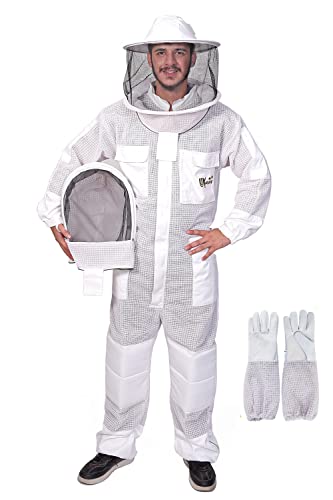
USKEEPERS 3 Layer Ventilated Bee Jacket
USKEEPERS · Three layer ventilated mesh (listed) · removable fencing veil · jacket length
Our verdict: If you are handling a swarm, working near a colony, or holding the ladder while someone else does, wear real gear. This jacket is three layer mesh that a sting cannot reach through, with enough airflow to stay on in summer heat, which matters because the protective gear people take off halfway through the job protects nobody.
Ventilation is a safety feature, not a luxury. The classic failure with cheap cotton bee gear is that it becomes unbearable in July, so it comes off, and the sting happens in the ten minutes it was off. The USKEEPERS three layer ventilated bee jacket (about $80) uses a spacer mesh construction: two outer layers with a thick air gap between them, so a stinger cannot reach skin and air moves through the whole garment.
Jacket rather than full suit is the right call for most homeowners: it covers the half of your body that matters, costs less, stores easily, and is far more comfortable. Our jackets and gloves guide covers the alternatives, and the full suits guide covers when you want more.
Who should buy it
Buy this if you are collecting a swarm, helping a beekeeper, working on a soffit near an active honey bee colony, or simply want to stop being nervous while gardening near your own hives. It is also the right first protective purchase for anyone thinking about keeping bees.
What we don't like
A jacket leaves your legs and ankles unprotected, which matters if you are ever kneeling near a ground nest. Ventilated mesh is bulkier to pack than cotton and snags on rough surfaces. And it is protective gear, not permission: it will not make approaching a hornet nest sensible.
- Construction
- Three layer ventilated mesh (listed)
- Veil
- Removable fencing veil (listed)
- Coverage
- Jacket length, upper body
- Best for
- Honey bee work, swarm collection
- Not for
- Hornet and yellowjacket nest removal
- Approx. price
- ~$80
Pros
- Three layer mesh keeps stings off skin
- Airflow means you keep it on in summer heat
- Jacket format is cheaper and easier to store than a suit
- Removable veil for washing and visibility
Cons
- No leg protection
- Bulkier than cotton to pack
- Not appropriate for social wasp nest removal
Bees: National Geographic Kids Readers, Level 2
National Geographic Kids · National Geographic Kids Readers, Level 2 · early independent reader
Our verdict: The most effective sting prevention for a young child is not a product, it is knowing the difference between a bumble bee on a flower and a yellowjacket at the trash can. This early reader does that job for about six dollars, with real photography and text at an early independent reading level.
Panic causes stings. Running, swatting, and flailing at a stinging insect is far more likely to produce a sting than standing still and walking away, and children do all three because nobody has told them what they are looking at. National Geographic Kids Bees, Level 2 is the cheapest intervention on this page: photographs a kid will actually look at, at a reading level they can manage alone.
Pair it with the three household rules that prevent almost every childhood sting: stay still and walk away, never drink from an open can outdoors in late summer, and never poke a hole in the ground or a paper nest. If the interest sticks, beekeeping with kids covers what comes next, and our books guide covers the grown-up shelf.
Who should buy it
Buy it for an early independent reader who is either frightened of bees or fascinated by them, both of which respond to the same fix. It is also a good add-on gift alongside a habitat kit or a bee house for a child who has just discovered the garden.
What we don't like
It is a short early reader, so a child much past first or second grade will finish it in one sitting and want more. It covers bees rather than the full stinging-insect cast, so the wasp and hornet distinctions still come from you. And it is a paperback that will not survive being carried around a garden all summer.
- Format
- Paperback early reader
- Level
- National Geographic Kids Readers, Level 2
- Best for
- Early independent readers
- Subject
- Honey bees and bee biology
- Approx. price
- ~$6
Pros
- Cheapest sting prevention there is: understanding
- Real photography kids will stop and look at
- Reading level a young child can manage alone
- Pairs well with a habitat kit or bee house
Cons
- Short: a strong reader finishes it quickly
- Covers bees, not wasps and hornets
- Paperback durability
The full identification table
Read across the row for the insect that matches what you saw. Sizes are typical adult body lengths and vary by species and region. Aggression describes behavior near the nest, which is the only place most of these insects are defensive at all.
| Insect | Size | Body | Color pattern | Nest | Aggression | Sting | Eats | What to do |
|---|---|---|---|---|---|---|---|---|
| Honey bee | About half an inch | Fuzzy, moderate | Amber to brown with darker bands, often dusty | Wax comb in cavities: hives, hollow trees, wall voids | Low away from the hive | Barbed, once only, dies | Nectar and pollen | Leave alone. Swarm in a tree: call a beekeeper, free removal |
| Bumble bee | Half to one inch | Very fuzzy, round | Black with bold yellow, sometimes orange bands | Small colonies in ground cavities, rodent burrows, under sheds | Low, defensive within a few feet of the nest | Smooth, can sting repeatedly | Nectar and pollen | Leave alone. Colonies die out by fall on their own |
| Carpenter bee | About one inch | Fuzzy thorax, shiny bare abdomen | Black, often with a yellow fuzzy patch on the thorax | Bored tunnels in bare softwood: fascia, rails, beams | Males hover and bluff; females indifferent | Males none; females smooth, rarely used | Nectar and pollen | Trap and seal only where it damages structure |
| Mason bee | Under half an inch | Fuzzy, stout | Metallic blue-black or dark blue | Existing holes and hollow stems, sealed with mud | None to speak of | Smooth, essentially never used | Nectar and pollen | Nothing. Host them: they are excellent spring pollinators |
| Sweat bee | A quarter inch or less | Slender to stout, lightly fuzzy | Often metallic green; some striped black and yellow | Bare soil burrows, some in rotting wood | None; lands on skin for salt | Smooth, very mild, rare | Nectar and pollen | Brush it off. Leave bare ground for them |
| Yellowjacket | About half an inch | Smooth, narrow waist | Crisp bright yellow and black, sharply defined | Paper nests in ground cavities, wall voids, and under eaves | High near the nest; bold around food | Smooth, repeated, painful | Insects, meat, sugar, garbage | The one at your picnic. Nest near a doorway: call a professional |
| Paper wasp | About three quarters of an inch | Smooth, very slender, long dangling legs | Brown, reddish, or black with yellow markings | Open umbrella comb under eaves, rails, and grills | Moderate; defends the nest, otherwise calm | Smooth, repeated | Caterpillars, insects, some nectar | Leave nests away from traffic. Remove ones at a doorway |
| Bald-faced hornet | About three quarters of an inch | Smooth, robust | Black with a white face and white bands | Large gray paper football hanging in trees or on structures | High; defends aggressively at range | Smooth, repeated | Insects, some nectar and sap | Do not approach or spray a mature nest. Professional removal |
| European hornet | One inch or more | Smooth, very large | Brown and yellow, reddish head and thorax | Paper nests in hollow trees, wall voids, attics | Moderate near the nest; flies at night | Smooth, repeated | Insects, tree sap, fallen fruit | Leave woodland nests. Structural nests: professional removal |
| Cicada killer | One and a half to two inches | Smooth, enormous | Black with yellow markings, rusty wings | Solitary burrows in bare, well-drained soil | Essentially none; males bluff, cannot sting | Females smooth, almost never used | Adults take nectar; provision young with cicadas | Nothing. Wait out July and August, then thicken the turf |
Honey bee
What it looks like: about half an inch, amber to brown with darker bands, fuzzy enough to look soft, and frequently dusted with pollen. Honey bees look busy and slightly scruffy, not sleek. Legs often carry visible pollen loads in yellow, orange, or even blue-gray depending on what is blooming.
Where it lives: in wax comb inside a cavity. That means a managed hive, a hollow tree, or occasionally a wall void or soffit in a house, which is the only situation where a honey bee colony becomes a homeowner problem. A colony persists year after year, unlike almost every other social insect here.
Sting: barbed. A honey bee worker that stings a mammal cannot pull the sting free and dies afterward, which is precisely why honey bees are reluctant to sting away from the hive. A foraging honey bee on a flower is about as dangerous as a moth.
What to do: nothing, in almost every case. The exception worth knowing: a swarm, a basketball-sized cluster of bees hanging on a branch, fence post, or mailbox, is a colony in transit with no nest and no stores to defend, and it is famously docile. Do not spray it. Call a local beekeeping association and someone will usually collect it free, because a swarm is a valuable colony. Our guide on how to catch a swarm describes what that removal actually involves.
The one situation that costs money: a colony established inside a wall or soffit. That is a cutout, which means opening the wall to remove bees, comb, and honey, and it is a job for an experienced removal specialist rather than a can of spray. Killing bees in a wall and leaving the comb behind produces melting honey, staining, and a secondary pest problem.
Bumble bee
What it looks like: big, round, and unmistakably fuzzy from head to tail, boldly banded in black and yellow with orange or white in some species. If it looks like a flying tennis ball with a velvet coat, it is a bumble bee.
Where it lives: small annual colonies, typically a few dozen to a few hundred workers, in a ground cavity: an abandoned rodent burrow, a compost pile, under a shed, inside a bird box, or in a tussock of grass. The entire colony dies in fall except for new queens, who overwinter alone. Nothing is reused next year.
Sting: smooth, so a bumble bee can sting more than once. It very rarely does. Bumble bees are defensive within a few feet of the nest entrance and essentially unbothered everywhere else, and you can stand next to a foraging bumble bee all afternoon.
What to do: leave it. A bumble bee colony under your shed is a several-week inconvenience that ends by itself when the colony dies out in fall, and bumble bees are among the most valuable pollinators in a garden because they buzz pollinate tomatoes, peppers, and blueberries. If the nest entrance is genuinely in a doorway or a play area, mark it, route around it, and revisit the site in winter to close the cavity once it is empty.
The confusion to clear up: bumble bee versus carpenter bee. Look at the abdomen. A bumble bee's rear section is fuzzy and banded. A carpenter bee's is shiny, bare, and black. Bumble bees never bore into wood, so any perfectly round hole with sawdust below it belongs to the other one.
Carpenter bee
What it looks like: roughly bumble bee sized, often larger, with a fuzzy thorax that usually carries a yellow patch and a distinctly shiny, hairless black abdomen. The gloss on the rear end is the tell, visible from several feet away in sunlight.
Where it lives: in tunnels it bores into bare, weathered softwood. Fascia boards, deck rail tops, pergola beams, shed eaves, and fence rails all qualify. It does not eat the wood and gets nothing nutritional from it; the tunnel is a nursery. Females reuse and extend old galleries, which is why one hole becomes many over the years.
Sting: here is the fact that resolves most carpenter bee anxiety. The bee that hovers in your face, darts at you, and refuses to leave is a male, and male bees of every species have no stinger, because the stinger is a modified egg-laying organ. He is bluffing completely. Females do have a sting, are smooth-stinged, and essentially never use it outside of being handled or crushed.
What to do: target the structure, not the species. Traps hung high on sunny elevations near the damage intercept scouting females in spring, and a trap like the Best Bee Trap wood carpenter bee trap costs about $26 and needs no bait. The permanent fix is plugging tunnels once activity stops in fall and then painting or sealing the bare wood. The full sequence is in our guide to getting rid of carpenter bees, and the trap comparison is in the best carpenter bee traps.
Worth remembering: these are native pollinators that buzz pollinate crops honey bees cannot handle. Trap the ones drilling your house and leave the rest to work your garden.
Mason bee
What it looks like: smaller than a honey bee, stout, and often a striking metallic blue-black that reads as dark navy in the sun. Most people who see one assume it is a fly, which is a reasonable mistake at that size.
Where it lives: in existing holes it did not make. Hollow plant stems, old beetle borings, gaps in siding, and the paper tubes people put in mason bee houses all work. The female packs each tube with a series of cells, each with a pollen loaf and an egg, and walls them off with mud, which is where the name comes from.
Sting: technically present in females, functionally irrelevant. Mason bees are solitary, have no colony to defend, and are so reluctant to sting that they are the standard recommendation for gardens with small children. They can be handled by people who know what they are doing, which is not something you would say about a yellowjacket.
What to do: nothing, except possibly encourage them. Mason bees are outstanding early-spring orchard pollinators, active in cooler weather than honey bees will fly in, and hosting them costs almost nothing. Our mason bee house guide covers the houses worth buying, which are the ones you can open and clean, and how to raise mason bees covers the annual cocoon routine.
The homeowner confusion: mason bees using a gap in your siding are not damaging anything. They did not make the hole and they cannot make one. If the hole bothers you, wait until the season ends and seal it.
Sweat bee
What it looks like: small, often under a quarter inch, and frequently a brilliant metallic green that looks nothing like anyone's mental image of a bee. Other species are unremarkable brown or striped. The green ones surprise people every time.
Where it lives: mostly in burrows in bare, sun-warmed soil, which is why tidy gardens with every square inch mulched have fewer of them. Some species nest in rotting wood. Most are solitary, though some are loosely communal.
Sting: present, smooth, and about as mild as stings get. Sweat bees are named for their habit of landing on people to drink perspiration for the salt, and they sting only when swatted or trapped against skin. Brushing one off gently is all that is required.
What to do: nothing, and consider leaving them somewhere to nest. A patch of bare, undisturbed ground in a sunny corner is a nesting site for a whole community of small native bees, and it is one of the highest-value, lowest-effort things in our guide to helping bees without keeping bees. Mulching every square inch of a yard removes habitat for the majority of native bee species, which nest in the ground.
Yellowjacket
What it looks like: about half an inch, smooth and shiny with a pinched waist, and crisply patterned in bright yellow and black with sharp edges to the markings. Nothing fuzzy about it. It flies with a direct, purposeful quality that honey bees lack.
Where it lives: in a paper nest, usually hidden. Ground cavities, wall voids, under decks, in landscape timbers, and occasionally in a visible papery mass under an eave. Colonies are annual, build through summer, and peak in size in late summer and early fall, which is exactly when people notice them.
Sting: smooth, repeatable, and painful. Yellowjackets are the most common cause of stings in North America by a wide margin, and they defend nests vigorously and at some distance. A disturbed ground nest can produce dozens of stings in seconds.
What to do: this is the one that actually matters. Yellowjackets are scavengers as well as predators, which is why they, and not honey bees, are the insects at your soda can, your burger, your trash bin, and your outdoor bar. Late-summer nuisance behavior comes from a large colony running short on the insect prey it fed on earlier in the season; the biology is well covered in the yellowjacket entry, and university extension programs like University of Minnesota Extension publish the practical nest-management guidance.
Practical management: keep lids on trash, cover drinks and never drink from an open can outdoors in August, clean up fallen fruit, and rinse recycling. A nest away from traffic can be left to die out in the first hard freeze. A nest in a wall void, in a doorway, or in a lawn where children play is a job for a professional, at night, with the right equipment. Do not pour anything flammable into a ground nest; people are injured doing this every year.
Paper wasp
What it looks like: longer and much slimmer than a yellowjacket, with a very narrow waist and long legs that dangle conspicuously in flight. Coloring runs brown, rust, or black with yellow markings that are usually less crisply defined than a yellowjacket's.
Where it lives: in the open, in an unmistakable upside-down umbrella of gray paper cells hanging from a short stalk. Under eaves, inside grill lids, in mailboxes, under deck rails, inside patio umbrellas, and in every porch light fixture in America. You can see the cells and often the larvae inside them.
Sting: smooth and repeatable. Paper wasps are moderately defensive of the nest and considerably calmer than yellowjackets or bald-faced hornets. Away from the nest they are indifferent to people.
What to do: depends entirely on location. A nest under a shed eave at the back of the property is a beneficial predator colony eating caterpillars out of your garden all summer, and it dies out over winter. A nest inside the grill lid or over the front door is a problem to remove, ideally early in the season when the nest is small and often tended by a single founding queen. Removing a small nest in spring is dramatically easier and safer than removing a large one in August.
Useful trick: check grill lids, mailboxes, and patio umbrellas in May, before the nests are established. Sixty seconds of looking in spring prevents most paper wasp incidents for the year.
Bald-faced hornet
What it looks like: robust, about three quarters of an inch, black with a distinctive ivory-white face and white banding at the rear. It is unmistakable once you have seen one, and it is the insect people usually mean when they say hornet in the eastern US.
Where it lives: in the famous gray paper football, sometimes basketball sized by fall, hanging from a tree branch, a shrub, or a structure. The nest is fully enclosed with a single entrance at the bottom, unlike the open comb of a paper wasp.
Sting: smooth, repeatable, and delivered with real commitment. This species defends its nest aggressively and at a greater distance than most, and it will pursue. Despite the name it is technically a yellowjacket rather than a true hornet, a detail covered in the bald-faced hornet entry, and its temperament is the reason the distinction is academic to anyone standing near the nest.
What to do: keep your distance and make a location judgment. A nest fifteen feet up in a tree at the back of a lot is genuinely fine to leave; the colony dies at first hard freeze and the nest is never reused. A nest beside a walkway, over a door, at child height in a shrub, or on a structure you have to work on is a professional removal, at night, in proper equipment. This is not a homeowner ladder job, and the widely circulated approach of spraying a mature nest from a stepladder is how people end up in an emergency room.
Do not throw things at it, which should not need saying and evidently does.
European hornet
What it looks like: genuinely large, an inch or more, brown and yellow with a reddish-brown head and thorax. It is the only true hornet established across much of the eastern US, and its size is startling the first time one goes past your ear.
Where it lives: paper nests inside cavities rather than hanging in the open. Hollow trees are the classic site; wall voids, attics, and barn spaces are the ones that become a homeowner issue. Unlike most wasps, European hornets fly at night and are strongly drawn to lights, which is how many people first meet one, banging against a lit window.
Sting: smooth and repeatable, and the size makes it memorable. Defensive near the nest and around lights at night; otherwise not especially interested in people.
What to do: leave woodland and hollow-tree nests entirely alone. They eat a large volume of other insects and the colony ends with the season. If a nest is inside a structure you occupy, that is a professional job. Two habits worth knowing: they can strip bark from lilac, birch, and shrub branches to feed on sap, which sometimes gets blamed on other pests, and they will hammer a lit window at night, so drawing a shade solves the psychological half of the problem instantly.
Cicada killer
What it looks like: the biggest wasp most Americans will ever see, up to two inches, black with yellow markings and rusty-tinted wings. It looks like something that escaped from a film set, and it is the single most common cause of a panicked message about giant hornets.
Where it lives: solitary burrows in bare, well-drained soil. Sandy lawn edges, the strip along a driveway, bare spots on a slope, and sparse turf on a berm are the classic sites. Dozens of individual females may nest in the same good patch of ground, which looks like a colony and is not one.
Sting: the females have one and effectively never use it on people; they use it to paralyze cicadas. The males patrol territory, dive at anything that moves including you, and have no stinger at all. The overall risk to a person standing in the middle of a nesting aggregation is very close to zero, which is covered in the cicada killer wasp entry.
What to do: wait. The adult flight lasts a few weeks in mid to late summer and then it is over. If the burrows in the lawn genuinely bother you, the durable fix is agronomic rather than chemical: thicken the turf so there is no bare, sun-baked soil to dig in. They are choosing your yard because part of it is bald.
And no, it is not a murder hornet. The northern giant hornet that generated headlines was subject to an eradication response in a very limited area of the Pacific Northwest and is not what is digging holes in a lawn in Ohio in July.
What to actually do: the response table
Location decides the response more than species does. The same bald-faced hornet nest is a non-issue at the back of a two-acre lot and a genuine hazard over a front door.
| Situation | Who to call | Typical cost |
|---|---|---|
| Honey bee swarm hanging in a tree or on a fence | Local beekeeping association or a swarm list | Usually free |
| Honey bee colony established inside a wall or soffit | Experienced live removal specialist for a cutout | Paid job; get quotes |
| Bumble bee nest under a shed or in the ground | Nobody; route around it until fall | Free |
| Carpenter bees drilling fascia or rails | Yourself: traps in spring, plug and seal in fall | Around $26 for a trap plus finish |
| Mason bees in siding gaps or stems | Nobody; seal the gap after the season if you want | Free |
| Yellowjacket nest away from foot traffic | Nobody; it dies at first hard freeze | Free |
| Yellowjacket nest in a wall, doorway, or lawn | Licensed pest control, worked at night | Paid job |
| Paper wasp nest, small and early in season | Yourself, carefully, or leave it if it is out of the way | Free to minimal |
| Bald-faced hornet nest near people | Licensed pest control; do not attempt from a ladder | Paid job |
| Cicada killers in the lawn | Nobody; overseed the bare ground in fall | Cost of seed |
When you do call a beekeeper, be ready to answer two questions: are the bees in a hanging cluster or inside a structure, and how high up. A cluster on a low branch is a fifteen minute job somebody will happily drive for. A colony twenty feet inside a chimney is not, and honest beekeepers will tell you so and refer you on.
If you are going to get closer than you should
Most of this page argues for leaving things alone, and there are legitimate reasons to suit up. Beekeepers open colonies routinely. Homeowners occasionally have to work on a soffit where a nest sits, or hold a ladder for someone else, or move a swarm cluster off a mailbox. If you are doing any of that, wear the gear rather than improvising with a hoodie.
For most people that means a ventilated jacket with a fencing veil rather than a full suit. The USKEEPERS three layer ventilated bee jacket (about $80) is the version we point homeowners at: three layer mesh that stings cannot reach through, a removable veil, and enough airflow that you will actually wear it in July instead of taking it off halfway through the job. Our jackets and gloves guide compares the alternatives.
If anyone in the household has a known sting allergy, the risk calculation is different for every insect on this page and it is a conversation with a clinician, not with an article. General sting first aid and the warning signs that mean seek help immediately are covered in our bee sting safety guide.
Teaching kids the difference
Fear of stinging insects is mostly learned, and identification is the cure. A child who can tell a bumble bee on a flower from a yellowjacket at the trash can behaves sensibly around both, which is safer than a child who runs and swats at everything with stripes. Running and flailing is, genuinely, what turns a non-event into a sting.
Three rules cover almost all of it. Stay still and walk away calmly rather than swatting. Never drink from an open can outdoors in late summer, which is the single most common way children get stung in the mouth. And never poke a hole in the ground or a paper nest, no matter how interesting.
For a young reader, National Geographic Kids Bees, Level 2 (about $6) is the cheapest way to turn a scared kid into an interested one, and interested kids stand still. Our beekeeping with kids guide goes further for families who want to get properly involved, and the bee gifts guide covers the craft kits and habitat kits that make good follow-ups.
More gear worth comparing
Beyond this guide: the highest-rated gear across every category and budget, with a live price check on each.



As an Amazon Associate we may earn from qualifying purchases, at no cost to you.
Quick shop: every pick
Skip the scroll: the whole lineup, with a live price check on each.
- Best Bee Trap Wood Carpenter Bee TrapBest for Carpenter BeesBest Bee Trap · ~$26Check Price
- USKEEPERS 3 Layer Ventilated Bee JacketBest Protection if You Get CloseUSKEEPERS · ~$80Check Price
- Bees: National Geographic Kids Readers, Level 2Best for Curious KidsNational Geographic Kids · ~$6Check Price
Key terms
- Barbed sting
- The honey bee's stinger, which lodges in mammal skin and tears free from the bee, killing her. It is why a honey bee will not sting casually away from the hive, and why every other insect on this page can sting repeatedly and she cannot.
- Social versus solitary
- Social species like honey bees, yellowjackets, and hornets have a colony and workers that defend it. Solitary species like mason bees, carpenter bees, and cicada killers have no colony to defend and are correspondingly indifferent to people.
- Swarm
- A honey bee colony reproducing: a queen and thousands of workers cluster on a branch or post while scouts look for a new cavity. Famously docile, since they have no nest or stores to defend, and usually collected free by a local beekeeper.
- Cutout
- The removal of an established honey bee colony from inside a structure, which requires opening the wall to take out bees, comb, and honey. A paid specialist job, and the reason spraying bees in a wall creates a worse problem than it solves.
- Paper nest
- The chewed-wood-pulp construction used by yellowjackets, paper wasps, and hornets. Open umbrella comb for paper wasps, fully enclosed gray envelopes for hornets and many yellowjackets. Annual: never reused the following year.
- Ground nest
- A nest in a soil cavity, used by yellowjackets, bumble bees, and many solitary bees. The yellowjacket version is the leading cause of multiple-sting incidents in North America, usually when a mower or trimmer runs over an entrance nobody saw.
- Buzz pollination
- Vibrating flight muscles against a flower to shake loose pollen it will not otherwise release. Bumble bees and carpenter bees do it, honey bees cannot, and it is why native bees matter for tomatoes, peppers, and blueberries.
- Aggregation
- Many solitary individuals nesting independently in the same good patch of ground, as cicada killers and some sweat bees do. It looks like a colony and behaves nothing like one, since there is no shared nest to defend.
Questions, answered
what is the difference between a bee and a wasp
Bees are fuzzy and rounded with thicker bodies, and they eat nectar and pollen. Wasps are smooth and shiny with a pinched waist, and most are predators or scavengers that will also take meat, sugar, and garbage. The behavior test is faster than the visual one: if it is interested in your food or drink, it is a wasp.
is the thing at my soda can a bee or a wasp
A yellowjacket, essentially always. Honey bees have no use for soda, meat, or trash and are not going to investigate a picnic. Yellowjacket colonies peak in late summer as their insect prey runs short, which is exactly when they become bold around human food. Keep drinks covered and never sip from an open can outdoors in August.
what is the difference between a hornet and a wasp
Hornets are a subset of wasps, generally larger and building enclosed paper nests. In the eastern US the bald-faced hornet is not technically a true hornet at all, it is a yellowjacket, and the European hornet is the true hornet that is actually present. Practically, treat both as large wasps that defend an enclosed nest vigorously.
is it a carpenter bee or a bumble bee
Look at the abdomen. Carpenter bees have a shiny, hairless black rear section; bumble bees are fuzzy all the way back and usually banded yellow. Carpenter bees patrol wood, eaves, and rails, while bumble bees work flowers and nest in the ground. Bumble bees never bore into wood, so a perfectly round hole with sawdust below it is always a carpenter bee.
what should i do about a swarm of bees in my yard
Nothing, and call a beekeeper. A hanging cluster of honey bees is a colony in transit with no nest or stores to defend, and it is one of the most docile things in nature. Local beekeeping associations keep swarm lists, and someone will usually collect it free because a swarm is a valuable colony. Do not spray it, and do not throw anything at it.
when should i call an exterminator for wasps
When the nest is somewhere people cannot avoid: inside a wall void, in a doorway or walkway, in a lawn where children play, or on a structure you have to work on. Location decides it more than species. A nest at the back of a lot away from foot traffic will die out at the first hard freeze on its own, and nothing needs to be done at all.
do all bees die after they sting you
Only honey bee workers. Their stinger is barbed, lodges in mammal skin, and tears free along with part of the abdomen. Bumble bees, carpenter bees, mason bees, and every wasp and hornet have smooth stings and can sting repeatedly. Male bees and wasps of every species have no stinger at all.
what is the giant wasp digging holes in my lawn
Almost certainly a cicada killer: up to two inches long, black with yellow markings and rusty wings, active for a few weeks in mid to late summer. Females sting cicadas, not people, and the males patrolling territory cannot sting at all. Wait it out, then overseed the bare, well-drained soil they were digging in, because bald ground is why they picked your yard.
are yellowjackets and honey bees the same thing
Not remotely. Honey bees are fuzzy, brownish, live in wax comb, eat only nectar and pollen, and sting once. Yellowjackets are smooth, crisply yellow and black, live in paper nests usually hidden in the ground or a wall, scavenge meat and sugar, and sting repeatedly. Most stings blamed on honey bees are yellowjacket stings.
how do i keep wasps away from my patio
Remove what they are coming for. Keep trash lids closed and bins rinsed, cover food and drinks, clean up fallen fruit, and wipe down outdoor bars and grills. Check grill lids, mailboxes, and patio umbrellas in May and knock down small paper wasp nests before they establish. A nest already large in August is a removal job, not a management job.
Filed under Comparison
Part of Bees & Pollinators
Keep reading
How to Get Rid of Carpenter Bees
If the ID came back carpenter bee: the trap, plug, and seal sequence that actually ends it.
The Best Carpenter Bee Traps
Five traps compared, with the placement rules that decide whether any of them catch anything.
Native Bees Guide
Beyond the ten on this page: the several hundred native species already living in a typical yard.
Bee Sting Safety Guide
What a sting actually needs, what it does not, and the warning signs that mean get help now.
How to Help Bees Without Keeping Bees
The honest list of what helps pollinators, for people who like bees and do not want a hive.
The Best Beekeeping Jackets and Gloves
If you are going to get close on purpose: the ventilated gear that stays on in July.