Comparison
16 guides, verified and ranked

Raw Honey vs Manuka Honey: Worth the Price?
For everything you actually eat honey for, buy ordinary raw honey. Manuka is a graded, certified, traceable specialty product from one New Zealand plant, and it is priced accordingly. We explain what UMF and MGO measure, run the price per ounce, and say plainly who should buy which.
Updated Aug 202615 min read
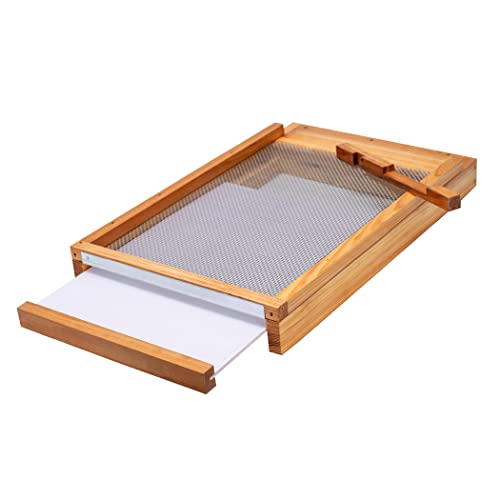
Screened vs Solid Bottom Boards: Which Should You Buy?
The floor of your hive is a $37 decision that gets argued about like a $500 one. Screened bottoms ventilate, let you count mites on a sticky board, and drop beetles out the back. Solid bottoms stop drafts. The answer for most of the United States is one board that does both, and here is why.
Updated Aug 202613 min read

Poly vs Wooden Beehives: Which One Wins
Insulated polymer hives cost roughly twice what pine does and give it back in winter survival and zero maintenance. Wood wins on price, repairability, standardization, and the fact that your mentor owns it. We run insulation, condensation, weight, UV, pests, and ten-year cost.
Updated Aug 202616 min read

Plastic vs Wax Foundation: Which Should You Buy?
One is nearly indestructible and survives an extractor at full speed. The other is what bees prefer and what comb honey demands. We settle which one belongs in your frames, when the other one earns its place, and why the trick that fixes plastic's only real weakness costs about four dollars.
Updated Aug 202614 min read

Package Bees vs Nuc: Which Should You Buy?
A package is three pounds of bees in a screened box with a queen they have never met. A nuc is a small working colony with brood, comb, and a laying queen already in production. For a first-year beekeeper the nuc is worth every dollar of the premium, and this is the full accounting of why.
Updated Aug 202614 min read

Oxalic Acid vs Formic Acid: Which Varroa Treatment
Formic acid is the one chemistry that reaches mites under the cappings, and its label permits use with honey supers on. Oxalic acid is the low-stress knockdown for a broodless or nearly broodless colony. We compare mode of action, brood penetration, queen risk, application, residue, and rotation.
Updated Aug 202617 min read
Italian vs Carniolan Bees: Which Race to Buy
Italians for long warm seasons and steady, predictable buildup. Carniolans for northern winters, frugal clusters, and explosive spring growth. We break down buildup, swarming, temperament, robbing, wintering, and the one caveat that beats race selection entirely.
Updated Aug 202615 min read

Honey Extractor Size Guide: 2, 4, or 8 Frames?
Sized by hive count, not by ambition. One or two hives: a manual 2-frame. Three to six: an electric 2/4. Seven or more: a radial 8-frame. We explain tangential versus radial, why uncapping is the actual bottleneck, and the club option that beats buying anything in year one.
Updated Aug 202616 min read

Hive Top Feeder vs Entrance Feeder: Which Should You Buy?
An entrance feeder puts a jar of sugar syrup on the doorstep of your hive and announces it to every colony within two miles. A top feeder puts the same syrup inside, where only your bees can reach it. That difference has killed more small colonies than any other feeding mistake, and it decides this comparison.
Updated Aug 202613 min read

Deep vs Medium Supers: Which Should You Buy?
A full 10-frame deep weighs about 90 lbs. A full medium weighs about 50. If you work your hives alone, that 40 lb gap is not a preference, it is the difference between a hobby you keep and a hobby your back retires you from. Here is the full case, including the argument that beats weight.
Updated Aug 202614 min read
Raw Honey vs Regular Honey: What the Labels Actually Mean
The full decode of the honey aisle: what raw means and what it does not, the difference between strained, filtered, and ultrafiltered, why pasteurization exists for honey at all, what heat does to aroma and enzymes, why the squeeze bear never crystallizes, what pollen content really tells you (traceability, not nutrition), and why syrup blending is the biggest honesty problem in the global honey trade.
Updated Aug 202616 min read
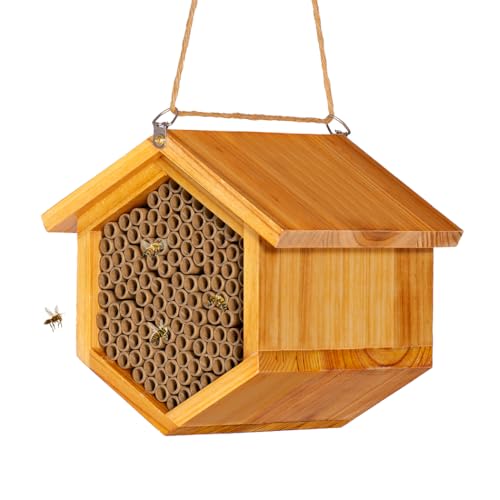
Mason Bees vs Honey Bees: Which One Belongs in Your Yard
One is a native solitary insect that costs about sixty five dollars, takes four hours a year, almost never stings, and out-pollinates its rival blossom for blossom. The other is an imported livestock animal that costs several hundred dollars, takes dozens of hours, needs a suit and mite treatments, and makes honey. Here is the full head-to-head on cost, time, stings, pollination, equipment, regulation, and winter work, plus an honest verdict on who should keep which.
Updated Aug 202618 min read

Bee vs Wasp vs Hornet: How to Tell What You Are Looking At
Ten insects people call bees, sorted out for good. What each one looks like, what it nests in, whether it can sting you more than once, what it actually eats, and what you should do about it. Including the single most useful fact in this whole guide: the thing at your soda can in August is almost never a honey bee.
Updated Aug 2026~16 min read

Flow Hive vs Langstroth: The Real Cost Math (2026)
One hive pours honey from a tap for $458. The other costs $179.21 and needs a $110.42 extractor you only buy once. We run the total-cost-of-ownership math both directions, one hive and five, and tell you exactly which keeper should buy which. Spoiler: the answer flips at the second hive.
Updated Aug 202614 min read

Langstroth vs Top Bar vs Warre: Which Hive Should You Actually Run?
Three hive philosophies, one honest referee. The Langstroth is the standardized vertical hive that runs American beekeeping, the horizontal top-bar hive trades extractable honey for a back that never lifts a super, and the Warre asks you to leave the bees alone on purpose. We walk the history, the physics, the honey math, and the one argument nobody makes loudly enough: compatibility with the beekeepers around you.
Updated Aug 202615 min read

8-Frame vs 10-Frame Beehives: Which Should You Buy?
The width of your first hive box is the most permanent decision in beekeeping: every box, cover, and bottom board you ever buy inherits it. The bees are fine in either. The choice is about your back, your budget, your resale market, and the aisle you will shop for the next decade, and we settle it here with the actual numbers.
Updated Aug 202612 min read
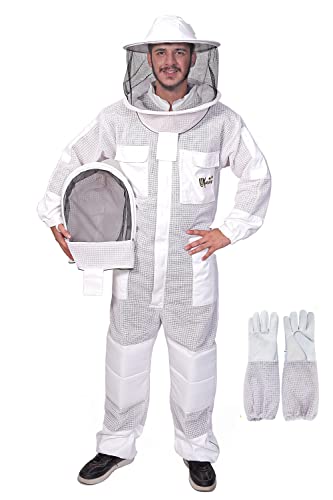
Our top-rated beekeeping gear
Whatever you decide, this is the gear we recommend: verified, researched, and ranked. Live price check on each.


As an Amazon Associate we may earn from qualifying purchases, at no cost to you.