Our Pick: Natures Nate
Check PriceRaw Honey vs Manuka Honey: Worth the Price?
Verdict first: for daily eating, baking, tea, toast, and anything you cook with, buy ordinary raw honey. Nate's 100% Pure Raw and Unfiltered Honey at $14.47 for a 32 ounce bottle, or Kelley's Local Texas Wildflower Honey at $15.50 for 40 ounces, is the honey we would keep on the counter. Buy manuka only if you specifically want the graded, certified New Zealand product and understand what you are paying for, in which case New Zealand Honey Co UMF 10+ at $18.88 is the sane entry and UMF 15+ at $33.88 is the step up.
By The BeehiveKits Hive Desk2026-08-2915 min read Fact-checked against verified Amazon listingsHow we research
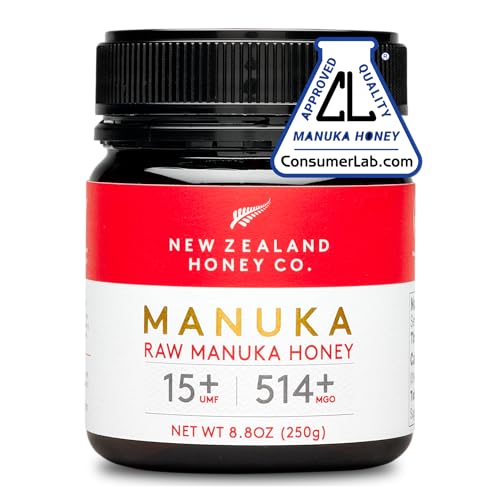 Upgrade Pick
New Zealand Honey Co Raw Manuka Honey UMF 15+ MGO 514+
New Zealand Honey Co · 4.6
$33.88
The price gap is the entire story. Per ounce, these raw honeys land around $0.39 to $0.45. Manuka in its typical small retail jars lands several times higher, and against commodity supermarket honey the multiple is larger still. Nothing about that spread is a scandal, and nothing about it is a bargain either. It is what a single-source, laboratory-graded, third-party-certified product from one plant on one set of islands costs to produce, certify, and ship.
So this is not a comparison of good honey against bad honey. It is a comparison of a pantry staple against a specialty product, and the mistake we see most often is people buying the specialty product to put in tea every morning. That is a very expensive cup of tea. If you want manuka in the house, buy a small jar and treat it as what it is: a premium item with a grading system attached.
Below we explain exactly what UMF and MGO measure and what they do not, run the price per ounce table, show you how to read a manuka label without being misled, and cover the two safety facts that apply to every honey on this page. On the health question, our position is simple and we will repeat it: we describe what these products are and how they are graded, we do not make health claims for any honey, and questions about your health belong with a clinician rather than a honey label.
What to know
- For eating, baking, cooking, and tea, ordinary raw honey wins outright. It costs a fraction as much and tastes better in most culinary applications.
- Manuka is honey from the manuka plant in New Zealand, sold under a laboratory grading system. You are paying for single-source origin, testing, and certification.
- UMF is a certification program that grades against several markers. MGO is a direct measurement of methylglyoxal concentration in the honey.
- A grade number is a chemistry measurement, not a promise about what the honey does. Treat it as a specification, the way you would a coffee origin or a chocolate percentage.
- Price per ounce is the only honest comparison. These raw honeys run about $0.39 to $0.45 per ounce; manuka in typical small jars runs several times that.
- Never cook with manuka. Heat destroys the delicate character you paid for, and any cheap honey performs identically in a recipe.
- No honey of any kind is safe for infants under 12 months. This is a firm safety rule, not a preference.
- People with bee-product sensitivities can react to honey, pollen, and propolis. If that is you, talk to a clinician before buying anything on this page.
At a glance
| Product | Type | Listed size | What you are paying for | Price | Check price |
|---|---|---|---|---|---|
| Nate's 100% Pure Raw and Unfiltered Honey | Raw US honey | 32 oz squeeze bottle | Everyday honey in a bottle you will actually reach for | $14.47 | Check Price |
| Kelley's Local Texas Wildflower Honey | Raw regional US honey | 40 oz | Single-region character at pantry prices | $15.50 | Check Price |
| New Zealand Honey Co Manuka UMF 10+ MGO 263+ | Certified manuka | Small jar, as listed | Entry grade with full UMF certification | $18.88 | Check Price |
| New Zealand Honey Co Manuka UMF 15+ MGO 514+ | Certified manuka | Small jar, as listed | Higher graded markers, third-party tested | $33.88 | Check Price |
The four honeys that define this comparison, priced from our verified offer table on August 29, 2026. Jar sizes shown are as listed; confirm the current size on the listing before comparing per-ounce.

Nate's 100% Pure, Raw and Unfiltered Honey, 32 oz
Natures Nate · Raw and unfiltered (listed) · 32 oz squeeze bottle · about $0.45 per ounce
Our verdict: The honey we would put on the counter and stop thinking about. Raw and unfiltered as listed, in a 32 ounce squeeze bottle that survives daily use, at a price that makes honey a staple rather than an occasion. Against manuka on a per-ounce basis it is a small fraction of the cost, and for toast, tea, yogurt, and baking it is the better product.
The best honey for eating is the honey you eat. Nate's 100% Pure Raw and Unfiltered Honey comes in a 32 ounce squeeze bottle, which sounds trivial and is not: a squeeze bottle gets used, where a heavy glass jar with a sticky lid quietly migrates to the back of a cupboard. At $14.47 that works out to roughly $0.45 an ounce, which is the number to keep in your head for the rest of this page.
Raw and unfiltered, as listed, means the honey has not been heavily processed or fine-filtered, so it retains the pollen and the natural character that get stripped out of the very clear supermarket product. Practically, that shows up as more flavor, more variation between batches, and faster crystallization, all of which are features rather than defects. Our raw vs regular honey explainer covers exactly what the processing difference is.
This is also the honey to cook with, bake with, and put in tea, for a reason that comes up repeatedly below: heat and dilution flatten the delicate character of any premium honey, so paying a specialty price for a cooking ingredient is money spent on something the recipe destroys. Our cooking with honey guide covers substitution ratios and the temperature notes that matter.
Who should buy it
Buy it if you want good honey for daily use and do not want to think about grading systems. It is the right default for families, for anyone who bakes, and for anyone who has been talked into buying specialty honey for their morning tea.
What we don't like
A blended national brand will not give you the distinctive single-region character that a local honey does, and batch-to-batch variation is smaller by design. It will crystallize like any raw honey, which surprises people who expect it to stay liquid forever.
- Type
- Raw and unfiltered (listed)
- Size
- 32 oz squeeze bottle
- Price per ounce
- About $0.45
- Origin
- US honey, as listed
- Best for
- Daily eating, tea, baking, cooking
- Price
- $14.47
Pros
- Roughly $0.45 an ounce, a fraction of specialty honey
- Squeeze bottle gets used rather than stored
- Raw and unfiltered, so the character survives
- The right honey for cooking and baking
Cons
- Less distinctive than a single-source local honey
- Crystallizes over time, like all raw honey

Kelley's Local Texas Wildflower Honey, 40 oz
Kelleys · Raw wildflower honey (listed) · 40 oz · about $0.39 per ounce
Our verdict: The cheapest honey per ounce on this page and the most interesting of the two raw picks. Wildflower honey from one region tastes like that region, which is the whole appeal of honey as a food, and at roughly $0.39 an ounce it makes the specialty-honey premium look like exactly what it is.
If you want honey to taste like something, buy honey from somewhere. Kelley's Local Texas Wildflower Honey is 40 ounces of raw wildflower honey (listed) at $15.50, which works out to roughly $0.39 per ounce, the best value on this page. Wildflower means the bees foraged whatever was blooming, so the flavor carries the character of a particular place and season rather than a blended national average.
This is the honey argument that matters far more than grading systems: honey is an agricultural product with terroir, like wine or olive oil, and the interesting variation is between floral sources and regions. Orange blossom, clover, buckwheat, tupelo, and sourwood are all recognizably different products, and exploring that is a much better use of a honey budget than climbing a grade ladder. Our honey varieties guide walks through the major floral sources and what each tastes like.
It also points at the best honey purchase most people never make: honey from a beekeeper near you, bought at a farmers market. It is usually fresher, usually cheaper than specialty retail, and the person selling it can tell you what was blooming. Our how to sell honey guide is written for the beekeeper side of that transaction, and it explains why local honey is priced the way it is.
Who should buy it
Buy it if you want honey with regional character at a pantry price, if you go through honey quickly enough to justify 40 ounces, or if you want the best cost per ounce on this page.
What we don't like
A 40 ounce container is a commitment, and wildflower honey varies batch to batch by definition, so the jar you love this year may taste different next year. Like all raw honey it will crystallize, and a big container of crystallized honey is a bigger warming job than a small one.
- Type
- Raw wildflower honey (listed)
- Size
- 40 oz
- Price per ounce
- About $0.39
- Origin
- Texas, as listed
- Best for
- Everyday use with regional character
- Price
- $15.50
Pros
- Best price per ounce on this page at about $0.39
- Single-region wildflower character
- Large container suits a household that uses honey daily
- Raw and unfiltered, so flavor survives
Cons
- Batch variation is inherent to wildflower honey
- Large container is a bigger job to decrystallize

New Zealand Honey Co Raw Manuka Honey UMF 10+ MGO 263+
New Zealand Honey Co · UMF 10+ certified · MGO 263+ · third-party tested, New Zealand origin (listed)
Our verdict: If you want manuka in the house, start here rather than at the top of the grade ladder. UMF 10+ with MGO 263+ is fully certified New Zealand manuka with the traceability and testing the category exists to provide, at $18.88 rather than triple that. Buy it as a specialty item to taste and enjoy, not as a substitute for the honey in your tea.
Manuka's premium is real, and so is the diminishing return on climbing the grade ladder. New Zealand Honey Co Raw Manuka Honey UMF 10+ carries both marks you want to see: a UMF certification number and the corresponding MGO figure, MGO 263+, with third-party testing as listed. That is what distinguishes genuine certified manuka from the much larger world of jars with the word manuka on them.
What you are buying, precisely, is a single-source honey from the manuka plant in New Zealand, graded in a laboratory against defined chemical markers, certified by a licensing body, and traceable back through the supply chain. That is an unusual amount of infrastructure for a food product, and the price reflects it. Whether that infrastructure is worth the premium to you is a spending decision, and it is a perfectly reasonable one to make for a distinctive food you enjoy.
What it is not is a health product, and we will not describe it as one. Manuka has a long history of traditional and popular use, and people buy it for many reasons, but this page describes what the honey is and how it is graded, not what it does. If you are considering manuka for a health reason, that is a conversation for a clinician, not for a product page. Our UMF and MGO explainer goes deeper on the grading system itself.
Who should buy it
Buy it if you are curious about manuka and want the certified version rather than a jar with a marketing claim, if you want a distinctive food to enjoy in small amounts, or if you are buying a gift for someone who has asked for manuka specifically.
What we don't like
It costs several times as much per ounce as excellent raw honey, and the jars are small, which catches people out when they compare shelf prices instead of unit prices. The flavor is strong, earthy, and medicinal in character, which not everyone likes, and it is wasted in anything cooked or heavily diluted.
- Type
- Certified manuka honey
- UMF grade
- 10+
- MGO figure
- 263+
- Origin
- New Zealand (listed)
- Testing
- Third-party tested (listed)
- Price
- $18.88
Pros
- Full UMF certification with matching MGO figure
- The sensible entry point into the category
- Traceable single-source New Zealand origin
- Distinctive flavor that genuinely differs from other honey
Cons
- Several times the price per ounce of excellent raw honey
- Small jars make shelf-price comparisons misleading
- Strong earthy flavor is not to everyone's taste
New Zealand Honey Co Raw Manuka Honey UMF 15+ MGO 514+
New Zealand Honey Co · UMF 15+ certified · MGO 514+ · third-party tested, New Zealand origin (listed)
Our verdict: The same honey category with higher measured markers: UMF 15+ and MGO 514+ instead of 10+ and 263+, at $33.88 rather than $18.88. Buy it if you specifically want the higher grade and understand that the number is a chemistry measurement. Do not buy it expecting the price difference to translate into a proportional difference in anything you can taste.
The grade ladder is real chemistry and steep pricing, in that order. New Zealand Honey Co UMF 15+ Manuka carries a higher UMF certification and a correspondingly higher MGO figure, 514+ against 263+, and costs roughly $15 more for a comparable jar. Higher-grade manuka is genuinely scarcer, which is why the price curve steepens rather than tracking the number linearly.
Here is the honest framing. MGO is a measurement of methylglyoxal concentration in the honey, expressed in milligrams per kilogram. UMF is a certification program that grades against several markers, including methylglyoxal and others associated with genuine manuka, and adds licensing and traceability requirements (UMF Honey Association). Those are specifications. They tell you the honey is what it says it is and quantify particular compounds in it. They are not statements about what the honey does in a human body, and this page will not present them as such.
So who should buy the higher grade? Someone who wants the higher grade, knows what it measures, and has decided the premium is worth it, the same way someone chooses a 75 percent chocolate over a 60 percent. That is a legitimate preference. It is a poor purchase for anyone buying on the assumption that a bigger number does something proportionally bigger. If you are buying for someone else, note that graded manuka makes an excellent gift precisely because the certification tells a clear story; our honey gift sets guide covers presentation options.
Who should buy it
Buy it if you specifically want a higher-graded certified manuka, if you are buying a gift where the grade is part of the point, or if you already enjoy manuka at 10+ and want to try further up the ladder.
What we don't like
Roughly double the price for a higher marker figure, with no proportional difference in flavor or usefulness in the kitchen. Small jar sizes and steep grade pricing make this the easiest honey on the page to overspend on, and the temptation to treat the number as more than a chemistry measurement is exactly the mistake we would steer you away from.
- Type
- Certified manuka honey
- UMF grade
- 15+
- MGO figure
- 514+
- Origin
- New Zealand (listed)
- Testing
- Third-party tested (listed)
- Price
- $33.88
Pros
- Higher certified markers with full UMF licensing
- Genuinely scarcer product than entry grades
- Gift-friendly: the certification tells a clear story
Cons
- Roughly double the entry-grade price
- No proportional culinary benefit over 10+
- The easiest honey here to overspend on
The verdict, stated plainly
Buy ordinary raw honey for everything you actually use honey for. Toast, tea, yogurt, oatmeal, marinades, baking, salad dressing, coffee. In every one of those applications, a good raw honey at roughly $0.39 to $0.45 an ounce performs as well as or better than a specialty honey costing several times more, and in anything heated it performs identically because heat flattens the differences that justify a premium.
Buy manuka only if you specifically want manuka. That means you want the graded, certified, traceable, single-source New Zealand product, you find its distinctive earthy flavor appealing, and you have decided the premium is worth it for a specialty food. Those are all good reasons. Buy a small jar, keep it as a treat, and do not put it in your tea every morning unless money is genuinely no object.
And do not buy either one on the basis of health claims. This page describes what these honeys are, where they come from, what their labels certify, and what they cost. It does not tell you what any honey does for you, because that is not a question a product comparison should answer. If you are thinking about honey in a health context, ask a clinician.
What raw honey actually is
Raw honey is honey that has not been pasteurized or fine-filtered. Bees gather nectar, reduce its moisture by evaporation, and store it in wax cells; when it is dry enough, they cap the cells. The beekeeper extracts it, strains out wax and debris, and bottles it. That is the whole process, and our how bees make honey explainer covers the biology in detail.
What "raw" preserves is the pollen, the trace aromatics, and the enzymes that heavy processing removes. Commercially processed honey is often heated to make it flow through fine filters, which produces a crystal-clear product with a long liquid shelf life and a flatter flavor. Neither is dangerous, and both are honey; the difference is character and clarity. Our raw vs regular honey explainer covers what each label actually means on a US shelf.
The more interesting variable is floral source. Honey tastes like whatever the bees foraged: clover is mild and familiar, orange blossom is floral, buckwheat is dark and molasses-like, sourwood is prized and regional. That is where the genuine flavor exploration lives, and it costs almost nothing to explore. Our honey varieties guide is the map.
What manuka honey actually is
Manuka honey is honey produced predominantly from the nectar of the manuka plant, Leptospermum scoparium, which grows in New Zealand and parts of Australia (Wikipedia). It is dark, thick, and strongly flavored, with an earthy, slightly bitter character that is unlike any common table honey.
What makes it a distinct market category is not just the plant. It is the grading and certification infrastructure built around it: laboratory testing for particular chemical markers, licensing programs, traceability requirements, and export standards. Very few foods carry that much verification machinery, and the machinery is a large part of what you pay for.
The reason the machinery exists is worth knowing: manuka commands a large premium, premiums attract fraud, and the industry responded with testing and certification so buyers could tell genuine graded manuka from jars trading on the name. When you buy a certified jar, part of the price is that verification, which is a real service. Our manuka buying guide ranks the certified options.
What UMF and MGO actually measure
These are the two numbers on a manuka label, and they are related but not the same thing.
MGO is a direct measurement: the concentration of methylglyoxal in the honey, expressed in milligrams per kilogram. MGO 263+ means at least 263 mg/kg. It is a single-compound chemical assay, and higher numbers mean more of that compound. Methylglyoxal in manuka forms from dihydroxyacetone present in the nectar of the manuka plant, which is why the compound is characteristic of this honey and not of clover honey.
UMF, the Unique Manuka Factor, is a certification program rather than a single measurement. It grades honey against several markers associated with genuine manuka, including methylglyoxal, and it adds licensing, auditing, and traceability requirements for the companies that use the mark (UMF Honey Association). A UMF number therefore carries more information than an MGO number alone, because it certifies authenticity as well as chemistry.
| Label mark | What it is | What it tells you | What it does not tell you |
|---|---|---|---|
| MGO 263+ | Methylglyoxal concentration in mg/kg | How much of one specific compound is present | Whether the honey is certified authentic manuka |
| UMF 10+ | Certification grade against multiple markers | Authenticity, traceability, and a graded marker profile | Anything about effects on a person |
| "Manuka" with no grade | A product name | Very little | Almost everything you would want to know |
The rule that follows: a jar with a UMF number and a matching MGO figure from a licensed company is a specified product. A jar that says manuka with no grading at all is a name on a label. Our UMF and MGO explainer goes further into how the grades map to each other.
The price per ounce table
Shelf price is misleading in this category because manuka is sold in small jars and table honey in large bottles. Unit price is the honest comparison, so here it is.
| Product | Price | Listed size | Roughly per ounce |
|---|---|---|---|
| Kelley's Texas Wildflower | $15.50 | 40 oz | About $0.39 |
| Nate's Raw and Unfiltered | $14.47 | 32 oz | About $0.45 |
| NZ Honey Co Manuka UMF 10+ | $18.88 | Small jar, as listed | Several times the raw honeys |
| NZ Honey Co Manuka UMF 15+ | $33.88 | Small jar, as listed | Several times again |
We have deliberately not invented an ounce figure for the manuka jars, because manuka is sold in a range of jar sizes and the size on any given listing changes. Do this yourself before buying: find the net weight on the listing, convert grams to ounces by dividing by 28.35, and divide the price by that number. Then compare it to $0.39. That single calculation is the most useful thing on this page, and it is the calculation the packaging is least eager for you to make.
For orientation, a common retail manuka jar size is small enough that per-ounce pricing typically lands several times above good raw honey, and against inexpensive commodity supermarket honey the multiple is larger still. None of which makes manuka a bad product. It makes it a poor everyday one.
How to read a manuka label without getting fooled
Five checks, in order of usefulness.
1. Look for a UMF number from a licensed company. That is the certification with auditing and traceability behind it. An MGO figure alone is a chemistry number without the authenticity framework around it.
2. Check that the MGO and UMF figures correspond. Genuine graded products list both and they track each other; UMF 10+ pairs with MGO 263+, UMF 15+ with MGO 514+, and so on. Mismatched or missing pairs are a reason to look at a different jar.
3. Find the net weight and do the per-ounce math. Small jars make expensive honey look affordable. Convert and compare.
4. Ignore the adjectives. Words like premium, active, and pure are not grades and are not regulated in the way a certification mark is. The number and the licensing are the content; everything else is packaging.
5. Be skeptical of health language on any honey. Sellers sometimes imply things a food label should not imply. A certification grades chemistry and authenticity, and that is all it does. If a claim on a jar sounds like a medical claim, treat it as marketing and take the actual question to a clinician.
Traditional uses, and where health questions belong
People have used honey in food and in traditional practice for thousands of years, and manuka in particular has a long history of popular use in New Zealand and, more recently, worldwide. Those traditions are real and interesting as cultural facts, and plenty of people buy manuka because of them.
What we will not do is translate a tradition into an effect. Saying "people traditionally take manuka for X" is a description of behavior; saying it works for X is a claim, and it is not a claim a honey comparison should be making. So: we describe the product, its origin, its grading, its flavor, and its price, and we stop there deliberately.
If you are considering honey of any kind in connection with a health question, take that question to a clinician who knows your situation. That is not a disclaimer we are adding for form. It is the actual right answer, and it costs you nothing to follow it.
Taste, and why manuka is a poor cooking honey
Manuka tastes strongly of itself: earthy, dark, faintly bitter, with a thick texture that is closer to a paste than a syrup. Some people love it. Some people find it medicinal and unpleasant on toast. It is worth knowing which camp you are in before buying a large jar, which is one more argument for starting at the entry grade.
In cooking, it is straightforwardly the wrong tool. Heat drives off volatile aromatics in any honey, and the character you paid a premium for is exactly what disappears first. Bake with manuka and you have made an expensive batch of something that tastes the same as it would with $0.39 honey. The same is true of anything heavily diluted, which includes a mug of hot tea.
If you want honey that does something distinctive in the kitchen, the interesting money is in floral varieties rather than grades. Buckwheat honey in barbecue sauce, orange blossom in a vinaigrette, sourwood on a biscuit. Our cooking and baking guide covers substitution ratios and temperature notes, and our hot honey guide covers the infused end of the category.
Certification, traceability, and counterfeits
The uncomfortable fact behind the whole manuka category is that far more honey has been sold as manuka worldwide than the manuka plant plausibly produces. That gap is why the certification infrastructure exists, and it is why paying for a licensed, graded, traceable jar is a rational choice if you want manuka at all.
Honey adulteration is a broader issue than manuka, too. Because honey is expensive relative to sugar syrups, dilution and mislabeling occur across the global honey trade, which is one more reason to prefer honey with a clear origin story: a certification mark, or a beekeeper you can talk to.
Which points at the cheapest form of traceability there is: buy from a local beekeeper. A jar bought at a farmers market from the person who extracted it has a supply chain one link long. Our raw honey buying guide covers what to look for on a US label, and the beekeeper's side of that transaction is in our how to sell honey guide.
Crystallization and storage, for both
All real honey crystallizes eventually, and raw honey crystallizes faster because the pollen and particles give sugar crystals something to form around. Crystallized honey is not spoiled, not fermented, and not a sign of adulteration. It is a physical state change, and it is reversible.
To bring it back: place the jar in warm water, not boiling, and give it time. Avoid the microwave, which heats unevenly and scorches, and avoid high heat generally, which drives off aroma and defeats the point of buying good honey. Our honey warmers guide covers the gear if you deal with this often, and our does honey go bad explainer covers shelf life properly.
Storage for both: a sealed container at room temperature, away from direct sun. Do not refrigerate honey, which accelerates crystallization. Keep the lid clean and use a dry spoon, since introducing water is the one thing that can actually cause honey to ferment.
Two safety facts that apply to every honey here
Do not give honey of any kind to an infant under 12 months old. This applies to raw honey, manuka, pasteurized supermarket honey, honey in baked goods intended for infants, and honey on a pacifier. The reason is the risk of infant botulism, and the guidance is firm rather than cautious (FDA; see also Wikipedia on infant botulism). Grading, certification, and price make no difference to this rule. After twelve months, honey is a normal food.
People with bee-product sensitivities can react to honey, pollen, and propolis. If you have a known allergy to bee products or to pollen, or you have reacted to bee stings, talk to a clinician before adding any honey product to your diet. That includes raw honey, which retains more pollen than processed honey by design, and it includes bee pollen and propolis products sold alongside honey.
Neither of these is a reason to avoid honey generally. They are the two facts worth knowing before you buy, and they apply identically to the $0.39 per ounce honey and to the certified jar.
Pick raw honey if / pick manuka if
Pick ordinary raw honey if: you eat honey regularly; you cook or bake with it; you put it in tea or coffee; you want the best flavor per dollar; you want to explore floral varieties, which is where the genuinely interesting differences in honey live; you are feeding a family; you want a large container that lasts.
Pick manuka if: you specifically want the certified New Zealand product; you like the strong earthy flavor and want it as a specialty food; you are buying a gift where the grading and certification are part of the appeal; you want a traceable single-source honey and have decided the verification is worth paying for.
Pick neither on the basis of health claims. If a health question is what brought you here, the honest answer is that a honey comparison is the wrong place to resolve it, and a clinician is the right one.
What we would actually buy
For the counter, permanently: Nate's 32 oz raw and unfiltered at $14.47, in the squeeze bottle, because a honey you can use one-handed at breakfast is a honey you will actually finish.
For flavor and value: Kelley's Texas Wildflower at $15.50 for 40 ounces, at roughly $0.39 an ounce the best value on this page, with genuine regional character. Better still if you can find the equivalent from a beekeeper in your own county.
For the specialty shelf: one small jar of New Zealand Honey Co UMF 10+ at $18.88, treated as what it is. And if you are buying a gift for someone who has specifically asked for high-grade manuka, UMF 15+ at $33.88 with a clear certification story on the label is a good present.
What we would not do is spend manuka money on everyday honey consumption. The pantry honey is not a compromise; for eating, baking, and tea it is the better product, and it costs a fraction as much. Our raw honey guide and varieties guide are where we would send that budget instead.
More gear worth comparing
Beyond this guide: the highest-rated gear across every category and budget, with a live price check on each.



As an Amazon Associate we may earn from qualifying purchases, at no cost to you.
Quick shop: every pick
Skip the scroll: the whole lineup, with a live price check on each.
- Nate's 100% Pure, Raw and Unfiltered Honey, 32 ozEveryday EatingNatures Nate · $14.47Check Price
- Kelley's Local Texas Wildflower Honey, 40 ozSingle-Region CharacterKelleys · $15.50Check Price
- New Zealand Honey Co Raw Manuka Honey UMF 10+ MGO 263+Trying Manuka SensiblyNew Zealand Honey Co · $18.88Check Price
- New Zealand Honey Co Raw Manuka Honey UMF 15+ MGO 514+The Higher GradeNew Zealand Honey Co · $33.88Check Price
How we chose
We compare on price per ounce, taste, and what the label actually certifies. We make no health claims for any honey, and we do not repeat health claims made by sellers.
Grading explanations come from the certifying body and encyclopedic sources, linked inline. Where a number measures a chemical marker, we say which marker and stop there.
Jar sizes are taken from the product listings. Manuka is commonly sold in small jars, so confirm the current size on the listing before running your own per-ounce math.
Safety facts, specifically the infant rule and bee-product sensitivities, are included on every honey article we publish, regardless of product.
Prices come from our verified offer table (checked August 29, 2026). No brand paid for placement, and our top pick is the cheapest honey on the page.
Key terms
- Raw honey
- Honey that has not been pasteurized or fine-filtered, so it retains pollen, aromatics, and natural character. It crystallizes faster than processed honey, which is a physical change rather than spoilage.
- Manuka honey
- Honey produced predominantly from the nectar of the manuka plant, Leptospermum scoparium, in New Zealand and parts of Australia. Dark, thick, and strongly flavored, and sold under a formal grading system.
- UMF
- Unique Manuka Factor: a certification program that grades manuka against several chemical markers and adds licensing, auditing, and traceability requirements. A UMF number certifies authenticity as well as chemistry.
- MGO
- Methylglyoxal, measured in milligrams per kilogram. MGO 263+ means at least that concentration. It is a single-compound assay, so it quantifies one thing and certifies nothing about authenticity on its own.
- Price per ounce
- The only honest way to compare honey across jar sizes. Divide price by net weight in ounces, remembering that grams divided by 28.35 gives ounces. Manuka's small jars make shelf prices misleading.
- Floral source
- The plant the bees foraged, which is what actually determines how honey tastes. Clover, orange blossom, buckwheat, and sourwood are recognizably different products, and exploring them costs almost nothing.
- Crystallization
- The natural formation of sugar crystals in honey over time. It is not spoilage. Warm the jar gently in warm water to reverse it, and avoid the microwave and high heat, which damage flavor.
- Infant botulism risk
- The reason no honey of any type should be given to a child under 12 months old. The rule applies regardless of grade, price, processing, or certification.
Questions, answered
is manuka honey worth it
Worth it as a specialty food if you want the certified New Zealand product and enjoy its distinctive earthy flavor. Not worth it as everyday honey: per ounce it costs several times what excellent raw honey costs, and in tea, baking, or anything heated the difference is lost. Buy a small jar and keep good raw honey for daily use.
what is the difference between raw honey and manuka honey
Raw honey is a processing description: honey that has not been pasteurized or fine-filtered, from any floral source. Manuka is an origin description: honey from the manuka plant in New Zealand, sold under a laboratory grading and certification system. Manuka can be raw too. The categories answer different questions.
what does umf mean on manuka honey
UMF stands for Unique Manuka Factor. It is a certification program that grades honey against several markers associated with genuine manuka and requires licensing, auditing, and traceability from the companies that use the mark. It certifies authenticity and chemistry, and it says nothing about effects on a person.
what does mgo mean on manuka honey
MGO is methylglyoxal, measured in milligrams per kilogram. MGO 514+ means the honey contains at least that concentration. It is a single-compound measurement, so a jar with only an MGO figure and no UMF certification gives you chemistry without the authenticity framework around it.
is higher umf manuka honey better
Higher UMF means higher measured markers and a scarcer product, which is why prices rise steeply rather than linearly. Whether it is better for you is a preference question, the way choosing a higher cacao percentage is. It does not taste proportionally different, and it is no more useful in the kitchen.
can you cook with manuka honey
You can, but it is a waste of money. Heat drives off the volatile aromatics that give any premium honey its character, so a baked good made with manuka tastes essentially the same as one made with inexpensive honey. Cook with raw honey at about $0.39 to $0.45 an ounce and save the specialty jar for eating as it is.
why is manuka honey so expensive
Three reasons stack up: it comes from one plant in a limited geography with a short flowering window, it is laboratory tested and third-party certified, and that certification infrastructure exists because the premium attracts fraud. You are paying for scarcity plus verification, and it is sold in small jars, which makes the shelf price look lower than the unit price really is.
how do you tell if manuka honey is real
Look for a UMF certification number from a licensed company, check that the MGO figure listed corresponds to that UMF grade, and be skeptical of jars that carry only the word manuka with no grade at all. Marketing adjectives like premium or active are not certifications and are not regulated the way a certification mark is.
can babies eat honey
No. Honey of any kind, including raw, manuka, pasteurized, and honey baked into food, should not be given to infants under 12 months because of the risk of infant botulism. Grade, price, and certification make no difference to this rule. After twelve months, honey is treated as a normal food.
does raw honey taste better than manuka
For most people and most uses, yes. Manuka is strong, earthy, thick, and slightly bitter, which some people love and others find medicinal. A good wildflower or single-floral raw honey is more versatile and, at roughly a fifth to a tenth of the price per ounce, a far better everyday choice.
Keep reading
Best Raw Honey
The US raw honey field ranked, with label terms decoded.
Best Manuka Honey
The certified manuka options compared by grade, jar size, and price per ounce.
Manuka Honey UMF and MGO Explained
A deeper look at the two numbers on the label and how they relate.
Honey Varieties Guide
Clover, buckwheat, orange blossom, sourwood: where honey flavor actually comes from.
Raw Honey vs Regular Honey
What raw, unfiltered, and pasteurized actually mean on a US label.
Cooking and Baking with Honey
Substitution ratios and temperature notes, and why the cheap jar belongs in the recipe.