Our Pick: aichose
Check PriceHow Bees Make Honey: From Nectar to Capped Comb, Step by Step
The short answer: honey is flower nectar that bees concentrate and chemically transform. Foragers drink nectar, a dilute sugar solution that is mostly water, and carry it home in a dedicated storage stomach, where enzymes begin splitting its sucrose into simpler sugars. House bees then pass the load mouth to mouth, add more enzymes, spread it in cells, and fan it with their wings until the water content drops from as much as 70 or 80 percent down to roughly 17 to 18 percent. At that point it is honey, too concentrated and too acidic for microbes to survive in, and the bees seal each cell with a wax cap for storage. That is the whole miracle: collection, enzymes, evaporation, cap.
By The BeehiveKits Hive Desk2026-08-2819 min read Fact-checked against verified Amazon listingsHow we research
The details are where it gets good, and they are worth knowing even if you never keep a hive: the dance language that tells a colony where the flowers are, the bucket-brigade chemistry of the honey stomach, the engineering of a superorganism running an industrial dehydrator on muscle power, and the reason a jar of honey found in an ancient tomb was still edible. For beekeepers, every step has a practical echo, when to add supers, why uncapped frames ferment in the bucket, what a refractometer like the aichose honey refractometer ($22.88) is actually measuring, and why we harvest capped frames and leave the rest.
This is an explainer, not a sales page, but our desk rules still apply: claims are grounded and cited where they deserve it, numbers are honest ranges rather than false precision, and the two tools we do recommend at the end are the two that connect this biology to your kitchen. Standard disclosure, plainly: no brand paid to appear here, and some links go to Amazon, where a purchase may earn us a small commission at no extra cost to you.
What to know
- Honey is concentrated, enzymatically transformed nectar: sucrose split into glucose and fructose, water fanned down to roughly 17 to 18 percent, sealed under wax.
- Foragers communicate flower locations through the waggle dance, a symbolic map encoding direction and distance, danced in the dark on vertical comb.
- Low moisture plus high acidity is why honey essentially never spoils: almost nothing microbial can live in finished, capped honey.
- It takes enormous work: a single worker's lifetime foraging yields only a fraction of a teaspoon of honey, and a strong colony flies six-figure miles for a super.
- Bees make honey for themselves, as winter fuel. A colony needs roughly 40 to 60 pounds to overwinter in cold regions, and ethical harvest means taking only the true surplus.
- The wax cap is the bees' own done stamp: capped frames are ripe for harvest, and a refractometer reading below about 18.6 percent moisture confirms it.
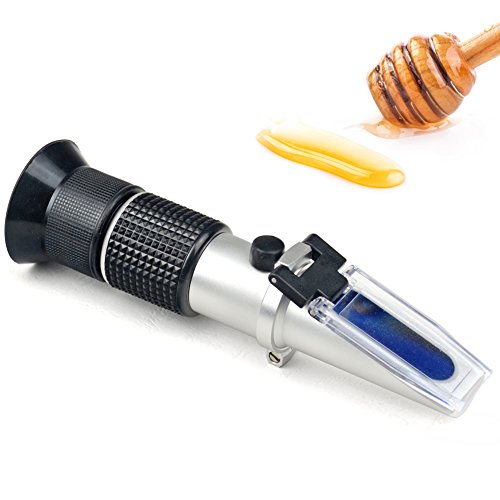
aichose Honey Refractometer
aichose · Honey moisture, Brix, and Baume scales (listed) · optical, no batteries
Our verdict: The bees cure honey to roughly 17 to 18 percent water and cap it; this is the tool that lets you verify their work before you bottle it. One drop on the prism, read the moisture line, and harvest with certainty instead of folklore.
Every fermented bucket of honey traces to the same mistake: extracting nectar that was not ripe yet. The aichose honey refractometer ($22.88) closes the question for the price of two jars: a drop of honey on the prism, hold it to the light, and the moisture scale tells you whether you are at or below the roughly 18.6 percent threshold where honey resists fermentation.
It is an optical instrument, no batteries, calibrated with the included reference, and it earns its keep doubly if you harvest early pulls or run humid-climate hives, where borderline frames are common. It pairs with the harvest sequence in how to harvest honey.
Who should buy it
Anyone bottling honey for family, gifts, or sale: it is the difference between believing your honey is ripe and knowing it is.
What we don't like
Needs a one-time calibration and a temperature-aware reading habit; cheap optics reward reading the instructions once, carefully.
- Scales
- Honey moisture, Brix, Baume (listed)
- Type
- Optical, handheld
- Calibration
- Included reference (listed)
- Price
- $22.88
Pros
- Answers the ripeness question in seconds
- No batteries, pocketable, harvest-day simple
- Cheap insurance against a fermented harvest
Cons
- Requires initial calibration
- Readings need basic temperature awareness
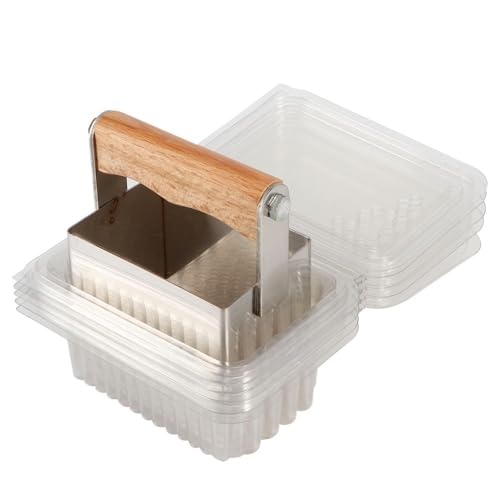
Anu Limen Comb Honey Cutter with Boxes
Anu Limen · Steel comb cutter · includes 10 clamshell boxes (listed)
Our verdict: Comb honey is this entire article in a box, nectar, enzymes, evaporation, and cap, untouched, and it is the one harvest that needs no extractor. A square cutter and clamshells turn a capped frame into the priciest product per pound a hobby apiary sells.
For one or two hives, the cheapest harvest line is no extraction at all: the Anu Limen comb honey cutter ($21.99) presses clean squares from a capped frame, and the included ten clamshell boxes (listed) package them straight for the gift table or farmers market, where comb sections outsell liquid honey per pound everywhere they appear.
The catch is comb quality: cut comb wants fresh, foundationless or thin-foundation frames drawn during a strong flow, which takes planning covered in comb honey supplies. The reward is selling the article you just read, sealed in wax.
Who should buy it
One-to-three-hive keepers skipping the extractor purchase, gift-givers, and anyone whose customers light up at honey they can see the engineering in.
What we don't like
The comb is consumed with the harvest, so the bees rebuild what an extractor would have preserved, a real cost in a resource the colony pays pounds of honey to make.
- Tool
- Steel square comb cutter
- Packaging
- 10 clamshell boxes included (listed)
- Best with
- Fresh comb from strong flows
- Price
- $21.99
Pros
- Harvest with zero extraction equipment
- Comb sections command premium prices
- Included boxes make packaging one motion
Cons
- Sacrifices drawn comb the colony must rebuild
- Wants planned, fresh comb for clean cuts
Start with nectar: what the flower is selling
Nectar is a bribe. Flowers secrete it, a solution of sucrose, glucose, and fructose in water, plus trace aromatics and minerals, precisely to hire pollinators, trading sugar for pollen delivery. Concentration varies wildly by plant, weather, and even hour of the day: some nectars run watery at 15 or 20 percent sugar, others past 50, and bees demonstrably prefer the richer product when they can get it. What blooms within flying range therefore writes the first draft of your honey, its quantity and its flavor alike, which is why we planted a whole companion guide on the best plants for honey bees.
A foraging trip is a shopping run measured in drops. A worker visits somewhere between fifty and several hundred flowers per trip, drawing nectar up through her proboscis and storing it not in her digestive gut but in a dedicated tank, the crop or honey stomach, a stretchable holding organ ahead of the true stomach with a valve between them. A full load runs tens of milligrams, a meaningful fraction of her own body weight, hauled home at flight speed with the fuel bill paid out of the cargo. The exchange rate is humbling and worth keeping in your head every time you lift a frame: by the commonly cited estimate, a single worker produces about one twelfth of a teaspoon of honey across her entire foraging life (Wikipedia: honey).
The waggle dance: how the colony finds the good stuff
Before the chemistry comes the logistics problem: 20,000 foragers, an 8,000-acre search area, and no management. The colony's solution is the waggle dance, one of the most remarkable communication systems outside human language. A forager who has found a rich source returns to the comb and performs a figure-eight dance whose central waggle run encodes the goods: the run's angle from vertical maps the flight bearing relative to the sun's direction, and the run's duration scales with distance, all performed in the dark and read by touch by the followers crowding her (Wikipedia: waggle dance). Decoding it earned Karl von Frisch a Nobel Prize, and it means a colony is not thousands of independent gamblers but a single information-sharing forager with thousands of bodies.
The dance floor doubles as a market. Richer sources earn longer, more vigorous dancing and recruit more foragers; fading patches stop being advertised and the workforce reallocates within hours. This is why your colonies can abandon your flower bed overnight when the basswood turns on, and why honey supers fill in bursts during a strong flow rather than at a steady trickle. Watch an observation hive during a flow and you can see the stock ticker running on the comb.
The honey stomach: chemistry in transit
Conversion starts before the forager lands. In the crop, the nectar load mixes with secretions carrying the enzyme invertase, which begins splitting sucrose, a double sugar, into its two simple components, glucose and fructose. We will hedge the biochemistry the way honest popularizers should: the process involves several enzymes doing several jobs, invertase inverting sucrose, glucose oxidase generating the gluconic acid and trace hydrogen peroxide that acidify and help preserve the product, and the details occupy real researchers. The plain-English version is enough: enzymes turn a simple sugar syrup into a chemically different, simpler-sugared, more acidic substance that is on its way to becoming shelf-stable.
Back at the hive, the forager does not deliver to a cell; she delivers to a coworker. The load is regurgitated and passed mouth to mouth, a relay called trophallaxis, with each receiving house bee adding her own enzyme dose and working the droplet, exposing it to hive air on her mouthparts before depositing it in a cell. This bucket brigade is not inefficiency; it is process engineering, multiplying enzyme contact and starting evaporation while the nectar is still in small, high-surface-area droplets. If the phrase bee spit ruins honey for anyone at your dinner table, remind them that this is the step where nectar becomes medicine-cabinet stable, and that every jar of it has passed this way for a hundred million years.
The dehydrator shift: fanning water out
Fresh nectar deposited in a cell is still far too wet to keep, often more than half water, and water is the enemy, because dilute sugar solutions ferment. The colony's answer is industrial dehydration on muscle power. House bees spread the unripe nectar in thin films across cell walls and hang partially filled cells open to the air, maximizing surface area. Then the fanning shift takes over: workers stationed through the hive and at the entrance run their flight muscles as fans, organizing directional airflow across the combs, pulling in drier air and exhausting humid air. On a strong flow night you can stand behind a hive and smell the result, a warm, floral exhaust the old books call the hive breathing, and hear the hum of the night shift drying your crop.
The finish line is moisture in the range of roughly 17 to 18 percent, at which point the sugars are so concentrated that the solution is hygroscopic, it pulls moisture from the air rather than surrendering any, and osmotically hostile to microbial life. The practical threshold beekeepers carry: honey at or below about 18.6 percent moisture resists fermentation in the jar, which is precisely the number a honey refractometer exists to check. Evaporation time runs from a day or two to the better part of a week per cell depending on nectar, weather, and colony strength, and the bees do not round up: a cell is done when it tests done, by their tongue-tip inspection, not by the calendar.
Capping: the wax seal of approval
When a cell of honey passes inspection, the bees close it with a thin lid of fresh beeswax, an airtight cap that keeps the finished, moisture-hungry honey from reabsorbing humidity and marks the cell complete. A frame of fully capped honey is a wall of pale wax, one of the most satisfying sights in beekeeping, and it is the bees' own quality certificate: under the caps, the product is ripe, stable, and warehouse-ready. The colony's discipline here is worth respecting, because it is the exact discipline harvest borrows.
The beekeeper's translation is the oldest rule in the craft: harvest capped frames. The working standard is frames at least three quarters capped, with the belt-and-suspenders check being a refractometer reading on the uncapped fraction; a tool like the aichose honey refractometer ($22.88) reads moisture in seconds from a single drop. Extract a super of largely uncapped nectar and you have bottled a fermentation experiment. The full pull-to-jar sequence, escape boards, uncapping, spinning, straining, lives in how to harvest honey.
Why honey keeps (almost) forever
Finished honey is a preservation system wearing a food costume, hostile to spoilage on three stacked fronts. First, water: at 17 to 18 percent moisture, honey's water activity sits below what bacteria and most yeasts need to grow, and its concentrated sugars osmotically dehydrate any cell that tries. Second, acid: gluconic acid from the enzyme work drives honey's pH down to roughly 3.4 to 4.5 (listed ranges vary by source), inhospitable to most microbes. Third, chemistry: trace hydrogen peroxide generation and assorted plant-derived compounds add a low-grade antimicrobial hum. Stack the three and you get the famous result: sealed, properly cured honey essentially does not spoil, with pots from ancient Egyptian tombs reported still edible after thousands of years (Wikipedia: honey).
The fine print belongs in the same paragraph as the legend. Honey's shelf-stability depends on staying dry: leave the jar open in a humid kitchen and its hygroscopic surface will pull in water until the top layer can ferment. Crystallization, glucose settling out as crystals, is not spoilage but physics, normal for most honeys and reversible with gentle warmth. And one real caution: honey can contain dormant botulism spores, harmless to older children and adults but the reason every authority says no honey for infants under one year. Respect the fine print and the legend holds: the jar you harvest this fall will outlast the label.
How much a colony makes, and how much we can take
Never forget the reason for all this industry: honey is the colony's winter fuel, banked calories that let a heat-generating cluster of bees outlast months with no flowers. A colony in a cold-winter region needs roughly 40 to 60 pounds of stores to reach spring, less in the mild South, and everything beyond that need is the surplus, the only honey a beekeeper can fairly call theirs. In a decent year an established hive in most US regions banks 30 to 60 pounds of true surplus; in a great year, well more; in a drought year, nothing, and the honest keeper feeds rather than harvests. First-year colonies usually produce little or no surplus at all, because they spent the season's income building comb and population.
The production math explains the price of real honey. A pound of honey represents nectar from something like two million flower visits by the commonly cited estimate, and a colony's foragers collectively fly tens of thousands of miles for a single super. We run the full honest model, region by region, first year versus established, flow years versus busts, in how much honey does one hive really make, and the harvest-side economics in the beekeeping cost index. The short version: respect the 40-to-60-pound rent the bees charge, harvest only above it, and your colonies fund the operation indefinitely.
From comb to jar: where the beekeeper joins the process
Everything to this point was the bees' work; the beekeeper's role is logistics at the end of the line. The standard path: pull capped supers, slice the wax caps off with a heated or serrated knife, spin the frames in a centrifugal extractor so the comb survives to be refilled, an enormous efficiency, since comb costs the bees pounds of honey to build, then strain and settle the honey and bottle it raw. A hobby-scale spinner like the VIVO 2-frame manual extractor ($129.99) handles a couple of hives; the full field from hand-crank to electric is ranked in best honey extractors, with knives, strainers, and buckets in honey harvesting equipment, and jars in honey jars and labels.
There is also the no-machinery path, and it is the oldest one: comb honey, the finished product exactly as the bees warehoused it, cut from the frame wax and all. A simple tool like the Anu Limen comb honey cutter ($21.99) squares perfect sections into clamshells, no extractor required, and comb sections command the highest per-pound price of anything a hobby apiary produces. The comb-honey program, frames, timing, and packaging, is its own guide: comb honey supplies.
Why honeys differ: varietals, wildflower, and honeydew
Honey's flavor is the landscape's signature. Nectar chemistry differs by plant, so honey dominated by one source, a monofloral or varietal honey, carries that plant's character: black locust nearly water-white and delicate, basswood pale with a minty edge, buckwheat dark as molasses, goldenrod ambered and assertive, plus the famous regional flags like Appalachian sourwood, Florida tupelo, and orange blossom. Varietals require landscape-scale bloom and precisely timed supering, pulling boxes when the target flow ends, which is why they are the specialty of migratory and regional operations, not backyards.
Backyard honey is almost always wildflower, the blended output of everything within two miles across the season, and this is a feature: it is the taste of your neighborhood in a given year, unrepeatable by anyone anywhere else, often varying jar to jar between the pale spring pull and the darker fall one. Two oddities round out the family: honeydew honey, made not from nectar but from the sugary secretions of sap-feeding insects, dark and mineral-rich and prized in Europe, and regional quirks like the blue and green honeys that follow bees discovering a candy factory, a reminder that bees optimize for sugar, not romance. Color, by the way, is graded on an actual instrument scale (the Pfund scale) and broadly tracks flavor intensity: paler is milder, darker is bolder.
What honey is not: the label decoder
A short consumer-protection detour, since this page will be read by honey buyers as well as honey makers. Raw honey is simply honey not heated past hive temperatures or fine-filtered; it crystallizes sooner and keeps its pollen and enzyme content, and everything a hobby beekeeper bottles is functionally raw. Pasteurized honey has been heat-treated for shelf clarity, a cosmetic process, not a safety requirement like milk's. Creamed honey is controlled crystallization, a texture, not an additive. And the sadder end of the shelf: honey is among the more adulterated foods in global trade, cut with rice or corn syrups by bad actors, which is one more reason local beekeeper honey, traceable to an actual apiary, commands its premium honestly.
Crystallized honey in your pantry is fine honey being honest: set the jar in warm water and it returns to liquid. Cloudiness, natural pollen, and jar-to-jar variation are the fingerprints of the real thing. The imposter tells are economic, not visual: honey priced like syrup usually is.
The whole process on one page
Run the film once more, start to finish. A scout finds a blooming basswood and dances its bearing and distance on the dark comb. Recruits fly out, tank up their honey stomachs, fifty to a few hundred flowers a trip, while invertase starts splitting sucrose in transit. At home the load passes mouth to mouth, gaining enzymes and losing water, and lands as thin films in open cells. The night shift fans, the hive breathes out flower-scented humidity, and over days the cells concentrate to 17 or 18 percent moisture, acidic, hygroscopic, microbially untouchable. Inspectors approve each cell and the wax caps go on. By fall the colony has banked its 40 to 60 pounds of winter fuel, and in a good year, a surplus above it, which is the only part the beekeeper takes.
If this page brought you here as a curious reader, the adjacent wonders are the types of honey bees and the rest of the vocabulary in the beekeeping glossary. If it brought you here as a future beekeeper, the whole road map is how to start beekeeping, and the two tools below are the ones that connect this chapter of biology to your first harvest.
More gear worth comparing
Beyond this guide: the highest-rated gear across every category and budget, with a live price check on each.




As an Amazon Associate we may earn from qualifying purchases, at no cost to you.
Quick shop: every pick
Skip the scroll: the whole lineup, with a live price check on each.
- aichose Honey RefractometerBest Moisture Checkaichose · $22.88Check Price
- Anu Limen Comb Honey Cutter with BoxesBest No-Extractor HarvestAnu Limen · $21.99Check Price
Key terms
- Nectar
- The sugar solution flowers secrete to attract pollinators, ranging from roughly 15 to over 50 percent sugar. The raw material of honey and the currency of the plant-pollinator trade.
- Honey stomach (crop)
- A stretchable storage tank ahead of a bee's true stomach, used to haul nectar home. Enzymatic conversion of nectar begins here, in transit.
- Invertase
- The key enzyme bees add to nectar, splitting sucrose into glucose and fructose. Part of the enzyme suite that turns sugar water into honey.
- Trophallaxis
- Mouth-to-mouth food transfer between bees. In honey making, the relay that multiplies enzyme exposure and begins evaporation before nectar is stored in cells.
- Waggle dance
- The figure-eight dance by which a forager encodes the direction (relative to the sun) and distance of a food source for nestmates, performed in darkness on vertical comb.
- Ripe honey
- Honey the bees have dehydrated to roughly 17 to 18 percent moisture, below the fermentation threshold near 18.6 percent. Signaled by wax capping and verified with a refractometer.
- Capping
- The thin wax lid bees build over ripe honey cells, sealing the hygroscopic finished product against humidity. The bees' own harvest-ready certificate.
- Hygroscopic
- Moisture-attracting. Finished honey pulls water from humid air, which is why it is stored capped in the hive and lidded in your pantry.
- Monofloral (varietal) honey
- Honey dominated by a single nectar source, like basswood, black locust, or buckwheat, each with distinct color and flavor. Requires landscape-scale bloom; backyard honey is usually a wildflower blend.
- Surplus
- Honey beyond the roughly 40 to 60 pounds a colony needs to overwinter in cold regions. The only portion an ethical beekeeper harvests.
Questions, answered
How do bees make honey, step by step?
Foragers drink nectar and carry it home in a storage stomach where the enzyme invertase begins splitting its sucrose into glucose and fructose. House bees pass the load mouth to mouth, adding enzymes, then spread it in cells and fan it until moisture drops from over half water to roughly 17 to 18 percent. The concentrated, acidified result is honey, and bees seal each finished cell under a wax cap for storage.
Why doesn't honey spoil?
Three stacked defenses: moisture around 17 to 18 percent is too low for bacteria and most yeasts, the concentrated sugars osmotically dehydrate microbes, and enzyme-derived gluconic acid drops the pH to roughly 3.4 to 4.5. Sealed and dry, honey is essentially indefinitely stable, though an open jar in humid air can absorb enough water for surface fermentation. Crystallization, by contrast, is normal physics and not spoilage.
Is honey bee vomit?
Not in any meaningful sense. Nectar rides in the crop, a storage tank ahead of the true digestive stomach, separated by a valve, and never undergoes digestion. The mouth-to-mouth transfers add enzymes, which is processing, not regurgitated food. Culinarily and chemically, honey is transformed plant nectar.
How much honey does one bee make in its lifetime?
About one twelfth of a teaspoon, by the commonly cited estimate. A single pound of honey represents nectar from on the order of two million flower visits and tens of thousands of collective flight miles, which is why a full super, 30 to 50 pounds of honey, is an astonishing logistics achievement.
How long does it take bees to make honey?
Individual cells cure in roughly one to five or so days depending on nectar moisture, weather, humidity, and colony strength, but the meaningful clock is the nectar flow: during a strong bloom a big colony can fill and cap a super in one to two weeks, then add nothing for months in a dearth. Honey arrives in bursts tied to bloom, not on a steady schedule.
What is the white stuff on top of honeycomb?
Wax cappings: thin lids of fresh beeswax the bees build over cells of finished honey. Capping means the honey below passed the bees' own ripeness inspection, which is why beekeepers harvest frames that are mostly capped. Capping wax sliced off at extraction is the cleanest wax a hive produces, prized for candles.
Why do bees make honey at all?
Winter fuel. Honey bees are one of the few insects that stay active through winter, clustering and shivering to generate heat, and that furnace burns stored honey, roughly 40 to 60 pounds per colony in cold regions. Honey is the colony's pantry; surplus beyond winter needs is what beekeepers harvest.
What makes honey different colors and flavors?
The nectar source. Each plant's nectar chemistry produces a signature, black locust is nearly water-white and mild, basswood pale and minty, buckwheat dark and malty, goldenrod amber and bold, and honey color broadly tracks flavor intensity. Single-source varietals require huge blooms of one plant; backyard honey is a wildflower blend unique to its neighborhood and year.
When is honey ready to harvest?
When the bees say so: harvest frames that are at least about three quarters capped, and verify borderline frames with a refractometer reading at or below roughly 18.6 percent moisture. Extracting uncapped, unripe nectar risks fermentation in the bucket. Equally important, harvest only the surplus above the colony's own 40 to 60 pound winter requirement.
Can bees make honey from anything besides flower nectar?
Yes. Honeydew honey comes from the sugary secretions of sap-feeding insects rather than nectar, and is dark, mineral-rich, and traditional in European forests. Bees will also collect any accessible sugar syrup, which is why beekeepers never harvest honey from colonies being fed sugar: that would be bottling syrup, not honey.
Filed under Explainer
Part of Beekeeping 101
Keep reading
How Much Honey Does One Hive Really Make?
The production side of this story: honest yield ranges by region, year, and colony strength, and the winter rent the bees keep.
How to Harvest Honey
Where the beekeeper takes over: pulling supers, uncapping, extracting, straining, and bottling without wrecking the colony's work.
The Best Honey Extractors
The machinery that saves the comb: manual and electric spinners ranked for hobby scale to sideliner.
The Best Plants for Honey Bees
The front end of the supply chain: bloom succession, nectar trees, and the seed mixes worth sowing.
Best Comb Honey Supplies
The no-extractor harvest: cutters, section systems, and packaging for honey sold exactly as the bees made it.
The Beekeeping Glossary
Every term on this page, and ninety more, defined in plain English.