Our Pick: Abrams Books
Check PriceThe Beekeeping Glossary: 90+ Terms Every Beekeeper Should Know
Beekeeping has a vocabulary problem: the hobby is 90 percent learnable from books and mentors, but both assume you already speak the language. This glossary is the fix, 90 plus terms defined in plain English and organized into seven working sections: the colony, the hive, the equipment, bee biology, diseases and pests, honey and hive products, and the things beekeepers actually do. If you want the two references we keep next to it on the shelf, they are The Beekeeper's Bible ($19.60) for depth and Beekeeping For Dummies ($15.99) for the first-year questions.
By The BeehiveKits Hive Desk2026-08-2828 min read Fact-checked against verified Amazon listingsHow we research
We wrote the definitions the way we wish someone had written them for us: short, concrete, and honest about which distinctions matter. Where a term is really a piece of gear, we link the guide where we review that gear. Where a term is a job, we link the how-to. And where a term hides a rabbit hole, bee space, varroa thresholds, honey moisture, we give you the number that matters and a citation you can check.
Use it two ways. Read a section start to finish before your first inspection season and the club meeting chatter will suddenly parse. Or treat it as a lookup table: the terms are alphabetical-ish within each theme, bolded for scanning, and cross-linked into the rest of the site, from the starter kit rankings to the varroa treatment guide. Standard disclosure, plainly: no brand paid to appear here, and some links go to Amazon, where a purchase may earn us a small commission at no extra cost to you.
What to know
- The vocabulary splits into seven working groups: colony roles, hive architecture, equipment, bee biology, diseases and pests, honey products, and beekeeper techniques. Learn them in that order.
- Bee space, the roughly 3/8 inch gap bees leave open as corridors, is the single most important term in the list: it is why removable-frame hives and modern beekeeping exist at all.
- The disease section is the one to actually memorize. Varroa, alcohol wash, and the 2 to 3 mites per 100 bees threshold decide whether your colonies see spring.
- Most confusing beginner pairs are defined side by side here: nuc vs package, deep vs super, swarming vs absconding, nectar flow vs dearth, capped brood vs capped honey.
- Terms that map to gear link straight to our reviews, so the glossary doubles as a shopping index for smokers, excluders, extractors, and refractometers.

The Beekeeper's Bible
Abrams Books · Hardcover reference · covers bee biology, hive management, honey and wax uses
Our verdict: If this glossary had a book form, this is it: the closest thing beekeeping has to a single-volume encyclopedia, from colony biology through candle recipes, produced beautifully enough to live on a coffee table and used hard enough to live in the shed.
Every entry in this glossary has a longer, illustrated cousin somewhere in The Beekeeper's Bible ($19.60). It is the book we hand people who learn by browsing: history, biology, management, and an entire back section of honey, wax, and propolis uses that most manuals skip entirely.
It is a reference, not a curriculum, so pair it with a mentor or a how-to book rather than expecting a lesson plan. The rest of the shelf is ranked in our beekeeping books guide.
Who should buy it
Browsers, gift-givers, and anyone who wants one handsome volume that answers what does that word mean and what do I do with all this wax in the same afternoon.
What we don't like
Organized for browsing rather than step-by-step learning, and the management sections are lighter on modern varroa specifics than current extension guidance; cross-check treatments.
- Format
- Hardcover reference
- Coverage
- History, biology, management, products
- Level
- All levels
- Price
- $19.60
Pros
- Encyclopedic scope in a single volume
- Strong honey, wax, and propolis product sections
- Beautiful enough to gift, useful enough to keep
Cons
- Not a step-by-step curriculum
- Varroa coverage needs supplementing with current extension guidance
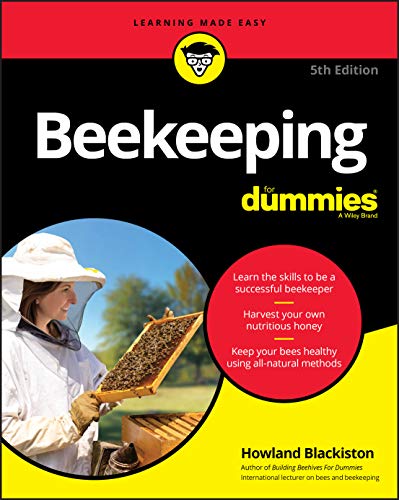
Beekeeping For Dummies
Wiley · Long-running beginner standard · equipment, seasons, diseases, harvest
Our verdict: Where the Bible is a reference, this is a guided tour: every term in our glossary shows up here in context, in the order a first season actually raises the questions. The highest-value $16 in the startup budget.
Beekeeping For Dummies ($15.99) is the book that turns vocabulary into practice: read the chapter, do the inspection, and the words in this glossary become muscle memory. It is calm about the scary sections, disease, stings, dead-outs, which is exactly what a first-year keeper needs at 10 pm in August.
It pairs with, rather than replaces, a local mentor, and its treatment chapters age like all print does; verify chemistry against current extension guidance and our varroa treatment guide.
Who should buy it
Anyone in their first two years. If you buy one book before your bees arrive, this is the one, and this glossary is its index.
What we don't like
US-generalist by design, so regional timing still comes from your club, and print treatment advice always trails the current label landscape.
- Format
- Paperback manual
- Level
- Absolute beginner to second year
- Price
- $15.99
Pros
- Teaches terms in working context, season by season
- Calm, thorough coverage of diseases and problems
- Cheap enough to gift with every starter kit
Cons
- Regional specifics still require a mentor
- Treatment chapters need cross-checking as products change
How to use this glossary
Each section below is a themed definition list: the term in bold, then a two-or-three-sentence working definition, then links where the term deserves a deeper page. We kept jargon out of the definitions themselves wherever possible, and where one term depends on another (you cannot define super without brood box), the dependency is defined in the same section.
If you are brand new, read The Colony and The Hive sections first; they cover about 80 percent of what a beginner class assumes. Then skim Equipment with our starter kit guide open in another tab, and save Diseases and Pests for a careful read before your bees arrive. The full curriculum, in order, lives in how to start beekeeping.
The Colony: who lives in the hive
Colony. The whole social unit: one queen, tens of thousands of workers, seasonal drones, brood, and stores, functioning as a single superorganism. A summer colony peaks around 40,000 to 60,000 bees; a winter cluster may shrink to 10,000 or fewer.
Queen. The one fertile female in a normal colony and the only bee that lays fertilized eggs, up to roughly 1,500 a day at peak. She is not a ruler; she is an egg-laying organ of the superorganism, and colonies replace her when she fails.
Worker. A female bee with undeveloped ovaries that does every job in the hive except laying fertilized eggs: nursing, comb building, guarding, undertaking, and finally foraging. Workers live about six weeks in summer and several months in winter.
Drone. A male bee, stingless, whose single biological job is mating with virgin queens from other colonies. Drones are reared in spring and summer and evicted before winter, one of beekeeping's colder lessons in resource accounting.
Brood. Collective term for all immature bees: eggs, larvae, and pupae. The brood nest is the warm core of the colony, held near 93 to 95 degrees F regardless of outside weather.
Egg. The first stage, a tiny white grain of rice standing upright in a cell. Eggs mean the queen was present within the last three days, which is why spotting eggs matters more than spotting the queen herself.
Larva. The white, C-shaped grub stage that workers feed for about six days. Healthy larvae glisten pearly white in a pool of brood food; discolored or twisted larvae are a disease flag.
Pupa. The transformation stage inside a capped cell, where the grub becomes a recognizable bee. Workers emerge on about day 21 from egg laying, queens on 16, drones on 24.
Capped brood. Pupating brood sealed under tan, slightly domed wax caps. A solid slab of capped brood is the classic sign of a well-mated, healthy queen; a shotgun-scattered pattern deserves investigation.
Brood pattern. The layout of eggs, larvae, and capped cells on a frame. Beekeepers read it like a report card: solid and concentric is good, spotty can mean a failing queen, inbreeding, or disease.
Queenright. A colony with a functioning, laying queen. Its opposite, queenless, is an emergency the bees try to solve by raising a new queen from young larvae, and one you can help solve with a frame of eggs from another hive.
Laying worker. A worker whose ovaries activate after prolonged queenlessness, laying unfertilized eggs (drones only), often several per cell. A laying-worker colony is one of beekeeping's hardest fixes and a strong argument for running two hives.
Cluster. The tight ball bees form in cold weather, shivering flight muscles to generate heat and rotating from the cold rim to the warm core. Winter survival is the cluster slowly eating its way up through stored honey.
Winter bees. Physiologically distinct workers reared in late summer and fall, fat-bodied and long-lived, that carry the colony to spring. They must be reared by low-mite colonies, which is why August varroa control decides February survival, as we cover in when to treat for varroa.
Swarm. Colony-level reproduction: the old queen and roughly half the workers leave to found a new home, leaving the parent hive with queen cells and the remaining bees. A hanging swarm is docile, spectacular, and catchable, see how to catch a swarm.
Supersedure. The colony replacing a failing queen without swarming: workers raise a new queen, and the old one is quietly retired. Supersedure cells typically hang from the comb face, while swarm cells crowd the bottom edge.
The Hive: the architecture
Langstroth hive. The stacked-box hive that has dominated since Rev. L. L. Langstroth patented it in 1852, built entirely around removable frames separated by bee space (Wikipedia: Langstroth hive). Essentially all US commercial equipment and mentor advice assumes it; our 10-frame and 8-frame roundups are all Langstroth.
Bee space. The roughly 3/8 inch gap honey bees leave open as walkways instead of gluing shut with comb or propolis. Respect it and frames lift out clean; violate it and the hive welds itself together. This one observation is the foundation of every modern hive design.
Deep (brood box). The tall box, about 9 5/8 inches, that usually houses the brood nest. A 10-frame deep full of honey weighs about 80 to 90 pounds by common listed estimates, which is why many keepers run deeps for brood only.
Medium (Illinois super). The mid-height box, about 6 5/8 inches, roughly 50 pounds full. Popular both as honey supers and, in all-medium setups, as interchangeable everything-boxes that spare your back, a tradeoff we map in 8-frame vs 10-frame.
Super. Any box added above the brood nest for surplus honey storage, from the Latin for above. "Supering" is the verb: adding boxes ahead of the nectar flow so the bees have somewhere to put the crop.
Frame. The removable wooden or plastic rectangle bees build comb inside, the invention that makes inspection possible. Ten to a deep box in standard configuration; our frames and foundation guide ranks the field.
Foundation. The sheet of embossed beeswax or wax-coated plastic inside a frame that gives bees a hexagonal template, keeping comb straight and centered. Foundationless frames work too, but demand level hives and more attention.
Drawn comb. Foundation the bees have built out into full-depth cells. It is the most valuable asset in beekeeping, taking pounds of consumed honey to produce, which is why keepers protect and reuse it for years.
Bottom board. The hive's floor, solid or screened. Screened bottoms fell out of a varroa-control fad into a ventilation preference; either works with management.
Inner cover. The thin board between the top box and the outer lid, providing an air gap, a feeding port, and a surface the bees will not glue to the roof.
Telescoping cover. The outer lid, edges hanging down over the box like a shoebox lid, usually metal-clad against weather.
Entrance reducer. The notched strip that shrinks the front door so a small colony can defend it, essential for new installs, robbing season, and winter mouse defense. Options in robbing screens and entrance reducers.
Nuc box. A half-width hive, usually five frames, used to sell starter colonies, catch swarms, house splits, and quarantine problems. Every apiary should own a spare; see nuc boxes and swarm traps.
Top bar hive. A horizontal trough hive where comb hangs from bars with no frames or foundation. No heavy lifting, cheap to build, fragile comb, destructive harvest; compared honestly in Langstroth vs top bar vs Warre.
Warre hive. A vertical top-bar hybrid designed for low-intervention keeping, new boxes added underneath rather than on top. Philosophically appealing, practically niche.
Flow hive. Trade name for hives with plastic frames that split internally so honey drains out through a tap without opening the hive. Real convenience at a real price; our analysis is in Flow hive vs Langstroth.
Observation hive. A glass-walled display hive, usually one frame wide, for classrooms and kitchen windows. A teaching tool, not a production colony; the field is small and we rank it in best observation hives.
Equipment: the gear on the truck
Smoker. The bellows-driven firepot whose cool white smoke masks alarm pheromone and triggers bees to preload honey, calming inspections. Buy a large chamber that stays lit; ours is the VIVO large stainless smoker ($29.99), and the full field is in best bee smokers.
Hive tool. The flat pry-bar-and-scraper that unsticks propolized boxes and frames. The J-hook variant adds a frame-lifting hook. Cheap, essential, and prone to walking off; buy two, or a whole tool kit.
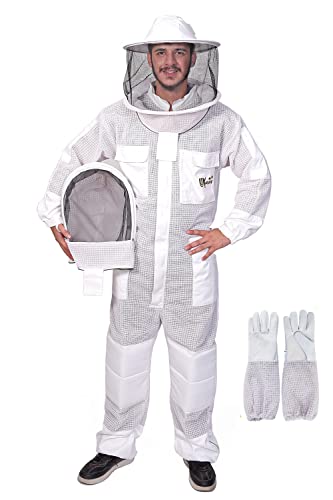
Bee suit. Full-body protection with an attached veil. Modern three-layer ventilated mesh ended the old choice between stings and heatstroke; rankings in best beekeeping suits.
Veil. The mesh head protection, worn alone, on a jacket, or on a suit. The one piece of protection no experienced keeper skips: stings to the face are dangerous and demoralizing.
Beekeeping gloves. Long-cuffed gloves, classically goatskin for the feel-to-protection ratio, like the Forest Beekeeping goatskin gloves ($24.95). Many keepers graduate to nitrile or bare hands for delicate work; start protected.
Queen excluder. A grid, metal or plastic, with slots sized so workers pass but the larger queen cannot, placed between brood boxes and honey supers to keep brood out of the crop. A 10-frame standard like the NUOMIC 10-frame queen excluder 4 pack ($44.99) covers an apiary. Some call it a honey excluder; used right, it is not.
Feeder. Any device for delivering sugar syrup: top feeders, frame (division board) feeders, entrance feeders, jar feeders. Format determines refill disturbance and robbing risk; the comparison lives in best bee feeders.
Extractor. The centrifuge that spins honey out of uncapped frames so the drawn comb survives to be refilled. Manual and electric, 2-frame to commercial; ranked in best honey extractors.
Uncapping knife. The heated or serrated blade that slices wax cappings off honey comb before extraction. Part of the harvest chain we cover in honey harvesting equipment.
Refractometer. The pocket optical tool that reads honey moisture in seconds. Honey below roughly 18.6 percent water resists fermentation, so a aichose honey refractometer ($22.88) is cheap insurance on harvest day.
Bee brush. The soft, long-bristled brush for gently sweeping bees off frames. Use sparingly; bees hate it more than smoke.
Frame grip. The one-handed clamp that lifts frames straight up. A convenience for some, a wrist-saver for others.
Hive stand. The platform that lifts hives 16 to 18 inches off wet ground, skunks, and your lumbar spine. Options in stands and winter wraps.
Mouse guard. The perforated metal strip that lets bees through but keeps fall mice from moving into a warm, honey-stocked winter hive.
Robbing screen. The mesh entrance baffle that confuses raiding foreign bees while resident bees learn the detour, the key tool for defending weak colonies in a dearth.
Escape board. A one-way maze board placed under supers before harvest; bees exit down overnight and cannot return, clearing the boxes without brushing or blowing.
Bee Biology: how the superorganism runs
Pheromone. Chemical signaling, the colony's nervous system. Queen pheromone advertises her presence, brood pheromone begs food, alarm pheromone (banana-scented) recruits defenders, which is why smoke and slow hands matter.
Queen mandibular pheromone. The queen's signature scent blend, spread bee-to-bee through the hive. Its fade is how a colony knows it is queenless or that she is failing, hours before any human could tell.
Nasonov pheromone. The lemony come-here scent workers fan from a raised abdomen to guide nestmates to the entrance, a swarm cluster, or water. Commercial swarm lures imitate it.
Waggle dance. The figure-eight dance by which a returning forager encodes the direction (relative to the sun) and distance of food, communicating a map inside a dark hive (Wikipedia: waggle dance). Decoding it won a Nobel Prize; watching it never gets old.
Royal jelly. The protein-rich glandular secretion nurse bees feed to all young larvae, and to queen larvae exclusively and abundantly. The difference between a worker and a queen is not the egg; it is the diet (Wikipedia: royal jelly).
Nurse bee. A young worker, roughly days 3 to 12 of adult life, whose glands are primed for brood feeding. Colonies balance nurse-to-forager ratios constantly; beekeepers manipulate them with brood swaps.
Forager. A worker in the final act of her life, flying up to two miles or more for nectar, pollen, water, and propolis. Foraging is terminal duty: workers literally wear their wings out.
Guard bee. A worker on entrance duty, inspecting incomers by scent and challenging strangers. Guarding intensity tracks the season: gentle in a flow, fierce in a dearth.
Orientation flight. The hovering, facing-the-hive figure eights of young bees memorizing home's location before first foraging. Often mistaken for robbing or swarming by new keepers; it is a good sign, not a bad one.
Cleansing flight. A winter warm-day flight to defecate away from the hive, bees do not soil the nest. Streams of bees on the first 45-degree afternoon in February is the sound of a colony alive.
Festooning. Bees hanging in living chains, leg to leg, where comb is being built. The function is debated; the sight is unforgettable.
Bearding. Bees clustering calmly on the hive front on hot evenings to cool the interior. Normal thermoregulation, not pre-swarming panic, though chronic heavy bearding says add space or ventilation.
Washboarding. Rows of bees rocking rhythmically on the hive face as if scrubbing it. Function genuinely unknown, one of several behaviors bees decline to explain.
Drone congregation area. A traditional aerial zone, often the same spot year after year, where drones gather and queens fly to mate with a dozen or more of them. Mating in flight, far from the hive, is nature's inbreeding insurance.
Bee bread. Pollen packed into cells, moistened with nectar, and fermented by microbes into the colony's protein staple, the food that actually rears brood.
Propolis envelope. The antimicrobial resin coating bees apply to interior surfaces, part of the colony's social immune system. Rough-sawn interiors encourage it; some keepers now court propolis rather than curse it.
Diseases and Pests: the section to memorize
Varroa destructor. The parasitic mite present in essentially every US colony, feeding on bees and vectoring the viruses that actually kill hives (Wikipedia: Varroa destructor). The number one cause of colony death and the reason monitoring is a scheduled chore, not a response to trouble. Start at best varroa treatments.
Alcohol wash. The standard mite count: about 300 bees (half a cup) from a brood frame swirled in alcohol, dislodged mites counted, result read as mites per 100 bees. The gear is a jar; the discipline is monthly, May through October, with tools ranked in mite monitoring tools.
Sugar roll. The non-lethal cousin of the alcohol wash: bees rolled in powdered sugar shed their mites and go home dusted but alive. Slightly less precise, much easier on the conscience.
Mite threshold. The treat-now line, converging in extension guidance around 2 to 3 mites per 100 bees. Below it, monitor; at or above it, treat, with chemistry chosen by temperature and season per when to treat for varroa.
Deformed wing virus. The most visible varroa-vectored virus: bees emerging with shriveled, useless wings. Seeing it means the mite problem is already serious.
American foulbrood (AFB). The nightmare: a spore-forming bacterial brood disease, smelly, ropy when tested with a matchstick, and effectively incurable, with spores viable for decades. Most states require reporting, and the standard remedy is burning the hive. Know it by sight, call your state apiarist on suspicion.
European foulbrood (EFB). The lesser bacterial brood disease: twisted, yellowed larvae, usually stress-linked, often clearing with a strong flow or requeening. Serious, but a different universe from AFB.
Chalkbrood. A fungal brood disease leaving white or gray mummified larvae at the entrance. Usually a damp-and-weak-colony symptom that better ventilation and a stronger population fix.
Nosema. A gut parasite (a microsporidian fungus) causing dysentery and shortened worker lives, mostly a stress and confinement disease of late winter.
Small hive beetle. The scurrying dark beetle whose larvae ferment and slime out combs in weak colonies, worst in the warm, humid Southeast. Strong colonies police them; traps handle the rest.
Wax moth. The moth whose larvae tunnel and web through comb, destroyer of stored equipment and already-weak colonies, but only a scavenger of the doomed, never the killer of the strong.
Robbing. Bees from strong colonies raiding weak ones for honey, escalating fast in a dearth: frantic fighting at the entrance, wax chips on the landing board. Prevention is reduced entrances and robbing screens, not intervention after it starts.
Absconding. The whole colony abandoning the hive, brood and all, under intolerable conditions (pests, starvation, repeated disturbance). Different from swarming, which is reproduction by a healthy colony.
Colony collapse disorder. The specific 2006-era syndrome of workers vanishing and leaving queen, brood, and stores behind. The term the public knows; modern losses are mostly attributed to the varroa-virus-nutrition-pesticide complex tracked in national surveys by the Bee Informed Partnership.
Formic acid. An organic mite treatment (Formic Pro and others) that penetrates cappings to kill mites on developing brood, used within a label temperature window of roughly 50 to 85 F.
Oxalic acid. An organic acid applied by vaporization or dribble, brutal on phoretic mites and useless under cappings, hence best in broodless periods. Hardware in oxalic acid vaporizers.
Phoretic mites. Mites riding on adult bees rather than sealed in brood cells, the only mites an alcohol wash counts and the only ones oxalic acid reaches. The distinction explains half of varroa treatment strategy.
Honey and Hive Products: the sweet vocabulary
Nectar. The sugary plant secretion, mostly sucrose and water, that bees collect and convert into honey. What blooms within two miles of your hives decides your crop, the subject of best plants for honey bees.
Nectar flow. The period when major forage blooms and colonies gain weight daily, the short annual window the whole beekeeping calendar orbits. Local, weather-dependent, and the thing your club knows that no website does.
Dearth. The gap between flows when nothing yields, typically mid-to-late summer. Robbing season, feeding season, and the time defensive behavior spikes.
Honey. Nectar concentrated below roughly 18 percent water, acidified, and dosed with enzymes until it essentially cannot spoil (Wikipedia: honey). The full transformation gets its own explainer: how bees make honey.
Ripe honey. Honey the bees have dehydrated to safe moisture and sealed under wax. The rule of thumb is harvest frames that are three-quarters capped or better, and verify with a refractometer below about 18.6 percent.
Cappings. The thin wax lids bees build over ripe honey, sliced off at harvest. Capping wax is the whitest, cleanest wax a hive produces and the raw material of the best candles.
Capped honey vs capped brood. The beginner's telling-apart test: honey caps are flat-to-concave and often white or wet-looking; brood caps are domed, tan, and papery. Location helps too, honey up top and in corners, brood in the warm center.
Crystallization. Glucose coming out of solution as crystals, natural, inevitable for most honeys, and reversible with gentle warmth. Not spoilage, whatever the grocery store return desk believes.
Creamed honey. Crystallization done on purpose: seeded with fine crystals and stirred so the set is smooth and spreadable instead of gritty.
Comb honey. Honey sold still sealed in its wax, the oldest premium product in the craft, commanding the highest per-pound price at any farmers market. Gear in comb honey supplies.
Varietal honey. Honey dominated by one nectar source, clover, orange blossom, tupelo, buckwheat, each with its own color and flavor. Hobby-scale honey is usually wildflower, a blend of whatever bloomed.
Honeydew. Honey made not from nectar but from the sugary excretions of aphids and scale insects, dark, mineral-rich, prized in Europe, and a surprise in US forested apiaries.
Beeswax. The building material itself, secreted as scales from glands on young workers' abdomens at a steep metabolic cost, roughly 6 to 8 pounds of honey consumed per pound of wax by common estimates. Renders into candles and balms; kit in candle making supplies.
Propolis. Plant resins collected and blended into the hive's antimicrobial caulk. Sticky, aromatic, the reason you own a hive tool, and a saleable product in its own right.
Pollen. The colony's protein, carried home as bright leg-basket pellets in colors that map the bloom. Trapped and sold as a human supplement; fed back to bees as the base of bee bread.
Mead. Honey wine, the oldest fermented drink and the traditional destiny of surplus crop. Starter kits in best mead making kits.
Beekeeper Actions: the verbs of the craft
Inspection. The routine opening of a hive, every 7 to 10 days in season, to answer four questions: is the queen laying, is there room, is the brood healthy, how do stores compare. The full checklist is in how to do a hive inspection.
Installing a package. Shaking three pounds of bees into a hive and hanging the caged queen until the colony releases her through a candy plug. Walkthrough: how to install a package.
Hiving a nuc. Transferring a five-frame starter colony into a full box in order and orientation, the gentler of the two starts. Walkthrough: how to install a nuc.
Split. Dividing one strong colony into two, frames of brood, bees, and stores plus a new queen or the resources to raise one. The beekeeper's version of the swarm, on the beekeeper's schedule.
Requeening. Replacing a colony's queen, for failure, temperament, or genetics, by introducing a caged replacement slowly enough that the colony accepts rather than kills her. Steps in how to requeen a hive.
Queen marking. A paint dot on the queen's thorax, color-coded by year, making her findable and her replacement detectable. Gear is cheap; steady hands are not included.
Grafting. Transferring day-old larvae into artificial queen cups to raise queens deliberately, the entry skill of queen rearing, covered in queen rearing kits.
Feeding. Supplementing with 1:1 syrup (spring, stimulates and builds) or 2:1 (fall, stores fast), plus fondant or dry sugar in winter and pollen substitute where protein runs short; see winter bee feed and pollen patties.
Reversing. Swapping brood boxes in early spring so the cluster, which wintered its way to the top, regains empty comb above, tidying the nest and blunting swarm pressure.
Newspaper combine. Merging two colonies by stacking them with a sheet of newspaper between; by the time they chew through, the scents have mingled and the merger is peaceful. Standard fix for a queenless or hopelessly weak hive.
Checkerboarding. Alternating empty and full frames above the brood nest to convince a strong colony it has more room than it thought, one of several swarm-prevention levers.
Harvest. Pulling capped supers, uncapping, extracting, straining, and bottling, the payoff sequence, covered end to end in how to harvest honey.
Winterizing. The fall program: mite-clean winter bees, 40 to 60 pounds of stores in cold regions, reduced entrances, mouse guards, moisture management, and wraps where winters bite. Checklist: how to winterize a beehive.
Swarm catching. Collecting a hanging swarm into a box, free bees for the prepared and the closest thing beekeeping has to a sport. Kit list: swarm catching gear.
Smoking. Using cool white smoke, a puff at the entrance, a pause, a puff under the lid, to mask alarm pheromone and buy calm. The technique half of the tool we ranked above.
Hefting. Lifting the back of a hive to judge stores by weight, the winter beekeeper's entire job description. Light hive, add sugar; heavy hive, leave it alone.
Where to go from here
A glossary tells you what the words mean; the rest of the site tells you what to do about them. If you are pre-bees, the path starts at how to start beekeeping and the cost index. If your bees arrive this spring, the first-year calendar sequences every term in this list into a month-by-month plan. And if a word sent you here mid-crisis, queen cells, robbing, a bad mite count, the disease section's links go straight to the action guides.
For the shelf, the two references below are the ones we actually reach for: one encyclopedic, one conversational. Between them and this page, you will never nod along blankly at a club meeting again.
More gear worth comparing
Beyond this guide: the highest-rated gear across every category and budget, with a live price check on each.



As an Amazon Associate we may earn from qualifying purchases, at no cost to you.
Quick shop: every pick
Skip the scroll: the whole lineup, with a live price check on each.
- The Beekeeper's BibleBest Reference BookAbrams Books · $19.60Check Price
- Beekeeping For DummiesBest First-Year CompanionWiley · $15.99Check Price
Key terms
- Queen
- The one fertile female in a colony and its only layer of fertilized eggs, up to about 1,500 a day at peak. Colonies replace failing queens by supersedure or swarming.
- Worker
- A female bee with undeveloped ovaries that performs every colony job in an age-based sequence, from nursing to foraging. Summer workers live about six weeks; winter bees live months.
- Drone
- A male honey bee whose sole role is mating with virgin queens from other colonies. Drones are stingless and are evicted from the hive before winter.
- Brood
- All immature bees collectively: eggs, larvae, and pupae. The brood nest is held near 93 to 95 degrees F year-round by the colony.
- Colony
- The full social unit of queen, workers, drones, brood, and stores functioning as one superorganism, peaking around 40,000 to 60,000 bees in summer.
- Bee space
- The roughly 3/8 inch gap bees leave open as corridors rather than filling with comb or propolis. Langstroth's application of it in 1852 made removable-frame hives possible.
- Langstroth hive
- The standard US stacked-box hive of removable frames, patented in 1852 and built around bee space. Nearly all American equipment and advice assumes its dimensions.
- Super
- Any box added above the brood nest for surplus honey storage. Supering is adding those boxes ahead of the nectar flow.
- Frame
- The removable rectangle bees build comb inside, the invention that makes inspection-based beekeeping possible. Standard deep boxes hold ten.
- Foundation
- An embossed sheet of beeswax or wax-coated plastic that guides bees to build straight, centered comb inside a frame.
- Nuc
- A nucleus colony: a small functioning hive sold on five frames with a laying queen, brood, and stores. The beginner-friendly way to obtain bees.
- Package
- About three pounds of loose worker bees with a caged, unrelated queen, sold by weight and installed by shaking into a hive. Cheaper than a nuc but starts from zero comb.
- Smoker
- The bellows firepot whose cool smoke masks alarm pheromone and calms colonies during inspection. The core interface between keeper and bees.
- Hive tool
- The flat pry bar and scraper used to break propolis seals on boxes and frames. The one tool used at every single inspection.
- Queen excluder
- A precision grid that passes workers but blocks the larger queen, placed between brood boxes and supers to keep brood out of harvest honey.
- Varroa destructor
- The parasitic mite present in essentially all US colonies, feeding on bees and transmitting the viruses that are the leading cause of colony death.
- Alcohol wash
- The standard varroa count: about 300 bees agitated in alcohol and dislodged mites counted, read as mites per 100 bees. Treatment thresholds sit near 2 to 3 per 100.
- American foulbrood
- A spore-forming bacterial brood disease that is effectively incurable, reportable in most states, and traditionally remedied by burning infected equipment.
- Small hive beetle
- A scavenging beetle whose larvae ferment and ruin comb in weak colonies, most damaging in the warm, humid southeastern US.
- Nectar flow
- The period when major forage plants bloom and colonies gain weight daily. The annual event the entire beekeeping calendar is planned around.
- Dearth
- A gap between nectar flows when little or nothing blooms, typically late summer. Peak season for robbing, defensiveness, and feeding.
- Propolis
- Plant resins bees collect and blend into an antimicrobial sealant applied throughout the hive. The reason every keeper owns a pry bar.
- Royal jelly
- The glandular secretion nurse bees feed abundantly and exclusively to queen larvae. Diet, not genetics, is what makes an egg become a queen.
- Waggle dance
- The figure-eight dance by which foragers communicate the direction and distance of food sources to nestmates inside the dark hive.
- Swarm
- Colony reproduction: the old queen and roughly half the workers depart to found a new nest, leaving queen cells behind in the parent hive.
Questions, answered
What are the basic beekeeping terms every beginner should know?
Start with the colony roles (queen, worker, drone, brood), the hive parts (deep, super, frame, foundation, bee space), the two ways to buy bees (nuc and package), and the health vocabulary (varroa, alcohol wash, nectar flow, dearth). Those two dozen terms cover most of what a beginner class, a mentor, or a supply catalog will assume you know.
What is the difference between a nuc and a package of bees?
A nuc is a small working colony on five frames: laying queen, brood, stores, and bees already organized as a family, typically $150 to $250. A package is about three pounds of loose bees plus a caged queen, cheaper and more shippable, but it starts with no comb or brood and runs three to four weeks behind. Beginners are usually better served by a locally raised nuc.
What does bee space mean and why does it matter?
Bee space is the roughly 3/8 inch gap honey bees leave open as passageways instead of filling with comb or propolis. Langstroth designed his 1852 hive around it, which is why frames lift out cleanly instead of tearing comb. Every modern removable-frame hive, and therefore every modern inspection technique, depends on it.
What is the difference between a swarm and absconding?
Swarming is reproduction by a healthy colony: the old queen leaves with roughly half the bees while the parent hive continues with new queen cells. Absconding is the entire colony abandoning the hive, brood and all, because conditions became intolerable, from pests, starvation, or constant disturbance. One is a sign of strength, the other of trouble.
How do I tell capped brood from capped honey?
Brood caps are domed, tan, and papery, and sit in the warm center of the nest. Honey caps are flat or slightly concave, often white or wet-looking, and occupy the tops and corners of frames and whole supers. Location plus cap texture answers it at a glance after a few inspections.
What is a varroa mite threshold?
The mite load at which extension guidance says treat now, commonly around 2 to 3 mites per 100 bees measured by alcohol wash or sugar roll. Below it you keep monitoring monthly; at or above it you treat with a product legal for your temperature window and super status. Waiting for visible damage means treating months too late.
What is a queen excluder and do I need one?
A grid with slots sized so workers pass through but the larger queen cannot, placed between the brood boxes and honey supers so no brood ends up in your harvest. Plenty of keepers run without one, but beginners usually appreciate clean, brood-free supers on their first harvest. They cost $17 to $45 and last decades.
What is the difference between a deep and a super?
A deep is the tall 9 5/8 inch box that usually houses the brood nest and weighs 80 to 90 pounds full of honey. A super is any box added above the brood nest for surplus honey, most often a medium at about 6 5/8 inches and 50ish pounds full. Many keepers now run all mediums so every box and frame interchange.
What does dearth mean in beekeeping?
A dearth is the stretch between nectar flows when little or nothing is blooming, typically mid to late summer in most of the US. Colonies stop gaining weight, robbing risk spikes, and normally gentle bees turn defensive. Dearth management means reduced entrances, robbing screens, feeding where needed, and keeping inspections short.
What are winter bees?
Winter bees are the physiologically distinct, fat-bodied workers reared in late summer and fall that live for months instead of weeks and carry the colony to spring. They must be reared by healthy, low-mite colonies, which is why treating varroa by late summer, before winter bees are raised, decides survival months in advance.
Filed under Explainer
Part of Beekeeping 101
Keep reading
How to Start Beekeeping
The complete first-year plan that puts every term in this glossary to work, from the winter class to the first spring inspection.
How Bees Make Honey
Nectar to capped comb, step by step: the enzymes, the evaporation, and why honey essentially never spoils.
The Best Varroa Mite Treatments
The vocabulary's most important section, turned into action: every mainstream treatment by chemistry and temperature window.
How to Do a Hive Inspection
The four questions every inspection answers, and the frame-by-frame routine that answers them in 15 minutes.
The Best Beekeeping Books
The full shelf ranked, from first-year manuals to the scientific deep ends.
Your First-Year Beekeeping Calendar
Every term in this glossary, sequenced into a month-by-month first season.