Our Pick: KQU
Check PriceThe Best Beeswax Candle Making Supplies (2026)
Our pick for beekeepers who want to turn harvest wax into real candles is the KQU beeswax candle making kit at $55.99: a listed 5 pounds of beeswax, an electric melting pot, wicks, and molds in one box, which is everything a first pour needs and a melter you keep long after the included wax is gone. If you just want to try candle making tonight for pocket money, the HASSLICKIT beginner kit at $19.99 is the cheapest respectable door in. And if your real goal is rendering your own cappings at scale, skip to the VEVOR 8-pound wax melter at $57.90, the same machine we recommended for harvest cleanup in our extractor-adjacent guides.
By The BeehiveKits Hive Desk2026-08-2815 min read Fact-checked against verified Amazon listingsHow we research
Here is why this category earns a guide of its own. Beeswax is the second crop every hive produces, and most of it currently goes in your trash. The cappings you slice off during extraction, the burr comb you scrape all season, the old frames you retire: rendered and filtered, that is premium candle wax, and beeswax candles are one of the highest-margin products a small apiary can sell. A common rule of thumb puts cappings at roughly a pound or two of wax per hundred pounds of honey extracted, and a single pound of clean beeswax pours six to eight votives that sell for $6 to $12 each at the same market table where your honey already sits.
Two facts shape every purchase below. First, beeswax is not paraffin: it is denser and more viscous when molten, so it needs a larger wick than a paraffin candle of the same diameter, and the wrong wick is the number one reason homemade beeswax candles tunnel and drown. Second, wax and open flame are a bad rendering combination; beeswax is flammable at stovetop temperatures, so everything in this guide melts wax with water baths or thermostatic electric pots, never a pot on a burner. The background chemistry lives on the beeswax entry; the buying decisions live here.
One disclosure, plainly: no brand paid for a spot in this guide and no seller saw it before publication. Links go to Amazon; if you buy through one we may earn a small commission at no extra cost to you, and that never moves a pick. Prices are the verified listings at publication, always check the live page. And this guide starts where harvest day ends: the uncapping knives and strainers that produce your cappings are in our honey harvesting equipment guide, and the full workflow is in how to harvest honey.
What to know
- Our pick is the KQU candle making kit ($55.99): listed 5 pounds of beeswax plus an electric melting pot, so the kit outlives its own supplies.
- The HASSLICKIT kit ($19.99) is the budget test drive; the VEVOR 8-pound melter ($57.90) is the upgrade for rendering your own cappings at scale.
- Beeswax needs a bigger wick than paraffin at the same candle diameter; the Multiwins 130-piece assortment ($9.99) lets you burn-test sizes instead of guessing.
- Rolled candles (Phinicco sheets, $14.99) need no melting at all and are the safest way to make candles with kids; poured candles need molds and a melter.
- The margin math is the point: a pound of cappings wax becomes roughly $40 to $90 of retail candles, the best value-add per pound in beekeeping.
- Never melt wax over direct flame: water-bath or thermostatic electric heat only, and render cappings outdoors or in a garage the first time; the smell is real.
At a glance
| Product | Best for | What you get (listed) | Method | Price | Check price |
|---|---|---|---|---|---|
| KQU Candle Making Kit | Our Pick (complete start) | 5 lbs beeswax, electric melt pot, wicks, molds | Poured | $55.99 | Check Price |
| VEVOR 8 lb Wax Melter | Best for Rendering Cappings | 8 lb thermostatic electric melter | Melting/rendering | $57.90 | Check Price |
| HASSLICKIT Beginner Kit | Best Budget Kit | Starter beeswax kit, listed contents | Poured | $19.99 | Check Price |
| Phinicco Beeswax Sheets | Best for Rolled Candles | 12 colored 8x8 sheets | Rolled, no melting | $14.99 | Check Price |
| Wehous Honeycomb Molds | Best Pillar Molds | 2 silicone honeycomb pillar molds | Poured | $9.99 | Check Price |
| MoldFun Bee Molds | Best Novelty Molds | 2 bee-themed silicone molds | Poured | $8.99 | Check Price |
| Multiwins Wick Set | Best Wick Assortment | 130 pieces, cotton wicks and hardware | Both | $9.99 | Check Price |
The 2026 beeswax candle supply shortlist at a glance. Contents and capacities are the sellers' listed figures; prices verified against the live listings on 2026-08-28.

KQU 5 lb Beeswax Candle Making Kit with Electric Melting Pot
KQU · 5 lbs beeswax included (listed) · electric melting pot (listed) · wicks and molds in kit (listed)
Our verdict: The KQU kit is the rare bundle where the hardware outlasts the consumables: a thermostatic electric melting pot you will use for years, plus a listed 5 pounds of beeswax, wicks, and molds to learn on. At $55.99 it costs about what the melt pot alone should, and it takes a beekeeper from never-poured to selling votives in one weekend.
Buy the kit for the pot; the rest is tuition. The dangerous, fussy part of candle making is melting wax, and the KQU beeswax candle making kit solves it properly with an electric melting pot that holds wax at temperature instead of cooking it on a stove. Beeswax melts at roughly 144 to 147 degrees Fahrenheit, per the figures summarized on the beeswax entry, and scorches or discolors when overheated, so thermostatic control is the difference between golden candles and brown ones. The listed 5 pounds of included wax is real inventory too: poured into votives, that is thirty-plus candles of practice material before you touch your own harvest wax.
The learning curve is where the kit earns its keep. Included wicks and molds mean your first pours happen the day the box arrives, and mistakes cost included wax rather than your own rendered cappings. By the second batch you will know your wick sizes, your pour temperature, and whether pillar molds or votives suit your table, and the pot then graduates to melting the cappings wax your uncapping knife produces every harvest. Verify the current kit inventory on the live listing before gifting or planning a class; contents on bundle listings drift between revisions.
Who should buy it
Buy the KQU kit if you want the complete poured-candle start in one purchase: beekeepers with their first bag of cappings, gift shoppers buying for one, and anyone who wants the electric pot anyway (you do). It is the best hardware-per-dollar box in the category.
What we don't like
Kit inventories on listings like this change between revisions, so confirm the current contents before you build plans around a specific mold or wick count. The included pot is sized for batches, not bulk rendering; cappings by the bucket want the VEVOR below. And included wicks come in limited sizes, so budget the $9.99 assortment for burn-testing.
- Included wax
- 5 lbs beeswax (listed)
- Melter
- Electric melting pot (listed)
- Accessories
- Wicks and molds in kit (listed)
- Method
- Poured candles
- Skill level
- Beginner-friendly
- Price
- $55.99
Pros
- Electric thermostatic pot beats every stovetop method
- 5 listed pounds of wax is 30-plus practice candles
- Complete first pour in one box
- Pot keeps serving after kit supplies run out
- Costs about what the pot alone should
Cons
- Kit contents drift between listing revisions
- Pot is batch-sized, not bulk-rendering-sized
- Included wick sizes are limited; buy the assortment

VEVOR 8 lb Electric Wax Melter
VEVOR · 8 lb capacity (listed) · thermostatic electric heat (listed) · pour spout design (listed)
Our verdict: The VEVOR melter is the machine for the wax side of a real harvest: a listed 8-pound thermostatic tank that melts a whole season's cappings in a sitting, holds temperature so the wax never scorches, and pours clean through a spout instead of a ladle. If your apiary produces more wax than a candle kit consumes, this is the missing appliance.
Rendering is the unglamorous step between sticky cappings and sellable wax, and capacity is what makes it bearable. Cappings come off the uncapping knife wet with honey and studded with debris; turning them into candle-grade wax means a rinse, a melt, and a filter pass or two. The VEVOR 8-pound wax melter does the melt at scale: thermostatic control keeps the tank in the safe zone above beeswax's roughly 145-degree melting point and below the temperatures that darken it, and the listed 8-pound capacity swallows the cappings from a multi-hive harvest in one or two sessions instead of a dozen double-boiler rounds.
The same tank then moonlights as your production melter on pour days, holding a big batch at temperature while you fill mold after mold, which is exactly how the pillar and novelty molds below are best used. Between the KQU kit's pot and this machine the decision is honest volume: one or two hives of cappings fit the kit pot; five hives, retired frames, and a burr-comb jar want the VEVOR. It is the same melter we point candle-curious readers at from our harvest coverage, and it holds its price at $57.90.
Who should buy it
Buy the VEVOR if you render your own wax in real quantity: multi-hive apiaries, beekeepers retiring old frames, and candle makers pouring batches bigger than a saucepan. It is the scale step after any starter kit.
What we don't like
It is a single-purpose appliance with a real footprint, and overkill if your annual wax harvest fits in a coffee can. Cleanup of a big tank is its own chore (pour hot, wipe hot, carefully), and you still need strainers and molds; this is the melter, not a kit.
- Capacity
- 8 lbs (listed)
- Heat
- Thermostatic electric (listed)
- Pour
- Spout design (listed)
- Best use
- Rendering cappings, batch pouring
- Power
- Standard household outlet
- Price
- $57.90
Pros
- Melts a season of cappings in a sitting or two
- Thermostat prevents scorched, darkened wax
- Spout pours cleaner than any ladle
- Doubles as the batch pot on pour days
Cons
- Overkill for one hive's wax
- Big-tank cleanup takes care and timing
- No wicks, molds, or filters included

HASSLICKIT Natural Beeswax Candle Making Kit
HASSLICKIT · Beginner beeswax kit (listed contents) · natural beeswax (listed) · under $20
Our verdict: The HASSLICKIT kit answers one question for $19.99: do you actually enjoy making candles? A listed-complete starter box of beeswax and fixings gets a first candle made tonight, with no appliance purchase and nothing to regret if the hobby does not stick. It is the gift-table and test-drive pick, not the production setup.
Every hobby deserves a cheap first date. Before committing to melters and mold libraries, it is worth $20 to learn whether hot wax and you get along, and the HASSLICKIT beeswax candle kit is the cleanest way to find out. The listed contents cover a first small batch of natural beeswax candles using kitchen equipment you already own (a saucepan of water as a double boiler does the melting at this scale, gently, never wax directly on the burner). An evening later you know your answer, and either way you made candles.
Set expectations at the price: batch sizes are small, included wick selection is whatever ships, and there is no thermostatic anything, so you supply the patience a $56 kit automates. It shines in its honest roles: a beekeeper's first cappings experiment, a craft night, a stocking stuffer for the bee-curious (it pairs naturally with our gifts for beekeepers list), and a classroom or scout-troop project where several cheap kits beat one nice one. Confirm the live listing's current contents before buying for a group, and if the hobby sticks, the upgrade path runs straight through the KQU kit's electric pot; nothing you learn here is wasted.
Who should buy it
Buy the HASSLICKIT kit as the low-risk trial: first-time candle makers, gifts under $20, and group projects. If the words "electric melting pot" already sound appealing, skip ahead to the KQU kit instead.
What we don't like
Small batches, limited wick sizes, and no temperature control; you are the thermostat, via a double boiler. Budget kit contents vary between listing revisions more than most, so check the live page, and serious production outgrows this box in a weekend.
- Contents
- Starter beeswax kit (listed)
- Wax
- Natural beeswax (listed)
- Melting
- Your own double boiler
- Method
- Poured, small batches
- Skill level
- Absolute beginner
- Price
- $19.99
Pros
- Cheapest respectable entry to the craft
- First candle possible the day it arrives
- Great gift and group-project price
- No appliance commitment
Cons
- No temperature control; double boiler required
- Contents drift between listing revisions
- Outgrown quickly if you get serious

Phinicco Beeswax Sheets for Rolling, 12 Colors, 8 x 8 Inch
Phinicco · 12 colored beeswax sheets (listed) · 8 x 8 inch (listed) · no melting required
Our verdict: Rolled candles are the branch of the craft with no hot wax at all: lay a wick along a honeycomb-textured sheet, roll it tight, and you have a taper in five minutes. The Phinicco 12-color set at $14.99 is the best-value sheet pack here, and it is the only pick in this guide you can safely hand to a six-year-old.
Rolling is candle making with the danger and the equipment subtracted. The Phinicco beeswax rolling sheets come embossed with the classic honeycomb texture, and the technique is the whole instruction manual: cut a wick a half inch proud of the sheet edge, press it into the edge, and roll firmly and evenly to the far side. A single 8 x 8 sheet rolls one slim taper; two sheets rolled together make a fatter pillar. No melter, no molds, no thermometer, and cleanup is picking up trimmings, which makes this the format for kids' crafts, classroom demos, market-table make-your-own events, and anyone who wants candles without a wax station.
The twelve colors are the honest selling point and the honest caveat in one. As gifts and kids' projects, colored tapers are exactly right. As premium apiary product, know that buyers of beekeeper-made candles usually want the natural golden sheet look, so sellers should treat colored sheets as the craft line and pure-wax poured candles as the flagship line. Rolled candles also burn faster than poured ones of the same size (air between the layers), so pitch them as what they are: quick, charming, giftable. Wick fit is forgiving in rolled work, but the square-braid cotton in the Multiwins assortment below still beats thin utility string; the physics of why wicks matter is summarized well on the candle wick entry.
Who should buy it
Buy the Phinicco sheets for kids, classrooms, craft nights, and quick gifts; they are the zero-equipment, zero-danger door into beeswax candles. Sellers should add them as an activity or craft line beside, not instead of, poured candles.
What we don't like
Colored sheets read craft, not premium apiary product, and rolled candles burn faster than poured equivalents. Sheets are also brittle when cold; warm them slightly in your hands or near (not on) a heat source before rolling in a cold room.
- Sheets
- 12 (listed)
- Colors
- 12 assorted (listed)
- Size
- 8 x 8 inches per sheet (listed)
- Method
- Rolled, no melting
- Skill level
- Kid-safe with supervision
- Price
- $14.99
Pros
- No hot wax anywhere in the process
- A finished taper in five minutes
- Best kids-and-classroom pick in the guide
- Twelve colors for gift variety
Cons
- Colored sheets undercut the premium apiary look
- Rolled candles burn faster than poured
- Sheets crack if rolled cold

Wehous Bee and Honeycomb Silicone Pillar Candle Molds, 2-Pack
Wehous · 2 silicone pillar molds (listed) · bee and honeycomb relief patterns (listed)
Our verdict: The honeycomb-textured pillar is the beeswax candle, the shape customers picture when they hear the words, and the Wehous 2-pack molds it for $9.99. Flexible silicone releases cleanly, the bee-and-comb relief casts sharply in golden wax, and two molds means a pour day produces pairs, which is how pillars sell.
Sell the shape people already associate with your product. A cylinder of pure golden beeswax with honeycomb texture and a bee in relief needs no explanation on a market table; it advertises its own material. The Wehous honeycomb pillar molds cast exactly that: pour at a calm temperature, seat a properly sized wick down the center (pillars this diameter want the larger wicks in the assortment below; burn-test the first one), and peel the silicone away when fully cool. Silicone's flexibility is the practical win over rigid molds; beeswax grips molds harder than paraffin does, and a flexible wall turns unmolding from a struggle into a peel.
Two molds is the right count, because pillar production is a patience game: wax must cool fully before unmolding, so mold count sets your daily output. A pour evening with both molds and the KQU pot yields a pair of pillars; with the VEVOR tank holding a big melt, you can rotate pours and cool-downs and stack real inventory. Pillars are also where margins peak: a few ounces of rendered cappings become a candle that sells in the $10 to $20 range at markets and gift shops, wrapped with the same label stock you already bought for jars. Wipe molds clean while slightly warm and they last for seasons.
Who should buy it
Buy the Wehous molds if you sell or gift poured candles: the honeycomb pillar is the flagship product of the apiary candle line and the best return on a $10 mold you will find. Pair with the wick assortment; pillar diameters are unforgiving of small wicks.
What we don't like
Two molds cap daily output because cooling is the bottleneck; production sellers will want multiple packs. Wick sizing for pillar diameters takes a burn test or two to dial in, and silicone relief patterns hold wax residue if you let it fully harden before wiping.
- Count
- 2 molds (listed)
- Material
- Silicone (listed)
- Pattern
- Honeycomb and bee relief (listed)
- Method
- Poured pillars
- Wick
- Larger sizes; burn-test
- Price
- $9.99
Pros
- The signature beeswax candle shape
- Silicone releases beeswax cleanly
- Sharp relief detail in golden wax
- $10-to-$20 retail candles from a $9.99 mold
Cons
- Cooling time caps output at two molds
- Pillar wicks need burn-testing to size
- Relief detail wants prompt cleanup

MoldFun Bee Silicone Molds, 2-Pack
MoldFun · 2 bee-themed silicone molds (listed) · multi-use for wax and soap (listed)
Our verdict: The MoldFun pair is the fun line of the candle table: bee-shaped castings that work as small candles, wax melts, and even soaps from the same molds. At $8.99 they are the cheapest way to add variety beside the pillars, and wax melts, no wick at all, are the easiest sellable product in this entire guide.
Every candle table needs a lower price point, and novelty shapes are how you build one. The MoldFun bee silicone molds cast small bee-shaped pieces that serve three products at once: tiny candles with a short wick, wick-free wax melts for warmers, and glycerin or cold-process soaps if your market table leans apothecary. The wax-melt angle deserves the emphasis: melts need no wick sizing, no burn testing, and barely any skill, just clean rendered wax poured into a cavity, and bagged beeswax melts sell briskly in the $5-to-$8 range as the impulse buy beside your $15 pillars.
The molds themselves follow the silicone playbook: flexible release, easy cleanup, and detail that casts well when the wax is poured warm but calm rather than screaming hot (overheated beeswax darkens and loses the honey scent, which is half of what customers are buying). Fill them from the same melt session as your pillars and nothing is wasted; leftover strainer-pass wax that is slightly too dark for a flagship pillar is perfect for melts, where nobody minds an amber tint. For gift baskets, a bee melt or two tucked beside a hex jar of honey from our jar guide finishes the theme for under a dollar of wax.
Who should buy it
Buy the MoldFun pair to round out a candle table with impulse-priced melts and novelty candles, to use up second-grade rendered wax profitably, and for gift-basket accents. Soap-making beekeepers get double duty from the same $8.99.
What we don't like
Novelty castings are accents, not flagships; they support a table rather than anchoring one. Small cavities want careful pouring to avoid air pockets in the details, and if you cast soap in a mold, keep it as the soap mold; scent and residue cross over.
- Count
- 2 molds (listed)
- Material
- Silicone (listed)
- Shapes
- Bee-themed (listed)
- Uses
- Small candles, wax melts, soap
- Skill level
- Beginner
- Price
- $8.99
Pros
- Wax melts: sellable product with zero wick skill
- Uses up second-grade rendered wax
- Triple duty across wax and soap
- Impulse-buy price point for your table
Cons
- Accent product, not a flagship
- Fine detail traps air without careful pours
- Dedicate a mold per craft once used for soap
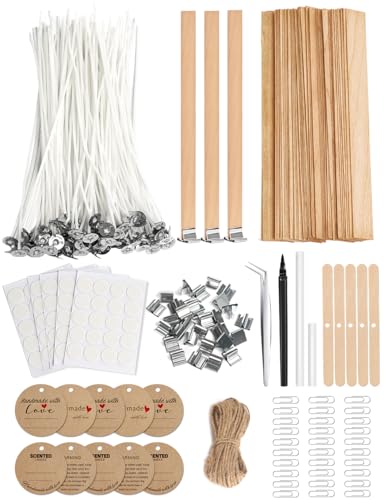
Multiwins 130-Piece Candle Wick Set
multiwins · 130 pieces (listed) · cotton wicks plus hardware (listed) · multiple sizes for burn testing
Our verdict: Wicks are where beeswax candles are won or lost, and the Multiwins 130-piece set is the cheap insurance: enough cotton wicks and hardware to burn-test your way to the right size for every mold you own. At $9.99 it fixes the single most common failure in homemade beeswax candles, the too-small wick.
Beeswax drowns small wicks, and small wicks are what most kits ship. Molten beeswax is thicker than molten paraffin, so a wick that burns a paraffin candle cleanly will tunnel and drown in a beeswax candle of the same diameter; the standing advice is to wick up, sometimes two sizes, when working in pure beeswax. The Multiwins 130-piece wick set turns that advice into practice: with a listed 130 pieces of cotton wick and mounting hardware across sizes, you pour a test candle per size, burn each for a couple of hours, and read the results. Full melt pool reaching the edge, no soot, no drowning: that is your size for that mold, forever.
The hardware half of the set matters as much as the wicks: sustainer tabs anchor wicks in votives and melts, and keeping wicks centered and taut during the pour (a clothespin across the mold top works) is most of the remaining craft. One honest note for perfectionists: traditional beeswax specialists favor square braid cotton wicks for pure beeswax work, and if you scale into serious production you may eventually order specific square-braid sizes; the physics of capillary draw is covered on the candle wick entry. For getting a hobby line dialed in, this assortment is the right first box, and at $9.99 it costs less than the wax in three failed candles.
Who should buy it
Buy the Multiwins set alongside any mold or kit purchase in this guide; every new mold diameter needs a burn test, and this box covers them all. It is the cheapest fix for the tunneling-candle problem that makes people quit.
What we don't like
Assortment sizing is approximate and unlabeled compared to buying named square-braid sizes from a candle supplier, so your burn-test notes are the real product. Piece counts on budget assortments drift between revisions; verify the live listing.
- Count
- 130 pieces (listed)
- Material
- Cotton wicks plus hardware (listed)
- Sizes
- Assorted, for burn testing
- Best use
- Sizing wicks per mold
- Pairs with
- Every mold and kit here
- Price
- $9.99
Pros
- Solves the number one beeswax candle failure
- Enough stock to test every mold you own
- Includes sustainer hardware for votives and melts
- Cheaper than the wax mistakes it prevents
Cons
- Sizes are assorted, not precisely labeled
- Serious production eventually wants named square braid
- Counts vary between listing revisions
More gear worth comparing
Beyond this guide: the highest-rated gear across every category and budget, with a live price check on each.



As an Amazon Associate we may earn from qualifying purchases, at no cost to you.
Quick shop: every pick
Skip the scroll: the whole lineup, with a live price check on each.
- KQU 5 lb Beeswax Candle Making Kit with Electric Melting PotBest OverallKQU · $55.99Check Price
- VEVOR 8 lb Electric Wax MelterBest for Rendering CappingsVEVOR · $57.90Check Price
- HASSLICKIT Natural Beeswax Candle Making KitBest Budget KitHASSLICKIT · $19.99Check Price
- Phinicco Beeswax Sheets for Rolling, 12 Colors, 8 x 8 InchBest for Rolled CandlesPhinicco · $14.99Check Price
- Wehous Bee and Honeycomb Silicone Pillar Candle Molds, 2-PackBest Pillar MoldsWehous · $9.99Check Price
- MoldFun Bee Silicone Molds, 2-PackBest Novelty MoldsMoldFun · $8.99Check Price
- Multiwins 130-Piece Candle Wick SetBest Wick Assortmentmultiwins · $9.99Check Price
How we chose
We rank candle supplies by the finished candle: does the gear produce something you would burn in your own house and sell under your own label. A kit that pours a tunneling, drowning candle is not cheap at any price.
Safety is a pass/fail gate. Beeswax is flammable and holds heat; every melting pick here uses water-bath or thermostatic electric heat, and we say so on the card. Nothing in this guide asks you to put wax in a pot on a burner.
Wick fit gets scored explicitly, because beeswax's viscosity punishes paraffin-sized wicks. We credit kits and assortments that include multiple wick sizes and flag any setup where the listed wick runs small for the listed mold diameter.
Contents and capacities are quoted as listed. Kit inventories on Amazon drift between listing revisions, so we hedge counts and tell you to verify the live page before planning a batch or a class around one.
Margin math is part of the review: this is a value-add category, and we judge each pick by what the wax it processes or shapes sells for at a market table, not just what the tool costs.
No brand has bought a placement. Prices come from the verified offer table on the publication date and are re-checked on update; a listing that goes dark or doubles in price loses its slot.
Key terms
- Cappings
- The thin layer of new wax bees seal ripe honey cells with, sliced off during extraction. The cleanest, lightest wax a hive produces and the preferred raw material for premium candles.
- Rendering
- Melting and filtering raw wax (cappings, burr comb, old frames) into clean blocks. Rinse, melt with gentle water-jacketed or thermostatic heat, and strain; two filter passes yield candle-grade wax.
- Slumgum
- The dark residue of cocoons, propolis, and debris left behind when wax is rendered. Normal, and the reason filtering exists; it separates from clean wax at the strainer.
- Wicking up
- Choosing a larger wick than paraffin charts suggest, standard practice for pure beeswax because its higher viscosity feeds flame more slowly. The cure for tunneling and drowned wicks.
- Melt pool
- The liquid wax circle around a burning wick. A correctly wicked candle's pool reaches the edge within a couple of hours; a pool that never spreads means the wick is too small.
- Rolled candle
- A candle made by rolling an embossed beeswax sheet around a wick, no melting involved. Fast, kid-safe, and giftable; burns faster than a poured candle of the same size.
- Wax melt
- A wickless piece of wax melted in a warmer for scent. The easiest beeswax product to make and sell: no wick sizing, no burn testing, and a happy use for second-grade wax.
- Double boiler
- Melting wax in a vessel sitting in simmering water, so the wax never exceeds water's temperature range. The safe stovetop method, and the budget alternative to a thermostatic melter.
Questions, answered
How much beeswax do I get from one beehive?
From normal extraction, plan on roughly a pound or two of cappings wax per hundred pounds of honey harvested, so a strong hive's 30 to 60 pound surplus yields something like half a pound to a pound of premium cappings wax, plus whatever burr comb you scrape all season. Retiring old frames adds more, though brood-comb wax renders darker and belongs in melts rather than flagship candles.
What wick size do I need for beeswax candles?
Larger than paraffin charts suggest, often by one or two sizes, because molten beeswax is more viscous and feeds the flame more slowly. The honest answer is that you burn-test: pour one candle per candidate size, burn for two hours, and pick the wick whose melt pool just reaches the edge without sooting. An assortment box makes the test cost a few cents per size.
Can I make candles from old brood comb?
You can, but render it separately and expect dark amber-to-brown wax with more filtering work; cocoons and propolis load old comb with debris. It makes fine wax melts and rustic candles, but keep your light cappings wax separate for the premium pillars and votives. Many suppliers also accept dark wax in trade toward foundation.
How do I melt beeswax safely at home?
Never in a pot directly on a burner: beeswax is flammable and scorches well below stovetop temperatures. Use a double boiler (wax vessel sitting in simmering water) or a thermostatic electric melter, keep water away from the molten wax itself, and never leave melting wax unattended. Beeswax melts at roughly 144 to 147 degrees Fahrenheit; it needs gentle heat, not high heat.
Why do beeswax candles cost so much more than regular candles?
Because the raw material is scarce and the burn is better: bees produce wax slowly (consuming several pounds of honey per pound of wax made), and pure beeswax burns longer, drips less, and carries a natural honey scent with no added fragrance. That is why pure beeswax votives sell for $6 to $12 while paraffin equivalents sell for a fraction, and why the premium survives at every farmers market.
Are rolled or poured beeswax candles better?
Different jobs. Rolled candles need no melting, take five minutes, and are safe to make with kids, but they burn faster and read as craft items. Poured candles need a melter, molds, and wick testing, but they produce the dense honeycomb pillars and votives that sell at premium prices. Most beekeeping households do both: poured for the market table, rolled for gifts and rainy afternoons.
How many candles does a pound of beeswax make?
Roughly six to eight votives, two to three small pillars, or a couple of taper pairs, depending on your molds. In retail terms, a pound of clean wax becomes about $40 to $90 of finished product at typical market prices, which is why rendering your cappings instead of discarding them is the easiest raise a small apiary can give itself.
Do I need to add fragrance to beeswax candles?
No, and most makers deliberately do not: pure beeswax carries a natural light honey scent from the hive, and "100 percent pure, nothing added" is the premium story customers are paying for. If you want scented product lines, do them as clearly labeled melts or blends rather than compromising the flagship pure line.
Can I sell beeswax candles at a farmers market?
Generally yes, and with less regulatory homework than honey: candles are not food, so cottage food rules do not apply. Your obligations are honest labeling (only call it 100 percent beeswax if it is), a standard burn-caution note, and whatever general vendor rules your market has. Many honey sellers find candles the easiest second product to add to an existing table.
Filed under Buyer's Guide
Part of Honey Harvest
Keep reading
How to Harvest Honey
The day your candle supply chain begins: pulling supers, uncapping, and the cappings bucket this whole guide is built on.
The Best Honey Harvesting Equipment (2026)
The uncapping knives and strainers that produce your cappings wax, plus the buckets that catch the honey first.
The Best Honey Extractors (2026)
Extract the honey, keep the comb, and save the cappings: the machines at the center of harvest day.
The Best Honey Jars and Labels (2026)
The packaging side of the market table, and the label stock that wraps candles as well as jars.
The Best Gifts for Beekeepers
Candle kits rank high on it: the gift guide for the beekeeper who has everything except free time.
Beekeeping Cost Index
Where candle revenue fits in the hobby's real profit-and-loss picture.