Our Pick: Craft A Brew
Check PriceThe Best Mead Making Kits (2026)
Our pick for first-time mead makers is the Craft A Brew mead making kit at $49.95: a reusable one-gallon setup from the most established name in small-batch brewing kits, with the fermenter, airlock, and instructions that get a beekeeper from raw honey to racked mead without a homebrew shop in town. If you already know you will love this hobby, the Craft A Brew deluxe kit at $79.99 is the premium tier, and its extra equipment is exactly the gear the basic kit makes you want by batch two. Budget testers start at $39.99 with the Jigger N Dash kit.
By The BeehiveKits Hive Desk2026-08-2815 min read Fact-checked against verified Amazon listingsHow we research
The beekeeper's case for mead is arithmetic plus romance. A gallon of standard-strength mead wants roughly three pounds of honey, so a single strong hive's 30 to 60 pound surplus (the math is in our honey-per-hive explainer) is ten to twenty gallons of potential mead, which is more than most households should drink and roughly fifty to a hundred bottles of the most personal gift a beekeeper can hand anyone. Honey that is a $10 jar at the market becomes several bottles of something no store sells: fermented sunshine from your own backyard, with a history older than written recipes, as the mead entry cheerfully documents.
Two things decide whether a first batch succeeds, and neither is talent. The first is sanitation: mead fails when wild microbes beat your yeast to the sugar, so every surface the must touches gets sanitized, every time, no exceptions. The second is patience: fermentation takes weeks and mead improves for months, and the classic beginner error is drinking it young and judging the hobby by it. Every kit below is scored on how well it sets you up for both.
One disclosure, plainly: no brand paid for a spot in this guide and no seller saw it before publication. Links go to Amazon; if you buy through one we may earn a small commission at no extra cost to you, and that never moves a pick. Prices are the verified listings at publication, always check the live page. And a legality note up front, because readers ask: home fermentation of mead for personal and family use is federally legal in the US for adults, with generous annual volume allowances, though a handful of state rules differ and selling homemade mead is a different matter entirely; details in the break below.
What to know
- Our pick is the Craft A Brew mead kit ($49.95): the most trusted one-gallon starter, reusable for batch after batch.
- The Craft A Brew deluxe kit ($79.99) is the premium tier, adding the equipment upgrades the basic kit teaches you to want.
- Plan roughly 3 pounds of honey per gallon for a standard mead; one hive's surplus is ten to twenty gallons of potential.
- Sanitation is the whole game: sanitize everything the must touches, and a first batch almost cannot fail; skip it and nothing else matters.
- Homebrewing mead is federally legal for adults in the US with allowances up to 100 gallons per adult per year (200 per household); selling it requires licensing.
- The witbee gated 5-gallon buckets ($59.99 for two) bridge harvest and brewery: honey storage, must mixing, and bottling from the same food-grade gear.
At a glance
| Kit | Best for | Batch size (listed) | Honey included? | Price | Check price |
|---|---|---|---|---|---|
| Craft A Brew Mead Kit | Our Pick (first batch) | 1 gallon | Bring your own | $49.95 | Check Price |
| Craft A Brew Deluxe Mead Kit | Premium Pick | 1 gallon | Bring your own | $79.99 | Check Price |
| MUST BEE Mead Kit | Best Beekeeper-Flavored Alternative | 1 gallon | Check listing | $49.95 | Check Price |
| Home Brew Ohio Mead Kit | Best Homebrew-Shop Pedigree | 1 gallon | Check listing | $56.62 | Check Price |
| Jigger N Dash Mead Kit | Best Budget | 1 gallon | Bring your own | $39.99 | Check Price |
| witbee Gated Buckets, 2-Pack | Best for Must Prep and Bottling | 5 gallons each | Not a kit | $59.99 | Check Price |
The 2026 mead kit shortlist at a glance. Contents are the sellers' listed figures; prices verified against the live listings on 2026-08-28.

Craft A Brew Reusable Mead Making Kit
Craft A Brew · 1-gallon batch (listed) · reusable equipment (listed) · from the most established small-batch kit maker
Our verdict: Craft A Brew has taught more Americans to ferment their first gallon than any other kit brand, and its mead kit is the pattern: a one-gallon fermenter, airlock, and the clearest instructions in the category, all reusable for the batches that follow. At $49.95 with your own honey, it is the highest-probability path from harvest to a mead you are proud to pour.
Buy the kit that assumes you know nothing, because on batch one that is the correct assumption. The Craft A Brew mead making kit earns the top slot on its instructions as much as its hardware: the process is laid out step by step, the sanitation ritual is treated as the law it is, and a beginner who simply follows the booklet ends up with a fermenting gallon on the counter and no mystery about what happens next. The equipment is the honest standard for small-batch work, a one-gallon fermenter, airlock and stopper, and the transfer gear for racking, and all of it is reusable, which turns the kit into a permanent little meadery that future batches feed for the cost of yeast and your own honey.
What the kit does not do is also worth knowing: one gallon yields about four wine bottles of finished mead, which is a tasting run, not a cellar, and exactly the right stakes for learning. Ferment somewhere with a stable, moderate temperature, resist the urge to peek under the airlock, and give the finished mead months in the bottle before judging it; young mead is famously harsh and time is the ingredient the kit cannot include. When the first gallon lands, the same equipment runs every experiment the hobby offers, from dry traditionals to fruit melomels, on honey straight from your bottling bucket.
Who should buy it
Buy the Craft A Brew kit for your first batch, full stop: it is the category's most reliable teacher and the equipment stays useful forever. It is also the best mead gift for a beekeeping household, since the honey is the one thing they have covered.
What we don't like
One gallon is a tasting volume; success will make you want a bigger fermenter within the year. You supply the honey (a feature for beekeepers, a surprise for others), and as with all kits, verify the current listed contents, since inclusions like yeast vary between revisions.
- Batch size
- 1 gallon (listed)
- Yield
- About 4 wine bottles per batch
- Equipment
- Fermenter, airlock, racking gear (listed)
- Honey needed
- About 3 lbs per gallon (your own)
- Reusable
- Yes
- Price
- $49.95
Pros
- Clearest beginner instructions in the category
- Reusable: a permanent one-gallon meadery
- Sanitation treated with proper seriousness
- Perfect batch size for learning stakes
- Ideal use for unsold harvest honey
Cons
- Four bottles per batch goes fast
- Honey and patience not included
- Inclusions like yeast vary by listing revision

Craft A Brew Deluxe Mead Making Kit
Craft A Brew · 1-gallon deluxe setup (listed) · expanded equipment over the base kit (listed) · reusable
Our verdict: The deluxe kit is Craft A Brew's answer to the equipment list the basic kit makes you want by batch two: the same trusted one-gallon format with an expanded, listed loadout of fermentation and bottling gear. At $79.99 it is the category's premium tier, and the right first purchase for the beekeeper who has already decided mead is happening every fall.
Some buyers know themselves: the trial batch was never going to be the last batch. For them the Craft A Brew deluxe mead kit collapses two purchases into one: the proven base experience plus the expanded equipment the hobby asks for as soon as one carboy is bubbling and another batch wants to start. The listed deluxe loadout deepens the gear across fermentation and bottling, and everything rides on the same instruction quality that makes the base kit our top pick; check the live listing for the current inventory, which Craft A Brew revises between runs.
The honest question is whether the $30 stretch beats buying the base kit and adding pieces later, and the answer tracks your certainty. Casual curiosity: take the base kit. A beekeeping household with an annual honey surplus and gift-giving ambitions: take the deluxe, because you will assemble its equivalent piecemeal within a season anyway, at retail prices and shipping delays. It also makes the definitive wedding or holiday gift for the beekeeper who has everything else (we keep a slot warm for it in our gift guide thinking), and the giftee's first batch still lands inside the same beginner-safe instruction rails. Whichever tier you choose, the honey math and sanitation law from the break above apply unchanged.
Who should buy it
Buy the deluxe kit if mead is a plan rather than an experiment: annual-batch beekeepers, gift buyers who want the complete gesture, and anyone who hates buying equipment twice.
What we don't like
It is $30 more than the base kit toward equipment a true dabbler may never miss, and it remains a one-gallon format; brewers with five-gallon ambitions eventually shop beyond any kit. Listed contents shift between revisions, so verify before gifting.
- Batch size
- 1 gallon (listed)
- Equipment
- Expanded deluxe loadout (listed)
- Honey needed
- About 3 lbs per gallon (your own)
- Reusable
- Yes
- Best as
- Committed start or flagship gift
- Price
- $79.99
Pros
- The base kit's teaching quality with fuller gear
- Cheaper than assembling the same kit piecemeal
- The flagship gift option in the category
- Reusable across every future batch
Cons
- Overbuy for one-time experimenters
- Still a one-gallon format
- Contents vary by revision; check before gifting

MUST BEE 1 Gallon Mead Making Kit
MUST BEE · 1-gallon mead kit (listed) · mead-specific instructions (listed) · check listing for inclusions
Our verdict: The MUST BEE kit matches our top pick's $49.95 price with a mead-first identity: this is a kit designed around honey wine specifically rather than adapted from beer or wine kits, and its beekeeper-adjacent branding makes it the natural gift pick inside bee clubs. Functionally it trades blows with the Craft A Brew; the choice comes down to instructions versus identity.
A kit built around mead has small advantages a generalist kit adapts toward. The MUST BEE mead making kit is honey wine from the box art down: the listed one-gallon equipment set covers fermentation and racking, the guidance speaks mead rather than translated beer, and the whole presentation lands with beekeepers in a way generic homebrew gear does not. At the identical $49.95 price as our top pick, it is the closest call in this guide, and in a bee club gift exchange the branding alone decides it.
Our top pick keeps its edge on the strength of Craft A Brew's instruction system and long track record with absolute beginners, which is the margin that matters most on batch one. But the MUST BEE kit is a fully respectable first gallon, and for buyers who already have a little fermentation context, or who will happily supplement with the internet's bottomless mead lore, the difference shrinks toward zero. Check the live listing for current inclusions (yeast and additions vary by revision), plan the same 3 pounds of your honey per gallon, and hold the same sanitation line. Whichever kit wins your cart, your harvest workflow now has a second finished product beyond the jar.
Who should buy it
Buy the MUST BEE kit if the mead-first branding speaks to you or the recipient: bee-club gifts, beekeeper birthdays, and buyers who want their equipment to say honey wine rather than homebrew. First-timers with zero context should still lean Craft A Brew.
What we don't like
At price parity with our top pick, it needs a reason beyond branding and does not always give one. Instructions are serviceable rather than category-best, and listed inclusions shift between revisions, so verify the current box before buying it as a complete gift.
- Batch size
- 1 gallon (listed)
- Focus
- Mead-specific kit and guidance (listed)
- Honey needed
- About 3 lbs per gallon (your own)
- Reusable
- Yes
- Best as
- Bee-club and beekeeper gifts
- Price
- $49.95
Pros
- Designed around mead, not adapted to it
- The right branding for beekeeping gift circles
- Competitive equipment at the benchmark price
Cons
- No edge over our top pick for true beginners
- Instructions a step behind Craft A Brew
- Inclusions vary; check the live listing

Home Brew Ohio One Gallon Mead Starter Kit
Home Brew Ohio · 1-gallon starter kit (listed) · standard homebrew components (listed) · supplier-grade gear
Our verdict: Home Brew Ohio is a homebrew supplier first and a kit assembler second, and its mead starter kit shows that lineage: standard, replaceable, upgrade-friendly components of the kind brick-and-mortar brew shops sell individually. At $56.62 it is the kit for buyers who care more about equipment DNA than instructional hand-holding.
There are two philosophies of starter kit: the curriculum and the toolbox. Craft A Brew sells the curriculum; the Home Brew Ohio mead starter kit sells the toolbox: a listed one-gallon loadout built from the standard-pattern fermenters, airlocks, and transfer gear that homebrew shops have stocked for decades. The practical advantage is compatibility: standard parts mean every piece has a cheap replacement and an obvious upgrade, and the gallon rig slots straight into a five-gallon future without orphaning anything. For the tinkerer who reads forums and enjoys equipment, that DNA matters more than a glossy booklet.
The tradeoff is the flip side: guidance is workmanlike, and a first-timer who needs the process taught rather than listed will feel the difference at racking time. Between this and our top pick the routing is clean: zero-context beginners go Craft A Brew; brewers-adjacent buyers, or households where someone has fermented anything before, do fine here and may prefer the parts. As with every kit in the guide, confirm the current listed inclusions on the live page, budget your own 3 pounds of honey per gallon, and let sanitation be the religion. The finished bottles pour beautifully into the gift-basket program alongside your jarred honey line.
Who should buy it
Buy the Home Brew Ohio kit if you value standard, upgradeable components and have (or can borrow) a little fermentation context. It is the best foundation here for someone who suspects a five-gallon system is in their future.
What we don't like
Instructional support trails the Craft A Brew kits, which matters most for the total beginner. At $56.62 it also costs more than our top pick without clearly outperforming it on batch one, and inclusions vary by listing revision.
- Batch size
- 1 gallon (listed)
- Components
- Standard homebrew pattern (listed)
- Honey needed
- About 3 lbs per gallon (your own)
- Upgrade path
- Compatible with standard 5-gallon gear
- Reusable
- Yes
- Price
- $56.62
Pros
- Standard parts: cheap replacements, easy upgrades
- Supplier-grade equipment lineage
- Best bridge toward five-gallon brewing
Cons
- Lighter instructional hand-holding
- Costs more than the better-teaching top pick
- Inclusions vary; verify the live listing

Jigger N Dash Reusable Mead Making Kit
Jigger N Dash · 1-gallon reusable kit (listed) · budget price · check listing for inclusions
Our verdict: The Jigger N Dash kit is the cheapest reusable route to a first gallon: $39.99 for the fermentation essentials, ten dollars under the benchmark kits, with the corners cut in polish rather than function. For the beekeeper who is curious but unconvinced, it keeps the experiment's cost below the value of the honey going into it.
Forty dollars is the right price for a maybe. Mead-curious beekeepers often stall at the cart because a $50-to-$80 kit feels like a commitment to a hobby they have not tried; the Jigger N Dash mead kit lowers the bar to $39.99 while staying genuinely reusable, which is the line that separates a starter kit from a craft project. The listed one-gallon equipment covers the essentials of fermenting and racking a batch; what the discount trims is polish, expect thinner instructions and simpler accessories rather than missing fundamentals, and lean on the internet's deep mead-making commons where the booklet runs out.
Budget-kit ownership has two rules. First, verify the listed contents against the basics (fermenter, airlock and stopper, transfer tubing, and ideally sanitizer) and fill any gap at purchase time; a $5 packet of no-rinse sanitizer is the most important accessory in all of brewing. Second, respect the process exactly as if the kit cost triple: the same 3 pounds of honey per gallon, the same sanitize-everything ritual, the same months of patience, because yeast does not read price tags. Done that way, this kit's first bottle tastes the same as anyone's. If the hobby sticks, upgrade regret is minimal at this price, and the kit retires gracefully into a backup fermenter, a permanently useful thing once you are running a real surplus through the meadery.
Who should buy it
Buy the Jigger N Dash kit if you are testing the hobby, buying a low-stakes gift, or outfitting a second fermenter cheaply. It is the least expensive reusable path to finding out whether mead is your thing.
What we don't like
Instructions and accessories are the thin end of the category, so beginners lean on outside guides sooner. Confirm the listed inclusions before relying on the box, and plan to add sanitizer if it is absent; that is not an optional accessory.
- Batch size
- 1 gallon (listed)
- Equipment
- Fermentation essentials (listed)
- Honey needed
- About 3 lbs per gallon (your own)
- Reusable
- Yes
- Best as
- Trial run, low-stakes gift
- Price
- $39.99
Pros
- Cheapest reusable kit in the guide
- Keeps the experiment below the honey's value
- Retires into a useful backup fermenter
Cons
- Thinnest instructions of the picks
- May need a sanitizer add-on
- Inclusions vary; check the live listing
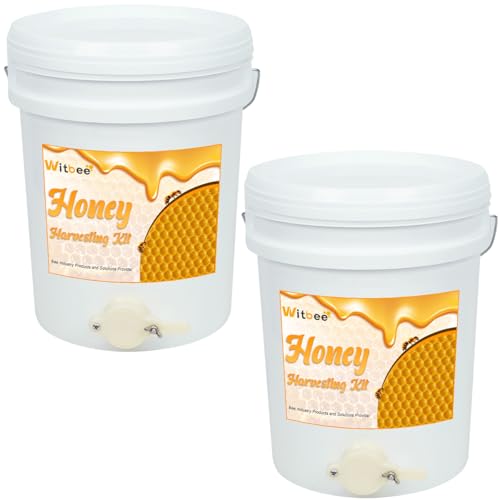
witbee 5 Gallon Honey Buckets with Gates, 2-Pack
witbee · Two 5-gallon buckets (listed) · leak-proof honey gates (listed) · food-grade with lids (listed)
Our verdict: The witbee pair is not a mead kit; it is the infrastructure a beekeeping meadery runs on: two food-grade 5-gallon buckets with leak-proof gates that store the harvest, meter honey into must by the pound, and handle bottling-day transfers. If your honey and your mead share a supply chain, these buckets are the junction.
The beekeeper mead maker has a logistics problem the kits do not solve: moving and measuring sticky pounds of honey cleanly. The witbee 5-gallon gated buckets solve it at both ends. At harvest, they are the standard catch-and-store vessels under your extractor and strainer (the same role they play in our harvesting equipment guide). At brewing time, the gate turns must prep from ladling into dispensing: set the bucket on a counter edge, open the gate over your scale, and run off exactly the 3 pounds a gallon batch wants, no dripping jar, no honey-coated measuring cups. Two buckets means the harvest store and the working batch never share a vessel.
The pair keeps earning through the mead calendar. A sanitized gated bucket is a fine mixing vessel for blending honey and water into must before it goes to the fermenter, and at the far end of the process a gated bucket makes a serviceable gravity bottling station for still mead. Sanitation discipline is the one carry-over rule: honey-side buckets live by food-safe-clean standards, but anything touching fermenting or finished mead gets the full no-rinse sanitizer treatment first, every time. At $59.99 for two food-grade gated buckets, the pack costs about what one branded bottling bucket runs at a homebrew shop, and it serves the honey house the other fifty weeks of the year.
Who should buy it
Buy the witbee pair if you both harvest honey and make mead: one purchase covers extractor-day catching, honey storage, metered must prep, and bottling transfers. It is the most useful non-kit item a beekeeping meadery can own.
What we don't like
It is infrastructure, not a mead kit: no airlock, no fermenter, no instructions, and it earns its slot only alongside one of the kits above. Gates need careful cleaning after honey duty, and buckets this size need real storage space.
- Count
- 2 buckets (listed)
- Capacity
- 5 gallons each (listed)
- Gate
- Leak-proof honey gate (listed)
- Material
- Food-grade with lids (listed)
- Roles
- Harvest, storage, must prep, bottling
- Price
- $59.99
Pros
- Meters honey by the pound through the gate
- Serves harvest day and brew day alike
- Two buckets separate store from working batch
- Costs like one specialty bottling bucket
Cons
- Not a kit; pairs with the picks above
- Gates demand thorough post-honey cleaning
- Bulky to store empty
More gear worth comparing
Beyond this guide: the highest-rated gear across every category and budget, with a live price check on each.



As an Amazon Associate we may earn from qualifying purchases, at no cost to you.
Quick shop: every pick
Skip the scroll: the whole lineup, with a live price check on each.
- Craft A Brew Reusable Mead Making KitBest OverallCraft A Brew · $49.95Check Price
- Craft A Brew Deluxe Mead Making KitBest Premium KitCraft A Brew · $79.99Check Price
- MUST BEE 1 Gallon Mead Making KitBest Beekeeper-Flavored AlternativeMUST BEE · $49.95Check Price
- Home Brew Ohio One Gallon Mead Starter KitBest Homebrew-Shop PedigreeHome Brew Ohio · $56.62Check Price
- Jigger N Dash Reusable Mead Making KitBest BudgetJigger N Dash · $39.99Check Price
- witbee 5 Gallon Honey Buckets with Gates, 2-PackBest for Must Prep and Bottlingwitbee · $59.99Check Price
How we chose
We rank kits by first-batch success rate: does the box contain the equipment, sanitizer coverage, and instructions that carry a total beginner to a drinkable gallon. A kit that assumes knowledge it does not teach loses points no matter the hardware.
Sanitation support is weighted heavily, because contamination is the one failure that ruins batches outright. Kits that include or clearly specify sanitizer, and instructions that repeat the ritual, score above kits that mention it once.
Reusability matters: a good kit is a permanent one-gallon brewery, not a one-shot craft project. We credit standard-sized fermenters, replaceable airlocks, and gear that accepts generic homebrew consumables.
Contents are quoted as listed, and where listings are ambiguous about included honey or yeast we say so and tell you to check the live page; kit inventories drift between revisions.
Beekeeper fit is part of the review: these kits are reviewed for people with their own honey supply, so honey-included kits earn no premium here, and gear that handles raw backyard honey (which arrives with wax flecks and crystallization) earns credit.
No brand has bought a placement. Prices come from the verified offer table on the publication date and are re-checked on update; a listing that goes dark or doubles in price loses its slot.
Key terms
- Mead
- Wine fermented from honey rather than grapes: honey, water, and yeast at its simplest. The oldest known fermented drink, and the natural second product of any honey surplus.
- Must
- The unfermented honey-and-water mixture the yeast is pitched into. Standard strength runs about 3 pounds of honey per gallon of must.
- Pitching
- Adding yeast to the must. Done once the must is at room temperature; pitching into hot must kills the yeast.
- Airlock
- The one-way water valve on the fermenter that lets carbon dioxide out while keeping air and microbes away from the mead. Its bubbling is also your progress meter.
- Racking
- Siphoning mead off the settled yeast sediment into a clean vessel. Done once or twice as fermentation finishes, it is most of what clears a mead.
- No-rinse sanitizer
- Food-safe sanitizer (Star San is the common example) that coats equipment and needs no rinsing. The most important consumable in brewing; anything touching the must gets it first.
- Yeast nutrient
- Nitrogen and micronutrient additions that compensate for honey's nutrient-poor must. The difference between a steady fermentation and a stalled, sulky one.
- Melomel
- Mead fermented with fruit. The classic second batch: the same equipment and honey with berries or stone fruit added.
- Hydrometer
- The float that measures must density before and after fermentation, telling you alcohol content and when fermentation is truly done. Not required for a first batch; illuminating from the second.
Questions, answered
How much honey does it take to make a gallon of mead?
About 3 pounds per gallon for a standard-strength mead, with dry session meads running closer to 2.5 pounds and sweet or strong meads at 3.5 pounds and beyond. In beekeeping terms, one well-filled deep frame roughly covers a one-gallon batch, and a single strong hive's annual surplus could supply ten to twenty gallons.
Is it legal to make mead at home?
Yes, in the US, for adults, for personal and family use: federal law allows up to 100 gallons per adult per year (200 per household of two or more adults) without permits or taxes, and home fermentation is legal in all fifty states, though a few states add their own limits worth a quick search. Selling homemade mead is a different matter entirely and requires winery licensing.
How long does mead take to make?
Primary fermentation typically runs two to six weeks; most one-gallon kits then rack the mead and let it clear for another month or so before bottling. The honest timeline includes aging: young mead tastes sharp, and three to six months in the bottle transforms it, with a year better still. Start a batch in fall with harvest honey and it pours beautifully the following summer.
Can I use raw, unfiltered honey from my own hives for mead?
Yes, and you should: raw backyard honey makes distinctive mead, and wax flecks or crystallization are irrelevant once dissolved into must. Crystallized jars nobody would buy, dark late-season honey, and honey recovered from cappings are all classic mead honey. There is no need to heat honey aggressively first; warm water sufficient to dissolve it protects more of the aroma.
What yeast should I use for mead, and can I use bread yeast?
Use a wine or mead yeast (common wine strains like the Lalvin varieties are the usual kit picks) plus yeast nutrient, since honey must is nutrient-poor. Bread yeast technically ferments but tends toward harsher flavors, lower alcohol tolerance, and a murky finish, so it is the one corner not worth cutting on a batch that ties up three pounds of your honey for months.
Why did my mead stop bubbling, and is it ruined?
Usually it is not ruined. Airlocks slow and stop naturally as fermentation finishes, so a quiet airlock after a few weeks most often means the mead is simply done. Stalls mid-ferment are typically temperature or nutrient problems: move the fermenter somewhere stably room-temperature and consider a nutrient addition. Genuine spoilage announces itself with off smells; if it smells like honey wine, it almost certainly is.
Do I need to sanitize everything, really?
Really. Contamination is the one mead failure with no recovery, and it is fully preventable: wash equipment, then treat everything that touches the cooled must or mead with a no-rinse sanitizer, every batch. The ritual takes five minutes per session and is the single biggest difference between beginners whose batches all work and beginners who quit after a vinegar surprise.
How strong is homemade mead?
Standard recipes at about 3 pounds of honey per gallon typically finish in the range of ordinary wine strength, roughly 10 to 14 percent, depending on the yeast and how much honey you fed the must. Lighter session meads and stronger sack-style meads sit on either side. A hydrometer reading before and after fermentation is how you know your actual number.
Can I sell mead made from my own honey?
Not under the homebrew allowance: personal-use rules cover making, drinking, and gifting, but selling any homemade alcohol requires federal and state winery licensing, and honey's cottage-food pathway does not extend to mead. Plenty of meaderies have grown out of backyard apiaries, but that is a licensing project, not a market-table decision. Meanwhile, gift bottles are legal and unreasonably effective.
What is the best first mead recipe for a beekeeper?
A one-gallon traditional: about 3 pounds of your honey, water to one gallon, wine yeast, and nutrient per your kit's schedule. No fruit, no spices, nothing to hide behind; a traditional shows you exactly what your own hive's honey tastes like fermented, which is the whole point of being a beekeeper with a mead kit. Save the melomels and spiced metheglins for batch two and three.
Filed under Buyer's Guide
Part of Honey Harvest
Keep reading
How Much Honey Does One Hive Produce?
The surplus math that decides how many batches a year your apiary can feed.
How to Harvest Honey
The harvest workflow that ends with buckets of the main ingredient.
The Best Honey Extractors (2026)
Where the mead honey comes from: extractors ranked by hive count and budget.
The Best Honey Harvesting Equipment (2026)
The gated buckets, strainers, and refractometer that serve the meadery as well as the bottling line.
The Best Honey Jars and Labels (2026)
The retail side of the harvest, for the honey that stays honey.
The Best Gifts for Beekeepers (2026)
Mead kits rank among the best of them; here is the rest of the list.