Our Pick: Anu Limen
Check PriceThe Best Comb Honey Supplies (2026)
Our pick for getting into comb honey is the Anu Limen comb cutter set at $21.99: a steel square cutter that punches clean retail-sized blocks out of a frame of new comb, bundled with 10 plastic boxes to sell them in, which makes it the only sub-$25 purchase in beekeeping that creates a finished premium product. Add the Ciieeo 12-pack of clamshell comb boxes at $26.59 when you outgrow the included ten, and a $44.99 MayBee medium super to grow the comb in, and the whole program costs less than one budget extractor.
By The BeehiveKits Hive Desk2026-08-2814 min read Fact-checked against verified Amazon listingsHow we research
The case for comb honey is simple economics wearing a wax seal. Cut comb, honey still sealed in the bees' own comb, is the most trusted form of honey a market table can display: it cannot be adulterated, diluted, or faked, and customers know it, which is why comb squares routinely sell for $15 to $25 where a jar of the same honey brings $8 to $10. It is honey with the provenance built in, a point the comb honey entry traces back to the era when comb was the everyday form. For a small apiary, that premium is the highest revenue per frame available without buying a single machine.
The catch, and the reason comb honey is not everyone's default, is that everything must be edible: the wax, the foundation, the whole slab. That means comb built fresh that season on either no foundation at all or the thinnest all-wax foundation you can arrange, never plastic and never thick wired sheets, and it means the colony has to draw new comb during a strong flow. We cover the foundationless and thin-foundation routes below, because the foundation decision is the fork in the road for the whole program.
One disclosure, plainly: no brand paid for a spot in this guide and no seller saw it before publication. Links go to Amazon; if you buy through one we may earn a small commission at no extra cost to you, and that never moves a pick. Prices are the verified listings at publication, always check the live page. Comb honey replaces the extractor for these frames but not the rest of harvest craft: the supers, timing, and handling live in how to harvest honey, and the extracted-honey path it runs beside is in our extractor guide.
What to know
- Our pick is the Anu Limen comb cutter with 10 boxes ($21.99): cutter plus retail packaging in one purchase, a complete comb honey start under $25.
- Comb honey sells at the top of the market: $15 to $25 per cut-comb square is common where jarred honey brings $8 to $10, with zero extractor investment.
- Everything in comb honey gets eaten, so grow it on foundationless frames or thin all-wax surplus foundation, never plastic or heavy wired sheets.
- The workflow is cut, drain, box, freeze: 24 to 48 hours in the freezer per batch protects against wax moth before sale, standard practice per extension guidance.
- A dedicated medium super (MayBee, $44.99) run during a strong flow is the comb factory: bait it with fresh frames and harvest only bright new comb.
- The Ciieeo clamshell boxes ($26.59 for 12) are the retail layer: a clear box is what turns a sticky square into a premium product.
At a glance
| Product | Best for | What you get (listed) | Role | Price | Check price |
|---|---|---|---|---|---|
| Anu Limen Comb Cutter Set | Our Pick (complete start) | Steel cutter plus 10 boxes | Cutting and packing | $21.99 | Check Price |
| LOCADENCE Comb Cutter | Best Budget Cutter | Hardened steel square cutter | Cutting | $14.00 | Check Price |
| Ciieeo Comb Boxes, 12-Pack | Best Retail Boxes | 12 clear clamshell keepers | Packaging | $26.59 | Check Price |
| BEEINN Wax-Coated Foundation | Foundation Option (read the caveat) | 8.5-inch deep foundation sheets | Comb base | $15.19 | Check Price |
| MayBee Medium Super Box | The Comb Honey Super | 10-frame medium super, beeswax dipped | Comb production | $44.99 | Check Price |
The 2026 comb honey shortlist at a glance. Dimensions and counts are the sellers' listed figures; prices verified against the live listings on 2026-08-28.
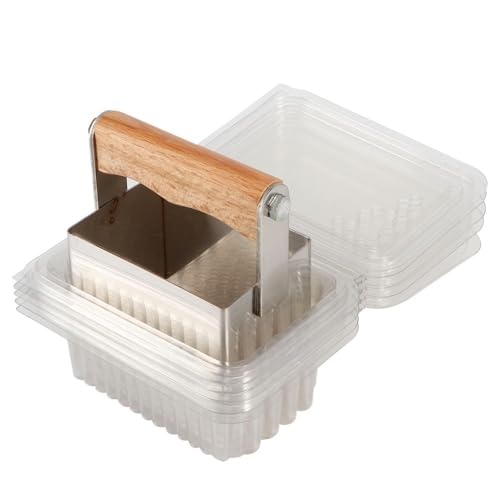
Anu Limen Steel Comb Honey Cutter with 10 Boxes
Anu Limen · Steel square cutter (listed) · 10 plastic comb boxes included (listed) · cut-and-pack in one set
Our verdict: The Anu Limen set is the whole cut-comb operation in one box: a steel cutter sized to punch retail squares, and ten plastic boxes that turn those squares into shelf-ready product. At $21.99 it is the cheapest complete route from frame to finished premium good anywhere in beekeeping, and the sizing match between cutter and boxes removes the classic first-timer mistake.
The bundled sizing is the quiet genius here. The classic cut-comb error is cutting squares that do not fit the boxes you bought, comb is fragile, and trimming a cut square to fit is how clean blocks become leaking wreckage. The Anu Limen comb cutter set ships the cutter and ten matched boxes together, so every square you punch drops into its container without surgery. The cutter itself is the right tool for the job: a steel square with an edge that pushes through comb and cappings in one press, giving the clean walls that make a comb square look like jewelry instead of debris.
Ten boxes is a genuine starter inventory: one good frame of new comb yields roughly four to six squares depending on your cut layout, so the included packaging covers your first two frames while you learn. After that the Ciieeo 12-pack below becomes your restock. Priced against the alternative, the whole set costs a fifth of the cheapest extractor in our extractor guide, and the product it makes sells for more per pound than anything that extractor will ever bottle.
Who should buy it
Buy the Anu Limen set if you are starting comb honey from zero: the matched cutter and boxes are the fastest path from first frame to sellable squares. It is also the right gift for the beekeeper who keeps saying they will try comb honey next year.
What we don't like
Ten boxes run out after roughly two frames, so budget the restock pack immediately if you are selling. Verify the boxes' food-contact suitability on the live listing before retail use, as with all imported clamshells. And a fixed-size cutter cuts one size; commercial operations eventually want a second dimension for variety.
- Cutter
- Steel square comb cutter (listed)
- Boxes included
- 10 plastic comb boxes (listed)
- Sizing
- Cutter matched to boxes
- Yield
- Roughly 4-6 squares per deep frame of comb
- Workflow
- Cut, drain, box, freeze
- Price
- $21.99
Pros
- Cutter and matched packaging in one purchase
- Clean-edged squares that sell on looks
- Complete premium product line under $25
- No extractor or machinery anywhere in the chain
Cons
- Ten boxes is only a starter inventory
- Single cut size
- Confirm food-contact rating before retail

LOCADENCE Hardened Steel Comb Honey Cutter
LOCADENCE · Hardened steel construction (listed) · wear-resistant edge (listed) · cutter only
Our verdict: The LOCADENCE is the cutter alone, in listed hardened steel with a wear-resistant edge, for $14. It is the pick for beekeepers who already have packaging sorted or who cut comb for their own table rather than retail, and the harder edge is a real durability argument if you plan to punch a lot of squares for years.
If you already own boxes, pay for steel, not bundles. The LOCADENCE comb honey cutter is the minimalist answer: a square cutter in listed hardened, wear-resistant steel that presses clean walls through comb exactly the way our top pick does, without the packaging you may not need. Households that eat their own comb honey, cut it straight onto the cheese board, no box ever involved, are the obvious buyers, and so is anyone restocking boxes separately by the dozen anyway.
The hardened-steel claim is worth taking seriously rather than as marketing: comb cutting dulls edges slowly, but cappings, cold comb, and the occasional scrape on the wire rack all take their toll across seasons, and a harder edge holds the crisp cut that makes squares presentable. Before committing to retail production with this cutter, do the one measurement the bundle above saves you from: cut a test square and check it against whatever boxes you plan to use, because a few millimeters of mismatch is the difference between drop-in packing and comb surgery. Pair it with the Ciieeo boxes below and you have rebuilt our top pick with a harder edge for about $18 more; whether that trade is worth it depends entirely on how many frames a season you cut.
Who should buy it
Buy the LOCADENCE if you cut comb for your own kitchen, already have packaging, or want the hardest-wearing edge for years of production. It is the tool-drawer version of the bundled pick.
What we don't like
No boxes means no complete product until you buy packaging, and the burden of matching cut size to box size lands on you; test-cut before a production run. A single fixed size applies here as with every punch cutter.
- Material
- Hardened steel (listed)
- Edge
- Wear-resistant (listed)
- Includes
- Cutter only
- Sizing
- Test-cut against your boxes
- Best use
- Home use, long-haul production
- Price
- $14.00
Pros
- Hardened edge for seasons of clean cuts
- Cheapest way in if boxes are handled
- Simple tool, nothing to break
Cons
- No packaging included
- Size-matching to boxes is on you
- One cut size

Ciieeo Honeycomb Keeper Clamshell Boxes, 12-Pack
Ciieeo · 12 clear plastic clamshell boxes (listed) · about $2.22 per box · display-ready
Our verdict: The Ciieeo 12-pack is the packaging that makes the premium price possible: clear clamshell keepers that show the comb from every side, contain the honey weep, and stack on a market table. At about $2.22 per box on a $15-to-$25 product, it is the highest-leverage packaging spend on this site.
Nobody pays $20 for an unpackaged sticky square; everybody understands one in a clear box. Comb honey is bought with the eyes, and the Ciieeo honeycomb keeper boxes are the display case: clear on all sides so the white cappings and honey-filled cells do the selling, hinged clamshell closure that keeps the slow honey weep off your table, and a stackable footprint that survives a cooler ride to market. Twelve boxes covers two to three frames of cut squares, which for most small operations is a full market day of the premium line.
The per-unit math is the point to hold onto: at roughly $2.22 a box plus a label, packaging runs about 12 to 15 percent of a $18 comb square, which is a better ratio than most premium jar builds in our jars and labels guide, on a product that commands twice the price per pound. Practical notes: drain squares thoroughly before boxing (a wet square fogs the plastic and pools in the corners), freeze the boxed squares for the standard wax-moth hold and sell them thawed, and add a small label with your apiary name and net weight; comb honey sold to the public carries the same basic labeling homework as jarred honey. As always with imported food packaging, confirm food-contact suitability on the live listing before retail use.
Who should buy it
Buy the Ciieeo boxes as the restock layer for any cutter above: they are the difference between comb honey as a family treat and comb honey as your table's top-priced product. Twelve per pack matches a small apiary's per-market volume well.
What we don't like
Per-square packaging cost is real money at $2.22, so these belong on retail squares, not the ones you eat at home. Box dimensions must be checked against your cutter before a production run, and food-contact confirmation on the listing is your job before selling in them.
- Count
- 12 boxes (listed)
- Material
- Clear plastic clamshell (listed)
- Per-box cost
- About $2.22
- Best use
- Retail cut-comb squares
- Check
- Cutter fit and food-contact rating
- Price
- $26.59
Pros
- Clear display sells the comb on sight
- Contains honey weep on the table
- Stackable for transport and display
- Packaging ratio beats premium jar builds
Cons
- Real per-unit cost; retail squares only
- Verify fit against your cutter first
- Confirm food-contact rating before sale

BEEINN Wax-Coated Deep Foundation Sheets, 8.5-Inch
BEEINN · 8.5-inch deep foundation sheets (listed) · wax coated (listed) · read the comb-honey caveat
Our verdict: The BEEINN sheets are here to settle the foundation question honestly: standard wax-coated foundation like this is excellent for the brood nest and extracted supers, but comb you intend to eat wants either no foundation at all or the thinnest all-wax surplus sheets. Buy these for the rest of the hive, and let their price make the foundationless case for your comb super.
The foundation in a comb square gets eaten with it, so the rules change. Standard foundation, including plastic sheets and heavier wax-coated ones, exists to be sturdy: to guide straight comb and survive extractor spin cycles. Comb honey inverts the priorities, because every layer ends up on a customer's toast: the traditional cut-comb material is thin surplus foundation, an ultra-thin pure-wax sheet that eats without a waxy midrib, and the modern alternative is foundationless frames, where bees build 100 percent fresh comb with nothing added at all. The BEEINN wax-coated foundation sheets are listed as 8.5-inch deep sheets, standard hive equipment rather than thin surplus, so our guidance is direct: use them where standard foundation belongs, the brood boxes and your extracted honey supers, and run your comb-honey frames foundationless or on thin surplus stock.
That is not a knock on the product; it is the map of where it fits. At $15.19 the BEEINN sheets are an economical way to re-sheet the rest of the operation, which frees your best equipment budget for the comb program, and wax-coated sheets draw faster than dry ones. For the comb super itself, foundationless is the budget champion: snap the wedge cleanly, glue in a wood starter strip or leave a bead of wax as a guide, keep the hive dead level, and the bees build show-quality comb during a strong flow. Our frames and foundation guide covers the full landscape, including where plastic foundation earns its keep everywhere except here.
Who should buy it
Buy the BEEINN sheets to outfit brood boxes and extracted supers economically while you run the comb super foundationless or on thin surplus. They are the supporting cast of a comb honey operation, not the star.
What we don't like
For actual cut comb these are the wrong thickness; that is the caveat this card exists to make. Confirm sheet count and fit for your frames on the live listing, and as with all wax foundation, store flat and cool or the sheets warp.
- Sheets
- 8.5-inch deep foundation (listed)
- Coating
- Beeswax coated (listed)
- Comb honey use
- Not for cut comb; use thin surplus or foundationless
- Best use
- Brood boxes, extracted supers
- Storage
- Flat and cool
- Price
- $15.19
Pros
- Economical re-sheeting for the rest of the hive
- Wax coating draws out faster than dry sheets
- Frees budget for the comb program
Cons
- Wrong material for edible cut comb
- Deep sheets fit deep frames only
- Warps if stored badly

MayBee 10-Frame Medium Super Box, Beeswax Dipped
MayBee · 10-frame medium super (listed) · beeswax dipped pine (listed) · standard Langstroth fit
Our verdict: Comb honey production wants a dedicated super, and the MayBee medium is the right box for the job: standard 10-frame Langstroth fit, beeswax-dipped pine, and the medium depth whose frames yield well-proportioned cut squares at a weight one person handles easily. At $44.99 it turns any strong hive into a comb factory during a flow.
Dedicating one box to comb honey is what makes the program repeatable. Comb honey requires new comb drawn fast during a strong nectar flow, and the way to get it is a dedicated super of foundationless or thin-surplus frames added right when the flow starts, so the bees build and fill in one continuous push. The MayBee 10-frame medium super is our box for that role: medium frames produce comb slabs that cut into well-proportioned squares with little waste, a full medium runs around 50 pounds instead of a deep's back-breaking 80-plus (listed estimates, and your spine will confirm), and the beeswax-dipped pine matches the weather protection standard we hold hive kits to in our 10-frame guide.
The economics close the argument. One medium super during a good flow can yield eight to ten frames of comb, call it forty-plus retail squares at $15 to $25 each, from a $44.99 box and a $22 cutter set. That is extractor-class revenue from a fraction of extractor-class capital, and the super goes back on next season to do it again. Timing the flow is the skill that makes it work; our beekeeping calendar and yield explainer cover reading your season.
Who should buy it
Buy the MayBee medium as your dedicated comb super if you run standard 10-frame Langstroth equipment and have at least one strong colony: it is the piece that turns comb honey from an experiment into an annual product line.
What we don't like
It is a box only; frames come separately, and for comb honey you want foundationless or thin-surplus frames, not the standard wired kind. Comb production also depends on a real nectar flow, so weak colonies and dearth years produce little regardless of equipment. Eight-frame apiaries need the matching width instead.
- Format
- 10-frame medium super (listed)
- Wood
- Pine, beeswax dipped (listed)
- Full weight
- About 50 lbs (listed estimates)
- Frames
- Sold separately; run foundationless or thin surplus
- Fit
- Standard Langstroth stack
- Price
- $44.99
Pros
- Medium frames cut into well-proportioned squares
- Manageable full weight versus a deep
- Beeswax-dipped weather protection
- Extractor-class revenue from sub-$50 capital
Cons
- Frames not included
- Needs a strong colony and a real flow
- 10-frame width only
More gear worth comparing
Beyond this guide: the highest-rated gear across every category and budget, with a live price check on each.




As an Amazon Associate we may earn from qualifying purchases, at no cost to you.
Quick shop: every pick
Skip the scroll: the whole lineup, with a live price check on each.
- Anu Limen Steel Comb Honey Cutter with 10 BoxesBest OverallAnu Limen · $21.99Check Price
- LOCADENCE Hardened Steel Comb Honey CutterBest Budget CutterLOCADENCE · $14.00Check Price
- Ciieeo Honeycomb Keeper Clamshell Boxes, 12-PackBest Retail BoxesCiieeo · $26.59Check Price
- BEEINN Wax-Coated Deep Foundation Sheets, 8.5-InchFoundation Option (With a Caveat)BEEINN · $15.19Check Price
- MayBee 10-Frame Medium Super Box, Beeswax DippedThe Comb Honey SuperMayBee · $44.99Check Price
How we chose
We rank comb honey gear by the finished square: clean cut edges, intact cappings, food-safe packaging, and a product we would price at the top of our own market table. Comb honey sells on appearance more than any other hive product, so presentation is the spec that matters.
Edibility is a pass/fail gate. Anything that ends up inside the comb gets eaten, so we only endorse comb grown foundationless or on thin all-wax foundation, and we say plainly where a listed product needs that caveat.
Counts, dimensions, and materials are quoted as listed, and where a listing is vague about food-contact plastics we tell you to verify before selling in it.
The workflow is part of the review: a cutter is only as good as the drain-and-freeze routine around it, so each pick is judged inside the standard cut-comb sequence, not in isolation.
Value is measured against the alternative capital path: comb honey competes with a $110-plus extractor as the way into premium honey products, and every pick is priced with that comparison in mind.
No brand has bought a placement. Prices come from the verified offer table on the publication date and are re-checked on update; a listing that goes dark or doubles in price loses its slot.
Key terms
- Cut comb
- Comb honey harvested by cutting squares directly from the frame: comb, cappings, honey and all, sold as-is. The premium format this whole guide serves.
- Thin surplus foundation
- Ultra-thin pure beeswax foundation made specifically for comb honey, thin enough to eat without noticing a midrib. The traditional base for cut comb; standard and plastic foundation are too heavy to sell in the comb.
- Foundationless frame
- A frame with only a starter strip or guide, on which bees build 100 percent natural comb. The modern budget route to edible comb; needs a level hive and a strong flow to come out straight.
- Comb super
- A honey super dedicated to comb production, added at the start of a strong flow with foundationless or thin-surplus frames so bees draw and fill fresh comb in one push.
- Wax moth
- A hive pest whose eggs can ride invisibly in harvested comb and hatch in storage or packaging. The reason every batch of cut comb gets a 24-to-48-hour freeze before sale.
- Nectar flow
- The period when blooming forage lets colonies build comb and store honey rapidly. Comb honey is a flow-dependent crop: strong flow, beautiful comb; dearth, nothing to harvest.
- Cappings
- The white wax seal over ripe honey cells. In comb honey the cappings stay on and their bright, unbroken appearance is most of the product's shelf appeal.
- Granulation
- Natural crystallization of honey, which happens in the comb as well as the jar. Harmless, but it clouds the jewel-like look, so cut comb sells best within its season.
Questions, answered
Why is comb honey so expensive?
Three stacked reasons: the bees must build brand-new comb for it, spending honey to make wax, so yield per frame is lower than extracted honey; the handling is delicate and entirely manual; and the format is impossible to adulterate, which buyers of raw honey prize. Together they support the $15 to $25 per square prices comb honey commonly brings at US markets, roughly double extracted honey per pound.
Do I need an extractor to produce comb honey?
No, and that is much of the appeal: comb honey is cut straight from the frame, so a cutter, boxes, and a freezer replace the entire extraction line. A complete cut-comb setup costs about $50 in this guide, versus $110 and up for the cheapest worthwhile extractor. Many small apiaries run comb honey as the premium line and extract the rest, or start with comb while saving for the machine.
What foundation should I use for comb honey?
Either none, foundationless frames with a starter strip, or thin surplus foundation, the ultra-thin all-beeswax sheet made for the purpose. Standard wired wax foundation and any plastic foundation are wrong for comb you will eat: the customer eats everything in the square, and a thick or plastic midrib ruins it. Save standard foundation for brood boxes and extracted supers.
How do you cut comb honey without making a mess?
Flat frame, wire rack over a sheet pan, and a straight-down press with a steel comb cutter, then let the cut squares drain on the rack for several hours before boxing; the opened edge cells weep honey and draining is what keeps boxes clean. Cold comb cuts poorly and warm comb sags, so room temperature comb and a clean cutter edge give the neat walls that sell.
Why do you freeze comb honey before selling it?
To kill wax moth eggs and larvae that can ride invisibly in any harvested comb; 24 to 48 hours in a standard freezer handles all life stages, per standard extension pest guidance. Freeze after boxing, thaw sealed so condensation stays off the comb, and the product is safe to store and sell. Skipping this step is how a beautiful square hatches a larva on a customer's counter.
How much comb honey does one hive produce?
A strong colony given a dedicated medium comb super during a good flow can draw and fill eight to ten frames, which cuts into roughly forty-plus retail squares. Total honey weight will run somewhat below what the same flow would have yielded in extracted honey, because the bees spent stores building the new comb, but at comb honey prices the revenue per super is typically higher, not lower.
Can you eat the wax in comb honey?
Yes; beeswax is edible and eating comb honey wax and all, or chewing the wax like gum after the honey is gone, is the traditional way. It passes through undigested. This is exactly why comb intended for eating must be new-season comb grown without plastic or heavy foundation and never exposed to mite treatments.
When should I put a comb honey super on the hive?
At the leading edge of your main nectar flow, on a colony strong enough to build fast: comb honey needs comb drawn and filled quickly in one push, which only happens when forage is abundant. Add it too early and bees ignore or travel-stain it; too late and it never gets finished. Harvest frames promptly at full capping, and pull the super before any varroa treatment goes on.
How should comb honey be stored?
Short term, boxed at room temperature away from heat and sun, sold within the season for the flawless look. Longer term, frozen: comb honey keeps for months in the freezer with quality intact, and freezing is already part of the wax-moth workflow. Avoid the refrigerator, which speeds granulation without the preservation benefits of a true freeze.
Filed under Buyer's Guide
Part of Honey Harvest
Keep reading
The Best Beehive Frames and Foundation
The full foundation landscape, foundationless included, and where standard sheets belong once the comb super takes the thin stuff.
How to Harvest Honey
Timing, pulling supers, and the harvest-day craft shared by the comb and extraction paths alike.
The Best Honey Extractors (2026)
The other path for the rest of your supers: manual and electric extractors ranked by hive count.
The Best Honey Jars and Labels (2026)
The jarred side of the market table, and the labeling homework comb honey shares with it.
The Best Honey Harvesting Equipment (2026)
Uncapping tools, buckets, and strainers for the frames that do not become comb squares.
How Much Honey Does One Hive Produce?
The yield math underneath comb-versus-extracted planning, region by region.