Our Pick: New Zealand Honey Co
Check PriceThe Best Manuka Honey (2026): UMF Grades, Decoded
Our pick is New Zealand Honey Co's Raw Manuka Honey at UMF 15+ (MGO 514+) for $33.88: UMF certified, third party tested, and sitting at the grade where manuka stops tasting like expensive honey and starts tasting like manuka, without paying the top-shelf premium. If you have never bought manuka before, start lower with the same producer's UMF 10+ (MGO 263+) jar at $18.88, which is the cheapest genuinely certified entry point in this guide. And watch the live prices before you commit, because at the moment the same producer's UMF 20+ jar is listed at $32.98, below the 15+, which makes the higher grade the better buy at those numbers.
By The BeehiveKits Hive Desk2026-08-2916 min read Fact-checked against verified Amazon listingsHow we research
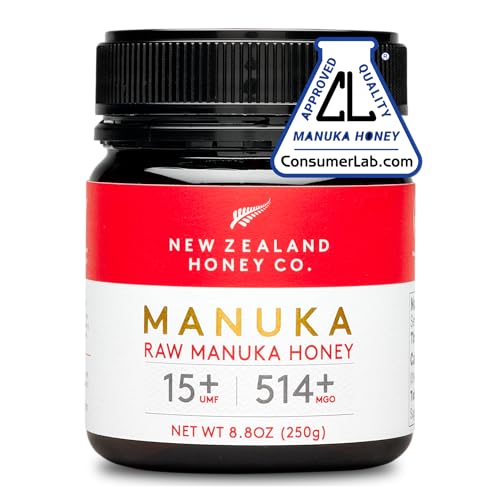 Best Overall
New Zealand Honey Co Raw Manuka Honey UMF 15+ (MGO 514+)
New Zealand Honey Co · 4.8
$33.88
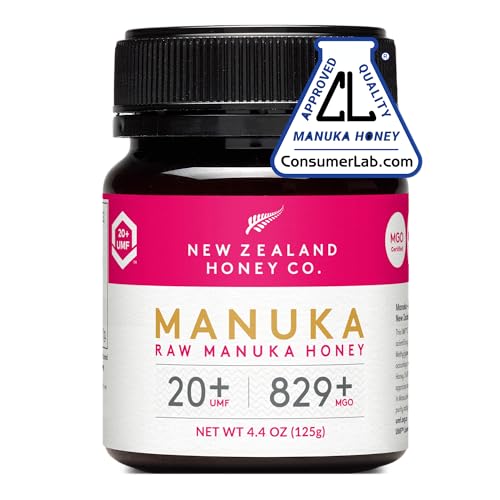 Best Value
New Zealand Honey Co Raw Manuka Honey UMF 20+ (MGO 829+)
New Zealand Honey Co · 4.8
$32.98
 Upgrade Pick
New Zealand Honey Co Raw Manuka Honey UMF 20+ (MGO 829+), Large Jar
New Zealand Honey Co · 4.8
$55.88
Before anything else, the guardrail we hold in every honey article on this site: we do not make health claims. We are not going to tell you that manuka honey does anything to your body, because that is not a claim a food guide gets to make, and the internet already has far too many pages that do. What we can do, and what nobody seems to bother doing, is explain exactly what the numbers on the jar measure, which of the four competing grading systems is actually verifiable, and how to work out whether the jar in front of you is priced fairly for the grade it claims. If you have a health question about manuka honey, ask a clinician.
Here is what the grading is really about. Manuka honey comes from bees foraging the manuka bush, Leptospermum scoparium, which grows in New Zealand and parts of Australia. That nectar produces honey containing dihydroxyacetone, which converts over time into methylglyoxal, abbreviated MGO. MGO is measurable in a lab, in milligrams per kilogram, and that measurement is the backbone of every honest grading system in the category. UMF, the New Zealand licensing standard, tests MGO alongside other chemical markers to certify both potency and authenticity. Everything else on a manuka label is either a translation of MGO or marketing.
One disclosure, plainly: no brand paid for a placement here, no producer saw this guide before publication, and links go to Amazon, where we may earn a small commission at no extra cost to you. Prices are the verified listings at publication and manuka prices move a lot, so always check the live page. And the standing rule that applies to every honey on this site: never give honey of any kind to a child under 12 months old.
What to know
- Our pick: New Zealand Honey Co UMF 15+ (MGO 514+) at $33.88. UMF certified, third party tested, the grade where manuka tastes like manuka.
- Entry point: the same producer's UMF 10+ (MGO 263+) at $18.88, the cheapest certified jar in this guide.
- UMF and MGO are the same information twice: UMF 10+ = MGO 263+, UMF 15+ = MGO 514+, UMF 20+ = MGO 829+.
- UMF is a licensed New Zealand certification that tests authenticity as well as potency. MGO alone is just a number the seller printed.
- KFactor is one company's proprietary pollen-based scale. "Active" and "bio active" with no number mean essentially nothing.
- Do the math: dollars per 100 grams divided by the MGO number tells you what you are paying for grade. Higher grades are not linearly better value.
- Counterfeiting is the real risk in this category, which is why New Zealand built a certification regime around it. Buy graded and licensed, or do not bother.
- We make no health claims for manuka honey. If that is why you are shopping, talk to a clinician first.
At a glance
| Manuka honey | Best for | Grade (listed) | Weight (listed) | Price | Check price |
|---|---|---|---|---|---|
| New Zealand Honey Co UMF 15+ | Our Pick | UMF 15+ / MGO 514+ | Check listing | $33.88 | Check Price |
| New Zealand Honey Co UMF 10+ | Best Entry Grade | UMF 10+ / MGO 263+ | Check listing | $18.88 | Check Price |
| New Zealand Honey Co UMF 20+ | Best High Grade for the Money | UMF 20+ / MGO 829+ | Check listing | $32.98 | Check Price |
| Egmont Honey MGO 265+ UMF 10+ | Best Value per Gram | MGO 265+ / UMF 10+ | 500 g | $26.99 | Check Price |
| Manuka Health UMF 13+ | Best Known Brand | UMF 13+ / MGO 400+ | 250 g (8.8 oz) | $34.95 | Check Price |
| Kiva Raw Manuka UMF 15+ | Best Alternative at 15+ | UMF 15+ / MGO 514+ | Check listing | $39.99 | Check Price |
| New Zealand Honey Co UMF 20+ Large | Best Big Jar at Top Grade | UMF 20+ / MGO 829+ | Larger jar (listed) | $55.88 | Check Price |
The 2026 manuka shortlist, all New Zealand sourced. UMF and MGO figures are as stated on each listing. Jar weights are quoted only where the listing states one. Prices verified 2026-08-29 and move frequently.
New Zealand Honey Co Raw Manuka Honey UMF 15+ (MGO 514+)
New Zealand Honey Co · UMF 15+ / MGO 514+ (listed) · UMF certified, third party tested (listed) · New Zealand sourced
Our verdict: UMF 15+ is where manuka honey becomes recognizably itself: dense, dark, almost mineral, closer to a spread than to a syrup. This jar carries the full UMF license rather than a bare MGO number, which is the difference between a tested certification and a claim, and at $33.88 it is priced sanely for the grade. It is our pick for anyone buying manuka on purpose rather than as an experiment.
UMF 15+ is the grade we would actually spend money on. Below UMF 10 the honey is mild enough that you are mostly paying for the word manuka. Above UMF 20 the price curve goes near vertical while the flavor difference narrows. The New Zealand Honey Co UMF 15+ manuka honey sits in the middle of that curve: dark caramel color, thick enough that a spoon stands up in it for a second, and a flavor that is genuinely unlike any other honey, faintly medicinal and earthy in a way that people either love immediately or have to grow into.
Third party testing is the other thing this listing gets right. The producer states independent verification rather than in-house numbers, which is what you want in a category where the grade is the whole value proposition. Practically, use it the way New Zealanders do: straight off a spoon, stirred into hot (not boiling) water with lemon, or spread on toast where its density actually works in your favor. It is a poor cooking honey and an expensive one, so do not bake with it.
On why people buy manuka in the first place: it has a long popular and traditional reputation, and a great many shoppers arrive at this jar for reasons that have nothing to do with breakfast. We are not going to characterize what it does, because we are a shopping guide and that is not our lane. If a health question is what brought you here, take it to a clinician. What we will say is that if you are buying manuka at all, buy a certified grade, because an uncertified jar is neither good honey nor a credible anything else. The full decoder for the numbers is in our UMF and MGO explainer.
Who should buy it
Buy this if you want real manuka rather than a manuka-flavored purchase: a certified, third party tested UMF 15+ jar at a price that is not absurd for the grade. It suits people who will eat it deliberately, off a spoon or in hot drinks, rather than using it as an everyday sweetener.
What we don't like
At the current listings the same producer's UMF 20+ jar is cheaper, which makes this pick a worse buy until that gap closes, so check both before you click. The jar weight is not stated clearly on the listing, so you have to confirm it at checkout to do the per-gram math. And the flavor is genuinely divisive: it does not taste like the honey you know.
- Grade
- UMF 15+ (listed)
- MGO equivalent
- MGO 514+ (listed)
- Certification
- UMF licensed, third party tested (listed)
- Origin
- New Zealand
- Weight
- Confirm on the live listing
- Best use
- Off a spoon, hot drinks, toast
- Price
- $33.88
Pros
- Full UMF license, not just a printed MGO number
- Third party testing stated on the listing
- The grade where manuka actually tastes like manuka
- Priced sanely against other certified 15+ jars
- Thick, spreadable texture that suits real use
Cons
- Currently listed above the same producer's UMF 20+
- Jar weight not clearly stated on the listing
- Strong, medicinal flavor that not everyone enjoys

New Zealand Honey Co Raw Manuka Honey UMF 10+ (MGO 263+)
New Zealand Honey Co · UMF 10+ / MGO 263+ (listed) · UMF certified, third party tested (listed) · New Zealand sourced
Our verdict: UMF 10+ is the floor of the meaningful grades and this is the least expensive certified jar in the guide at $18.88. The flavor is milder and more approachable than the higher grades, which makes it a genuinely better first manuka than a UMF 20+ that might just taste strange to you. Buy this to find out whether you like manuka at all.
Do not start at the top of the grade ladder. The most common manuka mistake we see is a first-time buyer spending $50 on a UMF 20+ jar, tasting it, and disliking it, at which point they own an expensive jar of something they will not finish. The New Zealand Honey Co UMF 10+ manuka honey at $18.88 solves that: it is recognizably manuka, noticeably darker and denser and more savory than ordinary honey, but mild enough to be pleasant on the first spoon rather than challenging.
Where this jar earns its slot is the price of admission. Under $20 is a rare number in certified manuka, and it comes from a licensed producer with third party testing stated. If you like it, move up a grade next time and you will have spent $19 to make a $34 decision well. If you do not like it, you spent $19 to find out, which is exactly the sort of trade this site exists to point out. For what the numbers mean before you climb the ladder, read our manuka UMF and MGO explainer.
Who should buy it
Buy this if you have never had manuka honey, if you are buying it as a small gift for someone who has not, or if you want a certified jar for daily use without paying high-grade money. It is the sane first purchase in the category.
What we don't like
It is the mildest honey here, so anyone chasing the intense, near-savory character of high-grade manuka will find it underwhelming. The jar weight is not stated clearly, so per-gram comparison requires a look at the live listing. And $18.88 is still a lot of money for a small jar of honey by any normal standard.
- Grade
- UMF 10+ (listed)
- MGO equivalent
- MGO 263+ (listed)
- Certification
- UMF licensed, third party tested (listed)
- Origin
- New Zealand
- Weight
- Confirm on the live listing
- Best use
- First manuka, daily spoon, hot drinks
- Price
- $18.88
Pros
- Cheapest certified jar in the guide at $18.88
- Full UMF license at an entry price
- Milder flavor that suits first-time buyers
- Same producer and testing as our top pick
Cons
- Mildest character of any jar here
- Jar weight not stated on the listing
- Still expensive compared with any ordinary honey
New Zealand Honey Co Raw Manuka Honey UMF 20+ (MGO 829+)
New Zealand Honey Co · UMF 20+ / MGO 829+ (listed) · UMF certified, third party tested (listed) · New Zealand sourced
Our verdict: UMF 20+ is the high end of the commonly sold grades, and at $32.98 this jar is currently listed below the same producer's UMF 15+. That is a pricing anomaly rather than a permanent state, and while it lasts it makes this the most grade you can buy per dollar in the guide. Verify both live prices, then take whichever is cheaper.
Manuka pricing does not always follow manuka grading, and that is an opportunity. Grade normally tracks price closely, because methylglyoxal content depends on nectar quality and honey age and there is only so much high-MGO manuka in the world. But listing prices move on inventory, not on chemistry, and right now the New Zealand Honey Co UMF 20+ manuka honey at $32.98 sits under the same producer's UMF 15+ jar at $33.88. Same license, same testing, same origin, more than 60 percent more methylglyoxal, less money. If both listings still read that way when you check, this is the obvious buy.
The rest of the story matches our top pick because it is the same producer: full UMF licensing rather than a bare number, stated third party testing, New Zealand origin. The jar weight is not stated clearly on the listing, so confirm it before comparing per-gram against anything else in this guide. And use it the way high-grade manuka deserves: neat, or in warm drinks, never baked into anything. Our UMF and MGO explainer covers exactly how far up the grade ladder is worth climbing.
Who should buy it
Buy this if you already know you like manuka and want the highest commonly sold certified grade, or if you are price-checking and find it listed below the 15+, in which case it is simply the better jar for less money.
What we don't like
The price advantage over the 15+ is an inventory quirk, not a promise, so it may be gone by the time you read this. The flavor is genuinely intense and a bad first manuka. And as with every jar from this producer, the listing does not state a clear weight, so you have to check at checkout.
- Grade
- UMF 20+ (listed)
- MGO equivalent
- MGO 829+ (listed)
- Certification
- UMF licensed, third party tested (listed)
- Origin
- New Zealand
- Weight
- Confirm on the live listing
- Best use
- Neat, warm drinks, for people who like manuka
- Price
- $32.98
Pros
- Highest commonly sold certified grade here
- Currently listed below the same producer's UMF 15+
- Full UMF license and stated third party testing
- The most methylglyoxal per dollar in the guide
Cons
- The price advantage is temporary and inventory driven
- Intense flavor, wrong grade for a first purchase
- Weight not stated on the listing

Egmont Honey Manuka Honey MGO 265+ / UMF 10+, 500 g
Egmont Honey · MGO 265+ / UMF 10+ (listed) · 500 g (listed) · non-GMO, New Zealand sourced
Our verdict: This is the value jar and the one product in the guide where you can do the per-gram math with confidence, because the listing states a weight: 500 grams for $26.99, about $5.40 per 100 grams. Nothing else here comes close on that measure. The grade is entry level at MGO 265+, equivalent to UMF 10+, which is exactly the right tradeoff for a jar this size.
Manuka is normally sold in jars so small that the price hides. Most listings in this category are 250 grams or smaller, which is about 8.8 ounces, and at that size a $35 jar does not feel as extreme as it is. The Egmont Honey MGO 265+ manuka in the 500 gram jar breaks that pattern: half a kilogram for $26.99, which is about $5.40 per 100 grams. For comparison, a 250 gram jar at $34.95 works out to roughly $13.98 per 100 grams, more than two and a half times the price for the same weight of honey.
The catch is the grade itself. MGO 265+, equivalent to UMF 10+, is the entry tier, so this is not the jar for someone chasing the dense, intense character of high-grade manuka. It is the jar for someone who wants certified New Zealand manuka in the house at a volume that lets them actually use it: in tea, on toast, off a spoon, without wincing at the rate of depletion. For most households that is the more sensible relationship with manuka honey, and it is why this jar carries our value pick.
Note that this listing states both a UMF grade and an MGO number, which is the belt-and-suspenders labeling we like to see. When only one appears, the conversion is straightforward, and our UMF and MGO explainer has the full table.
Who should buy it
Buy this if you want manuka honey you can actually use daily rather than ration, if you are cooking for a household, or if you simply refuse to pay boutique per-gram prices. Best value on this page by a wide margin.
What we don't like
MGO 265+ is the entry tier, so it lacks the intensity that high-grade shoppers are after. Five hundred grams is a lot of a strongly flavored honey if you turn out not to like it. And a big jar of manuka invites you to use it as an everyday sweetener, which is an expensive habit even at this price.
- Grade
- UMF 10+ (listed)
- MGO rating
- MGO 265+ (listed)
- Weight
- 500 g (listed)
- Price per 100 g
- About $5.40
- Cents per MGO point per 100 g
- About 2.0
- Origin
- New Zealand, non-GMO (listed)
- Price
- $26.99
Pros
- By far the best price per gram in the guide
- Listing states a clear 500 g weight, so the math is verifiable
- Carries both a UMF grade and an MGO number
- Big enough to use rather than ration
Cons
- Entry-tier grade at MGO 265+
- Too mild for high-grade manuka enthusiasts
- A large jar is a large commitment to a divisive flavor

Manuka Health UMF 13+ / MGO 400+ Manuka Honey, 250 g
Manuka Health · UMF 13+ / MGO 400+ (listed) · 250 g / 8.8 oz (listed) · New Zealand sourced
Our verdict: Manuka Health is one of the most recognized names in the category and this jar states everything a shopper needs: a UMF grade, an MGO figure, and an actual weight. At $34.95 for 250 grams it is about $13.98 per 100 grams, which is roughly two and a half times the Egmont jar's rate. You are paying for brand recognition and an unusually clear label.
The clearest label in the guide, at the least favorable per-gram price. The Manuka Health UMF 13+ manuka honey tells you three things most listings do not tell you together: the UMF grade (13+), the MGO number (400+), and the net weight (250 g, or 8.8 oz). That transparency is worth something, especially in a category where opacity is the norm. What it costs you is about $13.98 per 100 grams, or roughly 3.5 cents per MGO point per 100 grams, against about 2.0 cents for the Egmont jar.
Brand matters more in manuka than it does in most groceries, for a reason worth stating: the category has a long history of counterfeiting, with far more honey sold as manuka worldwide than New Zealand could plausibly produce. That is precisely why the UMF licensing program exists and why New Zealand built an export certification regime around the product. Buying a large, established, licensed brand is one reasonable way to manage that risk, and it is a legitimate reason to pay a premium even when the per-gram math does not flatter the jar.
Use it as you would any mid-grade manuka: spoon, toast, warm drinks. Background on the honey itself and the plant it comes from is well covered in the general entry on manuka honey, which is a good grounding read before you spend real money in this aisle.
Who should buy it
Buy this if brand recognition and label clarity are worth a premium to you, if you want a stated net weight so you can compare precisely, or if UMF 13+ is the exact middle grade you were looking for.
What we don't like
The per-gram price is the least favorable in the guide: about $13.98 per 100 grams against $5.40 for the Egmont jar. Two hundred and fifty grams disappears quickly. And you are paying a meaningful share of that premium for the name on the lid rather than for anything measurable in the honey.
- Grade
- UMF 13+ (listed)
- MGO rating
- MGO 400+ (listed)
- Weight
- 250 g / 8.8 oz (listed)
- Price per 100 g
- About $13.98
- Cents per MGO point per 100 g
- About 3.5
- Origin
- New Zealand
- Price
- $34.95
Pros
- States UMF grade, MGO number, and net weight together
- Well known, established New Zealand brand
- UMF 13+ fills the gap between the 10+ and 15+ tiers
- Easy to compare precisely against any other jar
Cons
- Worst price per gram in the guide
- 250 g goes fast at any regular use
- Meaningful share of the price is brand premium

Kiva Raw Manuka Honey, Certified UMF 15+ (MGO 514+)
Kiva · Certified UMF 15+ / MGO 514+ (listed) · 100% raw (listed) · New Zealand sourced
Our verdict: Kiva sells the same grade our top pick does, UMF 15+ at MGO 514+, with the same certification behind it, for $39.99 instead of $33.88. It is the jar to buy when our pick is out of stock, and a perfectly good jar on its own terms. It is simply $6 more for a functionally identical grade, so it does not take the top slot.
Grade parity means price decides. When two licensed producers both sell certified UMF 15+ at MGO 514+, you are comparing packers, not honey chemistry, because the grade is the specification. Kiva's certified UMF 15+ raw manuka honey is a well-regarded jar from a brand with a long presence in the category, and at $39.99 it costs about 18 percent more than the New Zealand Honey Co jar at the same grade. That gap is the entire argument, and it goes the other way the moment either listing moves.
Flavor and texture are what you expect from the grade: dark, thick, earthy, distinctly manuka. As with several jars here, confirm the net weight on the live listing before you compare per-gram against the Egmont or Manuka Health jars, both of which do state weights. For the decoder on why UMF 15+ specifically is the grade most manuka buyers settle on, see our UMF and MGO explainer.
Who should buy it
Buy Kiva when our top pick is out of stock, when Kiva is discounted below it, or if you already trust the brand. Same certified grade, same use cases, slightly more money at current listings.
What we don't like
It is $6.11 more than an identically graded certified jar, which is the whole of the case against it. The net weight is not clearly stated on the listing. And nothing on the label distinguishes the honey itself from our top pick, because at the same UMF grade there is nothing to distinguish.
- Grade
- Certified UMF 15+ (listed)
- MGO equivalent
- MGO 514+ (listed)
- Certification
- UMF certified (listed)
- Origin
- New Zealand
- Weight
- Confirm on the live listing
- Best use
- Spoon, hot drinks, toast
- Price
- $39.99
Pros
- Identical certified grade to our top pick
- Established brand in the category
- The right fallback when the pick is out of stock
- Raw and UMF certified, both stated on the listing
Cons
- About 18 percent more than the same grade elsewhere
- Weight not stated on the listing
- No differentiator over our pick at the same grade
New Zealand Honey Co Raw Manuka Honey UMF 20+ (MGO 829+), Large Jar
New Zealand Honey Co · UMF 20+ / MGO 829+ (listed) · larger jar format (listed) · UMF certified, third party tested
Our verdict: This is the premium slot of the category: the highest commonly sold certified grade in the larger of the producer's two jar sizes, for $55.88. It is the right buy for a committed manuka user who has already worked out that they want UMF 20+ and is tired of running out. For anyone else, it is a lot of money for a flavor they may not yet love.
Buy the big jar only after the small jar has proven itself. That is the whole guidance on the New Zealand Honey Co UMF 20+ large jar. At $55.88 it is the most expensive item in this guide, and the format only makes sense if you already know you use manuka at this grade regularly enough to finish it. If you do, the larger size normally improves your per-gram rate against the standard jar, and you should confirm both weights on the live listings to check that it still does at current prices.
Grade, certification, and origin are identical to the standard UMF 20+ jar: UMF licensed, third party tested, New Zealand sourced. Storage is trivial, honey keeps essentially indefinitely in a sealed jar at room temperature, so a large format carries no spoilage risk. The only real risks are the money and the flavor commitment. If manuka has become a habit rather than an experiment for you, this is the jar. If it has not, buy the $18.88 UMF 10+ and revisit this page in six months.
Who should buy it
Buy this if you already use UMF 20+ manuka regularly and want to stop reordering small jars, or if you are buying a serious gift for someone who genuinely loves high-grade manuka. Confirm the per-gram rate beats the standard jar first.
What we don't like
It is $55.88, the highest price on this page, and the larger format does not always deliver a better per-gram rate, so verify before assuming. Top-grade flavor is intense and a poor bet for anyone still deciding. And the listing does not state a weight clearly enough to do the math without checking.
- Grade
- UMF 20+ (listed)
- MGO equivalent
- MGO 829+ (listed)
- Certification
- UMF licensed, third party tested (listed)
- Format
- Larger jar (listed)
- Origin
- New Zealand
- Storage
- Sealed, room temperature, keeps indefinitely
- Price
- $55.88
Pros
- Top commonly sold certified grade in a larger format
- Same UMF license and third party testing as our pick
- Fewer reorders for committed manuka users
- No spoilage risk in a large honey jar
Cons
- Most expensive item in the guide at $55.88
- Larger format does not always improve per-gram value
- Wrong purchase for anyone still testing the flavor
More gear worth comparing
Beyond this guide: the highest-rated gear across every category and budget, with a live price check on each.



As an Amazon Associate we may earn from qualifying purchases, at no cost to you.
Quick shop: every pick
Skip the scroll: the whole lineup, with a live price check on each.
- New Zealand Honey Co Raw Manuka Honey UMF 15+ (MGO 514+)Best OverallNew Zealand Honey Co · $33.88Check Price
- New Zealand Honey Co Raw Manuka Honey UMF 10+ (MGO 263+)Best Entry GradeNew Zealand Honey Co · $18.88Check Price
- New Zealand Honey Co Raw Manuka Honey UMF 20+ (MGO 829+)Best High Grade for the MoneyNew Zealand Honey Co · $32.98Check Price
- Egmont Honey Manuka Honey MGO 265+ / UMF 10+, 500 gBest Value per GramEgmont Honey · $26.99Check Price
- Manuka Health UMF 13+ / MGO 400+ Manuka Honey, 250 gBest Known BrandManuka Health · $34.95Check Price
- Kiva Raw Manuka Honey, Certified UMF 15+ (MGO 514+)Best Alternative at UMF 15+Kiva · $39.99Check Price
- New Zealand Honey Co Raw Manuka Honey UMF 20+ (MGO 829+), Large JarBest Big Jar at Top GradeNew Zealand Honey Co · $55.88Check Price
How we chose
Certification is a pass/fail gate. Every pick in this guide is New Zealand sourced and carries either a UMF grade, an MGO number, or both. A jar that says only "active" or "premium" with no tested number does not make this list at any price.
We rank on dollars per graded unit, not on grade alone. A UMF 20+ jar is not automatically a better buy than a UMF 10+ jar; it is a better buy only if the price per gram per MGO point holds up, and often it does not.
We quote jar weights only where the live listing states one. Manuka is sold in grams, not ounces, and several listings sell multiple sizes on one page, so where the weight is ambiguous we give you the formula instead of a fabricated number.
We read grading systems as evidence, not as branding. UMF is a licensed program with authenticity testing behind it. A bare MGO number is a useful measurement with less verification behind it. Proprietary scales are ranked below both.
Absolutely no health claims. We describe what manuka is, how it is graded, where it comes from, how people traditionally use it in food and drink, and what it costs. Anything about your health is a question for a clinician.
No brand bought a placement. Prices come from the verified offer table on the publication date and are rechecked on update; manuka pricing is volatile, so we tell you when a lower grade is currently priced above a higher one.
Key terms
- MGO
- Methylglyoxal, measured in milligrams per kilogram of honey. It is the chemical marker manuka grading is built on, formed as dihydroxyacetone in manuka nectar converts over time. MGO 400+ means at least 400 mg/kg.
- UMF
- Unique Manuka Factor, a licensed New Zealand grading system that tests methylglyoxal alongside other chemical markers to verify both potency and authenticity. UMF 10+ corresponds to MGO 263+, 15+ to MGO 514+, 20+ to MGO 829+.
- KFactor
- A proprietary grading scale used by one producer, based on pollen content and authenticity rather than methylglyoxal. It is not comparable to UMF or MGO and does not tell you a potency figure.
- "Active" manuka
- Marketing language with no tested number behind it. Every honey has some peroxide activity, so the word alone conveys nothing. Treat an ungraded jar as an ordinary honey at an extraordinary price.
- Manuka bush
- Leptospermum scoparium, the shrub whose nectar produces manuka honey. It grows in New Zealand and parts of Australia, which is why authentic manuka has a narrow geographic origin.
- Monofloral manuka
- Honey where manuka nectar dominates, as opposed to multifloral manuka where it is one source among several. Monofloral commands higher grades and higher prices.
- Dollars per 100 grams
- Price divided by net weight in hundreds of grams. The only fair way to compare manuka jars, since the category sells in 250 g, 500 g, and unstated sizes side by side.
- Cents per MGO point
- Dollars per 100 grams divided by the MGO number. The single most useful value figure in manuka shopping, and one that almost no listing calculates for you.
Questions, answered
what umf manuka honey should i buy
UMF 15+ (MGO 514+) is the grade most buyers settle on: distinctly manuka in flavor without the near vertical price curve above UMF 20. Our pick there is the New Zealand Honey Co jar at $33.88. If you have never had manuka, start at UMF 10+ (MGO 263+) for $18.88 instead. Always price-check the higher grades, because listings sometimes put UMF 20+ below UMF 15+.
what is the difference between umf and mgo
MGO is a lab measurement of methylglyoxal in milligrams per kilogram. UMF is a licensed New Zealand grading program that tests methylglyoxal plus additional chemical markers to verify authenticity as well as potency. They map onto each other directly: UMF 10+ equals MGO 263+, UMF 15+ equals MGO 514+, UMF 20+ equals MGO 829+. UMF carries more verification behind it.
is manuka honey worth it
As a food, that depends entirely on whether you like the flavor, which is dark, thick, earthy, and genuinely divisive. It costs many times what excellent raw honey costs, so if you want honey for taste alone there are far better values, which is what our best raw honey guide is for. If you are considering manuka for health reasons, that is a question for a clinician and not one this guide answers.
how can you tell if manuka honey is real
Buy New Zealand sourced honey that carries a UMF license or a stated MGO number from a producer that publishes third party testing. Check that any stated UMF and MGO pair matches the published equivalences, since UMF 10+ should read MGO 263+ and UMF 15+ should read MGO 514+. Ungraded jars labeled only "active" or "premium" carry no verification at all.
is higher umf manuka honey better
Higher UMF means more methylglyoxal and a more intense, darker, more savory flavor. Whether it is a better purchase depends on price per gram: run the value math, because manuka pricing tracks inventory rather than chemistry and a higher grade is sometimes listed cheaper than a lower one. For flavor, most people find UMF 15+ the sweet spot and UMF 20+ a step too far on a first jar.
what does manuka honey taste like
Much less like ordinary honey than people expect. It is thick enough to hold a spoon, dark caramel to nearly brown in color, and the flavor runs earthy and faintly medicinal with a slightly bitter finish, especially at higher grades. Lower grades like UMF 10+ are milder and more approachable. It is a honey you either take to immediately or grow into.
how much does real manuka honey cost
In 2026, certified New Zealand manuka runs from about $18.88 for an entry-grade UMF 10+ jar to $55.88 for a large UMF 20+ jar. The more useful figure is per weight: the picks here range from about $5.40 per 100 grams for the Egmont 500 gram jar to about $13.98 per 100 grams for a 250 gram premium jar. Always check the stated weight before comparing.
why is manuka honey so expensive
Supply and verification. The manuka bush grows in a narrow geography, mainly New Zealand, and it flowers for a short window each year, so the harvest is genuinely limited. On top of that, the certification and export testing regime that exists because of historical counterfeiting adds real cost per jar. High-grade monofloral manuka is scarce, and price follows scarcity.
can you cook with manuka honey
You can, but it is a waste of money. Baking and high heat drive off the aromatic character you paid a premium for, and manuka's strong flavor competes with most recipes. Use inexpensive raw honey for cooking and keep manuka for uses where you actually taste it: off a spoon, on toast, or stirred into a warm rather than boiling drink.
can babies have manuka honey
No. Never give honey of any kind, including manuka at any grade, to a child under 12 months old, because honey can contain Clostridium botulinum spores that an infant digestive system cannot handle. This applies to honey stirred into food or baked into anything for an infant. After the first birthday, honey is fine for most children.
Filed under Buyer's Guide
Part of Honey & Bee Products
Keep reading
Raw Honey vs Manuka Honey
What the price premium actually buys, and when ordinary raw honey is the smarter jar.
Manuka Honey UMF and MGO Explained
The full decoder: every grade, the conversion table, what the licensing actually tests, and how counterfeits get caught.
The Best Raw Honey You Can Actually Buy
If you want honey for flavor rather than for a grade on the lid, this is where the money goes further.
The Honey Varieties Guide
Where manuka sits on the wider map of floral sources, from water-pale acacia to near-black buckwheat.
The Best Honey Gift Sets
Tasting flights and samplers, which is a smarter way to discover what you like than one $40 jar.
Does Honey Go Bad?
Storage, crystallization, and why a sealed jar of manuka will outlast almost anything else in your pantry.
Raw Honey vs Regular Honey
What "raw" means on any honey label, manuka included, and what heating and filtration actually change.