Our Pick: Teoon
Check PriceBeekeeping With Kids: A Safety-First Family Guide
The best first step for a curious kid is almost never a hive inspection. It is watching bees up close with nothing at stake, which is exactly what an observation kit like the Teoon observation beehive starter kit ($139.99) is for at the ambitious end, and what a $12.99 set like the Safari Ltd honey bee life cycle figures does at the simple end. Understanding first, proximity second, protective gear third, and only then the yard. Kids who arrive at their first inspection already knowing what a queen looks like and why smoke is used behave completely differently from kids who are handed a veil and told to stand still.
By The BeehiveKits Hive Desk2026-08-2918 min read Fact-checked against verified Amazon listingsHow we research
This guide is organized around one non-negotiable rule and a set of practical ones. The rule: if a child has any known or suspected allergy to bee or wasp stings, that child does not go into the bee yard, full stop, and any decision about proximity to hives is one for their clinician and family rather than a beekeeping site. Everything else in this guide assumes no known allergy and still errs firmly toward caution, because a first bad experience with bees can close a door for a decade.
The practical ones: first visits are short and calm, not thorough; children need real protective gear and most manufacturers start at youth sizes with jackets fitting more easily than full suits; roles should be genuinely useful rather than decorative, because kids can tell; and the education products, books, life-cycle kits, habitat builds, are not consolation prizes, they are the part that produces a child who actually understands what they are looking at.
Standard disclosure, plainly: no brand paid for a placement here, and some links go to Amazon, where a purchase may earn us a small commission at no extra cost to you. Prices were verified at publication. Nothing here is medical advice; allergy questions go to a clinician.
What to know
- Any known or suspected sting allergy means the child does not go in the bee yard. That decision belongs to a clinician and the family, not to a beekeeping guide.
- Understanding comes before proximity. A child who knows what they are looking at is calmer, safer, and far more likely to stay interested.
- First visits are short: 5 to 10 minutes at the hive, on a warm calm day, during a nectar flow when colonies are gentlest. End before anyone gets bored or hot.
- Child protective gear is a real constraint. Most manufacturers start at youth sizes, and a jacket with an attached veil fits a child better than a full suit does.
- Give real jobs, not decorative ones. Kids can tell the difference, and a genuine role is what builds ownership.
- Observation hives, window hives, and observation kits are the lower-risk entry point: all of the watching, none of the opening.
- 4-H and school programs are the structured path, and many county beekeeping associations run youth scholarships or mentored programs.
- Books and life-cycle models do the heavy lifting for ages 3 to 8, where hive work is not appropriate but fascination absolutely is.
At a glance
| Age | Realistic role | Gear needed | Watch out for |
|---|---|---|---|
| 3 to 5 | Books, models, watching flowers, garden planting | None; stay out of the apiary | Attention span, and the urge to grab |
| 6 to 8 | Watching from a distance, smoker fuel, carrying tools, hive journal | Youth jacket and veil if approaching at all | Heat in gear, and short patience windows |
| 9 to 12 | Holding frames with supervision, spotting eggs and queen, record keeping | Properly fitted youth jacket or suit, gloves | Overconfidence; enforce the calm-movement rule |
| 13 and up | Full inspections, mite washes, feeding, harvest work | Full suit, own hive tool | Lifting: a full deep runs about 80 to 90 lbs (listed estimate) |
What kids can actually do, by age

Teoon Observation Beehive Starter Kit
Teoon · Observation beehive starter kit with 3 frames (listed) · viewing-focused rather than production
Our verdict: The single most effective way to turn a curious child into a genuinely knowledgeable one, because it removes the time limit. Unlimited close observation with zero sting exposure beats a supervised ten-minute inspection every single time for building understanding.
Children learn bees by watching them for a long time, and a hive inspection gives them ten minutes in a hot veil. The Teoon observation beehive starter kit ($139.99) inverts that: a viewing-first setup where a child can sit and watch comb activity for as long as their attention holds, with no gear and no risk.
Understand what you are taking on. Observation setups house small colonies that need real management, seasonal planning, and often a route back into a full hive, so read the category guide before ordering. Options and their honest tradeoffs are in our observation hive guide, where window hives are frequently the more practical family answer.
Who should buy it
Families with a genuinely hooked child, homeschool and classroom settings with an adult who will manage the colony, and anyone who wants the watching experience without putting a kid in a veil.
What we don't like
It is a real colony with real management needs, not a terrarium, and a neglected observation hive dies visibly in front of a child, which is the worst possible lesson. Also the priciest item here by a wide margin.
- Type
- Observation beehive starter kit (listed)
- Frames
- 3 frames (listed)
- Best for
- Sustained close viewing
- Sting exposure
- None during viewing
- Price
- $139.99
Pros
- Unlimited viewing time with no protective gear
- Shows comb, brood, and behavior at close range
- Excellent for classrooms and homeschool units
- Removes the time pressure of a real inspection
Cons
- Requires genuine colony management
- Expensive relative to every other option here
- A failed observation colony is a bad lesson
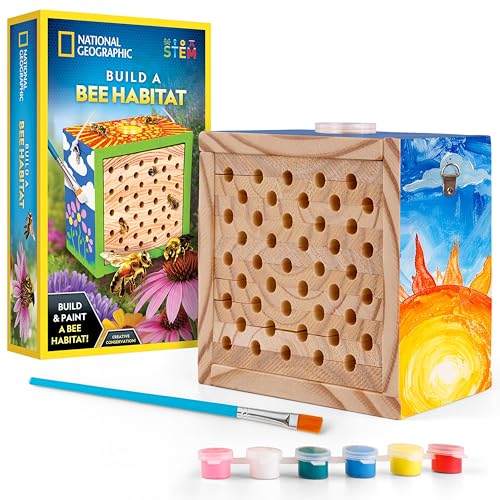
National Geographic Build a Bee Habitat Nature Craft Kit
National Geographic · Nature craft kit, build-your-own bee habitat (listed) · solitary bee focus · no live insects included
Our verdict: The strongest loop in kid-facing bee products: build it, hang it, watch real insects move in. Solitary bees are effectively non-defensive, so the payoff is observable at arm's length with no gear and no risk, which is exactly what a young child needs.
The National Geographic build a bee habitat kit ($19.99) works because the reward is not the craft, it is the tenant. A child hangs it, checks it daily, and eventually finds sealed tubes, which is a genuinely thrilling moment and requires nothing but patience.
If it takes, the natural upgrade is a proper mason bee house with replaceable tubes and a real cocoon management routine, covered in mason bee houses and how to raise mason bees. Solitary bee keeping is, for most families with young children, a better hobby than honey bee keeping.
Who should buy it
Ages roughly 5 to 10, families not ready for a honey bee hive, and anyone wanting a bee project with essentially no sting risk.
What we don't like
Occupancy depends entirely on placement and local solitary bee populations, so it can sit empty for a season, and small craft-kit habitats need seasonal cleaning or they become disease traps.
- Type
- Build-your-own habitat craft kit (listed)
- Target
- Solitary bees, not honey bees
- Live insects
- None included
- Age fit
- Roughly 5 to 10
- Price
- $19.99
Pros
- Real insects use the finished project
- Essentially no sting risk
- Builds patience and observation habits
- Cheap entry into pollinator hosting
Cons
- Occupancy is not guaranteed
- Needs seasonal cleaning to stay healthy

Bambilo Life Cycle Learning Kit
Bambilo · Life science education kit with life cycle models (listed) · classroom and homeschool oriented
Our verdict: The fuller of our two life-cycle picks and the better classroom buy. Physical stages a child can sequence with their hands turn an abstract idea into a concrete one, and it is the concept that unlocks everything else about hive biology.
Egg to larva to pupa to adult is the foundational idea in beekeeping, and it is the one that makes brood frames legible instead of confusing. The Bambilo life cycle learning kit ($32.99) makes the sequence physical, which is how children under ten actually learn it.
Pair it with a real frame of brood at the right moment. A child who has sequenced the models on the table and then sees the same four stages in a comb has learned something that will not fade. The biology behind it is in the queen bee biology guide and worker and drone bees.
Who should buy it
Homeschool families, classroom teachers, and parents of ages roughly 5 to 10 who want the concept locked in before the first hive visit.
What we don't like
It is a teaching aid rather than a toy, so it needs an adult to lead the first session or it goes in a drawer, and it costs more than double the simpler figure set.
- Type
- Life cycle learning kit (listed)
- Teaches
- Egg, larva, pupa, adult sequence
- Setting
- Homeschool and classroom
- Age fit
- Roughly 5 to 10
- Price
- $32.99
Pros
- Makes metamorphosis physical and sequenceable
- Pairs directly with a real brood frame
- Strong classroom and homeschool value
- Durable enough to reuse across years
Cons
- Needs an adult to lead the first session
- More expensive than a simple figure set

Safari Ltd Life Cycle of a Honey Bee
Safari Ltd · Educational toy figure set, honey bee life cycle stages (listed) · durable molded figures
Our verdict: The cheapest thing on this page that genuinely teaches. Small, durable, and portable enough to go to the bee yard in a pocket, where holding the pupa figure next to a real capped brood cell is the single best teaching moment available to a young child.
The Safari Ltd life cycle of a honey bee set ($12.99) does one job well: it puts the four stages in a child's hand for the price of a sandwich. Use it at the kitchen table first, then take it to the hive and match figures to what is actually in the comb.
It also makes a good small gift for a beekeeper's kid or a classroom, and it pairs naturally with a picture book for the reading half. More gift-shaped options across price points are in gifts for beekeepers and bee gifts and decor.
Who should buy it
Ages roughly 3 to 8, anyone wanting a cheap and genuinely educational first bee object, and beekeepers who want something to hand a visiting child.
What we don't like
It is a small figure set, not a curriculum, and the pieces are exactly the size that vanishes under a couch; for a classroom you want the fuller kit instead.
- Type
- Educational figure set (listed)
- Stages
- Honey bee life cycle stages
- Portability
- Pocket sized
- Age fit
- Roughly 3 to 8
- Price
- $12.99
Pros
- Cheapest genuinely educational option here
- Durable and portable to the bee yard
- Great for matching models to real comb
- Works as a small gift
Cons
- Small pieces get lost
- A figure set, not a full teaching kit

Bees (National Geographic Kids Readers, Level 2)
National Geographic Kids · Leveled reader, Level 2 (listed) · photographic · National Geographic Kids series
Our verdict: Under six dollars and it does the thing that matters most for young children: real photographs of real bees with text they can read themselves. Independent reading about a subject a child cares about is how the interest becomes theirs rather than yours.
Bees, National Geographic Kids Readers Level 2 ($5.57) is the cheapest and most reliable book pick on this page. Photography rather than illustration matters here: a child who has seen real pollen baskets in a photo recognizes them at the hive entrance.
Buy it alongside the life-cycle figures and you have covered the two channels, reading and handling, that carry ages 5 to 8. The grown-up shelf, for when a kid outgrows this, is in our beekeeping books guide.
Who should buy it
Emerging readers roughly 5 to 8, classrooms building a nonfiction shelf, and any beekeeper who wants a cheap thing to hand a curious kid.
What we don't like
Leveled readers are short by design, so a strongly interested child will finish it in a sitting and want more, and it covers bees broadly rather than beekeeping specifically.
- Format
- Leveled reader, Level 2 (listed)
- Illustration
- Photographic
- Age fit
- Roughly 5 to 8
- Series
- National Geographic Kids Readers
- Price
- $5.57
Pros
- Real photographs, not cartoons
- Readable independently by an emerging reader
- Cheapest item on this page
- Trusted nonfiction series
Cons
- Short; a keen reader finishes it fast
- About bees generally, not beekeeping
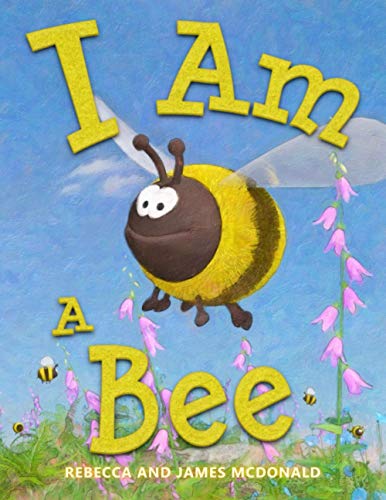
I Am a Bee: A Book About Bees for Kids
Independent · Picture-led educational book for young children (listed) · read-aloud format
Our verdict: The read-aloud pick for the age below independent reading. First-person framing does real work with small children: it turns a bee from a scary buzzing thing into someone with a job, which is the exact reframe that makes a first yard visit calm instead of frightening.
I Am a Bee ($10.93) is the bedtime half of the education plan for ages roughly 3 to 6. The narrative voice matters more than the facts at this age, because the goal is affection and familiarity rather than retention.
Read it before the first time a child sees a hive, not after. A child who has spent a week thinking of bees as workers with jobs behaves very differently at the entrance than one meeting them cold, which is the whole first-visit strategy in this guide, compressed into a picture book.
Who should buy it
Ages roughly 3 to 6, parents preparing a young child for a first apiary visit, and gift buyers who want something more useful than a stuffed bee.
What we don't like
It is a picture book, so a seven-year-old who already knows the basics will find it thin, and it is priced above a standard leveled reader.
- Format
- Illustrated read-aloud book (listed)
- Voice
- First-person narration
- Age fit
- Roughly 3 to 6
- Use
- Preparation before a first hive visit
- Price
- $10.93
Pros
- Reframes bees as workers, not threats
- Right voice for preschool and kindergarten
- Good preparation before a first yard visit
- Makes a better gift than a bee toy
Cons
- Too simple past about age six
- Costs more than a leveled reader
The sting conversation, done honestly
Start here, before any gear is bought. Children handle honest information about stings far better than they handle vague reassurance followed by a surprise. The honest version sounds like this: honey bees sting only when they feel threatened or when their hive is being defended, a honey bee dies after stinging a person because her barbed stinger tears free, and that is exactly why she does not want to do it. The sting hurts sharply for a few minutes and then aches and swells for a day or two. Most people get stung eventually if they keep bees, and most of the time it is a manageable, unremarkable event (Wikipedia: bee sting).
Then the rule that is not negotiable and should be stated plainly to the whole family. If a child has a known or suspected allergy to bee, wasp, or hornet stings, that child does not go into the bee yard. Not in a suit, not for a minute, not to watch from the gate. Systemic allergic reactions are a medical emergency, decisions about exposure belong to that child's clinician, and no amount of protective gear makes a hive inspection an appropriate risk for a child with a diagnosed sting allergy. That is a hard line and we do not soften it.
For everyone else, teach the response before it is needed: if you get stung, say so calmly, walk away from the hive first and deal with it away from the apiary, scrape the stinger out sideways rather than pinching it, then ice. Teach the difference between a normal local reaction, swelling and redness at the site, and the signs that mean stopping everything and calling for help. What those look like in detail is in our bee sting safety guide, and any question about a specific child goes to their clinician rather than to us.
Age-appropriate roles, and why real jobs matter
Children can smell a made-up job from across the yard. The way to hold their interest is to give them work that genuinely needs doing and that they can genuinely do, and then to let them own it.
Ages 3 to 5: the apiary is not the place. What works at this age is bees in books, bees on flowers, bees as models on the kitchen table, and planting things that bees visit. Watch a bumble bee work a coneflower for ten minutes and you will have taught more than any hive visit would.
Ages 6 to 8: the outer-circle jobs. Gathering smoker fuel, carrying the tool bucket to the hive and back, being the official timer, and watching the entrance from a safe distance, which is genuinely interesting: counting foragers coming in with pollen, and identifying the colors on their legs. If they approach the hive at all, they wear a properly fitted jacket and veil.
Ages 9 to 12: the real work begins. Holding a frame with supervision, learning to find eggs, spotting the queen, and, best of all, keeping the hive records: date, weather, what was seen, what was decided. Record keeping is a serious beekeeping job that many adults do badly, it suits this age perfectly, and it gives a child something in their own handwriting to be proud of.
Ages 13 and up: essentially a beekeeper, with two caveats. Lifting is a genuine limit, since a full deep box commonly runs 80 to 90 pounds as a listed estimate and a full medium runs about 50. Run 8-frame or medium equipment if a teenager will be doing the lifting. And supervision on treatments stays with the adult, because miticides are pesticides with labels that are legally binding.
Protective gear for children: the honest reality
This is the part that catches families out. Beekeeping suits are made primarily for adults, and while a number of manufacturers list youth or small sizes, sizing below roughly a child of eight or nine gets sparse, inconsistent between brands, and often generous in a way that defeats the purpose. A suit that is too big is not protective: loose cuffs, gaping ankles, and a veil that does not hold its shape against the face are the exact gaps stings find.
Three practical points. Jackets fit children better than full suits. A jacket with an attached, structured veil covers the parts that matter, adjusts more forgivingly at the waist, and pairs with the child's own jeans and boots, which fit them properly by definition. Our comparison of the jacket field is in jackets and gloves.
Fit at the openings is everything. Elastic wrists that actually grip, ankles tucked into boots or taped, and a veil that stands off from the face rather than resting against it. Check every closure before entering the yard, out loud, as a ritual. Kids like rituals and this one is genuinely protective.
Gloves are a tradeoff. Adult goatskin gloves on a child's hands are clumsy enough to cause the fumbling and rolling that gets bees pinched, which is what causes stings. For younger children, gloves that fit poorly can be worse than a careful, supervised gloveless approach is for an adult, so for kids we want gloves that actually fit, and if they do not exist in your child's size, that is an argument for the observation-first route rather than the hive route. The full suit field, including the smallest sizes, is in our bee suit guide.
The first visit: short, calm, and well-timed
Pick the conditions rather than the day. Bees are gentlest during a nectar flow on a warm, calm, sunny mid-morning to early afternoon, when the field force is out and the colony is prosperous. They are least gentle during a dearth, in cold or windy weather, before a storm, and in the evening when everyone is home. A first family visit during a July dearth is how families decide bees are terrifying.
Keep it to five or ten minutes at the hive. Do not try to do a full inspection with a child present on the first outing; do a short one with a single goal, look at one frame of brood, find one egg, watch the entrance, and stop while it is still fun. Ending early is the technique. A child who leaves wanting more comes back; a child who stands in a hot suit for forty minutes does not.
Teach three behaviors before you open anything. Move slowly, because fast movement reads as a threat. Stay to the side of the hive rather than in front of the entrance, so you are not standing in the flight path. And if a bee lands on you, watch it rather than swat it, because swatting is what turns a curious bee into a defensive one. Adults should model all three, and the full inspection technique is in how to do a hive inspection.
Heat deserves a specific mention. Children overheat faster than adults in protective gear, and a hot, uncomfortable child is a child who moves fast and stops listening. Morning visits, short durations, and water afterward. If you keep bees somewhere genuinely hot, the whole family calculus shifts and the timing advice in beekeeping in hot climates applies double to kids.
Observation hives and window hives: the lower-risk way in
If there is one recommendation in this guide we would put above the others for families, it is this: get the watching part working before the opening part. Observation setups let a child spend unlimited time at close range with zero sting exposure, which is exactly the ratio you want at the beginning.
Three tiers. A tabletop observation kit such as the Teoon observation beehive starter kit ($139.99) is the most involved version, a small framed setup built for viewing rather than production. A window hive is a standard Langstroth box with an acrylic window and a shutter, which is the practical family compromise: a real working hive that the kids can look inside on demand while the lid stays on. Both categories are compared in our observation hive guide.
The third tier costs nothing: an entrance-watching bench. Put a seat six to ten feet to the side of the flight path and let the child watch. Pollen colors coming in tell you what is blooming, orientation flights on a warm afternoon are mesmerizing, guard-bee behavior is visible, and a drone getting turned away in fall is an event. Children who watch entrances start noticing things adults miss.
Observation setups do have real management requirements: small colonies in observation hives need attention, feeding, and often a plan to return the bees to a full hive seasonally. Read the category guide before buying, because an observation hive that dies is a worse lesson than no observation hive at all.
Bees without a hive: mason bees and the garden route
For many families the right answer is not a honey bee colony at all, and saying so is not a cop-out. Solitary bees are dramatically better suited to young children: mason bees and leafcutter bees are effectively non-defensive, they can be watched at arm's length with no gear, their entire life cycle happens in tubes a child can hold, and the whole project fits on a fence post. For a six-year-old, a mason bee house is a better bee experience than a Langstroth hive by a wide margin.
The full setup is covered in mason bee houses and how to raise mason bees, and the differences that make them so kid-friendly are laid out in mason bees vs honey bees. Native bee identification is a genuinely absorbing outdoor activity that costs nothing, and our native bees guide is a decent field companion.
The other no-hive route is planting. A pollinator patch turns any yard into a place where a child can watch dozens of species without a single piece of protective equipment, and it does more measurable good for local pollinators than a honey bee hive does. What actually earns space in the ground is in the best plants for honey bees, and the broader case is in how to help bees without beekeeping.
School, 4-H, and structured youth programs
If a child's interest outlasts a season, structured programs are the natural next step and they exist almost everywhere. 4-H, the youth development program delivered through the cooperative extension system, runs entomology and beekeeping projects in many counties, complete with record books, fair exhibits, and mentorship from adults who already keep bees locally. Your county extension office is the place to ask what exists near you.
Many county and state beekeeping associations also run youth programs of their own, and a number offer youth scholarships that provide a beginner with equipment, bees, and a mentor in exchange for record keeping and a presentation at the end of the season. These are excellent and they are chronically under-applied for. Ask your local association directly, because these programs are rarely advertised well and vary from county to county. We do not list specific clubs or programs here because they change, and a wrong club name is worse than none; the framework for finding yours is in beekeeping classes and certifications.
School angles worth knowing: an observation hive in a classroom is a serious commitment with real management and liability considerations, but a life-cycle unit, a pollinator garden, or a beekeeper visiting with frames of comb and equipment is far easier and nearly as memorable. Extension programs publish youth-facing bee curricula, and the multi-state Bee Health hub is a reasonable place to start looking for materials.
The education products that actually earn their space
Most bee-themed children's products are decoration. A few genuinely teach, and they cluster in three categories.
Physical life-cycle models do something a book cannot: they make metamorphosis a thing a child can hold and sequence in order. Egg, larva, pupa, adult, in the hand, with the comb as context. Both the Safari Ltd life cycle of a honey bee set ($12.99) and the fuller Bambilo life cycle learning kit ($32.99) do this, at two different levels of ambition.
Build projects convert interest into activity. A habitat build like the National Geographic build a bee habitat nature craft kit ($19.99) gives a child a thing they made that real insects then use, which is a genuinely powerful loop and the same loop that makes mason bee houses work so well.
Books carry ages 3 to 8 almost entirely. A leveled reader like Bees, National Geographic Kids Readers Level 2 ($5.57) suits an emerging reader, and a picture-led title like I Am a Bee ($10.93) works for read-aloud with a younger child. Adult books that a curious ten-year-old can grow into are in our beekeeping books guide.
What we would skip: anything that requires capturing live wild bees, anything marketed as a "bee farm" that is really an ant farm with different stickers, and costume-grade veils sold as toys, which teach a child that face protection is play equipment.
Rules for the yard, written down
Post them somewhere and say them out loud before each visit. Kids follow rules they can recite.
One: nobody enters the bee yard without an adult. Two: everybody wears their gear, all closures checked out loud, before crossing the line. Three: walk, never run, and stay to the side of the hive, never in front of the entrance. Four: if a bee lands on you, watch it; do not swat. Five: if you get stung, say so, and we all walk away together. Six: no one opens a hive except the adult. Seven: the visit ends when the adult says, and nobody argues about it in the yard.
Two more for the household rather than the yard. Bee gear lives in one place and is put on outside, not carried through the house. And the honey harvest is a family event with real jobs in it, uncapping is the best job in beekeeping for a nine-year-old, which turns the season's payoff into something the kids helped make. The workflow is in how to harvest honey, and if you have neighbors close by, the flyway and water etiquette in the urban beekeeping guide matters even more with children playing nearby.
What good looks like after a year
A realistic year with a school-age child ends with four things, and honey is the least of them. The child can name the three castes and explain what each does. They can tell you what they saw at the entrance today and what it means about what is blooming. They have a record book in their own handwriting with real observations in it. And they have been stung once or twice, handled it calmly, and come back.
That last one is the actual outcome. The point of doing this carefully is not to prevent every sting forever, which is not achievable; it is to make sure the first one happens in a context where a child feels prepared and supported rather than ambushed. Families who rush this step frequently lose the child's interest permanently on a single bad afternoon.
If the interest holds, the natural next steps are a hive of their own to manage under supervision, a 4-H or club youth program with its record-keeping structure, and, for a teenager, the first rungs of the formal training ladder described in beekeeping classes and certifications. If it does not hold, the mason bee house on the fence keeps working regardless, which is a nice property of this hobby: the low-effort version still does something real.
More gear worth comparing
Beyond this guide: the highest-rated gear across every category and budget, with a live price check on each.



As an Amazon Associate we may earn from qualifying purchases, at no cost to you.
Quick shop: every pick
Skip the scroll: the whole lineup, with a live price check on each.
- Teoon Observation Beehive Starter KitBest Close-Up Viewing SetupTeoon · $139.99Check Price
- National Geographic Build a Bee Habitat Nature Craft KitBest Hands-On ProjectNational Geographic · $19.99Check Price
- Bambilo Life Cycle Learning KitBest Life-Cycle Teaching SetBambilo · $32.99Check Price
- Safari Ltd Life Cycle of a Honey BeeBest Budget Teaching ToySafari Ltd · $12.99Check Price
- Bees (National Geographic Kids Readers, Level 2)Best Book for Emerging ReadersNational Geographic Kids · $5.57Check Price
- I Am a Bee: A Book About Bees for KidsBest Read-Aloud for Little KidsIndependent · $10.93Check Price
How we chose
We organized this guide around risk first: allergy, sting exposure, heat, and lifting, in that order.
Age brackets are guidance, not rules. Temperament varies enormously, and the child who can stand still at seven exists alongside the twelve-year-old who cannot.
Product picks favor genuine educational value over novelty, and we flag which are books, which are models, and which involve live insects.
Prices come from our verified offer table and were checked at publication.
We give no medical guidance. Allergy questions, epinephrine questions, and reaction questions go to a clinician.
Key terms
- Systemic reaction
- An allergic sting reaction affecting the body beyond the sting site, which is a medical emergency and entirely different from normal local swelling. Any child with a known or suspected sting allergy should not be in the bee yard, and exposure decisions belong to their clinician.
- Local reaction
- The normal response to a sting: sharp pain, then redness and swelling at the site for a day or two. Common, expected, and not an allergy. Teach children what normal looks like so an ordinary sting is not frightening.
- Flight path
- The stream of bees leaving and returning to the entrance. Standing in it is the most common way an adult or child gets bumped and stung. The rule for families is simple: always stand to the side of the hive, never in front of it.
- Nectar flow
- A period of major bloom when colonies are prosperous and at their gentlest. The right time to schedule a first family visit. A dearth, when nectar has stopped, is the wrong time and produces defensive bees.
- Observation hive
- A viewing-focused hive with transparent walls or windows that lets people watch comb activity without opening anything. The lowest-risk way for children to spend real time with bees, and a genuine management commitment for the adult.
- Solitary bee
- Bees such as mason and leafcutter bees that nest individually rather than in colonies and are effectively non-defensive. Far better suited to young children than honey bees, and hostable in a tube house on a fence with no gear.
- Hive record book
- A written log of each visit: date, weather, what was observed, what was decided. A genuinely important beekeeping task that suits ages nine and up perfectly and gives a child real ownership of the work.
Questions, answered
what age can a child start beekeeping
Children can help around beekeeping from about six, with jobs outside the hive, and can begin handling frames under close supervision around nine to twelve. Ages three to five are better served by books, life-cycle models, and watching bees on flowers. Teenagers can do essentially everything, with adults keeping responsibility for miticide treatments and heavy lifting.
is beekeeping safe for kids
For children with no known sting allergy, and with proper gear, calm conditions, and short supervised visits, it is a reasonable family activity. The absolute rule is that any child with a known or suspected allergy to bee or wasp stings does not go into the bee yard, and that decision belongs to their clinician rather than to any beekeeping guide.
do they make bee suits for kids
Yes, but sizing is inconsistent and gets sparse below roughly age eight or nine. In practice a jacket with an attached veil fits a child better than a full suit, because it adjusts at the waist and pairs with their own jeans and boots. What matters is closure at the wrists, ankles, and neck, and a veil that stands off the face rather than resting on it.
how do I introduce my child to bees without scaring them
Understanding first, proximity second. Read about bees, handle life-cycle models, and watch pollinators on flowers before anyone goes near a hive. Then pick a warm calm day during a nectar flow, keep the first visit to five or ten minutes with one simple goal, and end while it is still fun rather than pushing through a full inspection.
what should I do if my child gets stung by a bee
Move away from the hive first, then scrape the stinger out sideways rather than pinching it, and apply ice. Normal local swelling and redness for a day or two is expected. Signs of a reaction beyond the sting site are a medical emergency and mean calling for help immediately. Any specific question about your child goes to their clinician.
are mason bees safer for kids than honey bees
Considerably. Mason and leafcutter bees are solitary and effectively non-defensive, they can be watched at arm's length with no protective gear, and their whole life cycle happens in tubes a child can hold. For most families with young children, a mason bee house is a better bee project than a honey bee hive.
can you have a beehive with small children in the yard
Many families do, with siting doing most of the work: hives at the far end of the property, a flyway barrier that lifts flight paths above head height, entrances facing away from play areas, and a clear rule that nobody enters the apiary without an adult. If any child in the household has a known sting allergy, that changes the answer entirely and is a conversation for their clinician.
what jobs can kids do in the bee yard
Give them real ones. Younger kids gather smoker fuel, carry the tool bucket, and watch the entrance counting pollen colors. Older kids hold frames under supervision, look for eggs and the queen, and keep the hive record book, which is a genuinely important task most adults do badly. Avoid decorative jobs; children can tell.
is there a 4-H beekeeping project
Many counties run entomology or beekeeping projects through 4-H, which is delivered through the cooperative extension system, complete with record books and fair exhibits. Availability varies by county, so ask your local extension office. Many county and state beekeeping associations also run youth programs and scholarships that are chronically under-applied for.
what is the best bee gift for a kid who loves bees
For ages three to six, a read-aloud picture book plus a life-cycle figure set. For five to eight, a photographic leveled reader. For a child who wants to do something rather than read about it, a build-your-own bee habitat kit, because real solitary bees eventually move in, which is a far better payoff than any toy.
Filed under Explainer
Part of Beekeeping 101
Keep reading
The Best Kids Beekeeping Suits
Youth suits ranked on fit at the wrists and ankles, which is the real sting-prevention spec.
The Bee Sting Safety Guide
Normal reactions, systemic reactions, and what to do: the background behind the family sting conversation.
The Best Observation Hives
Window hives and observation setups compared, for families who want the watching without the opening.
The Best Mason Bee Houses
The lower-risk pollinator project that suits young children better than a honey bee colony does.
Beekeeping Classes and Certifications
Clubs, short courses, and the apprentice-to-master ladder for a teenager whose interest keeps growing.
The Best Beekeeping Books
The grown-up shelf a curious ten-year-old will graduate into within a couple of seasons.
How to Help Bees Without Beekeeping
Planting, water, and habitat: real pollinator support for families who decide a hive is not for them.