Our Pick: Wiley
Check PriceBeekeeping Classes and Certifications: How to Learn
If you do one thing before buying a hive, join your local beekeeping association and take its beginner short course. Nothing else in beekeeping education comes close on value, because a club gives you three things no book or video can: a mentor who keeps bees in your exact microclimate, a source of local bees from stock that has already wintered where you live, and a room full of people who will notice when you skip a mite count. Pair that with one good reference on the shelf, our default first pick is Beekeeping For Dummies ($15.99), and a hive log you actually write in, such as the LIKAGI waterproof 3-pack ($17.99), and you have covered 90 percent of what a first-year beekeeper needs.
By The BeehiveKits Hive Desk2026-08-2918 min read Fact-checked against verified Amazon listingsHow we research
Certification comes later, and it is optional. Several universities and state associations run a tiered beekeeper certification program, generally structured as an apprentice level, then a journeyman or intermediate level, then a master level, with a senior or master craftsman tier above that in some programs. The ladder is genuinely rigorous at the upper levels and it is a real credential in the community, but it is not a license and it is not required to keep bees. Programs, requirements, testing formats, and costs vary enormously by state, and they change, so this guide describes the shape of the ladder honestly and sends you to your own state program for the specifics rather than inventing numbers.
This page is also an argument about sequence. Beekeepers do not fail because they lack information; information is abundant and free. They fail because they learn passively, watch fifty videos, and then meet their first queenless colony with no idea what they are looking at. The sequence that works is: read one book properly, take one structured course, get hands on someone else's hives before your own arrive, keep written records from day one, and use the club for the questions that only a local can answer.
Standard disclosure, plainly: no brand paid for a placement here, and some links go to Amazon, where a purchase may earn us a small commission at no extra cost to you. Prices were verified at publication. We deliberately name no specific clubs, schools, programs, or fees; those are for your state association and your extension office to tell you.
What to know
- Local clubs are the highest-value beekeeping education available, and the cheapest. Find yours through your state beekeeping association or your county extension office.
- State association and university extension short courses are the standard structured beginner path, usually run in winter so you finish before spring installs.
- Certification ladders generally run apprentice, then journeyman or intermediate, then master, with a senior tier in some programs. Requirements, costs, and testing vary by state and change; check your own program.
- Certification is a credential, not a license. Nobody needs it to keep bees, and plenty of excellent beekeepers never pursue it.
- Hands-on time in someone else's apiary before your bees arrive is worth more than any number of videos.
- Read one book cover to cover rather than skimming five. Depth beats breadth in year one.
- Keep written records from your first inspection. Patterns across a season beat memory every time, and record keeping is a requirement in most certification programs anyway.
- Mentorship has etiquette: come with specific questions, do the reading first, offer your labor, and report back on what you did.
At a glance
| Channel | What it is best at | What it cannot do | When to use it |
|---|---|---|---|
| Local club | Local timing, local stock, mentors, community norms | Structured curriculum varies by club | First, and forever |
| State or extension short course | Structured fundamentals, science-backed, taught in sequence | Rarely gives you hands-on hours | The winter before your first bees |
| Books | Depth, reference, offline access at the hive | Cannot show you what a queen cell feels like | All year, one at a time |
| Online courses and video | Repetition, seeing procedures, learning at your pace | Regional mismatch; anyone can publish anything | Between classes and inspections |
| Hands-on apiary days | The muscle memory that nothing else teaches | Limited availability and weather dependent | Spring, before your own install |
| Certification program | Structured progression, credibility, teaching skills | Not required to keep bees | Year two and beyond |
Learning channels compared
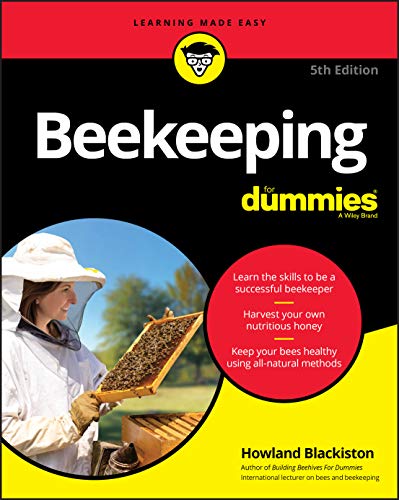
Beekeeping For Dummies
Wiley · Standard beginner reference · comprehensive coverage · reference-friendly structure
Our verdict: The default recommendation for a reason. It covers the whole first year in the order a beginner encounters it, treats the frightening parts matter-of-factly, and is structured so you can find the swarm chapter in April without rereading everything before it.
Read one book properly rather than five badly, and if you are picking that one book, Beekeeping For Dummies ($15.99) is our default. The Dummies structure, which is often a weakness in narrative subjects, is a strength here: you read it through in winter and then use it as a lookup reference all season.
Buy it before the short course, not after. Arriving at a beginner class having already read the material turns the class from an introduction into a chance to ask good questions, which is a completely different experience. Alternatives are compared in our beekeeping books guide.
Who should buy it
Anyone who has not yet kept bees, and anyone whose first season went badly and who wants to rebuild the fundamentals properly before year two.
What we don't like
It is general by design, so regional timing still has to come from your club, and its breadth means the depth on any single topic, varroa especially, is lighter than a specialist title.
- Format
- Paperback reference
- Coverage
- Full beginner curriculum
- Best use
- Winter cover-to-cover, then season-long reference
- Level
- Beginner
- Price
- $15.99
Pros
- Comprehensive across the whole first year
- Easy to use as a lookup reference mid-season
- Calm and practical about stings, pests, and losses
- Cheapest serious education you can buy
Cons
- General rather than regional
- Lighter depth on varroa than a specialist book

The Backyard Beekeeper, 5th Edition
Quarry Books · Absolute beginner's guide, 5th edition (listed) · illustrated · narrative structure
Our verdict: If a reference-style layout makes your eyes glaze, this is the one to buy instead. It reads start to finish like a book rather than a manual, which for many people is the difference between finishing it in January and abandoning it in chapter three.
The Backyard Beekeeper ($15.59) is the other standard first recommendation, and the choice between it and the Dummies volume is mostly about how you like to read. This one is warmer, more illustrated, and more sequential, and it is the better companion for someone who wants to enjoy the winter reading rather than study it.
Buy one, not both, at least at first. Two beginner books covering the same ground mostly produces confusion where they differ on minor practice. Add a second title in year two when you have specific gaps, per our books guide.
Who should buy it
Readers who prefer narrative to reference, visual learners who want photography alongside the text, and anyone giving a book as a gift to a prospective beekeeper.
What we don't like
The narrative structure makes it slightly harder to use as a quick mid-season lookup, and like every general title, regional timing still has to come from your local club.
- Format
- Illustrated paperback
- Edition
- 5th edition (listed)
- Best use
- Cover-to-cover winter read
- Level
- Beginner
- Price
- $15.59
Pros
- Reads well start to finish
- Strong photography and illustration
- Covers the fundamentals without gaps
- Makes a better gift than a reference manual
Cons
- Slower to use as a mid-season lookup
- General rather than regional

The Beekeeper's Bible
Abrams Books · Bees, honey, recipes and home uses (listed) · illustrated hardcover reference
Our verdict: Not the book to learn from first, and the best book to own second. It puts beekeeping in its historical and craft context, covers honey, wax, and recipes properly, and it is the volume that non-beekeepers in the household actually pick up and read.
The Beekeeper's Bible ($19.60) earns its place after your first practical book rather than instead of it. Where a beginner manual answers "what do I do in May," this answers "why is any of this the way it is," which is the question that turns a hobby into an interest.
It is also the natural gift for a beekeeper who already owns the practical titles, and the craft chapters connect directly to the wax and honey side of the site, including rendering beeswax and candle making supplies.
Who should buy it
Second-book buyers, gift buyers, and anyone interested in the craft and history side of bees rather than only the management side.
What we don't like
It is not a first-season field manual, the management coverage is broader than it is deep, and the format is a coffee-table book rather than something you take to the hive.
- Format
- Illustrated hardcover
- Coverage
- Management, history, honey, wax, recipes (listed)
- Best use
- Reference and reading, not field use
- Level
- All
- Price
- $19.60
Pros
- Broad coverage including craft and history
- Strong illustration and production quality
- The book non-beekeepers in the house will read
- Excellent gift for an established keeper
Cons
- Not a first practical manual
- Too nice to take to the hive

LIKAGI Waterproof Beekeeping Log Book, 3-Pack
LIKAGI · 3-pack waterproof beehive inspection log books (listed) · one book per hive
Our verdict: The habit matters more than the notebook, but the notebook determines whether the habit survives contact with a bee yard. Waterproof pages handle rain, sticky fingers, and a smoker set down in the wrong place, which is exactly why paper notebooks stop getting used by June.
Records are how you learn from your own season instead of repeating it. The LIKAGI waterproof beekeeping log book 3-pack ($17.99) gives you one book per hive plus a spare, with pages that survive the conditions that destroy ordinary notebooks.
Use a structured entry: date, weather, eggs seen, brood pattern, stores, population, anything unusual, action taken, plan for next time. Two minutes per hive. By August those entries will answer questions that memory simply cannot, and documented records are a requirement in most certification ladders anyway.
Who should buy it
Every beekeeper from the first inspection, and especially anyone considering a certification program, where documented experience is part of the assessment.
What we don't like
Preprinted formats never quite match how you want to record things, and three books is more than a one-hive keeper needs, though the spares get used eventually.
- Count
- 3 log books
- Construction
- Waterproof pages (listed)
- Format
- Structured inspection entries
- Best use
- One book per hive, filled at the hive
- Price
- $17.99
Pros
- Survives rain, smoke, and sticky hands
- One book per hive keeps records separated
- Structured prompts mean beginners record the right things
- Supports certification documentation requirements
Cons
- Preprinted fields will not match everyone's method
- More books than a single-hive keeper needs

PerKoop Beekeeping Log Book, 3-Pack
PerKoop · 3-pack beekeeper tracking journals (listed) · structured inspection pages
Our verdict: The cheapest version of the most valuable habit in beekeeping. If the only thing standing between you and written records is not wanting to spend money on notebooks, this removes the objection for less than the cost of a hive tool.
The PerKoop beekeeping log book 3-pack ($13.99) covers three hives with structured inspection pages at the lowest price in our table. It is not waterproof, so it lives in the truck or the tote rather than on the hive lid, but the habit is what matters and this buys the habit.
Whichever you choose, write at the hive rather than intending to write later. The entry you make standing over the open box is accurate; the one you reconstruct at the kitchen table three hours later is a story.
Who should buy it
Budget-conscious first-year keepers, anyone testing whether they will actually keep records, and clubs buying in bulk for a beginner class.
What we don't like
Not waterproof, so it needs to stay out of the rain and away from the smoker, and the paper quality reflects the price.
- Count
- 3 log books
- Format
- Structured tracking journal pages (listed)
- Waterproof
- No
- Best use
- Kept in the tool tote, filled at the hive
- Price
- $13.99
Pros
- Cheapest route into the record-keeping habit
- Three books covers a small apiary
- Structured pages guide a beginner's entries
- Good bulk buy for a beginner class
Cons
- Not waterproof
- Paper quality matches the price
Start with the club, because it is the one thing you cannot replicate
Beekeeping is local to a degree that surprises people. The right week to feed, the right week to treat, the flow that everyone in your county plans around, the stock that overwinters in your soil and weather, and the pests that show up in your area are all local facts. A national website, this one included, gives you the framework. Your county association gives you the numbers that fill it in.
Finding yours is straightforward and does not require anyone to guess. Search for your state's beekeeping association, which nearly every state has, and look for its club or chapter directory; almost all of them maintain one. Your county cooperative extension office is the other reliable route, since extension agents generally know the local association and often co-host its programs. The national bodies, including the American Beekeeping Federation, are useful for the broader picture and for state association contacts. We deliberately do not list club names here, because they change and a wrong name sends you nowhere.
What a club actually gives you, in rough order of value: a mentor, local nucs from producers the members vouch for, a beginner short course, monthly meetings where seasonal timing gets announced before you need it, a swarm list, equipment group buys, and access to shared extractors, which alone can save a first-year keeper several hundred dollars. Most clubs charge a modest annual membership. It is the best money in the hobby.
State association and extension short courses
The standard structured entry point in the United States is a beginner short course, typically run by a state or county beekeeping association, often in partnership with the state land-grant university's extension service. These usually run in winter, precisely so participants finish before spring installs, and they are usually a small number of sessions covering bee biology, equipment, installation, inspection, pests and diseases, and the seasonal calendar.
They are worth taking for two reasons beyond the content. First, sequence: a short course teaches the material in the order you will need it, which is not the order the internet delivers it in. Second, cohort: you meet the other beginners in your county in the same week you meet the experienced keepers, and both relationships pay off for years.
University extension is also the most reliable free written resource in American beekeeping. Extension programs publish beginner curricula, regional calendars, and pest management guidance that are science-based and regionally specific, and much of it is online at no cost. Penn State's Beekeeping 101 is a well-known example of the format, and the multi-state Bee Health hub aggregates material across programs. Start with your own state's version, because the calendar advice will match your weather.
The Master Beekeeper ladder: what it actually is
Several universities and state beekeeping associations run tiered beekeeper certification programs, and the general shape is consistent enough to describe honestly even though the details differ everywhere.
Level one, usually called apprentice or certified beekeeper. Typically requires some minimum period of hive-keeping experience, attendance at a course, and a written test covering fundamentals: bee biology, castes, equipment, seasonal management, common pests and diseases. This is the level most hobbyists who pursue certification at all actually reach.
Level two, usually journeyman or intermediate. Typically adds more required years of experience, a practical or field examination in which you demonstrate handling and diagnosis in front of examiners, and a public service component such as giving talks, mentoring, or answering community questions. The service requirement is the point: this level is where a program starts producing people who teach.
Level three, master. Typically requires substantial experience, written and practical examinations at a higher level, sometimes an oral examination, and a documented record of teaching, extension work, or contribution to the beekeeping community. This is a serious credential and the pass rates in some programs are humbling.
Above that, some programs add a senior or master craftsman tier requiring original research, publication, or major program contribution. Very few people reach it, and those who do are generally recognized names in their region.
What we will not do is tell you which university runs which program, what any of them cost, when they test, or what the specific requirements are, because those vary by state and change from year to year, and a stale number is worse than no number. Ask your state beekeeping association which certification program serves your state; every association that participates in one will tell you immediately.
Is certification worth it?
Honest answer: for most backyard beekeepers, no, and that is fine. Certification is not a license. No US state requires a credential to keep bees in your backyard, and the registration some states do require is an entirely different thing, covered in beekeeping laws by state. Plenty of excellent beekeepers with twenty years and forty colonies have never taken a certification exam.
Where it does pay off is specific. If you plan to teach, mentor formally, or run a club's education program, the credential gives you standing and the coursework genuinely improves your teaching. If you want to sell bees, queens, or nucs, it signals seriousness to customers who cannot otherwise judge you. If you provide pollination services or sell honey commercially, it can matter in contracts and at markets, alongside the labeling and food-safety requirements covered in how to sell honey. And if you are the kind of learner who needs an exam on the calendar to actually study, the structure itself is worth the fee.
The strongest argument for pursuing at least the first level is not the certificate. It is that the syllabus forces you to learn the parts you have been avoiding, which for most hobbyists means bee anatomy, disease identification, and the legal and regulatory material. Those are exactly the gaps that show up in a bad season.
Mentorship, and how not to burn one
A mentor is the highest-leverage relationship in beekeeping and the easiest to squander. Experienced beekeepers are generous almost to a fault, and they get worn out by the same pattern: a beginner who asks questions answered in chapter two, who does not report back, and who never offers anything in return.
The etiquette is simple. Do the reading first, and ask questions that a book cannot answer, which usually means anything with the word "here" or "now" in it. Be specific. "My hive seems weird" wastes their time; "I found no eggs and three capped queen cells on frame six today, photos attached, here is what I think is happening" gets a real answer and teaches you more. Offer labor. Ask to help in their yard on inspection days; you get hands-on hours and they get an extra pair of hands, and this is the trade that makes the relationship sustainable.
Report back. Tell them what you did and what happened. Mentors keep helping people who close the loop. Respect the season. Do not call a mentor during the main flow or on harvest weekend with a non-urgent question. And pay it forward: mentor a beginner yourself in year three, which is also, not coincidentally, a service requirement in most certification ladders.
One more thing worth saying plainly: mentors disagree with each other, and with the internet, and sometimes with extension guidance. Where the disagreement is about local timing, follow the local mentor. Where it is about varroa thresholds, treatment labels, or disease law, follow the extension guidance and the product label, because those are evidence and legal requirements rather than opinion.
Books: read one properly instead of five badly
Books are still the best-value beekeeping education per dollar, and the mistake beginners make is breadth. Five half-read books produce a scattered mental model. One book read cover to cover in winter, then kept in the truck all season and reread in pieces, produces a beekeeper.
Our default first pick is Beekeeping For Dummies ($15.99), because it is comprehensive, organized around the questions beginners actually ask rather than around the author's interests, and calm about the parts that frighten people. If you want a warmer, more narrative treatment that still covers the fundamentals properly, The Backyard Beekeeper ($15.59) is the other standard recommendation and reads better as a start-to-finish sit-down.
For the reference shelf rather than the first read, The Beekeeper's Bible ($19.60) is the broad illustrated volume that covers history, craft, and recipes alongside management, and it is the one non-beekeepers in the household actually pick up. The full comparison, including the specialist titles, is in our beekeeping books guide.
How to read them: cover to cover in winter with a pen, then a targeted reread of the relevant chapter the week before you do each task for the first time. Reading the swarm chapter in April, the week before you might see queen cells, sticks far better than reading it in January.
Online courses, video, and the internet problem
Online beekeeping education has an obvious strength and an obvious weakness. The strength is repetition and demonstration: watching a competent keeper do an inspection twenty times before doing your first one genuinely helps, and there is no equivalent to seeing what a queen cell, a laying worker pattern, or a chalkbrood mummy actually looks like on video.
The weakness is that anyone can publish anything, and beekeeping content is full of confident regional advice presented as universal truth. A video that is entirely correct for a keeper in Georgia can be actively harmful in Vermont, and the comment sections will not tell you which is which. The filter is simple: prefer material from university extension programs and state associations, treat everything else as a demonstration of technique rather than as guidance on timing, and check any timing advice against your own club's calendar.
Paid online courses vary from excellent to worthless. The good ones are usually run by a university program or a well-known state association and come with structure, assessment, and a real instructor. Before paying, ask three questions: who teaches it, is there any assessment, and does it address the region you actually live in. If a course cannot answer the third question, it is a supplement rather than a substitute for your state's short course.
Where online genuinely wins is in the specific how-to. Reading and then watching a single procedure before doing it, a hive inspection, a split, or a deadout diagnosis, is the correct use of the medium.
Hands-on hours: the part everyone underinvests in
Reading and watching build a model. Only handling bees builds the calm. The difference between a beginner who opens their first hive smoothly and one who fumbles is almost entirely whether they have had their hands in someone else's boxes first, and the fastest way to get those hours is to ask.
Three routes. Club apiary days: many associations maintain a teaching apiary and run open inspection days in spring where beginners work frames under supervision. This is the single best day on the beekeeping calendar for a first-year keeper. Mentor yard days: ask to tag along and be useful; carrying boxes and holding the smoker for a season teaches more than a shelf of books. Bee schools with a field component: some short courses include a hands-on session, and those are worth choosing over one that does not.
What to practice specifically before your own bees arrive: lighting a smoker and keeping it lit, which is genuinely a skill; cracking a hive and prying frames without rolling bees; holding a frame correctly and turning it to see both sides without dropping it; spotting eggs, which takes most people several sessions and good light; and closing up without crushing bees on the box edges. None of that is hard. All of it is much easier to learn on a colony that is not yours.
Record keeping: the habit that teaches you the most
Written records are the most underrated learning tool in beekeeping, and they are the one habit that separates keepers who improve year over year from keepers who repeat the same season five times. Memory does not preserve patterns across a season. A notebook does.
What to record, every visit: date, time, weather, which hive, whether you saw eggs, brood pattern quality, stores estimate, population impression, anything unusual, what you did, and what you plan to do next visit. That is a two-minute entry and it will answer questions in August that you cannot answer any other way, such as whether this colony has always been slow or whether something changed in June.
Use a format that survives the yard. Waterproof field logs like the LIKAGI waterproof beekeeping log book 3-pack ($17.99) exist because paper notebooks in a bee yard get wet, propolized, and smoke-stained. If you want the same habit at a lower price, the PerKoop beekeeping log book 3-pack ($13.99) covers three hives for under fifteen dollars. Phone notes work too, as long as you actually write them at the hive rather than intending to later, which nobody does.
One more reason to start now: documented records are a requirement in most certification ladders, and a candidate who has kept real logs since year one arrives at an apprentice or journeyman assessment with evidence rather than recollection.
A first-year learning plan, month by month
September to October: find and join your county association. Attend a meeting. Sign up for the winter short course, which fills. Buy one book and start it.
November to December: read the book cover to cover with a pen. Attend meetings. Ask around about local nuc producers and get on a list, because ordering happens in the December-to-February window and good producers sell out. Start reading your state extension's beekeeping pages.
January to February: the short course. Order bees and equipment. Assemble and paint boxes so they cure well before bees arrive. Identify a mentor, ideally someone whose yard is within a few miles of yours, and ask if you can help this spring.
March to April: attend a club apiary day and get your hands on frames before your own bees arrive. Set your site. Install. Start your log with visit number one, including the install itself.
May to July: inspect on a 7 to 10 day rhythm, log every visit, and take your specific questions to your mentor with photos. Reread the swarm and inspection chapters as the season reaches them. Learn a mite wash properly rather than reading about it.
August to September: the varroa decision and fall feeding, which are the two tasks where a beginner most needs local guidance. Ask the club what people are seeing this year. If your winters are severe, the priorities in beekeeping in cold climates are the ones to get right, and if your summers are the hard season, beekeeping in hot climates is the equivalent.
October onward: winterize, then review your whole log from the season and write down three things you would do differently. That review is the single most valuable hour of your beekeeping year, and it is also the point where certification starts to look interesting rather than intimidating.
Learning as a family, and as a beginner in a city
Two audiences deserve a note. If children are learning alongside you, the sequence changes: understanding first, proximity second, and structured youth programs such as county 4-H entomology projects and club youth scholarships are genuinely good routes. The whole approach, including age-appropriate roles and the sting conversation, is in beekeeping with kids.
If you are learning in a city, your club is likely to be unusually active and unusually useful, because urban associations spend a lot of time on exactly the questions city keepers have: ordinances, neighbors, rooftops, and swarm calls. Urban clubs also tend to run the best-attended swarm lists, which is the fastest way to get hands-on experience with bees you did not pay for. The city-specific management layer is in the urban beekeeping guide.
And whatever your situation, the entry point is the same one this page opened with. Find the association nearest you, go to one meeting, and ask two questions. Everything else in beekeeping education arranges itself around that first evening.
More gear worth comparing
Beyond this guide: the highest-rated gear across every category and budget, with a live price check on each.



As an Amazon Associate we may earn from qualifying purchases, at no cost to you.
Quick shop: every pick
Skip the scroll: the whole lineup, with a live price check on each.
- Beekeeping For DummiesBest First BookWiley · $15.99Check Price
- The Backyard Beekeeper, 5th EditionBest Read-Through Beginner BookQuarry Books · $15.59Check Price
- The Beekeeper's BibleBest Reference Shelf VolumeAbrams Books · $19.60Check Price
- LIKAGI Waterproof Beekeeping Log Book, 3-PackBest Field-Proof Hive LogLIKAGI · $17.99Check Price
- PerKoop Beekeeping Log Book, 3-PackBest Budget Hive LogPerKoop · $13.99Check Price
How we chose
We describe the general shape of tiered beekeeper certification programs without naming schools, fees, dates, or requirements, because those vary by state and change annually.
We name no specific clubs. The correct starting point is your state beekeeping association's club directory or your county extension office.
Book picks are limited to titles in our verified offer table, chosen for depth and for how well they hold up as season-long references.
Record-keeping picks are included because written records are both good practice and a common certification requirement.
Prices come from our verified offer table and were checked at publication.
Key terms
- Local beekeeping association
- A county or regional club, usually affiliated with a state association, providing mentors, beginner courses, local bee sources, shared equipment, and seasonal timing guidance. The highest-value education available to a beginner and the correct first step.
- Short course
- A structured beginner program, typically several sessions run in winter by a state or county association, often with university extension involvement, covering biology, equipment, installation, inspection, pests, and the seasonal calendar.
- Cooperative extension
- The public outreach arm of land-grant universities, which publishes regionally specific, science-based beekeeping guidance at no cost and frequently co-hosts beginner programs. The most reliable free written resource in American beekeeping.
- Apprentice level
- The entry tier in most beekeeper certification ladders, typically requiring a minimum period of hive experience, course attendance, and a written exam on fundamentals. Requirements vary by program and change; check your state's.
- Journeyman level
- The middle tier in most certification ladders, typically adding a practical field examination and a public service component such as teaching, mentoring, or community outreach. The level where a program starts producing instructors.
- Master beekeeper
- The upper tier in most certification ladders, typically requiring substantial experience, written and practical examinations, and documented teaching or extension contribution. A real credential in the community, and not a license to keep bees.
- Teaching apiary
- A club-maintained apiary used for hands-on instruction, where beginners work frames under supervision. Attending a club apiary day before your own bees arrive is the highest-value hands-on time available to a first-year keeper.
- Hive log
- A written record of each inspection: date, weather, observations, actions, and plans. The habit that most reliably separates beekeepers who improve each year from those who repeat the same season, and a documentation requirement in most certification programs.
Questions, answered
do you need a license to keep bees
No US state requires a license or certification to keep bees in your backyard. Several states do require or encourage apiary registration with the department of agriculture, which is a different and usually free process that plugs you into inspection and pesticide notification programs. Certification programs are voluntary credentials, not licenses.
how do I find a local beekeeping club near me
Search for your state beekeeping association, which nearly every state has, and look for its club or chapter directory. Your county cooperative extension office is the other reliable route, since extension agents usually know the local association and often co-host its programs. Both will point you to the county club, which is where you actually want to be.
how much does a beekeeping class cost
It varies by state and by program, and we do not quote figures because they change annually and differ everywhere. Ask your state association or county extension office directly; both will tell you current pricing and what is included, and many association short courses bundle a year of membership with the course.
what is a master beekeeper certification
It is the upper tier of a voluntary, tiered certification ladder run by several universities and state associations, generally structured as apprentice, then journeyman or intermediate, then master, with a senior tier in some programs. Higher levels typically require years of experience, written and practical exams, and documented teaching or service. Requirements and costs vary by program.
is a master beekeeper certification worth it
For most backyard beekeepers, no, and that is a perfectly good answer. It pays off if you plan to teach or mentor formally, sell bees or queens, provide pollination services, or if you need an exam on the calendar to actually study. The strongest argument for the first level is that the syllabus forces you to learn the parts you have been avoiding.
can you learn beekeeping online
Partly. Online material is excellent for demonstration and repetition, and university extension programs publish genuinely good free curricula. What it cannot give you is hands-on time or local timing, and beekeeping content is full of regionally specific advice presented as universal. Use online for technique, your club for timing, and a teaching apiary for the handling.
what is the best book for a beginner beekeeper
Read one properly rather than five badly. Beekeeping For Dummies is the comprehensive reference-style default and works as a season-long lookup, while The Backyard Beekeeper is the warmer narrative alternative that people are more likely to finish. Pick one based on how you like to read, and add a second title in year two when you know your gaps.
how do I find a beekeeping mentor
Join your county association and go to meetings; that is where mentors are. Then earn one: do the reading first, ask specific questions with photos rather than vague ones, offer your labor on their inspection days, and report back on what you did. The labor trade is what makes the relationship sustainable for both of you.
how long does it take to learn beekeeping
You can run a colony competently after one winter course and one season with a mentor. Reading a colony well, diagnosing problems by pattern rather than by checklist, takes three to five seasons for most people. The variable that speeds it up most is written records, because they let you learn from your own past seasons instead of guessing.
should I take a beekeeping class before buying bees
Yes, and the calendar makes it easy: most association short courses run in winter, and bees are ordered between December and February, so the class comes first naturally. Arriving at the class having already read one book turns it from an introduction into a chance to ask the specific questions that only a local instructor can answer.
Filed under Explainer
Part of Beekeeping 101
Keep reading
How to Start Beekeeping
The full first-year plan the education sequence on this page feeds into, from ordinances to install day.
The Best Beekeeping Books
Every title compared, including the specialist volumes worth adding in year two.
Your First-Year Beekeeping Calendar
The month-by-month schedule to hang your learning plan on, with regional adjustment notes.
Beekeeping With Kids
Youth programs, 4-H, and the safety-first sequence for families learning alongside their children.
Beekeeping Laws by State
Registration, inspection, and the regulatory homework certification does not replace.
Where to Buy Bees
Local nucs, packages, and producers: the purchase your club will help you get right.