Winterizing
24 guides tagged Winterizing

Winter Beekeeping: What to Do, and Mostly What Not to Do
Winter is the season where the best beekeepers do the least. The colony is a self-heating organism running on a fixed fuel budget you set in September, and almost every intervention available to you costs it heat it cannot spare. The real winter jobs are small: heft the hive monthly, keep the entrance clear, add emergency feed if it is light, keep condensation off the cluster, take the broodless mite shot if your region offers one, and spend the rest of the season ordering, building, and planning.
Updated Aug 202618 min read
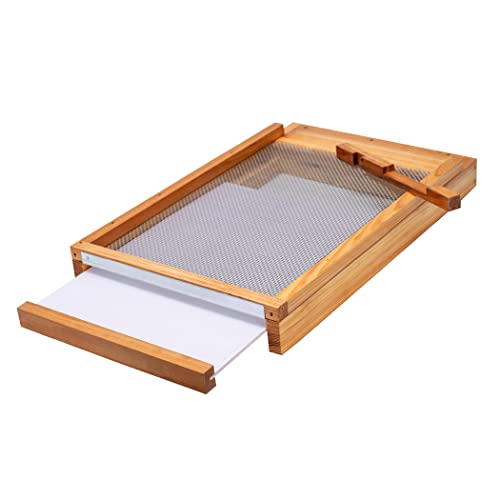
Screened vs Solid Bottom Boards: Which Should You Buy?
The floor of your hive is a $37 decision that gets argued about like a $500 one. Screened bottoms ventilate, let you count mites on a sticky board, and drop beetles out the back. Solid bottoms stop drafts. The answer for most of the United States is one board that does both, and here is why.
Updated Aug 202613 min read

Poly vs Wooden Beehives: Which One Wins
Insulated polymer hives cost roughly twice what pine does and give it back in winter survival and zero maintenance. Wood wins on price, repairability, standardization, and the fact that your mentor owns it. We run insulation, condensation, weight, UV, pests, and ten-year cost.
Updated Aug 202616 min read
Italian vs Carniolan Bees: Which Race to Buy
Italians for long warm seasons and steady, predictable buildup. Carniolans for northern winters, frugal clusters, and explosive spring growth. We break down buildup, swarming, temperament, robbing, wintering, and the one caveat that beats race selection entirely.
Updated Aug 202615 min read

How to Overwinter Nucs: The Sideliner's Insurance
A five-frame colony that survives to March is a free replacement queen, a free spring split, and a hedge against the deadout you have not found yet. Making them in time, packing enough feed into a small box, pairing them to share heat, controlling moisture, and splitting them out in April.
Updated Aug 202622 min read

Hive Top Feeder vs Entrance Feeder: Which Should You Buy?
An entrance feeder puts a jar of sugar syrup on the doorstep of your hive and announces it to every colony within two miles. A top feeder puts the same syrup inside, where only your bees can reach it. That difference has killed more small colonies than any other feeding mistake, and it decides this comparison.
Updated Aug 202613 min read

Fall Beekeeping: The Season That Decides Whether They Live
We will say this plainly rather than burying it: fall is the most important season in beekeeping, and it is not close. The bees being reared right now are the winter bees, physiologically different animals that must live six months instead of six weeks, and they can only do that if they were raised by a colony with a low mite load. Your August and September decisions determine whether the colony sees March. This is the working fall checklist, in priority order.
Updated Aug 202619 min read

The Best Hive Covers and Inner Covers (2026)
The roof of a hive is two parts doing two different jobs, and beginners routinely run only one of them. We ranked five covers and cover sets, explained exactly why the inner cover exists, and made the case that winter colonies die of condensation far more often than they die of cold.
Updated Aug 202614 min read
The Best Bottom Boards (2026)
The bottom board is the cheapest part of a hive and the one that does the most diagnostic work. We ranked five screened boards, explained the sticky-board mite count that makes screens worth having, and covered beetle trays, winter inserts, mouse guards, and why beeswax dipping outlasts paint on the wettest board in the stack.
Updated Aug 202615 min read

Nosema and Dysentery: The Difference That Matters
Brown streaks on the front of a hive in February are the most misdiagnosed sign in beekeeping. Nosema is a microsporidian parasite living inside the gut cells of adult bees, invisible without a microscope. Dysentery is a plumbing problem caused by too much water and indigestible solids in a bee that cannot get out to void. They overlap, they are not the same thing, and the management that fixes both is about stores, moisture, and queens rather than about anything you can pour in a feeder.
Updated Aug 202618 min read
How to Feed Bees Sugar Syrup: Ratios and Rules
1:1 by weight to stimulate spring buildup, 2:1 to pack fall stores, plain white cane sugar and nothing else, mixed with hot water off the heat and never boiled. Plus the rules that matter more than the recipe: when to stop, why supers on means no feeding, and how not to start a robbing war.
Updated Aug 202619 min read

How to Diagnose a Deadout: The Spring Autopsy
You lift the lid in March and the hive is silent. The frames in front of you are a written record of what happened, and the beekeeper who reads them correctly does not repeat the same loss next winter. This is the decision tree: what the cluster position, the stores, the cappings, the cell walls, and the smell each mean, what to salvage, and the one finding that means you stop, do not reuse anything, and call the state.
Updated Aug 202621 min read

How to Combine Two Hives with the Newspaper Method
One strong colony beats two weak ones going into winter, and a sheet of newspaper is how you get there. Choosing which queen lives, dispatching the other, the merge itself, the fall deadline, and the two situations where combining is the worst thing you can do.
Updated Aug 202619 min read
Beekeeping in Cold Climates: The Northern Playbook
Upper Midwest, Northeast, Mountain West, and the Canadian border run beekeeping on a short fuse: a compressed build-up window, a fall feeding deadline that does not move, and a five-month winter. Cold is not what kills colonies up here. Condensation, light stores, and August mites are. Here is the whole northern management set, in the order it actually matters.
Updated Aug 202621 min read
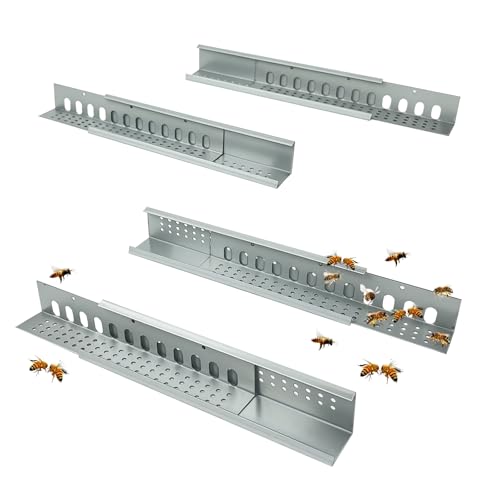
Apiary Predators: Mice, Skunks, Bears, and the Rest
Everything bigger than a beetle wants something from your hives, and each one leaves a different signature at the entrance. This is the full field guide to reading that evidence and answering it: mouse guards before the first frost, raised stands and tack strips for the night scratchers, electric fencing for bears because nothing else works, and the fall yellowjacket pressure that finishes weak colonies.
Updated Aug 202620 min read

When to Treat for Varroa: The Timing That Decides Winter
Every varroa product works, and every varroa product fails, and the difference is almost never the chemistry: it is the calendar. Treat in August and the colony winters; treat the same hive with the same strips in October and it dies anyway, because the winter bees were already damaged as pupae. This is the timing page: thresholds by month, the temperature window on every mainstream product, the broodless oxalic windows most keepers waste, and a full-year treatment calendar you can tape to the shed wall.
Updated Aug 202623 min read
How to Winterize a Beehive: The Full Survival Protocol
Winter does not kill honey bee colonies. Mites, starvation, and condensation kill colonies, and all three are decided in fall while the weather is still pleasant. This is the complete winterizing protocol in order of importance: the August mite knockdown, the weight targets, the entrance hardware, the moisture plan that outranks any wrap, and the restraint that carries a hive from November to the first dandelions.
Updated Aug 202621 min read

The Best Pollen Patties and Substitutes (2026)
Sugar keeps bees alive; protein makes more bees. We ranked the pollen patties and substitutes that drive late-winter buildup and carry colonies through pollen droughts, covered when protein feeding actually helps and when it backfires, and flagged the small hive beetle rule that decides how much patty ever goes on a hive.
Updated Aug 2026~14 min read

The Best Robbing Screens and Entrance Reducers (2026)
A colony defends its entrance or loses everything through it. We ranked the robbing screens, entrance reducers, and mouse guards that turn a hive's front door from a liability into a checkpoint, and covered when dearth, fall, and moving day each demand different hardware.
Updated Aug 2026~13 min read

The Best Winter Bee Feed (2026)
Once cold weather ends syrup season, a light colony lives or dies on solid feed placed directly over the cluster. We ranked the candy board and fondants we would actually trust a winter to, covered candy boards versus fondant versus dry sugar, and laid out the hive-weight math that tells you whether you need any of it.
Updated Aug 2026~14 min read

How Much Honey Does One Hive Produce?
The honest answer is a range, not a number: an established, healthy colony in most US regions yields about 30 to 60 pounds of surplus honey in a normal year, a first-year colony usually yields close to none, and the gap between a 20-pound year and an 80-pound year comes down to forage, weather, colony strength, and mites. Here is the whole calculation, jars included.
Updated Aug 202614 min read
Your First-Year Beekeeping Calendar, Month by Month
Beekeeping is a calendar sport: every month has one job that cannot be done in any other month, and the colonies that die in February were usually lost to a task skipped in August. This is the whole first year on one page, December ordering through your first spring-two inspection, on a US temperate baseline with honest adjust-by-region notes for the Gulf South, the northern tier, and the arid West.
Updated Aug 202622 min read

The Best Beehive Stands and Winter Wraps (2026)
Winter does not kill most colonies with cold; it kills them with condensation, starvation, and mites, in roughly that order of surprise to new beekeepers. We picked the stands that save your back and your bottom boards, the wraps that actually earn their place by climate zone, the screened bottom board that manages moisture year round, and the electric fencing that keeps bears from ending the whole conversation.
Updated Aug 2026~15 min read
The Best Premium Insulated Beehives (2026)
Insulated poly hives are the closest thing modern beekeeping has to a cheat code for winter: warmer clusters, drier boxes, less syrup burned just staying alive. We ranked the Apimaye Ergo system, the insulated lineup we would actually put a colony in, from the full $320 set with frames down to the $72 screened bottom board that upgrades a wooden hive.
Updated Aug 202616 min read
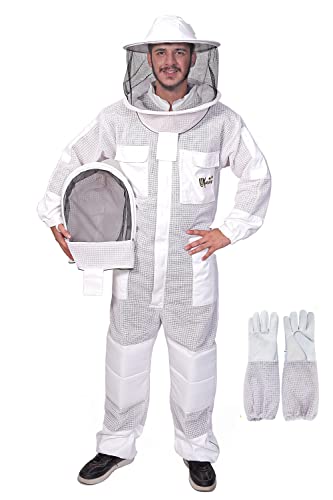
Our top-rated beekeeping gear
Whatever you decide, this is the gear we recommend: verified, researched, and ranked. Live price check on each.



As an Amazon Associate we may earn from qualifying purchases, at no cost to you.