Our Pick: NOW Foods
Check PriceThe Best Royal Jelly and Propolis (2026)
Our royal jelly pick is NOW Foods Royal Jelly 1000 mg with 10-HDA at $15.91, because it states the marker compound the market uses for standardization instead of leaving you to guess what is in the capsule. Our propolis pick is the Herb Pharm propolis liquid extract at $16.78, a proper dropper tincture from a herbal extract house that has been making them for decades. If you want propolis without alcohol on the ingredient line, the Carlyle propolis tincture drops at $9.99 are the cheapest way in, and if you want royal jelly closest to how it comes out of a queen cell, the YS Eco Bee Farms freeze-dried at $36.99 is the format to buy.
By The BeehiveKits Hive Desk2026-08-2915 min read Fact-checked against verified Amazon listingsHow we research
 Upgrade Pick
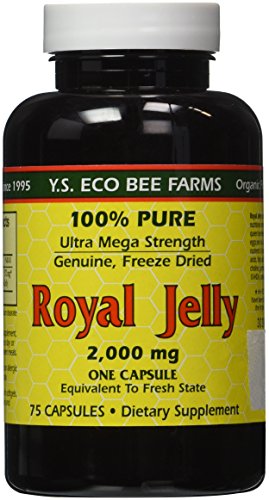
YS Eco Bee Farms 100% Pure Freeze Dried Royal Jelly, 2000 mg
YS Organic · 4.5
$36.99
These two products get shelved together and are almost completely unrelated. Royal jelly is made by bees: young worker bees secrete it from glands in their heads and feed it to every larva for the first few days of life, then keep feeding it, continuously and in quantity, to the larva they are raising as a queen. That difference in diet is the mechanism behind one of the strangest facts in biology, which is that a queen and a worker start as genetically identical eggs. The royal jelly entry lays out the biology, and our queen bee biology guide covers what it means inside a colony.
Propolis is the opposite: bees do not make it, they collect it. Foragers gather sticky resin from tree buds and wounds, carry it home on their legs, and workers chew it with wax and enzymes into the dark, tacky material that seals every crack in the hive, varnishes the inside walls, and narrows the entrance for winter. Beekeepers know it as the stuff that glues frames down and stains gloves brown. Sold as a supplement, it becomes a tincture, because the resins dissolve in alcohol far better than in water, which is exactly why the alcohol question dominates the propolis aisle. The propolis entry covers the composition.
Two disclosures. The routine one: no brand paid to appear here, links go to Amazon, and a purchase may earn us a small commission at no extra cost to you; prices were verified at publication and drift, so check the live listing. The important one: royal jelly and propolis are bee products, and people with allergies to bee products or to pollen can react to them, sometimes seriously. This guide describes what these products are, how they are produced, and how they are graded. It does not describe what they do in a body, and we make no claims of that kind. If you have any history of reaction to bee stings, honey, or pollen, talk to a clinician before using bee products at all.
What to know
- Royal jelly pick: NOW Foods Royal Jelly 1000 mg with 10-HDA ($15.91), because it names the marker compound the industry standardizes on.
- Propolis pick: Herb Pharm propolis liquid extract ($16.78), a real dropper tincture; the Carlyle drops ($9.99) are the budget entry.
- Royal jelly is secreted by young worker bees and fed to larvae. Queens get it continuously, which is why identical eggs become queens or workers.
- 10-HDA is a fatty acid found in royal jelly and used as its standardization marker. A product that states a 10-HDA figure is telling you something; one that does not is telling you nothing.
- Freeze-dried royal jelly is shelf stable and comes in capsules; fresh royal jelly is a refrigerated paste and a completely different buying experience.
- Propolis is plant resin bees collect and rework, not something they synthesize. Tinctures use alcohol because resins dissolve in it; alcohol-free versions trade extraction strength for palatability.
- Allergy caution applies to both: people allergic to bee products or pollen can react. Start small and talk to a clinician first.
At a glance
| Product | Type | Best for | Format (listed) | Price | Check price |
|---|---|---|---|---|---|
| NOW Foods Royal Jelly 1000 mg | Royal jelly | Our Pick (royal jelly) | Capsules, 10-HDA stated | $15.91 | Check Price |
| YS Eco Bee Farms Freeze Dried Royal Jelly | Royal jelly | Best Freeze-Dried | 2000 mg equivalent (listed) | $36.99 | Check Price |
| Costar Royal Jelly 1450 mg | Royal jelly | Best Year Supply | 365 capsules | $36.90 | Check Price |
| Carlyle Royal Jelly | Royal jelly | Best Budget Capsules | 120 capsules | $16.99 | Check Price |
| Herb Pharm Propolis Liquid Extract | Propolis | Our Pick (propolis) | Dropper tincture | $16.78 | Check Price |
| Piping Rock Bee Propolis Extract | Propolis | Best Value Tincture | 4 fl oz | $12.49 | Check Price |
| Carlyle Bee Propolis Tincture Drops | Propolis | Best Budget Entry | 2 fl oz | $9.99 | Check Price |
The 2026 royal jelly and propolis shortlist. Counts, milligram figures, and volumes are the sellers' listed values; prices verified against the live listings on 2026-08-29.

NOW Foods Royal Jelly 1000 mg with 10-HDA
NOW Foods · 1000 mg royal jelly (listed) · 10-HDA content stated on label (listed) · long-established supplement house
Our verdict: NOW Foods does the thing almost nobody else in this category does: it puts a 10-HDA figure on the label. Since 10-HDA is the compound the royal jelly trade uses to standardize and grade material, a product that states it is making a specification you can compare, and at $15.91 it is also among the cheapest ways to buy royal jelly at all.
The label question that separates royal jelly products is whether the seller commits to a number. Royal jelly is a perishable, variable biological material, and the trade settled on one compound to characterize it: 10-HDA, short for trans-10-hydroxy-2-decenoic acid, a fatty acid found in royal jelly and used as its marker for standardization and freshness. The NOW Foods Royal Jelly 1000 mg with 10-HDA states the 10-HDA figure on the label, which turns a vague product into a comparable one. Most competitors state a milligram count and nothing about what that milligram count contains.
The rest is straightforward: a capsule format from a supplement house that has been around long enough to have real quality processes, at a price that undercuts most of this category. Capsules are also the format that solves royal jelly's biggest practical problem, which is that fresh royal jelly is a perishable paste that needs constant refrigeration and tastes strongly sour. Freeze-dried material in a capsule sidesteps both. Note as always that supplement labeling in the US does not involve pre-market approval of label claims, as FDA explains, and the NIH Office of Dietary Supplements publishes plain-language guidance on how to read a Supplement Facts panel, which is worth ten minutes before you buy anything in this aisle.
Who should buy it
Buy the NOW capsules if you want royal jelly in the shelf-stable, no-fuss format and you want a label that commits to a standardization figure. It is the sensible default in this category and the cheapest of our picks.
What we don't like
Capsules are further from the raw material than fresh paste, and people who specifically want royal jelly in its original texture and taste will not be satisfied by them. The 1000 mg figure is a listed value like every count in this category, so verify it live. And the standing allergy caution applies: this is a bee product.
- Format
- Capsules (listed)
- Strength
- 1000 mg royal jelly (listed)
- Marker
- 10-HDA content stated (listed)
- Storage
- Shelf stable, cool and dry
- Best use
- Everyday shelf-stable format
- Price
- $15.91
Pros
- States a 10-HDA figure, which most rivals do not
- Shelf stable, no refrigeration logistics
- Cheapest of our royal jelly picks
- Established supplement manufacturer
- Capsules avoid the sour taste of fresh jelly
Cons
- Further from raw material than fresh paste
- Milligram figures are listed values, verify live
- Bee product: allergy caution applies
YS Eco Bee Farms 100% Pure Freeze Dried Royal Jelly, 2000 mg
YS Organic · Freeze dried (listed) · 2000 mg equivalent (listed) · single-ingredient royal jelly (listed)
Our verdict: Freeze drying pulls water out of frozen material under vacuum instead of cooking it off, which is why it is the preservation method purists want for a delicate secretion like royal jelly. YS Eco Bee Farms sells exactly that at a listed 2000 mg equivalent for $36.99, and the single-ingredient label is refreshingly short.
How royal jelly is dried is the main thing that happens to it between the hive and the bottle. Raw royal jelly is a milky, sour paste that young worker bees secrete from glands in their heads, and beekeepers harvest it by grafting larvae into artificial queen cups and spooning the jelly out a few days later; it is labor-intensive work, which is most of why royal jelly costs what it does. Once harvested it is perishable and must be frozen or dried immediately. The YS Eco Bee Farms freeze dried royal jelly takes the freeze-drying route, which removes water from frozen material under vacuum rather than driving it off with heat.
The trade you are making is money for provenance. At $36.99 this is more than twice the price of our top pick, and it does not headline a 10-HDA figure the way NOW does, so you are buying on processing method and brand rather than on an analytical number. That is a legitimate way to shop for a bee product, and YS Eco Bee Farms has a long track record across the whole category, including the low-moisture pollen we recommend in our bee pollen guide. It is the pick for someone who wants royal jelly handled carefully and is not primarily price shopping. As with everything here, verify the listed milligram equivalence on the live page, and keep the bee-product allergy caution in mind.
Who should buy it
Buy the YS freeze-dried royal jelly if processing method matters more to you than price, if you already buy this brand's pollen or honey, or if you want the single-ingredient label with the least done to it.
What we don't like
It costs more than double our top pick and does not lead with a 10-HDA specification, so the case for it rests on processing and brand rather than an analytical figure. Milligram equivalence claims across freeze-dried products are hard to compare between brands, and this is not a cheap way to try royal jelly for the first time.
- Format
- Freeze dried (listed)
- Strength
- 2000 mg equivalent (listed)
- Ingredients
- Royal jelly, single ingredient (listed)
- Processing
- Vacuum freeze drying, no heat (listed)
- Best use
- Buyers prioritizing processing method
- Price
- $36.99
Pros
- Freeze drying avoids heat processing
- Short, single-ingredient label
- Brand with a long track record across hive products
- Higher listed strength than the entry capsules
Cons
- More than double the price of our top pick
- No headline 10-HDA figure
- Milligram equivalence is hard to compare between brands
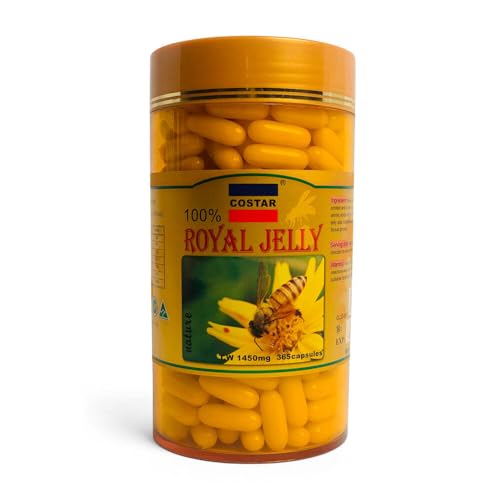
Costar Royal Jelly Supplement 1450 mg, 365 Capsules
Costar · 365 capsules (listed) · 1450 mg per serving (listed) · roughly a year at one a day
Our verdict: Three hundred and sixty five capsules at a listed 1450 mg is a full year at one a day for $36.90, which works out to about ten cents a capsule and makes this the cheapest royal jelly per unit in the guide. It is a restock purchase, not a first purchase.
Bulk supplement bottles are for people who have already made the decision. The Costar royal jelly 365-capsule bottle prices like a restock: roughly ten cents per listed 1450 mg capsule, a year of daily use in one purchase, and no repeat shipping. If royal jelly is already part of a routine, that is a straightforward saving over buying a 60-count bottle six times.
Two caveats keep it out of the top spot. First, a year-long bottle is a year-long bottle: supplements do not improve sitting in a cabinet, and buying twelve months of anything commits you to the same product for twelve months, which is a lot of confidence to place in a first-time purchase. Second, the listing leads with milligram strength rather than a 10-HDA specification, so like most of this category it is telling you how much material is in the capsule and not much about the material. Keep it in a cool, dry, dark cabinet rather than on a sunny windowsill, verify the listed count and strength on the live page, and treat this as the second or third bottle you buy, not the first.
Who should buy it
Buy the Costar bottle if royal jelly is already an established habit and you want the lowest cost per capsule. It is the restock pick for committed users and a poor first purchase for anyone still deciding.
What we don't like
A year in one bottle is a large commitment to a single lot and a single brand, and supplements do not get better with age. There is no headline 10-HDA figure, and the very low per-capsule price makes the usual verification work more important, not less.
- Format
- Capsules (listed)
- Count
- 365 capsules (listed)
- Strength
- 1450 mg per serving (listed)
- Cost per capsule
- About $0.10 at listed count
- Best use
- Restocking an established routine
- Storage
- Cool, dry, dark cabinet
- Price
- $36.90
Pros
- Lowest cost per capsule in the guide
- A full year at one a day, listed
- No repeat ordering or shipping
- Higher listed strength than entry bottles
Cons
- Commits you to one lot for a year
- No stated 10-HDA specification
- Wrong purchase for a first-time buyer
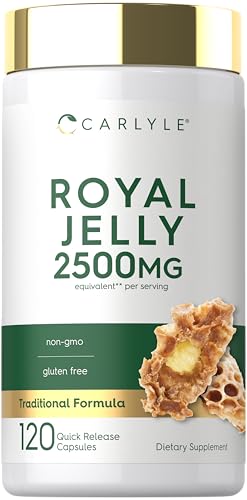
Carlyle Royal Jelly Supplement, 120 Capsules
Carlyle · 120 capsules (listed) · traditional supplement format (listed) · four-month size at one a day
Our verdict: The Carlyle bottle sits in the useful middle: 120 listed capsules for $16.99, which is long enough to know whether you want to keep buying royal jelly and short enough that you are not stuck with a year of it. A plain, inexpensive, sensible trial size.
The right first bottle of anything is the one that runs out while you still care about it. The Carlyle royal jelly 120-capsule bottle is that size: a listed four months at one a day for $16.99, priced close to our top pick but in a plain format without a stated marker figure. It competes on being simple and cheap, and it succeeds at both.
What you give up is specification. There is no headline 10-HDA number, so the label is telling you a weight and a source, which is the industry norm rather than a scandal but is genuinely less information than the NOW bottle gives you for less money. That makes this a value play rather than a spec play, and it is a reasonable one for a first bottle or a second brand to compare against. As with every product in this guide, the standing caution stands: royal jelly is a bee product, people with bee-product or pollen allergies can react to it, and a clinician is the right person to consult before starting anything in this aisle.
Who should buy it
Buy the Carlyle bottle for a low-commitment trial in capsule form, or as a second brand to compare against a marker-stated product. It is the plain, cheap, sensible option.
What we don't like
No stated 10-HDA figure, and it is priced slightly above our top pick, which does state one. Capsule counts and strengths on budget supplement listings drift between revisions, so verify the live page before assuming a four-month supply.
- Format
- Capsules (listed)
- Count
- 120 capsules (listed)
- Supply
- About four months at one a day
- Marker
- No stated 10-HDA figure
- Best use
- Low-commitment trial bottle
- Price
- $16.99
Pros
- Sensible trial size, not a year's commitment
- Simple, inexpensive, widely stocked
- Shelf-stable capsule format
- Easy second brand for comparison
Cons
- No stated marker compound figure
- Costs slightly more than our specced top pick
- Counts drift between listing revisions

Herb Pharm Propolis Liquid Herbal Extract
Herb Pharm · Liquid herbal extract (listed) · dropper bottle · established US extract manufacturer
Our verdict: Propolis is a resin, and resins want alcohol extraction, which is a job for a company that makes tinctures for a living. Herb Pharm does, and at $16.78 its propolis extract is the one we would buy: a real dropper bottle, a short label, and the deep amber color that says the resins actually went into solution.
Propolis is the hive's construction adhesive, and understanding that explains the whole product category. Foragers collect sticky resin from tree buds and bark wounds, pack it on their hind legs like pollen, and bring it home; workers then chew it with beeswax and their own enzymes into a material that seals every crack, varnishes the interior walls, encases things too large to remove, and narrows the entrance against winter and intruders. Any beekeeper who has pried apart a well-propolized hive knows it as brown glue that never quite comes off a hive tool. The Herb Pharm propolis liquid extract takes that raw resin and does the one thing that makes it usable as a liquid: extracts it into alcohol.
Herb Pharm is the pick because tincture-making is its whole business rather than a category it entered. The extract pours dark amber, smells resinous and faintly like a pine forest, and comes in a standard dropper bottle that makes small quantities manageable. Fair warning about the practical side: propolis stains. It stains counters, cloth, teeth, and the inside of glasses, and it does not come off easily, which is a fact every beekeeper learns from their gloves long before they meet a tincture. Use it over a sink, cap the bottle promptly, and do not put the dropper down on a wooden table.
Who should buy it
Buy the Herb Pharm extract if you want propolis in its traditional alcohol tincture form from a maker whose core competence is exactly that. It is the quality default in this small category.
What we don't like
It is an alcohol tincture, which rules it out for anyone avoiding alcohol and makes the taste sharp and resinous. Propolis stains everything it touches, permanently, and the bottle is small for the price compared with the value tinctures below. Bee product: the allergy caution applies fully.
- Type
- Alcohol-based liquid extract (listed)
- Format
- Dropper bottle (listed)
- Source
- Bee-collected plant resin
- Color
- Deep amber
- Best use
- Traditional tincture use, drop dosing
- Caution
- Stains fabric, surfaces, and teeth
- Price
- $16.78
Pros
- Tincture making is the manufacturer's core business
- Short label, standard dropper bottle
- Alcohol extraction suits propolis resins
- Consistent color and resinous aroma
Cons
- Alcohol base rules it out for some buyers
- Small bottle for the price
- Propolis stains permanently, handle carefully

Piping Rock Bee Propolis Extract Tincture, 4 fl oz
Piping Rock · 4 fl oz (listed) · propolis extract tincture (listed) · largest bottle in this guide
Our verdict: Most propolis tinctures come in one or two ounce dropper bottles, so a listed four ounces for $12.49 is a genuine outlier on volume. If you use propolis regularly rather than occasionally, the arithmetic here is hard to argue with.
Bottle size is the quiet variable in the propolis aisle. Dropper tinctures are usually sold in one or two ounce bottles, which makes per-ounce comparisons awkward and makes regular users reorder constantly. The Piping Rock bee propolis extract tincture lists four fluid ounces for $12.49, which is several times the volume of a standard dropper bottle at a lower sticker price than most of them.
The tradeoffs are the ones you would expect from a value brand. Sourcing detail on the resin is thin, and a large bottle of an alcohol tincture will be open in your cabinet for a long time, so keep it tightly capped, out of sunlight, and away from heat. Propolis tinctures are reasonably stable, but the bottle you are still working through in eighteen months deserves a sniff test. This is the pick for a regular user who has already settled on alcohol-based propolis and does not want to reorder every six weeks. New to propolis entirely? Start with a small bottle, because the taste is genuinely strong and the staining is genuinely permanent.
Who should buy it
Buy the Piping Rock bottle if you already use propolis tincture regularly and want the best price per ounce in the guide. Volume buyers and households with more than one user get the most from it.
What we don't like
Thin sourcing information, and a four-ounce bottle of tincture is a long-lived open container that needs decent storage discipline. It is the wrong size for a first try, and the staining and taste issues that apply to all propolis apply here at four times the volume.
- Type
- Alcohol-based tincture (listed)
- Volume
- 4 fl oz (listed)
- Value
- Largest bottle, lowest price per ounce here
- Storage
- Capped, cool, out of sunlight
- Best use
- Regular users, multi-person households
- Price
- $12.49
Pros
- Several times the volume of a standard dropper bottle
- Lowest price per ounce in the guide
- Straightforward single-purpose product
- Good fit for established regular use
Cons
- Thin sourcing detail on the resin
- Long-lived open bottle needs good storage
- Too much volume for a first trial

Carlyle Bee Propolis Tincture Drops, 2 fl oz
Carlyle · 2 fl oz (listed) · tincture drops (listed) · lowest price in this guide
Our verdict: At $9.99 for a listed two ounces, the Carlyle drops are the sub-ten-dollar entry into propolis, and propolis is a product people should absolutely try cheaply first. The taste is resinous, bitter, and memorable, and no description substitutes for a drop on your tongue.
Propolis tastes like a pine forest that has been simmered down, and that is not for everyone. Before spending real money on a four-ounce bottle or a premium extract, it is worth ten dollars to find out where you land. The Carlyle bee propolis tincture drops answer that at $9.99 in a listed two-ounce bottle, which is enough to learn the taste, the staining behavior, and whether you want it in your cabinet at all.
Expect a value product: minimal sourcing detail, a plain label, and a standard tincture format. It is a fine trial bottle and a poor flagship. One practical note that applies to every propolis product and surprises everyone once: it stains teeth and glassware, and the residue on a dropper is basically hive glue, so use it over a sink and rinse anything it touches immediately. Beekeepers who want the raw material rather than a tincture have a different path entirely, which we cover in the collector section below, and the wider world of hive products is mapped in our guides to bee pollen and raw honey.
Who should buy it
Buy the Carlyle drops as a taste test: the first propolis bottle, the curiosity purchase, or a small addition to a hive-products gift box. It costs less than ten dollars to answer the only question a first bottle needs to answer.
What we don't like
Minimal sourcing information and a plain, unremarkable formulation; this is a trial bottle rather than a product to settle on. The taste is strong even by propolis standards, and the staining problem is the same as every other tincture here.
- Type
- Tincture drops (listed)
- Volume
- 2 fl oz (listed)
- Entry price
- Lowest in the guide
- Best use
- First-time trial, gift boxes
- Caution
- Stains teeth, glass, and fabric
- Price
- $9.99
Pros
- Under ten dollars to try propolis
- Standard dropper format
- Small enough not to waste if you dislike it
- Easy gift-box addition
Cons
- Minimal sourcing information
- Strong taste even for propolis
- Trial bottle rather than a keeper
More gear worth comparing
Beyond this guide: the highest-rated gear across every category and budget, with a live price check on each.



As an Amazon Associate we may earn from qualifying purchases, at no cost to you.
Quick shop: every pick
Skip the scroll: the whole lineup, with a live price check on each.
- NOW Foods Royal Jelly 1000 mg with 10-HDABest Royal Jelly OverallNOW Foods · $15.91Check Price
- YS Eco Bee Farms 100% Pure Freeze Dried Royal Jelly, 2000 mgBest Freeze-DriedYS Organic · $36.99Check Price
- Costar Royal Jelly Supplement 1450 mg, 365 CapsulesBest Year SupplyCostar · $36.90Check Price
- Carlyle Royal Jelly Supplement, 120 CapsulesBest Budget CapsulesCarlyle · $16.99Check Price
- Herb Pharm Propolis Liquid Herbal ExtractBest Propolis OverallHerb Pharm · $16.78Check Price
- Piping Rock Bee Propolis Extract Tincture, 4 fl ozBest Value TincturePiping Rock · $12.49Check Price
- Carlyle Bee Propolis Tincture Drops, 2 fl ozBest Budget EntryCarlyle · $9.99Check Price
How we chose
We evaluate these products as foods and food supplements: what the material is, how it was produced, how the seller standardizes it, and what the label actually commits to. We make no claims about physiological effects and do not repeat any that appear on packaging.
For royal jelly, we credit products that state a 10-HDA figure. It is the fatty acid the market uses as the standardization marker, and naming it is the difference between a specification and a word on a bottle.
Processing format is scored: freeze-dried powder in capsules and refrigerated fresh paste are different products with different handling requirements, and we say which is which rather than lumping them.
For propolis, the alcohol question is central. We note whether a tincture is alcohol-based or alcohol-free, because that governs both extraction and who can comfortably use it, and we do not treat one as universally better.
Counts, milligrams, and volumes are quoted as listed. Supplement listings revise their counts and strengths between versions, so verify the live page before planning around a specific number.
No brand bought a placement. Prices come from the verified offer table on the publication date; a listing that goes dark or doubles in price loses its slot.
Key terms
- Royal jelly
- A milky secretion produced by glands in the heads of young worker bees and fed to larvae. Queen larvae receive it continuously throughout development, which is what makes a queen rather than a worker from an identical egg.
- 10-HDA
- Trans-10-hydroxy-2-decenoic acid, a fatty acid found in royal jelly and used across the trade as the marker compound for standardizing and characterizing material. A specification, not a claim about effects.
- Propolis
- Plant resin collected by foraging bees and reworked with wax and enzymes into the hive's sealant and interior varnish. Also called bee glue, and known to every beekeeper as the reason frames stick.
- Tincture
- A liquid extract made by steeping material in a solvent, usually ethanol. Propolis is sold this way because its resins dissolve readily in alcohol and poorly in water.
- Alcohol-free extract
- A propolis extract carried in glycerin or a similar solvent instead of ethanol. Gentler in taste and suitable for people avoiding alcohol; it extracts the resin fraction differently than an alcohol tincture.
- Freeze drying
- Removing water from frozen material under vacuum rather than with heat. The preferred way to stabilize royal jelly for shelf storage, since the raw product is perishable and heat sensitive.
- Queen cup
- The wax cup a colony builds as the foundation of a queen cell, and the vessel commercial royal jelly producers graft larvae into so the colony floods it with jelly for harvest.
- Propolis collector screen
- A flexible mesh mat laid over the frames that bees fill with propolis as though sealing cracks. Frozen and flexed, it releases the propolis in brittle chips.
Questions, answered
what is royal jelly made of
It is a secretion produced by glands in the heads of young worker bees, roughly five to fifteen days old, and fed to larvae in the colony. It is mostly water, with proteins, sugars, and lipids including the fatty acid 10-HDA that the trade uses as its marker compound. Bees make it; they do not gather it.
why do queen bees get royal jelly
Because the colony feeds it to the larva it has chosen to raise as a queen, continuously and in quantity, while worker larvae get it only for their first few days. That difference in diet is what turns a genetically ordinary egg into a queen. It is one of the clearest examples of diet driving development in the insect world.
what does 10-HDA mean on a royal jelly label
10-HDA is trans-10-hydroxy-2-decenoic acid, a fatty acid characteristic of royal jelly. The industry uses it as an analytical marker for standardizing and comparing material, so a stated 10-HDA figure means the product was analyzed rather than just weighed. It is a specification, and we make no claims about what it does.
is freeze dried royal jelly as good as fresh
They are different products with different logistics. Fresh royal jelly is a perishable, sharply sour paste that requires refrigeration from harvest onward. Freeze-dried material is stabilized by removing water from frozen jelly under vacuum, which makes it shelf stable and capsule-friendly. Purists prefer fresh; almost everyone else buys freeze-dried for practical reasons.
what is propolis and where does it come from
Propolis is resin that foraging bees collect from tree buds and bark wounds and then rework with beeswax and their own enzymes. In the hive it seals cracks, varnishes interior surfaces, encases intruders too large to remove, and narrows the entrance. Beekeepers know it as the sticky brown glue that holds frames down.
should i buy alcohol free propolis
It depends on why you are avoiding alcohol. Propolis is mostly resins, which dissolve well in ethanol and poorly in water, so alcohol tinctures are the traditional format. Alcohol-free versions use glycerin or similar carriers, which taste gentler and suit people who avoid alcohol, but they extract the resin fraction differently. Read the label and decide which tradeoff you want.
does propolis stain
Badly and more or less permanently. Propolis stains fabric, wood, countertops, glassware, and teeth, and the residue is essentially hive glue that resists most cleaning. Use tinctures over a sink, rinse anything the dropper touches immediately, and do not set an open bottle on furniture. Beekeepers learn this from their gloves long before they meet a bottle.
can you be allergic to royal jelly or propolis
Yes. Both are bee products, and people with allergies to bee products or to pollen can react to them, sometimes seriously. If you have any history of reaction to bee stings, honey, or pollen, talk to a clinician before using either, start with a very small amount, and stop immediately if anything feels wrong. This guide is buying information, not medical advice.
how do beekeepers collect propolis
With a flexible mesh collector screen laid over the frames under the inner cover. Bees treat the mesh gaps as cracks and fill them with propolis over several weeks, usually most enthusiastically in late summer. The screen then goes in the freezer for a few hours, and flexing it cracks the brittle propolis off in chips. Keep screens out of hives during treatment windows.
why is royal jelly so expensive
Because harvesting it is manual, low-yield work. Producers graft larvae into artificial queen cups, wait a couple of days for the colony to fill them, then remove the larvae and spoon out a small quantity of jelly per cell. Add cold-chain handling for a perishable product and freeze drying for shelf stability, and the price follows the labor.
Filed under Buyer's Guide
Part of Honey & Bee Products
Keep reading
The Best Bee Pollen Granules (2026)
The third hive product in the supplement aisle: what it is, how it is trapped and dried, and how to store it.
The Best Raw Honey (2026)
The hive product everyone starts with, and the guide that explains what raw does and does not mean on a label.
Queen Bee Biology Guide
What royal jelly does inside a colony: how a queen is made, mated, and replaced.
How to Render Beeswax
The other raw material the hive hands you, and the safe way to turn it into clean blocks.
The Best Beeswax Lip Balm and Soap Kits (2026)
Where hive products end up in a kitchen craft: balms, bars, and the ratios that make them work.
Types of Honey Bees
Some stocks propolize heavily and some barely bother. The differences between the common US bee lines.