The Archive
136 guides · page 2 of 12

Honey Extractor Size Guide: 2, 4, or 8 Frames?
Sized by hive count, not by ambition. One or two hives: a manual 2-frame. Three to six: an electric 2/4. Seven or more: a radial 8-frame. We explain tangential versus radial, why uncapping is the actual bottleneck, and the club option that beats buying anything in year one.
Updated Aug 202616 min read

Hive Top Feeder vs Entrance Feeder: Which Should You Buy?
An entrance feeder puts a jar of sugar syrup on the doorstep of your hive and announces it to every colony within two miles. A top feeder puts the same syrup inside, where only your bees can reach it. That difference has killed more small colonies than any other feeding mistake, and it decides this comparison.
Updated Aug 202613 min read

Fall Beekeeping: The Season That Decides Whether They Live
We will say this plainly rather than burying it: fall is the most important season in beekeeping, and it is not close. The bees being reared right now are the winter bees, physiologically different animals that must live six months instead of six weeks, and they can only do that if they were raised by a colony with a low mite load. Your August and September decisions determine whether the colony sees March. This is the working fall checklist, in priority order.
Updated Aug 202619 min read

Deep vs Medium Supers: Which Should You Buy?
A full 10-frame deep weighs about 90 lbs. A full medium weighs about 50. If you work your hives alone, that 40 lb gap is not a preference, it is the difference between a hobby you keep and a hobby your back retires you from. Here is the full case, including the argument that beats weight.
Updated Aug 202614 min read

The Best Kids Beekeeping Suits (2026)
A child's bee suit is not a costume, it is a closure system. We ranked three kids suits and the gear that goes with them, explained why you size by height rather than age, and stated the one safety rule that overrides every other consideration in this guide.
Updated Aug 202613 min read
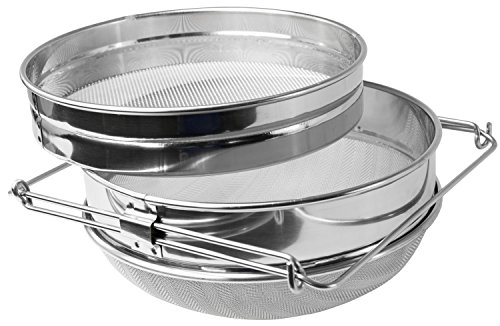
The Best Honey Strainers (2026)
A double sieve is a twenty dollar tool that decides how your honey looks in the jar. We ranked the five worth buying, explained what each mesh layer actually catches, and made the case for letting gravity and a warm room do most of the work instead of forcing honey through finer and finer screens.
Updated Aug 202614 min read

The Best Hive Covers and Inner Covers (2026)
The roof of a hive is two parts doing two different jobs, and beginners routinely run only one of them. We ranked five covers and cover sets, explained exactly why the inner cover exists, and made the case that winter colonies die of condensation far more often than they die of cold.
Updated Aug 202614 min read
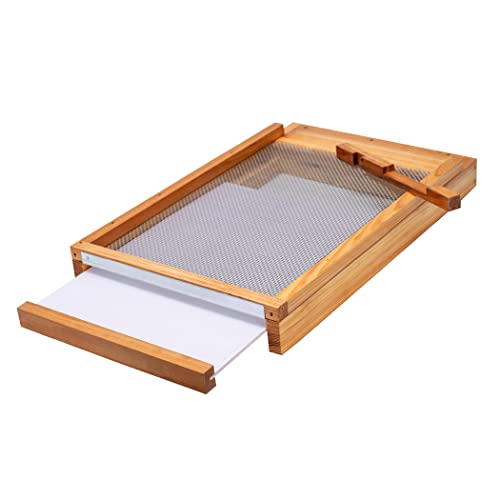
The Best Bottom Boards (2026)
The bottom board is the cheapest part of a hive and the one that does the most diagnostic work. We ranked five screened boards, explained the sticky-board mite count that makes screens worth having, and covered beetle trays, winter inserts, mouse guards, and why beeswax dipping outlasts paint on the wettest board in the stack.
Updated Aug 202615 min read

The Best Bee Smoker Fuel (2026)
Smoker fuel is the cheapest thing in your kit and the one that decides whether your inspection is calm or chaotic. We ranked the four burlap and jute fuels worth buying, explained what separates cool white smoke from hot sooty smoke, and listed everything you should never put in a firebox.
Updated Aug 202613 min read

Worker and Drone Bees: What the Other 99 Percent Actually Do
The colony's workforce and its males, explained properly: how a worker changes jobs roughly every week of her life from cell cleaner to nurse to wax builder to guard to undertaker to forager, why a summer worker burns out in six weeks while a winter bee lives six months, how the waggle dance turns 20,000 foragers into one searching organism, what a foraging trip actually costs, why laying workers are the hardest problem in beekeeping, and the strange, short, genetically vital life of a drone.
Updated Aug 202623 min read

Wax Moths in Beehives: The Symptom, Not the Cause
Wax moths almost never kill a healthy colony. They arrive after something else already did the killing, and then they eat the evidence. This is the full field guide: greater and lesser wax moth biology, how to read webbing, frass, and the cocoon divots chewed into your woodenware, and the storage protocol that keeps a shed full of drawn comb from turning into a bag of gray silk over one August.
Updated Aug 202619 min read

Urban Beekeeping: Rooftops, Small Yards, and Neighbors
City beekeeping is not backyard beekeeping with less grass. It is a different discipline built on four things: a flyway barrier that forces bees up over head height, a water source on your property, honest hive density, and neighbors who heard about the bees from you instead of from a sting. Here is the whole city playbook, including the rooftop logistics nobody warns you about.
Updated Aug 202619 min read
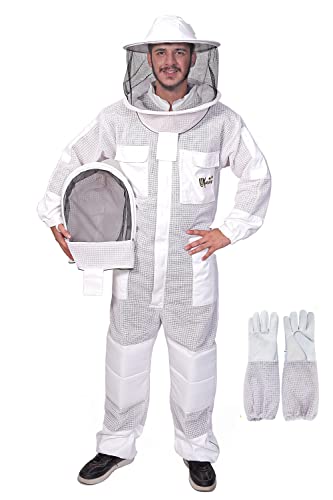
Our top-rated beekeeping gear
Whatever you decide, this is the gear we recommend: verified, researched, and ranked. Live price check on each.



As an Amazon Associate we may earn from qualifying purchases, at no cost to you.