Our Pick: VOISEN
Check PriceThe Best Solar Wax Melters (2026)
Our pick is the VOISEN 8-quart electric wax melter at $61.99: a thermostatic melting pot that renders a season's cappings into clean blocks in an afternoon, indoors, in any weather, without waiting for a sunny week. If you want more capacity, the VEVOR 20-pound melter at $65.69 is barely more money for a much bigger pot. If what you actually want is the solar box, the Tough Timbers solar wax melter plans at $11.50 are the honest route, because you are going to build it rather than buy it. And if you want beeswax without rendering anything, clean pellets start at $9.99 a pound.
By The BeehiveKits Hive Desk2026-08-2914 min read Fact-checked against verified Amazon listingsHow we research
Let us be straight about the category, because most guides are not. Solar wax melters are genuinely excellent: a glazed, insulated box that sits in the sun, heats the interior enough to melt wax, and lets clean molten wax run down a sloped tray through a filter into a mold below, leaving the dirt and cocoons behind. They cost nothing to run, they cannot scorch wax the way a hot element can, and they are a fixture of small apiaries in sunny regions. They are also almost entirely a homemade or specialty-supplier item, and searching for one on Amazon turns up electric melters, candle-making pots, and a set of plans. That is the market as it exists, so that is what we ranked.
The wax itself is worth the trouble. Beeswax is secreted by worker bees from glands on their abdomens, and building it is expensive for a colony, which is why cappings, the wax that never held brood, render out so much lighter and cleaner than old brood comb. The general chemistry and history are covered in the beeswax reference literature. In practice the yields divide sharply by source: a bucket of cappings gives you a lot of pale, sweet-smelling wax, and a stack of black brood comb gives you a small amount of dark wax and a great deal of residue.
The usual disclosure, plainly: no brand paid for a placement here and nobody saw this guide before publication. Links go to Amazon; a purchase may earn us a small commission at no cost to you and never moves a ranking. Prices are the verified listings on the publication date, always check the live page. Capacities are the manufacturers' listed figures, hedged as listed, and the full step-by-step process lives in our how to render beeswax walkthrough.
What to know
- Our pick is the VOISEN 8-quart electric wax melter ($61.99): thermostatic, indoor, weather-proof, and fast enough to finish a season's cappings in an afternoon.
- Purpose-built solar melters are effectively not an Amazon category. The realistic solar route is the Tough Timbers plans ($11.50) plus a weekend and some scrap lumber.
- Solar is free and gentle but slow and weather-bound. Electric is fast and predictable but costs power and can scorch wax if you run it hot.
- Cappings wax and brood comb are different products: cappings render pale and clean, old brood comb renders dark with heavy slumgum residue and a low yield.
- More capacity costs almost nothing here: the VEVOR 20-pound melter ($65.69) is under four dollars more than the 8-quart pot.
- If you want beeswax for candles or balms and do not keep bees, skip rendering entirely: clean triple-filtered pellets start at $9.99 a pound.
At a glance
| Product | Type | Capacity | Best for | Price | Check price |
|---|---|---|---|---|---|
| VOISEN Wax Melter | Electric melting pot | 8 quarts (listed) | Our Pick | $61.99 | Check Price |
| VEVOR 20 Lb Wax Melter | Electric melting pot | 20 lbs / 10 L (listed) | Best capacity | $65.69 | Check Price |
| Tough Timbers Solar Melter Plans | Build-it-yourself plans | Whatever you build | The true solar route | $11.50 | Check Price |
| Howemon White Beeswax Pellets | Bought clean wax | 2 lbs | Skip rendering, bulk | $14.39 | Check Price |
| Mary Tylor Naturals Beeswax Pellets | Bought clean wax | 1 lb | Skip rendering, small batch | $9.99 | Check Price |
The realistic wax-rendering options, plus clean bought wax for people who want to skip the process. Prices verified against the live listings on 2026-08-29.

VOISEN 8-Quart Electric Wax Melter
VOISEN · Electric wax melting pot, 8 quart capacity (listed), thermostat controlled
Our verdict: This is the melter most backyard beekeepers should buy, whatever the guide title says. At $61.99 the VOISEN gives you controlled heat, an 8-quart pot that handles a hobby harvest's worth of cappings, and complete independence from the weather. Solar is more romantic and this is what actually gets your wax rendered before you lose interest.
The honest case for electric over solar is that electric finishes. A solar melter needs several consecutive hot, clear days, positioned right, undisturbed, and it works beautifully when you get them. The VOISEN 8-quart wax melter works on a rainy Tuesday in November, which is realistically when most people finally get around to the bucket of cappings that has been sitting in the shed since August. Controlled heat, a lid, a drain, and an afternoon, and the job is done.
The 8-quart size is right for a hobby apiary. Two to five hives produce a few pounds of cappings a season, and cappings are bulky before they melt, so a pot this size takes a full harvest's worth in one or two loads. If you also cull old brood comb, size up, because black comb is mostly not wax and you will be processing a lot of volume for a modest block of dark wax at the end.
Where it fits in the workflow: your uncapping tank catches cappings during harvest, they drain their honey for a day or two, you rinse them in cool water and dry them, and then they come here. That is the whole chain, and the wax that comes out the other end is the input for candles, wraps, and balms, covered in our candle supplies guide. The step-by-step of the melt itself, including the filtering, lives in how to render beeswax.
Who should buy it
Buy the VOISEN if you keep two to five hives, save your cappings, and want them actually rendered rather than sitting in a bucket waiting for a sunny week. It is the practical answer for most backyard beekeepers in most climates.
What we don't like
It uses electricity, which is the entire philosophical objection solar people will raise, and they are not wrong. It is a pot rather than a filtering system, so you supply the straining setup. And wax is famously difficult to clean off anything, so plan on this becoming a dedicated wax-only tool the first time you use it.
- Type
- Electric wax melting pot
- Capacity
- 8 quarts (listed)
- Control
- Thermostat controlled (listed)
- Best input
- Cappings wax, drained and rinsed
- Weather dependence
- None, works indoors year round
- Cleanup
- Becomes a dedicated wax tool, plan accordingly
- Price
- $61.99
Pros
- Renders a hobby harvest's cappings in an afternoon
- Works indoors in any weather, any season
- Thermostat control protects wax color and smell
- Right capacity for two to five hives
- Straightforward enough that the wax actually gets done
Cons
- Costs power to run, unlike a solar box
- You supply the filtering setup
- Becomes a wax-only tool permanently

VEVOR 20 Lb Electric Wax Melter
VEVOR · Electric wax melter, 20 lbs / 10 L capacity (listed), extra large
Our verdict: The VEVOR is the same idea with a much bigger pot, and at $65.69 the extra capacity costs $3.70 over our top pick. If you keep more than about five hives, cull brood comb, or expect to grow, buy this one instead and never think about batch sizes again. The only reasons to choose smaller are bench space and storage.
Capacity is almost free here, which changes the recommendation. The VEVOR 20-pound wax melter holds a listed 10 liters against the 8 quarts of our top pick, for under four dollars more. In most product categories that would be a fifty percent premium. Here it is a rounding error, so the honest advice is that if you have the shelf space, take the bigger pot.
The same run-it-cool discipline applies, more so at volume: a bigger mass of wax takes longer to come up to temperature, which tempts people into raising the thermostat, which is how a pale block turns brown. Set it low, give it time, and use the time to set up your filtering. A double layer of cheesecloth over a paper filter, or a fine mesh over a mold, is the standard arrangement, and the pour is where clean wax is won or lost.
One practical caution about any electric melter: wax and water and electricity together deserve respect. Do not overfill, do not let a wet load spit, keep the cord clear, and never leave a melter running unattended overnight the way you might a honey warmer. Wax has a much lower flash tolerance than honey, and a melter is a small appliance being asked to do a real job.
Who should buy it
Buy the VEVOR if you run more than about five hives, cull old brood comb on a rotation, or simply want the headroom. At $3.70 over the smaller pot, capacity is effectively free.
What we don't like
It is physically larger, which matters if your bench and storage are tight. Bigger loads take longer to come to temperature, which tempts impatient people into overheating. And like every melter here, it will become a permanent wax-only vessel.
- Type
- Electric wax melting pot
- Capacity
- 20 lbs / 10 L (listed)
- Control
- Electric, temperature controlled (listed)
- Best input
- Cappings wax and culled brood comb
- Weather dependence
- None, works indoors year round
- Price
- $65.69
Pros
- More than double the capacity for $3.70 more
- Handles culled brood comb volume without endless batches
- Room to grow with the apiary
- Same all-weather indoor convenience
Cons
- Larger footprint on the bench and in storage
- Big loads heat slowly, which invites impatience
- Still an electricity-dependent answer

Tough Timbers Solar Wax Melter Plans
Tough Timbers · Build plans for a solar wax melter, beekeeping specific
Our verdict: If you want a genuine solar wax melter, this is the realistic path: buy the plans, build the box, and run it on sunshine for the rest of your beekeeping life. At $11.50 the plans are the cheapest item in this guide by a distance, and the value is knowing the geometry, the glazing, the tray slope, and the drain, because a solar melter that is merely a warm box does not work.
Solar wax melters work on a genuinely elegant principle. A shallow insulated box with a sloped, glazed lid, aimed at the sun, gets hot enough inside to melt beeswax. Dirty comb or cappings go on a sloped metal tray at the top; as the wax melts it runs downhill through a filter and drips into a mold or pan at the bottom, while the cocoons, propolis, and debris stay behind on the tray as a mat. There is no element to scorch the wax, no power bill, and no supervision required beyond aiming the box. The Tough Timbers solar wax melter plans exist because getting the details right is what separates that description from a warm box full of unmelted comb.
The honest tradeoffs. Solar is free to run and physically incapable of overheating wax the way an element can, and the wax it produces is beautiful. It is also slow, taking hours to days per batch, and entirely weather-bound: a cloudy week means no rendering at all, and a northern autumn means the season is simply over. It also handles cappings much better than heavy brood comb, because the marginal heat is enough to melt clean wax but struggles to drive wax out of dense old comb. Most solar owners we know also own an electric pot for the difficult loads, which is not a contradiction, it is just two tools.
Who should build one: beekeepers in sunny regions with the space, the scrap lumber, and the temperament for a weekend project, especially anyone who likes the idea of their equipment costing nothing to operate. It also pairs beautifully with a spring routine, since the sunniest months are exactly when you are drawing new comb and thinking about wax anyway, and comb drawing is expensive enough for a colony that many keepers support it with feed, which our feeding stimulant guide covers.
Who should buy it
Buy the plans if you live somewhere sunny, enjoy building equipment, and want a wax melter with no running cost. It is also the right buy for anyone who has looked for a solar melter to purchase and discovered the category barely exists.
What we don't like
You are buying instructions, not a melter, so the actual cost is the plans plus lumber, glazing, and a weekend. It is weather-dependent by definition and seasonal in cooler climates. And it struggles with dense old brood comb, which is exactly the material most in need of rendering.
- Type
- Build plans for a solar wax melter
- What you get
- Plans, not a finished melter
- Also needed
- Lumber, glazing, dark interior finish, tray, filter
- Running cost
- None, sunlight only
- Best input
- Cappings wax and light comb
- Weather dependence
- Total, and seasonal in cool climates
- Price
- $11.50
Pros
- The genuine solar route, in a category that barely sells finished units
- Zero running cost forever once built
- Cannot scorch wax the way an element can
- Cheapest item in this guide
- Satisfying weekend build with real utility
Cons
- You still have to build the thing
- Useless on cloudy days and in cold seasons
- Poor at rendering dense old brood comb
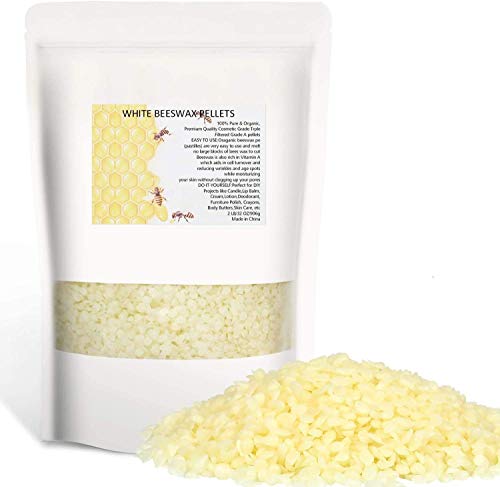
Howemon White Beeswax Pellets, 2 lb
Howemon · White beeswax pellets, 2 lb, 100% pure and natural, triple filtered (listed)
Our verdict: Not every reader of a wax melter guide keeps bees. If you want beeswax for candles, wraps, or balms and have no cappings to render, buying it is the sane answer: $14.39 for two pounds of clean, consistent, triple-filtered pellets that melt straight from the bag. It is also the honest comparison point for beekeepers wondering whether rendering is worth the trouble.
Run the arithmetic before you buy a melter. The Howemon 2-pound beeswax pellets land at roughly $7 a pound, clean, filtered, and pre-pelletized so they melt fast and measure easily. A $61.99 electric melter therefore pays for itself somewhere around nine pounds of rendered wax, which a few hives will produce over two or three seasons of saved cappings. If you keep bees, rendering wins eventually and you also get wax you produced yourself, which is most of the point. If you do not keep bees, buying is not a compromise, it is simply the correct answer.
Pellets have one real advantage over blocks that even beekeepers should notice: they melt fast and evenly, and you can weigh out exactly what a recipe calls for without hacking at a brick with a knife. If you render your own wax into big blocks, keeping a bag of pellets alongside for small precise projects is not cheating, it is convenient. Our candle making supplies guide covers what happens next, and beeswax pellets and wraps goes deeper on the buying side.
Who should buy it
Buy the Howemon 2-pound bag if you want beeswax for a project and do not have cappings to render, or if you want a reliable supply alongside your own rendered blocks for recipes that need exact weights.
What we don't like
It is bought wax rather than your own, which is the entire romance of beekeeping missing from the transaction. White pellets have had most of the honey aroma filtered out, so choose yellow if you want that smell. And at scale, buying gets expensive compared with rendering cappings you already own.
- Type
- Bought beeswax pellets
- Quantity
- 2 lb
- Color
- White, triple filtered (listed)
- Melts
- Fast and evenly, easy to weigh
- Best for
- Candles, wraps, balms, small precise projects
- Price
- $14.39
Pros
- Clean, consistent wax with zero processing
- Roughly $7 a pound in the 2-pound size
- Pellets melt fast and weigh out precisely
- The right answer for non-beekeeping crafters
Cons
- Not your own wax, which is half the point for beekeepers
- White pellets lose most of the honey aroma
- Buying gets expensive at volume

Mary Tylor Naturals White Beeswax Pellets, 1 lb
Mary Tylor Naturals · White beeswax pellets, 1 lb, 100% pure and natural (listed)
Our verdict: The one-pound bag is the sampler: enough wax for a batch of candles, a run of food wraps, or a few dozen lip balms, at $9.99. Per pound it costs more than the two-pound bag, which is how bag sizes work, and it is the right purchase for a first project rather than an ongoing habit.
Buy the small bag first if you are not sure you like the craft. Plenty of people buy a melter, render five pounds of wax, and then discover they have made exactly one candle. The Mary Tylor Naturals 1-pound beeswax pellets let you find out for $9.99 whether wax projects are something you will keep doing, before any equipment enters the picture. A pound goes further than people expect: it is a decent stack of food wraps, several small candles, or a large batch of balm.
Storage is easy and forgiving in both cases: beeswax keeps essentially indefinitely in a sealed bag away from heat, light, and strong odors, and the pale bloom that develops on the surface of stored wax over time is normal and buffs away. That durability is part of why rendering is worth doing at all: a block of cappings wax rendered this September will still be perfectly good several years from now, waiting for the winter you finally get around to making candles.
Who should buy it
Buy the 1-pound bag if you want to try a wax project before investing in equipment, or if you need a small precise quantity for a recipe. It is the low-commitment entry point to the whole craft side of beekeeping.
What we don't like
It costs more per pound than the 2-pound bag, so it is a poor choice for anyone who already knows they will keep going. White pellets carry little honey aroma. And, obviously, it is not your own wax.
- Type
- Bought beeswax pellets
- Quantity
- 1 lb
- Color
- White (listed)
- Best for
- First projects, small recipes, testing the craft
- Storage
- Sealed, away from heat and odors, keeps indefinitely
- Price
- $9.99
Pros
- Cheapest way to try a beeswax project
- A pound covers a real batch of wraps or candles
- Clean and consistent with no processing
- Stores indefinitely if sealed
Cons
- More per pound than the 2-pound bag
- Minimal honey aroma in white wax
- Not a substitute for rendering your own
More gear worth comparing
Beyond this guide: the highest-rated gear across every category and budget, with a live price check on each.




As an Amazon Associate we may earn from qualifying purchases, at no cost to you.
Quick shop: every pick
Skip the scroll: the whole lineup, with a live price check on each.
- VOISEN 8-Quart Electric Wax MelterBest OverallVOISEN · $61.99Check Price
- VEVOR 20 Lb Electric Wax MelterBest CapacityVEVOR · $65.69Check Price
- Tough Timbers Solar Wax Melter PlansThe True Solar RouteTough Timbers · $11.50Check Price
- Howemon White Beeswax Pellets, 2 lbSkip Rendering, BulkHowemon · $14.39Check Price
- Mary Tylor Naturals White Beeswax Pellets, 1 lbSkip Rendering, Small BatchMary Tylor Naturals · $9.99Check Price
How we chose
We start by being honest about availability: if a category barely exists on the retailer our readers actually buy from, we say so rather than padding the list with mislabeled products.
Electric melters are judged on temperature control first. Beeswax has a low melting point and scorches, darkens, and smells wrong when overheated, so a pot with a real thermostat beats a hotter pot every time.
Capacity is judged against a realistic hobby harvest: a few hives produce a few pounds of cappings wax a season, which is why 8 quarts is enough for most people and 20 pounds is comfortable headroom.
For the DIY route we weigh what the plans save you: knowing the glazing angle, the tray slope, and the drain arrangement is most of the value, because a badly designed solar box just gets warm.
Bought wax is judged on filtration and honesty of labeling, since the entire point of buying rather than rendering is getting clean, consistent, ready-to-use wax.
No placement is paid. Prices come from the verified offer table on the publication date; picks that go dark or spike lose their slot on update.
Key terms
- Solar wax melter
- An insulated, glazed box that uses sunlight to melt wax off comb and cappings, running the clean wax down a sloped tray through a filter into a mold. Free to run, slow, and weather-dependent.
- Cappings wax
- The wax sliced off ripe honey cells during uncapping. It has never held brood, so it renders pale, clean, and high-yield, and it is the most valuable wax a colony produces.
- Brood comb
- Comb that has raised bees. Dark, dense with cocoons, and low-yielding when rendered, but worth processing as part of a normal comb rotation.
- Slumgum
- The dark residue left behind after rendering: cocoons, propolis, pollen, and debris. Useless for candles, occasionally used as a swarm-trap lure or fire starter.
- Rendering
- Melting raw wax and filtering out debris to produce clean, usable blocks. The process is drain, rinse, dry, melt, filter, mold, in that order.
- White beeswax
- Beeswax that has been filtered and lightened, removing color and most of the honey aroma. Preferred for consistency in cosmetics and candles; yellow keeps more of the scent.
- Double boiler
- Melting wax over water rather than direct heat, the traditional safe method. A thermostatic melter accomplishes the same protection with less fuss.
- Comb rotation
- Culling and replacing the oldest brood frames every few years to keep comb clean. The practice that generates most of the dark wax a hobby beekeeper renders.
Questions, answered
can you buy a solar wax melter
Barely, and almost never from the general marketplace. Specialty beekeeping suppliers stock them, but they ship badly and sell seasonally, so the realistic route is buying plans for about $11.50 and building one. Search results for solar wax melters are dominated by electric candle-making pots, which are a good product under a misleading heading.
solar wax melter vs electric wax melter
Solar is free to run, gentle enough that it cannot scorch wax, and excellent on cappings, but it is slow and only works on sunny days in warm months. Electric is fast, works indoors year round, and handles dense old brood comb, but costs power and can darken wax if you run it hot. Plenty of beekeepers own both.
how does a solar wax melter work
It is an insulated box with a sloped glazed lid aimed at the sun. Sunlight heats the dark interior enough to melt beeswax; the wax runs down a tilted metal tray, passes through a filter, and drips into a mold below, while cocoons and debris stay behind on the tray as a mat. No power, no supervision beyond aiming it.
what temperature do you melt beeswax at
As low as you can while keeping it liquid. Beeswax melts at a relatively low temperature and darkens, smells burnt, and loses its pale color well before anything dramatic happens, so the technique is the lowest working setting plus patience. That is exactly why a thermostatic melter beats an improvised pot on a stove.
how much wax do you get from cappings
Enough to be worth catching every scrap. Cappings are the highest-yield, cleanest wax in the apiary because they have never held brood, and a few hives across a season produce a satisfying block. Old dark brood comb is the opposite: a lot of volume in, a modest block of dark wax and a big mat of residue out.
can you render beeswax in a crockpot
People do, and it works because a slow cooker holds a low temperature, which is the main thing wax needs. The catches are that it becomes a permanently wax-only appliance, low settings on some units still run warmer than ideal, and it holds far less than a purpose-built melter. A dedicated thermostatic melter is a better tool if you will do this every year.
do you have to clean cappings before melting
Yes, and skipping it is the most common way to ruin a batch. Drain the honey out of the cappings for a day or two, rinse them in cool water, and dry them before melting. Honey residue burns and darkens wax, and water trapped in wet wax spits in a hot pot. Drain, rinse, dry, then melt.
is it cheaper to render your own beeswax or buy it
Bought pellets run roughly $7 a pound in a 2-pound bag, so a $61.99 electric melter pays for itself around nine pounds of rendered wax, which a few hives produce across a couple of seasons. If you keep bees, rendering wins eventually and you get your own wax. If you do not keep bees, buying is simply the correct answer.
what is slumgum and what do you do with it
It is the dark residue left after rendering: cocoons, propolis, pollen, and debris compacted into a mat. It is not useful for candles or cosmetics. Some beekeepers use a small piece as a swarm-trap lure because it smells strongly of used hive, and some use it as a fire starter. The rest goes in the bin.
how do you store beeswax after rendering
Sealed, cool, dark, and away from strong odors, and it will keep essentially indefinitely. Wax picks up smells, so do not store it next to fuel or paint. A pale bloom on the surface after months of storage is normal and buffs off with a cloth, and it says nothing about quality.
Filed under Buyer's Guide
Part of Honey Harvest
Keep reading
How to Render Beeswax
The step-by-step process this equipment serves: drain, rinse, dry, melt, filter, mold, plus what to do with the slumgum.
The Best Uncapping Tanks
Where cappings wax gets collected in the first place, and the drain that recovers the honey before you melt anything.
The Best Beeswax Candle Making Supplies
What the rendered blocks become: molds, wicks, sheets, and kits for turning a season of cappings into candles.
The Best Beeswax Pellets and Wraps
Buying clean wax instead of rendering it, plus the food wraps that are the easiest first project.
The Best Beehive Frames and Foundation
Comb rotation is what generates dark wax to render, and foundation is one of the things rendered wax goes back into.
The Best Honey Warmers and Decrystallizers
The same gentle-heat discipline applied to the other product of a harvest, with the temperature ceiling that protects flavor.